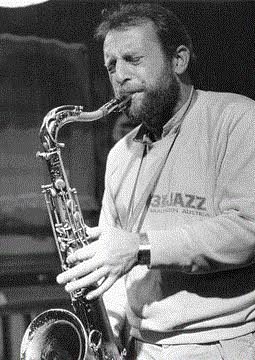
If you were to leave behind the bright, sun-kissed sidewalks of Ipanema or the crowded, neon-lit avenues of Manhattan in the mid-1980s, and travel eastward, behind the heavy, enigmatic folds of the Iron Curtain, you would discover a world where jazz was not merely a lifestyle choice. It was an act of profound intellectual freedom, a secret language spoken in dimly lit basement clubs by artists who pushed boundaries in total defiance of geographical and political isolation. A master cultural chronicler like Nelson Motta would instantly tell you that the most mesmerizing musical miracles often happen in the places the global mainstream completely forgets to look. In Eastern Europe, away from the commercial pressures of the Western music market, jazz evolved into an intense, deeply spiritual, and uncompromisingly artistic medium. At the absolute apex of this hidden vanguard stood the brilliant Slovenian saxophonist, flutist, and composer Tone Janša. In 1985, Janša led his phenomenal quartet into the studios of Yugoton Records—the legendary state-owned record label of Yugoslavia—to cut Jazzbina. The title itself plays on a beautiful double meaning: a clever combination of “jazz” and the Slovenian word bina (stage), evoking a subterranean jazz den or a hidden platform for sonic exploration. It remains a towering, hypnotic masterpiece of deep, modal Eastern European jazz alchemy.
What Janša and his quartet achieved on Jazzbina is a breathtaking, fiercely intelligent exercise in musical geometry. Instead of following the smooth, pop-infused fusion trends that were thoroughly dominating Western airwaves in 1985, the Tone Janša Quartet chose to look backward and inward, drawing deep inspiration from the sacred, modal fires of John Coltrane, Wayne Shorter, and the historic European quartets of Miles Davis. Yet, Janša injected this foundational modal vocabulary with a unique, unmistakable Slavic soul—a dark, brooding lyricism and complex, asymmetrical rhythmic sensibilities rooted in the folk traditions of the Balkans. Backed by an elite rhythm section consisting of pianist Renato Chicco, bassist Ewald Oberleitner, and drummer Karlheinz Miklin Jr., Janša constructed a massive, labyrinthine sonic architecture. For high-fidelity audio collectors, serious crate-diggers, and audiophiles, Jazzbina has long been a legendary, intensely coveted holy grail. The original Yugoslavian Yugoton vinyl pressings feature an incredibly raw, vivid, and uncompressed analog mix that treats the listener to a staggeringly wide, deep, and lifelike soundstage. It has rapidly become a premier diagnostic reference tool for evaluating an audio system’s mid-range transient snap, three-dimensional depth perspective, and low-frequency pitch definition.
Buy Amazon
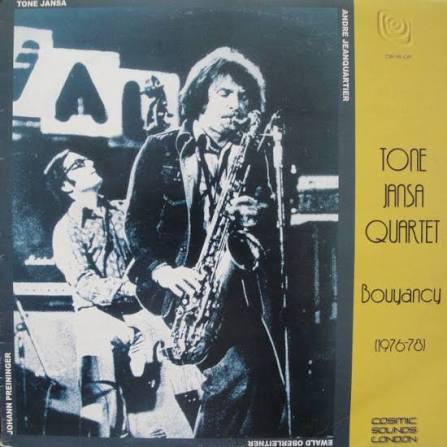
The primary, most uncompromising technical gauntlet that Jazzbina throws down at the feet of your playback chain is the raw, unadulterated physical presence of Tone Janša’s saxophone. Whether he is blowing a fierce, muscular tenor line or a crying, serpentine soprano solo, Janša’s horn is recorded with an upfront, naked intensity right in the center of the soundstage. This tracking puts an immense amount of pressure on your system’s upper-midrange and lower-treble linearity, specifically between 800 Hz and 3 kHz. On a properly dialed-in audio setup, his saxophone should not merely sound like a two-dimensional recording; it must materialize as a holographic entity standing exactly between your speakers. The recording captures the micro-fine mechanical details of the performance—the physical rasp of the wooden reed vibrating against his lip, the sudden, sharp columns of air rushing through the brass body, and the literal clicking of the keys. If your system suffers from high-frequency peakiness, poor cartridge alignment, or cabinet resonances, his horn will instantly lose its rounded, woody warmth, sounding artificially harsh, thin, or blaring.
As you allow the heavy vintage wax to rotate and the stylus journeys into the driving, modal groove of the opening track, the spatial geometry of the Yugoslav soundstage expands into a beautiful masterclass of acoustic instrument separation. Here, Ewald Oberleitner’s acoustic bass and Karlheinz Miklin Jr.’s crisp, driving drum kit establish a relentless, swinging foundation. This arrangement tests the absolute limits of your system’s intermodulation distortion and transient speed. Miklin’s cymbals and snare are recorded with a dry, organic, and woody quality characteristic of mid-80s European jazz recordings, completely free of the artificial digital reverbs that ruined so many albums of that era. If your amplification chain lacks a robust power supply, or if your speakers suffer from slow transient rise times, the sudden, explosive snare accents will completely swallow up Renato Chicco’s fluid, complex acoustic piano chord voicings that blossom on the left side of the stage. A truly linear high-fidelity system will keep each musician firmly anchored in their own distinct geographic pocket, allowing the listener to perceive the physical depth of the recording studio.
Furthermore, this uncompressed analog master demands an exceptional amount of low-frequency control and pitch definition from your system’s woofers. On long, exploratory modal tracks where the rhythm section stretches out, Oberleitner’s double bass lines move with a deep, authoritative thud that operates heavily between 40 Hz and 100 Hz. This recording captures the true, physical weight of an acoustic bass vibrating in a live room. If your loudspeakers suffer from artificial mid-bass coloration, or if your listening room lacks proper acoustic treatments, this low-frequency energy will turn into an amorphous, boomy hum that muddies the entire stereo image. A high-end amplifier with an iron-fisted damping factor will control your speaker’s woofers with absolute precision, ensuring that each plucked bass note stops and starts instantaneously, preserving the intricate rhythmic counterpoint that grounds the quartet’s avant-garde explorations.
Meanwhile, Janša’s exceptional, atmospheric flute work on the album’s softer, more introspective passages provides a rigorous workout for your system’s low-level resolution and noise floor. When he switches from the heavy tenor sax to the silver flute, the music drops into a quiet, deeply meditative landscape where the ambient decay of the studio becomes an instrument of its own. This delicate texture requires an audio system with an exceptionally low noise floor. Any trace of electronic hum, power supply noise, or sub-par turntable bearing rumble will completely swallow these low-level micro-dynamics, robbing the record of its unique, hauntingly spiritual atmosphere. On a pristine high-fidelity chain, these quiet passages reveal themselves with stunning clarity; you can hear the natural acoustic ring of the Yugoton studio walls and the long, elegant decay of the piano strings fading away into a pitch-black background.
The true triumph of Jazzbina lies in its absolute, uncompromised emotional honesty. In an era when the music industry was rapidly moving toward heavily synthesized, over-produced, and digitally compressed recordings, the Yugoton team preserved the raw, organic bleeding edge of live musicians interacting in real time. When the band pushes into a frantic, collective crescendo, you are hearing the pure, unadulterated truth of an ensemble operating at the peak of their telepathic powers. If your audio setup introduces any time-alignment errors or phase distortions across its crossover networks, this delicate, telepathic balance will be completely lost, stripping the record of its immense, poetic impact.
To sit down in the sweet spot of your listening environment, turn down the house lights, and absorb Jazzbina from its opening, modal salvos to its final, redemptive acoustic chords is to experience a masterclass in Eastern European musical sophistication and analog engineering. It is an intense, deeply rewarding, and endlessly fascinating auditory journey that beautifully demonstrates the boundary-pushing spirit of a forgotten jazz renaissance. A legendary bohemian romantic like Nelson Motta would undoubtedly tell you that this record is the ultimate expression of sophisticated, late-night artistic luxury—a piece of pure, uncompromising musical gold best enjoyed in absolute stillness with a pour of rich, smoky single-malt scotch, while the modern world outside rushes by in a blur of chaos and the mind finally discovers its peace within these deep, labyrinthine Yugoslavian soundscapes. The Yugoton Records team executed a monumental service for music history, treating Tone Janša’s finest hour with the absolute, unyielding reverence it commands. It is an indispensable, essential cornerstone that will continuously challenge your audio system to achieve its absolute peak of transient speed, spatial clarity, and emotional truth.