
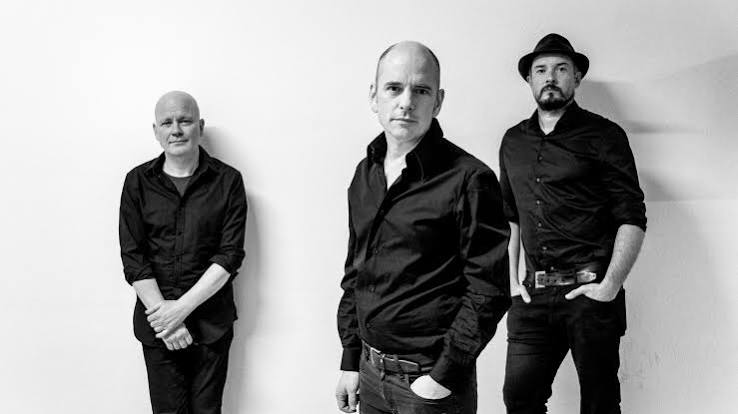
If you were to leave behind the sun-drenched sidewalk cafes of Ipanema, where the bossa nova guitar strings gently warm the humid afternoon air, and fly thousands of miles due north, you would eventually collide with a completely different kind of magic. You would find yourself in Oslo, standing before a vast, slate-gray fjord wrapped in the silent embrace of a Scandinavian winter. A master chronicler like Nelson Motta would instantly tell you that great jazz does not always need to sweat, stomp, or shout; sometimes, it discovers its ultimate power by drawing a deep breath, slowing its heartbeat down to an absolute crawl, and surrendering entirely to the luxury of silence. In December 2002, a soft-spoken Norwegian pianist named Tord Gustavsen walked into the legendary Rainbow Studio in Oslo alongside bassist Harald Johnsen and drummer Jarle Vespestad. Under the watchful, uncompromising eye of ECM mastermind Manfred Eicher, they committed Changing Places to tape. It was an album that did not merely join the jazz tradition—it remapped its spiritual landscape.
What Gustavsen achieved on this landmark debut is a gorgeous, heartbreaking exercise in absolute musical containment. He took the traditional piano trio format and systematically stripped away the flashy, hyper-vocal virtuosity that so often dominates the American post-bop scene. Instead, he reached deep into the solemn, ancient modal harmonies of Norwegian Lutheran church hymns, the sparse phrasing of Caribbean lullabies, and the cool, brooding space of late-night cool jazz. It is a music defined by its exquisite patience—a sonic universe where a single, beautifully struck piano chord is allowed to hang suspended in the air for what feels like an eternity, slowly dissolving into a pitch-black background. For high-end audio enthusiasts, Changing Places has long been a legendary holy grail, a recording that demands an almost impossible level of transparency from a playback chain. When ECM marked this unissued contemporary masterpiece for its premium ECM Luminessence Series, cut entirely all-analog (AAA) from the original master tapes and pressed onto pristine 180-gram virgin wax at Pallas, they handed audiophiles the ultimate diagnostic tool for checking low-level micro-dynamics and system noise floors.
Buy Amazon
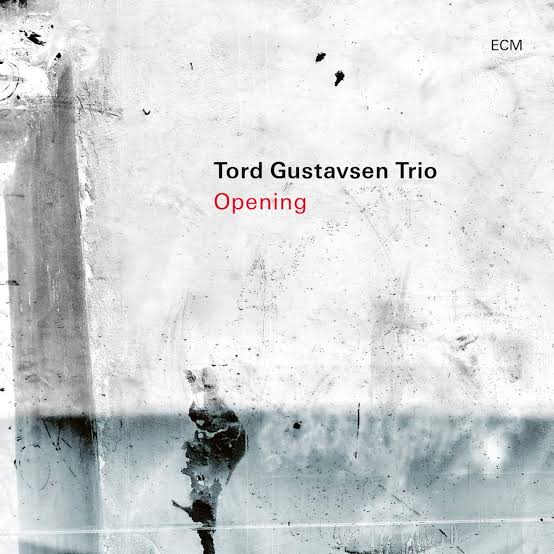
The foundational, unyielding gauntlet that Changing Places throws down at the feet of your audio system is its terrifyingly low floor of silence. On the sweeping, melancholic opening track, “Turning to Harm”, Gustavsen’s Steinway grand piano enters with a stark, holographic physical presence right in the center of your listening room. This isn’t a compressed, modern radio mix; the piano is rendered with its full, natural acoustic proportions intact. This presentation tests the absolute limits of your phono cartridge and your preamplifier’s signal-to-noise ratio. Because the music operates at such a quiet, whisper-soft dynamic level, any trace of electronic hum, poorly shielded cables, or surface noise will instantly shatter the illusion of the performance. A truly linear hi-fi chain will reveal the micro-fine textures of Gustavsen’s touch—the subtle variance in pressure as his fingers meet the ivory keys and the delicate mechanical release of the piano felt dampers rising off the heavy strings.
As the needle glides effortlessly into the heartbreakingly beautiful waltz of “At a Glance”, the three-dimensional architecture of the famous Rainbow Studio opens up with immense panoramic depth. Here, the late Harald Johnsen’s double bass anchors the left-center channel with a warm, foundational authority. Johnsen’s bass tone operates primarily in the critical lower-midrange and upper-bass frequencies between 60 Hz and 150 Hz. If your loudspeakers suffer from artificial cabinet resonance or mid-bass bloat, his beautifully plucked notes will turn into an amorphous, muddy hum that bleeds across the stereo image. The Luminessence pressing preserves the taut, wooden snap of the string hitting the fingerboard, followed by a deep, hollow body cavity resonance that must stop instantly when the musician dampens the string. A high-fidelity system with a high amplifier damping factor will control your woofers with iron-fisted precision, keeping the bass notes firmly locked in their specific geographic pocket on the left side of the stage.
Meanwhile, the right channel becomes a playground for some of the most intricate, high-frequency micro-percussion ever captured on analog tape. Drummer Jarle Vespestad delivers an absolute masterclass in minimalist restraint, spending much of the record utilizing specialized wire brushes and ultra-thin ride cymbals. On the hypnotic, slowly unfurling title track, “Changing Places”, Vespestad softly coaxes a rhythmic shimmer from his cymbals that floats like ice crystals in the air. This layer is an absolute torture test for your system’s tweeters, specifically testing their transient rise time and phase linearity. On an average audio setup, this delicate brushwork will collapse into a generic, abrasive hiss that sounds like white noise or a poorly tracked record groove. But on a truly high-resolution system, you can actually perceive the physical separation of the individual metal bristles dragging across the textured surface of the drum head, floating completely independently of the piano notes melting into the room.
The true genius of this Ryan K. Smith all-analog cut lies in how it perfectly preserves Manfred Eicher’s signature sound aesthetic—the legendary “ECM reverb” that creates an immense, cathedral-like ambient space around the trio. On tracks like “Melted Matter”, when Gustavsen hits a heavy chord in the lower register and allows it to sustain, you can hear the sound waves literally traveling out to the far corners of the recording room, bouncing off the studio walls, and gently returning to the microphones. If your audio system suffers from time-alignment errors or digital pre-ringing, this delicate, natural room decay will become smeared and truncated. The Pallas vinyl pressing forces your playback chain to prove it can articulate the micro-dynamic space between the notes. It reveals that the silence in Gustavsen’s music isn’t dead space; it is a living, breathing canvas packed with emotional tension and artistic intent.
To sit down in the sweet spot of your listening room, turn off every modern digital distraction, and absorb Changing Places from its opening groove to its final, whispering decay is to understand why the European jazz movement remains one of the most vital artistic currents of our time. It is a transportive, deeply meditative experience that completely bypasses the analytical brain and speaks directly to the soul. A legendary cultural aesthetician like Nelson Motta would undoubtedly tell you that this record is the ultimate manifestation of sophisticated, late-night bohemian luxury—a flawless piece of sonic art best enjoyed in a dark room with a single candle burning, a glass of dark, aged aquavit in hand, while the winter wind howls softly outside your window. The ECM Luminessence team has delivered a monumental archival triumph, treating the Tord Gustavsen Trio’s timeless minimalism with the absolute, uncompromising reverence it commands. It is an indispensable cornerstone that will continuously challenge your audio system to achieve its absolute highest potential of transparency, speed, and emotional truth.