The Chronicle of an Era: The Mid-Seventies Fusion Counter-Rebellion, The ECM Sonic Matrix, and the Architecture of Air
By the arrival of 1976, the international jazz-rock fusion movement was largely dominated by high-voltage electronic density, staggering instrumental gymnastics, and massive, saturated walls of sound produced by overdrive pedals and towering Marshall stacks. While arenas were filled with explosive, rock-inflected volume, a profound, quiet parallel rebellion was taking place inside the high-fidelity studios of Europe. A select group of master improvisers sought to dismantle this heavy electronic fatigue. Led by Manfred Eicher and his visionary independent label ECM Records (Edition of Contemporary Music), they looked toward pastoral folk melodies, impressionistic open-string spaces, and European chamber music structures, developing a distinct label motto: “The Next Best Sound to Silence.”
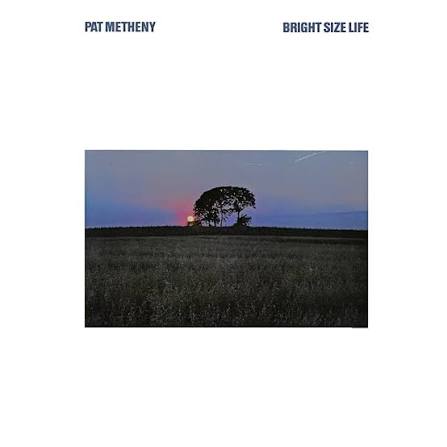
It was precisely within this climate of acoustic restoration and spatial realignment, in December 1975, that a 21-year-old guitarist from Missouri named Pat Metheny entered Tonstudio Bauer in Ludwigsburg, West Germany, to record his debut masterpiece. Released in early 1976, Bright Size Life stood as an extraordinary creative threshold. It did not merely present a collection of standard guitar trio jams. Instead, it engineered a legitimate, deeply organic bridge between Midwestern folk lyricism, advanced modal jazz improvisation, and cutting-edge electric bass poetry. The record permanently altered the evolutionary destiny of the jazz guitar, establishing an immortal, reference-grade monument for the contemporary jazz movement.
The Biography & The Concept of the Masterwork: The Midwestern Poet and the Fretless Pioneer
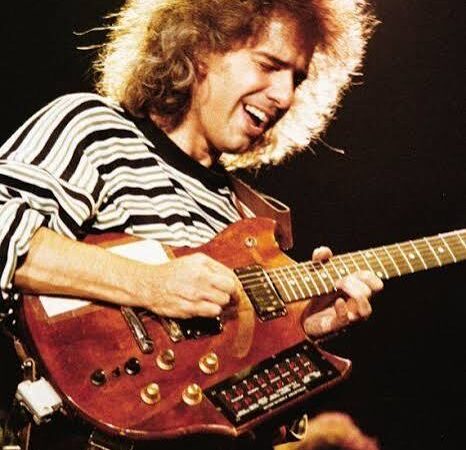
The artistic trajectory of Patrick Bruce Metheny (born in 1954) is fundamentally the story of an instrumental transfiguration. Emerging from Lee’s Summit, Missouri, and cutting his teeth in Boston alongside vibraphonist Gary Burton, Metheny completely rejected the traditional, dark-toned, horn-like bebop speed that characterized most post-war jazz guitarists. Influenced by the breathy lyricism of Miles Davis’s trumpet and the wide-open intervals of country music, Metheny treated the guitar as an engine of light. He developed a completely unique approach based on a custom Gibson ES-175 hollow-body guitar, subtle digital delay modulation to create a wide-screen chorus effect, and an absolute devotion to open string voicings and singable melodies.
The core conceptual architecture of Bright Size Life represents the absolute distillation of this open-air philosophy. To execute this fragile, highly delicate structural design without crushing the composition’s melancholic poetry under typical jazz clichés, Metheny assembled a telepathic dream team of young acoustic-electric masters. The center pillar of the rhythm section was his close friend Jaco Pastorius, a young prodigy from Florida whose singing, growling voice on a modified Fender Jazz Bass with the frets ripped out was about to permanently revolutionize the stringed world. Completed by the highly organic, cymbal-shading drum pocket of Bob Moses, the trio abandoned casual jam-session formats, focusing entirely on interlocking group interactions and geometric melodic shapes.
Buy Amazon
The Anatomy of the Stereo: A Sensorial Excursion Through Singing Choruses, Growling Wood, and Transparent European Reverbs
To place a reference-grade phono cartridge onto the uncompressed, silent analog grooves of an original 1976 ECM German pressing—engineered by the master Martin Wieland—is to witness an astonishing demonstration of spatial transparency, acoustic depth, and holographic instrument separation. Unlike drier American post-bop dates, Wieland captured this session with a gorgeous, wide-screen stereophonic ambient bloom that places the listener in the absolute center of a pristine sonic landscape. Side A opens with the monumental title track, “Bright Size Life”. The track materializes from absolute silence with Pat Metheny’s hollow-body guitar positioned center-left. His tone is incomparably warm, round, and swimming in a subtle analog delay that spreads his notes like light across the stereo field.
The physical realism is breathtaking; you can hear the soft, tactile friction of his plectrum striking the strings, completely avoiding high-frequency metallic bite.
Suddenly, Jaco Pastorius’s fretless bass enters from the right channel, and the emotional realism is jaw-dropping. The microphone preserves the literal, vocal-like quality of his instrument—the deep, woody growl of his bridge pickup, the incredible warmth of his thumb strokes, and the micro-dynamic inflections of his slides and vibratos.
Bob Moses’s drum kit manages the space from the center-right, his ride cymbal patterns and soft snare accents decaying naturally into the physical dimensions of the studio room, entirely free of tape saturation or acoustic blurring.
On the hypnotic grid of “Midwestern Nights Dream”, the spatial separation reaches an elite level of audiophile excellence. You can feel the exact physical distance between Metheny’s sparkling chord arpeggios on the left and Jaco’s singing upper-register counter-melodies on the right.
The natural acoustic reflections of the studio walls blend beautifully around the trio, demonstrating a masterclass in how a minimalist studio mix can preserve microscopic human vulnerability with absolute transparent fidelity and three-dimensional depth.
The Legacy and Modern Coordinates: The Eternal Fountain of Contemporary Lyricism
The historical, critical, and engineering trajectory of Bright Size Life stands today as one of the most fiercely protected, universally analyzed, and deeply emotional milestones in the history of recorded jazz. The album achieved immediate critical coronation and massive success among audiophiles, permanently cementing Pat Metheny’s reputation as the ultimate poet laureate of the contemporary guitar and launching Jaco Pastorius into historical immortality. It provided permanent historical proof that an electric jazz trio could achieve the highest peaks of harmonic complexity and structural grandeur by turning away from sheer volume and aggressive distortion, opting instead for group empathy, structural restraint, and absolute tonal beauty.
Six decades later, the modern coordinates of Jazz Latitude look directly back to this 1976 German document as the essential textbook for the art of contemporary trio improvisation. From contemporary musicians who blend jazz with Americana and global folk music to the modern architects of minimalist ambient guitar, everyone operates directly under the aesthetic route mapped out by Pat Metheny and Jaco Pastorius. It remains the definitive proof that when technical virtuosity bows to the beauty of silence and space, the result is a monument that is structurally timeless, sonically pristine, and boundlessly immortal. Metheny carved a permanent coordinate of maple and platinum on our map: an eternal outpost that stands as an immortal monument to the absolute triumph of the tranquil musical soul.