From Postwar Japan to a Wider Musical World
Before Japanese Jazz Became International
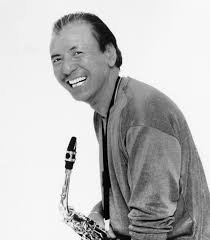
Sadao Watanabe’s career is sometimes summarized through a series of geographical connections: Japan, the United States and Brazil. The outline is accurate, but it can make his development sound simpler than it was, as though three musical cultures were placed beside one another until a recognizable fusion emerged. Watanabe’s importance lies in something more gradual. Across more than six decades, he became one of the musicians who demonstrated that a Japanese jazz artist could participate fully in an international improvisational language without treating national identity as either a limitation or a marketing device. Bebop, Brazilian music, American jazz education and Japanese musical life all became parts of his experience, but none provides a complete explanation of his sound.
To understand that achievement, it is necessary to return to the Japan in which Watanabe first encountered jazz. He was born in Utsunomiya, Tochigi Prefecture, in 1933, and his adolescence unfolded during the difficult years surrounding the end of World War II and the transformation that followed. Japan’s musical environment was changing rapidly. American popular culture became increasingly visible during the Allied occupation, and jazz — already known in Japan before the war — entered a new period of circulation through records, radio broadcasts, military clubs and performances for American personnel.
For young Japanese musicians, this created opportunities but also contradictions. Jazz came from another country at a moment when Japan was reconstructing its own cultural and political identity. Learning the music required access to recordings, instruments and experienced players that could not always be taken for granted. Yet by the 1950s, a remarkable generation of Japanese jazz musicians was emerging, increasingly capable of moving beyond imitation and participating in the music on its own terms.
Watanabe would become one of its most visible figures.
Discovering the Alto Saxophone
Watanabe began playing clarinet as a teenager before turning toward the alto saxophone, the instrument that would become the center of his career. Like many young alto players of his generation, he encountered the enormous influence of Charlie Parker. Bebop had changed the technical and conceptual possibilities of jazz during the 1940s, and Parker’s approach to harmony, phrasing and rhythmic placement became unavoidable for musicians trying to understand modern improvisation.
For Watanabe, bebop provided a language to study rather than a style to preserve unchanged. Its demands were severe. Improvisation required more than learning melodies or reproducing familiar phrases; the musician had to understand harmony quickly enough to make spontaneous decisions at performance speed. Parker’s lines demonstrated how melody could move through chord changes with extraordinary freedom while retaining rhythmic clarity.
This became part of Watanabe’s foundation, but his later career would demonstrate that a strong foundation does not require permanent stylistic loyalty. He absorbed bebop deeply enough that he could eventually move beyond its surface vocabulary without losing the improvisational discipline underneath it.
That process began inside Japan’s rapidly developing jazz scene.
Toshiko Akiyoshi and a Generation Looking Outward
One of the decisive relationships in Watanabe’s early development was with pianist Toshiko Akiyoshi. Akiyoshi had already become an important figure in Japanese jazz and would soon establish an international career of her own. Watanabe joined her group in the 1950s, placing him alongside a musician whose ambitions and musical standards extended beyond the boundaries of the domestic scene.
The relationship is historically significant because Watanabe and Akiyoshi represent two different but interconnected paths through which Japanese jazz became increasingly international. Both took American jazz seriously as a living art rather than an imported entertainment. Both sought direct contact with the musicians, institutions and environments in which modern jazz was developing. And both eventually demonstrated that participation in jazz did not require abandoning Japanese identity in order to achieve legitimacy.
When Akiyoshi left Japan for the United States, Watanabe assumed leadership responsibilities within the group she had left behind. That transition was more than a professional opportunity. It placed him in a position where he had to develop as a bandleader while still relatively young, making decisions about repertoire, ensemble balance and performance rather than functioning only as a promising soloist.
By the end of the decade, Watanabe had established himself as one of the leading saxophonists in Japanese jazz. Yet Japan alone could not provide everything he wanted to learn.
The next step would take him to Boston.
Berklee and the Discipline Behind Improvisation
In 1962, Watanabe traveled to the United States to study at Berklee School of Music in Boston, later known as Berklee College of Music. The move placed him inside an institution that had become particularly important for musicians interested in modern jazz, arranging and contemporary approaches to harmony.
The significance of Berklee in Watanabe’s development should not be reduced to the familiar story of an Asian musician traveling to America to learn “authentic” jazz. By the early 1960s, Watanabe was already an experienced professional. He had performed extensively, worked with major Japanese musicians and developed a strong command of bebop. What formal study offered was another level of structural understanding.
Composition and arranging became increasingly important. Jazz could be examined not only as an intuitive performance practice but as an architecture of harmony, orchestration and form. For a musician who would later move comfortably among small-group jazz, Brazilian-influenced recordings and larger studio productions, that education provided useful tools.
Boston also offered something no classroom could reproduce: proximity to a larger network of musicians.
Watanabe encountered American players directly, listened in clubs and participated in a musical environment where jazz was constantly changing. The early 1960s were not a period of stylistic stability. Hard bop remained vital, modal approaches were expanding, Ornette Coleman’s innovations had intensified debates about form and freedom, John Coltrane was transforming the possibilities of the saxophone, and new rhythmic and compositional ideas were entering the music from multiple directions.
Watanabe was not arriving in America to discover a finished tradition.
He was entering a tradition in motion.
Gary McFarland and the Expanding Jazz Vocabulary
During his American period, Watanabe’s musical relationships extended beyond the classroom. Among the musicians with whom he worked was vibraphonist and composer Gary McFarland, whose own career reflected the expanding boundaries of jazz during the 1960s. McFarland moved among small-group improvisation, orchestral writing, popular song and the growing American fascination with Brazilian music.
That last connection would become especially important.
Bossa nova had already transformed the international musical landscape after recordings by João Gilberto and Antônio Carlos Jobim began attracting attention beyond Brazil. By the early 1960s, American jazz musicians were engaging intensely with Brazilian harmony, melody and rhythm. The success of recordings involving Stan Getz helped bring the music to a mass audience, but the relationship between Brazilian musicians and jazz extended far beyond the commercial bossa nova boom.
For Watanabe, encountering this musical environment while studying in the United States opened another path. Brazilian music offered rhythmic and melodic possibilities that differed from bebop without requiring him to abandon improvisation.
The consequences would last for decades.
Returning to a Changed Japan
Watanabe returned to Japan in 1965 with more than a Berklee education. He returned with direct experience of an international jazz community and with a widened sense of what a modern jazz musician could do.
Japan itself had changed during his absence. The country’s rapid economic growth was reshaping urban culture, and jazz had developed a substantial audience. Clubs, record collectors, magazines and increasingly accomplished musicians supported a scene that could no longer be described simply as an imitation of American jazz.
Watanabe’s return therefore occurred at a productive moment. He could bring knowledge acquired in Boston into a community already capable of responding creatively to it. He became an important figure not only as a performer but also as an educator and example for younger musicians interested in careers extending beyond Japan.
His playing retained the clarity and agility associated with his bebop foundation, but his interests were broadening. The alto saxophone remained central, yet flute would also become part of his instrumental palette. Arranging and composition assumed greater importance. Brazilian rhythm increasingly entered his work.
What emerged was not an immediate stylistic transformation but a gradual widening of the field.
Brazil as a Musical Relationship
The Brazilian dimension of Watanabe’s career deserves particular care because it is easy to turn it into another simplistic fusion story. Japan developed an unusually strong relationship with Brazilian music during the twentieth century, shaped by migration, recordings, popular culture and the international circulation of bossa nova. Watanabe participated in that relationship, but his engagement became personal and sustained rather than merely fashionable.
Brazilian music offered something distinct from the bebop language that had formed his early improvisational identity. Samba and bossa nova organized rhythm differently. The relationship between melody and harmony could be sophisticated without producing the same kind of forward-driving phrasing associated with bebop. Space could function differently. The saxophone could sing across the rhythm rather than constantly challenge it.
Watanabe was particularly suited to this environment because lyricism had always been important to his playing. His technical fluency allowed rapid improvisation, but his sound did not depend on density. Brazilian repertoire gave him another context in which clarity of melodic line could become central.
The influence was not a temporary episode.
It became one of the recurring languages of his career.
Elis Regina and a Direct Encounter with Brazilian Music
A crucial stage in Watanabe’s Brazilian engagement came through direct contact with musicians in Brazil. His work and travels connected him with artists at a moment when Brazilian popular music itself was undergoing extraordinary transformation. The country of the late 1960s was producing music that moved well beyond the initial international image of bossa nova, encompassing samba, MPB, experimental arrangements and new relationships between popular song and jazz.
Watanabe encountered this culture not simply through American interpretations.
That distinction matters.
When Brazilian music travels internationally, it is often filtered through the expectations of foreign musicians and audiences. Bossa nova, in particular, was sometimes reduced outside Brazil to a relaxed rhythmic atmosphere or sophisticated background music, stripping away much of its cultural and compositional specificity.
Watanabe’s sustained interest allowed him to move beyond that surface. His relationship with Brazilian rhythm became part of a broader musical vocabulary rather than an exotic color attached to jazz.
This would eventually contribute to some of his most accessible recordings, but accessibility should not be confused with superficiality. Watanabe understood that melodic directness and sophisticated musicianship were compatible.
That lesson would become increasingly important as his audience expanded.
Jazz Without a Border Test
By the end of the 1960s, Watanabe occupied an increasingly unusual position. He had been formed inside Japanese jazz, studied directly within the American educational and professional environment and developed a serious relationship with Brazilian music. Critics could easily describe this as a meeting of East and West, but that phrase creates an artificial simplicity.
There was no single “East” in Watanabe’s music, just as there was no single “West.”
American jazz itself contained multiple regional, racial and stylistic histories. Brazilian music belonged to another vast cultural world. Japanese jazz had developed its own institutions and generations of musicians. Watanabe moved among these environments without pretending they were interchangeable.
What connected them was his musicianship.
The alto saxophone became the constant through changing contexts. His tone was increasingly identifiable through clarity, warmth and melodic directness. Bebop remained underneath his improvisational vocabulary even when the surrounding music moved elsewhere. His growing interest in composition allowed different rhythmic environments to become part of a coherent repertoire.
The result was not cultural neutrality.
It was mobility.
The Beginning of an International Voice
The 1970s would transform the scale of Watanabe’s career. The international recording industry was changing, jazz was entering increasingly open relationships with electric instruments, funk and popular music, and Japanese musicians were gaining greater access to studios, festivals and global distribution. Watanabe was positioned unusually well for this environment.
He could play straight-ahead jazz without sounding like a visitor to the tradition. He could enter Brazilian repertoire without treating it as a novelty. He understood arranging and composition. He had experience in both Japanese and American professional environments. Most importantly, he had developed a melodic identity capable of communicating beyond specialist jazz audiences.
The next phase would bring electric keyboards, larger productions, major American collaborators and albums that reached listeners far beyond the clubs in which his career had begun.
It would also create a critical problem that continues to surround Watanabe: the temptation to divide his work into supposedly serious jazz on one side and commercially accessible fusion on the other.
His career is more interesting when that division is removed.
For Watanabe, accessibility was not necessarily a retreat from improvisation.
It could be another form of communication.
And as the 1970s unfolded, that belief would take his music into a much wider world.
Buy Amazon
California Shower and the Expansion of an International Language
When Jazz Began Opening Its Borders
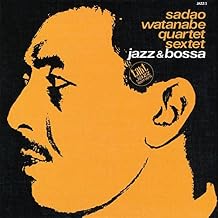
The 1970s confronted jazz musicians with a rapidly changing musical environment. Electric keyboards, amplified bass, funk rhythms, rock production and increasingly sophisticated recording technology were transforming the sound of the music, while the boundaries between jazz, popular song and instrumental pop became more permeable. For some critics, these developments produced a convenient opposition: acoustic jazz represented artistic seriousness, while fusion and more accessible studio recordings represented compromise. Sadao Watanabe’s career demonstrates how inadequate that distinction can be. His move toward electric textures and broader audiences did not erase the bebop foundation he had developed in Japan and Boston. It placed that foundation inside new rhythmic, melodic and production environments.
Watanabe entered the decade already unusually prepared for such movement. He understood American jazz from direct experience, had developed a lasting relationship with Brazilian music and had returned to a Japanese scene whose musicians and audiences were increasingly confident in their own place within international jazz culture. His alto sound was becoming more immediately identifiable, and his instinct for melody allowed him to communicate without simplifying his improvisational vocabulary into something anonymous. Rather than choosing between jazz traditions, Watanabe began constructing a career in which several approaches could coexist.
That flexibility would become one of his defining qualities. He could record music rooted in modern acoustic jazz and then move toward samba, electric fusion or highly polished studio arrangements without treating any one of those settings as his permanent identity. The continuity was not instrumentation. It was phrasing, melodic judgment and the ability to make the saxophone remain unmistakably central even when everything around it changed.
Iberian Waltz and the Acoustic Foundation
Before the polished productions that would define Watanabe’s international breakthrough, recordings such as Iberian Waltz demonstrated how strongly his music remained connected to modern jazz. The album belongs to an important period in which Japanese musicians were absorbing developments from American post-bop while increasingly establishing their own recording culture and compositional identities. Watanabe’s alto playing carried the speed and harmonic understanding of his bebop formation, but he was already less interested in demonstrating stylistic allegiance than in finding settings in which his melodic personality could emerge.
This is also where Charlie Mariano becomes relevant to Watanabe’s story. Mariano, an American alto saxophonist whose career would eventually extend through European and Asian musical environments, represented another model of jazz mobility. His presence within Watanabe’s musical orbit complicates any simple narrative of American influence flowing outward toward Japan. By this period, jazz musicians were increasingly moving in multiple directions, encountering one another through festivals, recordings and international collaborations. Japanese jazz was not merely receiving information from the United States; it was becoming one of the places where international musicians could meet.
That context is important because the second Jazz Latitude URL that once centered its identity on Watanabe, Mariano and Iberian Waltz exaggerated the idea into an artificial “East-West counterpoint.” The historical reality is richer. Watanabe did not need to represent Japan every time he played with an American musician, and Mariano did not represent an undifferentiated West. They were improvisers meeting inside a musical language both had already spent years studying and transforming.
The value of Iberian Waltz lies partly in showing that Watanabe’s later accessibility did not emerge from limited jazz credentials. It came from a musician with a substantial acoustic foundation who consciously chose to broaden his vocabulary.
My Dear Life and a Larger Stage
By the middle of the 1970s, Watanabe’s career was expanding rapidly. My Dear Life, released in 1977, became an important marker in that transition. The album brought him into contact with an international group of musicians and reflected the increasingly fluid relationship between Japanese jazz production and American studio culture. The scale of the arrangements was changing, but Watanabe’s alto remained the central narrative voice.
This is where his melodic instinct became commercially significant without becoming artistically trivial. Jazz criticism has often been suspicious of melodies that reveal themselves quickly, as though difficulty were evidence of seriousness. Watanabe’s playing suggests another possibility. A memorable melody can support sophisticated improvisation precisely because the listener has a clear point of orientation. The more direct the theme, the greater the contrast when the improviser begins to reshape it.
Watanabe understood this intuitively. His compositions and performances could welcome listeners before asking them to follow more complicated harmonic or rhythmic movement. This approach helped expand his audience in Japan at a moment when instrumental jazz was entering new relationships with radio, advertising, television and a growing consumer culture. It also prepared the ground for the album that would become one of the most recognizable landmarks of his career.
California Shower: Accessibility Without Apology
Released in 1978, California Shower marked a decisive expansion in Watanabe’s international profile. Produced by Dave Grusin and recorded with an exceptional group of American studio musicians, the album placed Watanabe inside the polished West Coast jazz-fusion environment of the period. The personnel included musicians whose careers crossed jazz, funk, pop and studio recording, and the production reflected a world in which instrumental sophistication and accessibility were no longer assumed to be incompatible.
The title track became closely associated with Watanabe and illustrates why his music could reach listeners who did not necessarily identify as jazz specialists. Its melodic shape is immediate. The groove is inviting. The arrangement creates space for the alto to remain lyrical rather than forcing every passage toward technical display. Yet Watanabe’s phrasing still carries the discipline of decades spent with jazz improvisation. He does not abandon his musical history when the setting becomes smoother.
Dave Grusin was an especially appropriate collaborator. As pianist, arranger, composer and producer, Grusin understood how to construct sophisticated music inside accessible forms. His later association with GRP Records would help define a major strand of polished contemporary jazz, but even before that label became central to the 1980s market, his work demonstrated an unusual sensitivity to orchestration and studio detail. With Watanabe, the production did not need to bury the saxophone under elaborate arrangements. It could frame it.
That distinction helps explain the album’s durability. California Shower is unmistakably a product of its era, but its strongest qualities are not dependent on nostalgia for late-1970s production. Watanabe’s melodic presence remains the reason the music has an identity.
Los Angeles as a Meeting Place
The American West Coast became important to Watanabe not because it replaced Tokyo as his musical home but because Los Angeles offered access to an extraordinary network of studio musicians. During the 1970s and 1980s, players such as Lee Ritenour, Harvey Mason, Dave Grusin and many others moved with unusual fluency between jazz sessions, film music, television, pop records and their own projects. The old boundary between a jazz musician and a studio musician was becoming increasingly difficult to maintain.
Watanabe fit naturally into this environment. He was technically accomplished, read music fluently, understood arranging and could improvise without requiring the entire production to be reorganized around a conventional jazz format. At the same time, his tone was distinctive enough to avoid disappearing into the polished anonymity that could affect studio-based instrumental music.
Working internationally also changed the meaning of “Japanese jazz.” Watanabe did not have to make every recording in Tokyo with Japanese musicians for his work to remain part of Japanese jazz history. His ability to move through Los Angeles studios while maintaining a career and audience centered strongly in Japan demonstrated that national jazz scenes could become international without dissolving.
The traffic moved in both directions. American musicians participated in Japanese projects. Japanese labels invested in ambitious recordings. Audiences in Japan developed deep knowledge of American and European jazz. Musicians moved through festivals and studios with increasing frequency.
Watanabe became one of the most visible figures inside this network.
Morning Island and the Confidence of Melody
Morning Island, released in 1979, continued the direction opened by California Shower while making Watanabe’s melodic identity even more central. The music occupies a space where jazz improvisation, Brazilian-inflected rhythm, funk and polished instrumental production can coexist without requiring a manifesto to justify the combination.
For listeners approaching Watanabe through his earlier bebop and post-bop work, albums from this period can initially sound like a dramatic change. The tempos may be relaxed, the arrangements brighter and the hooks more immediate. But the continuity becomes clearer when attention shifts from genre to phrasing. Watanabe still builds lines with a jazz musician’s understanding of harmonic movement. His articulation retains clarity. He knows how to leave space around a phrase and how to shape an improvisation toward a melodic destination rather than treating virtuosity as its own conclusion.
This ability became particularly important as smooth jazz would later emerge as a major commercial category. Watanabe is sometimes retrospectively placed inside that history because some of his recordings share its accessibility and production polish. Yet his development predates the consolidation of smooth jazz as a radio format, and his discography is far too broad to fit comfortably inside the label.
The more useful perspective is to see Morning Island as part of a period when jazz musicians around the world were exploring how instrumental music could address larger audiences without necessarily abandoning improvisation.
Watanabe found his own answer.
Brazil Never Disappeared
Even as American studio production became increasingly important, the Brazilian dimension of Watanabe’s language did not disappear. It remained one of the threads connecting different phases of his career. Samba and bossa nova had offered him rhythmic possibilities distinct from both bebop and funk, but their deeper influence could also be heard in his approach to melodic space.
Brazilian music taught generations of jazz musicians that rhythmic sophistication did not require constant density. A groove could be intricate while feeling relaxed. Harmony could be rich without becoming heavy. A melody could carry emotional complexity through understatement.
These qualities suited Watanabe particularly well. His alto could float over a Brazilian-derived rhythm without losing momentum, and his flute provided another timbral possibility for lighter arrangements. What might sound superficial in less sensitive hands became, for Watanabe, part of a musical relationship he had cultivated over years.
This is why describing him simply as a pioneer of “Japanese bossa nova” is limiting. Bossa nova was one chapter inside a much broader engagement with Brazilian music and international jazz. It influenced his rhythmic vocabulary and his sense of melodic presentation, but it did not replace his earlier language.
Watanabe accumulated musical experiences.
He rarely discarded them.
Orange Express and the Momentum of the 1980s
By the time Orange Express appeared in 1981, Watanabe had developed a recognizable approach to contemporary instrumental music. The record continued his movement through jazz-fusion, Brazilian influence and polished production while reinforcing the qualities that had made his late-1970s recordings successful. Rhythmic energy increased in places, but melody remained the center of gravity.
The early 1980s were particularly fertile for this kind of music. Digital recording technologies were beginning to alter studio practice, synthesizers were becoming more prominent, and jazz musicians were increasingly comfortable moving between acoustic and electric settings. At the same time, Japan’s economy and record industry supported ambitious production, creating opportunities for musicians whose projects could operate on an international scale.
Watanabe benefited from this environment, but describing his success simply as a product of economic conditions would underestimate the groundwork already completed. He had been a professional musician since the 1950s, had studied in Boston, built relationships in Brazil and the United States, and developed an audience through years of recording and performance.
The international success of the later albums was not sudden.
It was accumulated.
A Japanese Star Without Leaving Jazz Behind
Watanabe’s popularity in Japan eventually reached a level unusual for a jazz instrumentalist. His visibility extended beyond specialist clubs and record collectors, and he became a recognizable cultural figure. For purist criticism, such popularity can create suspicion. Once a jazz musician reaches listeners through accessible compositions, polished production or commercial media, the temptation is to imagine that something essential has been surrendered.
Watanabe’s career makes that judgment difficult to sustain because he never stopped moving between contexts. More accessible recordings did not prevent him from continuing to engage with improvisation, nor did success erase his earlier musical foundation. He could play a melodic fusion composition for a large audience and still approach the saxophone with the harmonic awareness formed through Parker, bebop and decades of jazz performance.
This ability to inhabit several musical economies at once became increasingly common among later generations, but Watanabe was doing it at a time when the cultural distance between Japanese jazz and the American industry was considerably greater.
His success therefore mattered beyond record sales.
It altered what seemed possible for a Japanese jazz musician.
The Problem With the Word Fusion
“Fusion” is useful because it identifies a historical period in which jazz interacted intensely with rock, funk, electronic instruments and studio production. But applied too broadly, it can erase differences between musicians whose work shared only a few surface characteristics.
Watanabe’s fusion period does not sound like Miles Davis’s electric bands, Weather Report, Return to Forever or the more aggressive jazz-rock emerging from Europe. Nor should it. His priorities were different. Melody often occupied a more central role, Brazilian influence remained significant, and the alto saxophone provided continuity through changing production environments.
His music from this period can therefore be understood less as participation in a single fusion genre than as a personal response to a larger historical opening. Jazz musicians had access to new sounds, new audiences and new forms of collaboration. Watanabe used those possibilities to enlarge his language rather than to declare a break with his past.
That is why the distinction between “serious Sadao” and “commercial Sadao” ultimately fails.
Both are the same musician making different choices.
Crossing Without Disappearing
By the middle of the 1980s, Watanabe had achieved something that would have seemed extraordinary when he first began playing jazz in postwar Japan. He had become an international recording artist while remaining deeply connected to Japanese musical life. He had worked with leading American musicians without becoming an imitation of an American saxophonist. He had developed a long relationship with Brazilian music without presenting himself as a Brazilian musician. His recordings could move toward popular accessibility without severing their relationship with improvisation.
The common phrase “bridging East and West” is too small for this history because Watanabe’s career was never a journey between two fixed worlds. It involved Japan, the United States and Brazil, but also an international jazz culture increasingly defined by movement among musicians, recordings, festivals and audiences.
Watanabe did not stand between those worlds.
He moved through them.
That mobility became one of his most important contributions. He demonstrated that musical identity could remain specific while becoming international, and that accessibility did not automatically require artistic anonymity.
The next stage of his career would test that principle across changing decades. Jazz markets would shift, smooth jazz would become a commercial category, younger generations of Japanese musicians would emerge, and Watanabe himself would move repeatedly between acoustic playing and contemporary production. What had begun as an international breakthrough was becoming something more difficult to achieve: longevity.
Buy Amazon
Longevity, Identity and the Meaning of an International Career
After the Breakthrough
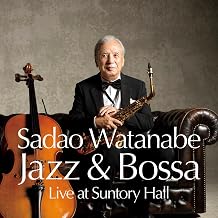
International success creates its own problem for a musician. The qualities that expand an audience can quickly become expectations, and expectations can become a formula. By the early 1980s, Sadao Watanabe had developed a recognizable position within contemporary instrumental music: lyrical alto saxophone, polished arrangements, strong melodies, Brazilian rhythmic influence and collaborations with musicians from the highest levels of American studio jazz. It would have been possible to remain inside that language indefinitely. Instead, the decades that followed demonstrated how little Watanabe was interested in allowing one successful period to define the entirety of his career. Electric production remained available to him, but so did acoustic jazz, small ensembles, Brazilian music and the bebop vocabulary from which he had begun.
This flexibility is essential to understanding his longevity. Watanabe’s discography is too broad to sustain a neat narrative of stylistic progression in which one phase permanently replaces another. His career behaves more like a conversation among recurring interests. Bebop never disappears simply because fusion enters the picture. Brazil does not vanish when he works with American studio musicians. Accessible melody does not prevent more demanding improvisation. Acoustic settings can return after highly produced recordings without being framed as a correction or return to artistic seriousness. Different approaches remain available because Watanabe accumulated languages rather than abandoning them.
That approach also explains why judging his career through a single album or decade is particularly misleading. Listeners who know him through California Shower encounter one important version of Watanabe. Those who begin with earlier Japanese jazz recordings hear another. Brazilian-oriented projects reveal still another dimension. The continuity is the musician himself: his alto tone, melodic instinct and improvisational discipline provide the thread through environments that can otherwise sound dramatically different.
The Alto as a Constant
Across those changes, the alto saxophone remained Watanabe’s most recognizable voice. His sound developed around qualities that were unusually well suited to stylistic mobility. It could be agile without becoming brittle, warm without losing definition and lyrical without becoming passive. The instrument could carry bebop lines, float over Brazilian rhythms or occupy the foreground of a polished contemporary arrangement without requiring a fundamental change of personality.
Tone is difficult to describe without falling into cliché because its significance lies partly in details that resist notation. Two saxophonists can play the same phrase at the same tempo and produce entirely different emotional effects through articulation, attack, vibrato, breath and placement. Watanabe’s identity resides in these choices as much as in the notes themselves. His playing often favors clarity. Phrases communicate their direction. Even when improvisation becomes technically active, the line tends to retain a melodic logic.
This characteristic helps explain his ability to reach audiences beyond committed jazz listeners. Watanabe does not require the listener to understand the harmonic mechanics behind a solo before the phrase can communicate. The technical foundation is present, but it supports expression rather than demanding recognition.
Such accessibility can be mistaken for simplicity. In reality, making an improvised line feel inevitable requires considerable control. The musician must know enough to avoid making knowledge the subject.
Watanabe learned that balance early and refined it for decades.
Returning to the Small Group
One of the most important correctives to the simplified image of Watanabe as a smooth fusion saxophonist is his repeated return to smaller and more explicitly jazz-centered settings. These recordings and performances reveal that the language acquired through bebop and modern jazz never became an artifact of his youth. It remained active.
The return to acoustic or less heavily produced settings should not be interpreted as Watanabe recovering authenticity after periods of commercial compromise. That narrative would reproduce the same false hierarchy that has distorted discussion of fusion for decades. Acoustic instrumentation does not automatically produce deeper music, just as electric production does not automatically produce superficial music.
What changes is the environment.
A smaller group exposes interaction differently. Without elaborate arrangements, the relationship among saxophone, rhythm section and harmonic instruments becomes more immediate. Watanabe’s phrasing has to create its own architecture, and his improvisational decisions become easier to hear. The result reminds listeners that the melodic directness of his popular recordings was built on an unusually durable jazz foundation.
That foundation allowed him to move back and forth rather than choosing one permanent identity.
Jazz as a Career Measured in Decades
Longevity in jazz is not simply a matter of surviving long enough to accumulate anniversaries. The music changes around the musician. Audiences change. Recording industries collapse and reorganize. Formats disappear. Festivals grow. New generations develop their own languages, and styles once considered modern become historical categories.
Watanabe’s professional life has passed through all of these transformations.
When he began playing, Charlie Parker was still a contemporary reference rather than a figure preserved inside jazz history. The LP was becoming the dominant recorded format. Japanese jazz musicians depended heavily on imported information and limited opportunities for direct contact with American players. By the time Watanabe became internationally established, jazz-rock and fusion had changed expectations surrounding instrumentation and production. Later, compact discs, digital recording, smooth jazz radio, the internet and streaming would each transform how instrumental music reached listeners.
Watanabe remained active through these changes without trying to disguise his age or chase every new development. This is perhaps one of the least spectacular but most meaningful aspects of his career. Adaptation does not require constant reinvention. Sometimes it means understanding which parts of one’s musical identity are flexible and which should remain intact.
For Watanabe, melody proved remarkably durable.
Japanese Jazz After Watanabe’s Generation
Watanabe’s historical position becomes clearer when placed within the extraordinary expansion of Japanese jazz after the 1950s. He belongs to a generation that included musicians who had to negotiate a particularly intense relationship with American jazz. Bebop and modern jazz arrived with enormous cultural authority, and early Japanese players were frequently judged according to how convincingly they could reproduce American models.
Over time, that framework became less useful. Japanese musicians developed distinct scenes, compositions, labels, clubs and recording practices. Artists including Toshiko Akiyoshi, Masabumi Kikuchi, Terumasa Hino and many others followed different paths through an increasingly confident musical culture. Later generations would make the very idea of a single Japanese jazz sound impossible to sustain.
Watanabe’s contribution to this history was not that he single-handedly created Japanese jazz or made it legitimate internationally. Such claims erase the musicians and institutions surrounding him. His importance lies in being one of the most visible examples of how far a Japanese jazz career could travel.
He studied in America but returned to Japan.
He collaborated internationally without permanently relocating his artistic identity abroad.
He achieved broad popularity without ceasing to function as an improvising musician.
For younger Japanese players, the existence of such a career expanded the range of imaginable possibilities.
Terumasa Hino and Parallel Paths
Trumpeter Terumasa Hino provides a useful comparison because his career demonstrates another way Japanese jazz became international. Like Watanabe, Hino developed deep connections with American jazz while maintaining a distinctive relationship with Japan. Yet their musical trajectories were not identical. Hino often pursued more overtly exploratory and hard-edged forms of modern jazz, while Watanabe became particularly associated with melody, Brazilian influence and accessible fusion.
The contrast is useful precisely because it prevents Japanese jazz from being reduced to a national style. Two musicians from the same broad generation could respond to international jazz culture in very different ways.
This diversity expanded dramatically in subsequent decades. Japanese jazz could encompass avant-garde improvisation, spiritual jazz, hard bop, fusion, big-band composition, free jazz and numerous relationships with popular music. The country’s extraordinary record culture also helped preserve and circulate recordings that sometimes received more sustained attention in Japan than in the countries where they had originated.
Watanabe’s career belongs within this larger ecosystem.
He was a central participant, not its solitary representative.
Brazil as a Lifelong Conversation
Brazilian music remained one of the most distinctive threads running through Watanabe’s work, and its persistence deserves emphasis because it separates genuine engagement from temporary fashion. The international bossa nova boom of the early 1960s generated countless recordings by musicians who adopted its surface characteristics for a few years and then moved elsewhere. Watanabe’s relationship lasted much longer.
Part of the reason was musical compatibility. Brazilian harmony and rhythm gave his melodic instincts a particularly natural environment. Samba could provide forward movement without forcing his alto into constant density. Bossa nova could create space without becoming static. Brazilian songwriting offered melodies sophisticated enough to support improvisation while remaining immediately communicative.
But the relationship also reflected Watanabe’s broader approach to international music. He did not appear interested in demonstrating cultural mastery over material from another tradition. His best Brazilian-influenced work feels conversational rather than possessive. He approaches the repertoire as a jazz musician who has spent years listening to and learning from another musical culture.
That humility matters.
Cross-cultural music becomes most convincing when curiosity survives familiarity.
Accessibility Reconsidered
Watanabe’s career offers a useful case study in the complicated relationship between jazz criticism and accessibility. Jazz history contains numerous musicians whose popularity produced suspicion among critics, particularly when recordings used polished production, strong melodic hooks or elements associated with contemporary popular music.
Some skepticism is justified. Commercial pressures can produce cautious music, just as artistic ambition can produce self-indulgence. Neither outcome belongs exclusively to any instrumentation or market.
The problem begins when accessibility itself becomes evidence against seriousness.
Watanabe repeatedly demonstrates that a musician can value communication without surrendering craft. His melodies often establish themselves quickly, but his improvisational vocabulary remains grounded in decades of jazz experience. The arrangements can be polished without reducing the saxophone to decoration. Brazilian rhythms can create warmth without functioning merely as lifestyle atmosphere.
The question should therefore not be whether a recording is accessible.
It should be what the musician does with that accessibility.
At his best, Watanabe uses it as an invitation.
Beyond the Smooth Jazz Label
The emergence of smooth jazz as a commercial radio format during the 1980s and 1990s created another retrospective problem for Watanabe’s catalog. Some of his polished instrumental recordings share obvious characteristics with music later grouped under that label: melodic saxophone, carefully produced rhythm sections and arrangements designed to flow without abrasive extremes.
But treating Watanabe primarily as a smooth jazz artist collapses a career that began decades before the category existed. His musical formation was bebop. His discography includes acoustic modern jazz, Brazilian projects, fusion and numerous configurations that resist the radio format’s conventions.
Chronology matters.
A musician cannot be adequately explained by a category that emerged after many of his defining choices had already been made.
More importantly, Watanabe’s continued movement among musical settings demonstrates that polished contemporary jazz was one option within his language rather than the language itself.
Labels can help listeners navigate a catalog.
They should not become cages.
The Educator Behind the Performer
Watanabe’s influence also extends beyond recordings. His visibility, professional example and long involvement in Japanese musical life contributed to an environment in which younger musicians could imagine jazz as a sustainable international practice. Education in this sense is broader than formal teaching. A career can itself become instructional.
For musicians growing up in Japan after Watanabe had already established himself internationally, several possibilities no longer needed to be hypothetical. A Japanese player could study abroad and return home rather than treating departure as permanent. International collaborators could participate in Japanese-led projects. Brazilian and American influences could be incorporated without erasing local identity. A jazz instrumentalist could reach a large domestic audience.
None of this means Watanabe created those possibilities alone. Japan’s economic growth, recording industry, clubs, festivals, educators and other musicians all contributed. But visible examples matter.
Watanabe was one of the most visible.
The Importance of Remaining Curious
A career extending across so many decades inevitably contains uneven periods. No serious assessment of Watanabe requires pretending that every recording is equally essential or that every production choice has aged perfectly. The point of examining his career historically is not to convert longevity into automatic greatness.
What deserves attention is the persistence of curiosity.
From bebop to Brazilian music, from Berklee to Japanese studios, from acoustic groups to Los Angeles session musicians and back toward smaller jazz settings, Watanabe repeatedly placed himself in situations where his established habits could encounter something different.
That willingness to move is particularly striking because success often encourages the opposite behavior. Once audiences recognize a sound, repeating it becomes professionally rational. Watanabe frequently maintained recognizable elements while changing the environment around them.
The saxophone remained.
The contexts moved.
Not East Meets West
Few phrases have been used more casually in writing about Asian jazz musicians than “East meets West.” It appears sophisticated because it acknowledges cultural exchange, but it often reduces enormous musical histories to two imaginary blocks. Sadao Watanabe’s career demonstrates why the phrase should be retired.
What exactly is the East in his music?
Postwar Japanese jazz? Japanese popular culture? The specific scene in Tokyo? His experience growing up in Utsunomiya?
And what is the West?
Charlie Parker’s bebop? Berklee? Brazilian samba? Los Angeles fusion? Dave Grusin’s arranging? American funk?
The categories collapse immediately.
Watanabe’s career is not interesting because he stood on a bridge between two civilizations. It is interesting because he became a musician in a period when jazz was increasingly capable of circulating through many cultural environments while retaining the improvisational principles that had made such circulation possible.
He participated in that movement from a specifically Japanese position.
The specificity should not be erased.
Neither should the movement.
What Sadao Watanabe Changed
It would be excessive to claim that Watanabe transformed the direction of jazz globally. The history of the music is too large and decentralized for such a statement. His contribution is more precise.
He helped normalize the idea of the Japanese jazz musician as an international artist rather than a regional interpreter of American music.
That change did not happen through argument.
It happened through work.
Record after record, tour after tour, collaboration after collaboration, Watanabe demonstrated that musical authority did not depend on birthplace. A saxophonist from Utsunomiya could study Charlie Parker, learn in Boston, engage deeply with Brazilian music, record with leading American musicians, return repeatedly to Japan and construct a career whose identity belonged to all of those experiences without being reducible to any one of them.
Later generations would travel through doors that musicians like Watanabe helped make easier to see.
A Sound That Traveled Without Losing Its Center
Sadao Watanabe’s story begins in a Japan emerging from war and reaches an era in which a Japanese jazz musician performing internationally requires no special explanation. The distance between those worlds is enormous.
His career crossed that distance gradually.
There was no single revolutionary album that changed everything. No moment when Japanese jazz suddenly became international because one musician had arrived. The transformation occurred through accumulated relationships: musicians learning from records, clubs supporting performances, students traveling abroad, foreign players visiting Japan, labels recording increasingly ambitious projects and audiences developing sophisticated relationships with jazz from around the world.
Watanabe became one of the clearest human threads running through that history.
His bebop foundation gave him a language.
Berklee expanded its architecture.
Brazil changed his relationship with rhythm and melodic space.
The international studio world expanded his audience.
Japan remained the center from which those experiences could be understood as a career rather than a collection of influences.
And through every change, the alto saxophone carried the continuity.
That may ultimately be the most useful way to understand Sadao Watanabe. Not as the musician who fused East and West, not merely as a pioneer of Japanese bossa nova, not as a fusion star and not as a smooth-jazz saxophonist.
He is a jazz musician whose career demonstrates what can happen when a strong musical identity is allowed to travel.
The world around the sound changed repeatedly.
The sound kept finding its way home.