Latest posts
-
Echoes in the Jungle: The Mystical Groove of the Borneo Jazz Festival
The Jungle Transformation: From Oil Town to Global Sonic Sanctuary To truly chart the outer limits of The Jazz Compass, one must look beyond traditional concrete jungles and head straight into the rainforest. Launched in 2006 in the coastal city of Miri, Sarawak, on the legendary island of Borneo, the Borneo Jazz Festival began as…
-
The Celtic Big Band Vanguard: The Scottish National Jazz Orchestra and the Art of Transatlantic Swing
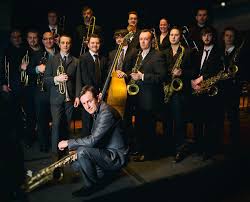
The Edinburgh Laboratories and Tommy Smith’s Grand Vision To fully appreciate the magnificent sonic architecture of the Scottish National Jazz Orchestra (SNJO), one must travel back to 1995. It was then that Scotland’s premier jazz icon, saxofonist and composer Tommy Smith, envisioned a world-class national ensemble that could stand shoulder-to-shoulder with the elite big bands…
-
The Ten Strings of Genius: Hamilton de Holanda and the Modern Mandolin Revolution
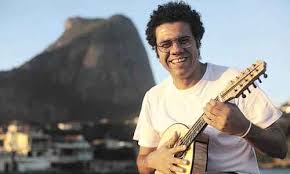
The Brasília Prodigy and the Birth of the 10-String Monster To truly comprehend the global explosion of Hamilton de Holanda, you have to picture an artist who looked at a traditional, deep-rooted acoustic instrument and decided to completely alter its physical architecture. Raised in the modernist landscape of Brasília, Hamilton was a child prodigy who…
-
The Snap-Crackle Paradigm: Roy Haynes and the Eternal Youth of the Jazz Drum Kit
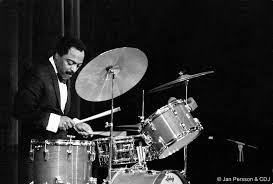
The Boston Dandy and the Birth of the Modern Sharp Beat To truly comprehend the staggering longevity and stylistic impact of Roy Haynes, you have to picture an artist who was already a star in the late 1940s and somehow remained the most modern-sounding drummer on the planet well into the 21st century. Born in…
-
The Blueprint of the Groove: Paul Chambers and the Absolute Pulse of Jazz
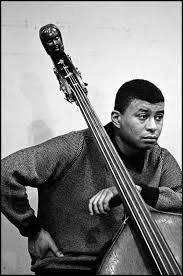
The Foundations of Miles and the Iconic Awakening of “So What” To understand the very DNA of modern jazz rhythm, one must study the foundational stance of Paul Chambers. Arriving in New York from Detroit in the mid-1950s, Chambers possessed a time-keeping ability so structurally flawless and a beat so deeply anchored that he became…
-
School Days and Thunder Riffs: Stanley Clarke and the Golden Age of Fusion
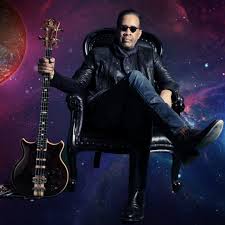
The Philadelphia Titan and the Return to Forever Explosion To comprehend the tectonic shift that Stanley Clarke brought to modern music, you have to imagine the bass player being completely liberated from the back row of the band. Born in Philadelphia and classically trained on the acoustic double bass, Clarke arrived in New York with…
-
The Cool Dissident: Lee Konitz and the Linear Genius of the Alto Saxophone
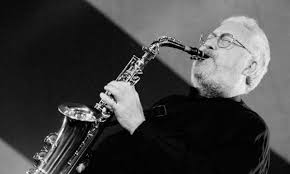
The Chicago Dissident and the Birth of the Cool To truly measure the immense artistic spine of Lee Konitz, you have to imagine a young man standing in the middle of 1940s New York, completely surrounded by the overwhelming sonic explosion of Charlie “Bird” Parker, and choosing not to follow him. Under the rigorous, quasi-mathematical…
-
From Ipanema to Manhattan: Eliane Elias and the Perfect Bossa-Jazz Alchemy
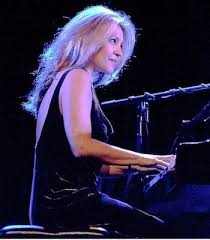
The São Paulo Prodigy and the New York Conquest To fully understand the global stature of Eliane Elias, one must visualize a young classical piano prodigy soaking up the complex harmonic language of Tom Jobim and João Gilberto in São Paulo, only to land in the fierce, competitive jazz arena of New York City in…
-
Drums of Freedom: Max Roach and the Weaponization of the Bebop Groove
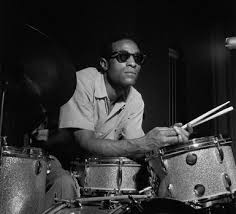
The Bebop Revolution and the Liberation of the Drum Kit To truly understand the modern drum kit, you have to look at the landscape before and after Max Roach. Emerging from Brooklyn in the early 1940s, a teenage Roach stepped directly into the smoky after-hours laboratories of Minton’s Playhouse, matching wits with Charlie Parker and…