
The Forgotten Visionaries of European Jazz Fusion
The story of jazz fusion is usually told through a familiar cast of American innovators. Miles Davis shattered convention with Bitches Brew. Weather Report transformed ensemble improvisation into atmospheric exploration. Return to Forever fused Latin rhythms with dazzling virtuosity, while the Mahavishnu Orchestra pushed electric jazz toward almost supernatural intensity. Yet, at precisely the same historical moment, another revolution was taking place across the Atlantic. In Belgium, a remarkably original collective called Placebo was quietly developing a musical language that combined jazz, funk, electronic experimentation, minimalist repetition and psychedelic atmosphere in ways that still sound startlingly modern more than fifty years later.
Unlike many European ensembles of the early 1970s, Placebo never attempted to become a continental version of an American fusion band.
Nor did it embrace the radical abstraction associated with free jazz.
Instead, the group occupied an extraordinary middle ground.
Its music grooved.
It experimented.
It improvised.
It embraced technology.
Most importantly, it possessed a distinctive artistic identity that belonged entirely to Europe.
Today, listeners discovering Placebo for the first time are often surprised by how contemporary its recordings feel.
That impression is no accident.
Many of the ideas now associated with nu-jazz, broken beat, electronic jazz and cinematic groove music were already present within Placebo’s remarkable catalogue decades before those movements acquired names.
Marc Moulin: The Architect of a New Sound
At the center of Placebo stood pianist, keyboardist, composer and broadcaster Marc Moulin, one of the most original musical thinkers Belgium has ever produced.
Moulin never viewed jazz as a fixed tradition.
He saw it as an evolving system capable of absorbing new technologies, rhythmic concepts and cultural influences without losing its improvisational spirit.
Unlike many pianists trained primarily within acoustic jazz, he embraced electric keyboards with genuine enthusiasm.
Fender Rhodes.
Clavinet.
Early synthesizers.
Electronic effects.
These instruments became creative tools rather than fashionable accessories.
His approach anticipated the increasingly important relationship between jazz and electronic music that would flourish decades later.
Belgium’s Unexpected Jazz Renaissance
Although Belgium occupies a relatively small geographical space, its contribution to modern jazz has been remarkably significant.
The country produced extraordinary instrumentalists.
Important festivals.
Innovative broadcasters.
Independent record labels willing to support adventurous music.
By the late 1960s, Belgian musicians found themselves at the crossroads of several artistic traditions.
French modernism.
Dutch experimentation.
British progressive rock.
American jazz.
Rather than choosing one direction, many artists explored all of them simultaneously.
Placebo emerged naturally from this unusually fertile environment.
Its music reflected a Europe becoming increasingly interconnected artistically long before political integration transformed the continent.
JazzLatitude Insight
Placebo understood something many fusion bands overlooked. Technology does not make music modern. Curiosity does. The group’s electronic instruments mattered because they expanded imagination rather than replacing musicianship.
Beyond Jazz-Rock
The expression jazz-rock frequently appears in discussions of Placebo.
While technically accurate, the description barely captures the group’s remarkable originality.
Rock contributed rhythmic energy.
Jazz supplied harmonic sophistication.
Funk introduced irresistible groove.
Electronic textures expanded sonic possibilities.
Minimalist repetition generated hypnotic momentum.
Rather than combining separate genres mechanically, Placebo created an entirely new musical environment in which stylistic boundaries gradually disappeared.
The ensemble sounded neither American nor traditionally European.
It sounded unmistakably like itself.
A Collective Rather Than a Band
Although Marc Moulin served as the ensemble’s principal composer and artistic guide, Placebo functioned through remarkable collective interaction.
Every musician contributed actively to the evolving musical landscape.
Bass lines shaped composition.
Drums suggested structural change.
Keyboards alternated between harmony and rhythm.
Improvisation emerged collectively rather than according to predetermined solo sequences.
This democratic approach distinguished Placebo from many contemporary fusion groups centered primarily around virtuoso individualists.
Listening became as important as performance.
The First Recordings
Placebo’s early albums immediately announced an ensemble unwilling to follow established formulas.
Extended grooves unfolded patiently.
Themes emerged gradually.
Electronic keyboards blended seamlessly with acoustic instruments.
Improvisation remained central while composition provided clear architectural direction.
The music avoided unnecessary complexity without sacrificing sophistication.
Listeners encountered an ensemble more interested in atmosphere than spectacle.
That artistic confidence would become one of Placebo’s defining characteristics throughout its career.
Toward a New European Modernity
By the middle of the 1970s, Placebo had established itself as one of the most adventurous voices in European jazz.
Its finest recordings still lay ahead.
The albums that followed would reveal an extraordinary ability to anticipate musical developments that would not become widely recognized until decades later.
What began as an experimental Belgian ensemble was quietly becoming one of the most visionary groups in the history of European jazz fusion.
Buy Amazon
Ball of Eyes: A Blueprint for the Future
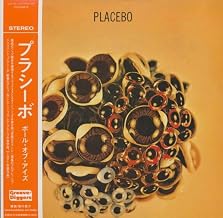
When Ball of Eyes appeared in 1971, it immediately distinguished itself from nearly everything happening in European jazz. The album did not announce its originality through explosive virtuosity or radical abstraction. Instead, it unfolded with remarkable patience. Grooves developed gradually, harmonies shifted almost imperceptibly and electronic keyboards blended into the ensemble so naturally that listeners often forgot they were hearing one of the earliest truly modern fusion recordings in Europe.
Listening today is an uncanny experience.
Much of the music sounds less like a product of the early 1970s than an anticipation of the twenty-first century.
Acid jazz.
Broken beat.
Nu-jazz.
Cinematic funk.
Electronic jazz.
All seem strangely foreshadowed within these performances.
What makes Ball of Eyes extraordinary is not merely its innovation, but the quiet confidence with which those innovations are presented.
Nothing feels experimental for its own sake.
Everything serves the musical narrative.
Marc Moulin’s Harmonic Imagination
Unlike many keyboard players of the fusion era, Marc Moulin rarely approached harmony as an opportunity for technical exhibition.
His voicings were economical.
Often deceptively simple.
Yet beneath that apparent restraint lay remarkable sophistication.
Rather than filling every available space, Moulin allowed harmony to breathe.
Repeated chords acquired new meaning through subtle rhythmic displacement.
Small harmonic movements generated enormous emotional impact.
This approach reflected influences ranging from modern jazz pianists to European classical minimalism.
The result was music that rewarded repeated listening.
Each return revealed another hidden layer.
JazzLatitude Insight
Marc Moulin demonstrated that sophistication does not always come from harmonic complexity. Sometimes the most powerful musical idea is a single chord repeated with enough imagination to transform everything surrounding it.
Rhythm Before Virtuosity
Many fusion groups of the 1970s built their reputations upon astonishing technical ability.
Placebo certainly possessed exceptional musicians.
Yet technical brilliance never became the primary objective.
Groove came first.
The rhythm section developed hypnotic momentum without becoming repetitive.
Bass lines rarely functioned as simple accompaniment.
Instead, they became melodic foundations around which keyboards and horns could evolve.
Drumming emphasized subtle interaction rather than relentless intensity.
Every rhythm felt alive.
Constantly shifting.
Never static.
This remarkable rhythmic intelligence explains why Placebo’s recordings continue attracting listeners from jazz, funk and electronic music alike.
The Self-Titled Placebo
The ensemble’s self-titled album, released in 1973, marked another major artistic milestone.
Compared with earlier work, the compositions became even more focused.
Improvisation remained central.
Yet every piece displayed stronger structural architecture.
Electronic keyboards assumed greater prominence.
The ensemble sounded increasingly confident in its own identity.
Rather than exploring possibilities, Placebo now seemed fully aware of its artistic direction.
The recording also revealed Marc Moulin’s growing mastery as an arranger.
Textures entered naturally.
Dynamics unfolded patiently.
Nothing appeared accidental.
Every detail contributed to a remarkably cohesive listening experience.
Electronics Without Excess
One of Placebo’s greatest achievements lies in its remarkably mature use of electronic instruments.
During the early 1970s, synthesizers often attracted attention simply because they were new.
Many musicians employed them as spectacular effects.
Moulin adopted another philosophy.
Technology should expand expression.
Not replace it.
Electric keyboards blend seamlessly into acoustic textures.
Synthesizers enrich harmonic color without overwhelming ensemble interaction.
Even decades later, the electronic elements rarely sound dated.
Instead, they feel surprisingly organic.
This timeless quality distinguishes Placebo from many contemporaries whose fascination with technology ultimately overshadowed musical substance.
Atmosphere as Composition
Listening carefully to Placebo reveals another remarkable characteristic.
Silence matters.
Space matters.
Mood matters.
Many compositions unfold almost cinematically.
Rather than moving rapidly from solo to solo, the music develops through atmosphere.
Textures accumulate gradually.
Small rhythmic variations alter emotional direction.
Improvisation becomes part of the environment rather than standing apart from it.
This cinematic sensibility would later become one of the defining characteristics of European jazz during the ECM era, although Placebo arrived at many similar conclusions independently.
The Rediscovery
For many years, Placebo remained something of a secret shared among devoted collectors.
Original vinyl editions became highly sought after.
Jazz enthusiasts recommended the records quietly to one another.
Then something unexpected happened.
A new generation discovered the music.
Hip-hop producers sampled the grooves.
Electronic musicians admired the harmonic language.
Acid jazz DJs introduced the recordings to younger audiences.
Collectors searching for forgotten European fusion masterpieces placed Placebo near the top of their lists.
Rather than fading into history, the group’s reputation steadily expanded.
Its music had simply arrived several decades too early.
Why Modern Listeners Connect So Easily
One reason Placebo feels unusually contemporary is that modern audiences have become comfortable with stylistic hybridity.
Today’s listeners move effortlessly between jazz.
Electronic music.
Soul.
Hip-hop.
Ambient music.
Progressive rock.
Placebo anticipated exactly this kind of listening.
Its recordings never insist upon stylistic purity.
Instead, they invite curiosity.
The music welcomes multiple interpretations without losing its coherence.
That openness explains why each new generation seems to rediscover the ensemble with genuine excitement.
Essential Albums
For listeners discovering Placebo for the first time, these recordings provide the ideal introduction to one of Europe’s most visionary jazz collectives.
- Ball of Eyes (1971) — The groundbreaking debut that established Placebo’s unique blend of jazz, funk, electronics and minimalist atmosphere.
- Placebo (1973) — A mature artistic statement that refined the group’s compositional architecture while expanding its electronic palette.
- 1973 (recordings from the same creative period) — Sessions that capture the ensemble at the height of its exploratory confidence and rhythmic sophistication.
- Later archival releases and live recordings — Valuable documents illustrating the group’s remarkable improvisational chemistry and the evolution of Marc Moulin’s compositional thinking.
Together, these recordings document a collective whose influence has grown steadily with time, proving that genuine innovation is often recognized long after it first appears.
The Band That Predicted the Sound of Modern Europe
Few ensembles in the history of European jazz have been rediscovered as dramatically as Placebo. During its original lifetime, the Belgian collective earned the admiration of adventurous listeners, musicians and critics, yet it never achieved the international visibility enjoyed by Weather Report, Soft Machine or Return to Forever. Decades later, however, a remarkable reversal began to take place. Record collectors, jazz historians, electronic producers and younger musicians started uncovering Marc Moulin’s extraordinary catalogue, recognizing that many of the ideas associated with modern nu-jazz, acid jazz and electronic improvisation had already been explored by Placebo during the early 1970s.
This delayed recognition says something important about genuinely visionary music.
It often arrives before audiences possess the vocabulary necessary to describe it.
Placebo did not become more modern over time.
The rest of the musical world gradually caught up.
Beyond Fusion
Although Placebo is frequently classified as a jazz fusion ensemble, the label ultimately proves too narrow.
Fusion generally implies the combination of jazz and another identifiable genre.
Rock.
Funk.
Latin music.
Placebo certainly embraced all of these influences.
Yet the collective pursued something more subtle.
It fused methods of listening.
Improvisation remained central.
Minimalist repetition shaped musical architecture.
Electronic instruments expanded color rather than dominating texture.
Composition and groove developed simultaneously.
The resulting music cannot be reduced to stylistic mathematics.
Its originality emerges from the way every element interacts with every other.
JazzLatitude Insight
Placebo reminds us that innovation is not always loud. Sometimes the most revolutionary musicians are those who quietly change the way rhythm breathes, harmony unfolds and technology serves human expression.
Marc Moulin’s Enduring Legacy
Marc Moulin’s influence extends far beyond the recordings he made with Placebo.
As a composer, keyboardist, producer, broadcaster and later solo artist, he became one of Belgium’s most significant musical figures.
His artistic philosophy anticipated many developments that would later reshape European jazz.
Electronic instruments as equal creative partners.
Groove without commercial compromise.
Minimal harmonic gestures carrying profound emotional weight.
Patient musical development instead of constant virtuosic display.
These ideas continue resonating through contemporary jazz, electronic music and cinematic composition.
Many musicians who have never consciously studied Moulin nevertheless work within artistic territory he helped establish.
A Quiet Influence on Electronic Jazz
One of Placebo’s most fascinating achievements lies in its indirect influence.
The ensemble did not inspire a large number of immediate imitators.
Instead, its recordings quietly circulated among adventurous listeners for decades.
As electronic music matured during the 1980s and 1990s, producers increasingly searched for forgotten jazz recordings whose rhythmic sophistication differed from traditional swing.
Placebo proved an extraordinary discovery.
Its grooves felt modern.
Its harmonies remained sophisticated.
Its production retained remarkable clarity.
Hip-hop producers sampled passages.
Acid jazz DJs championed the albums.
Collectors elevated original pressings to legendary status.
A new audience emerged almost half a century after the music had first been recorded.
Belgium’s Lasting Contribution to Jazz
Placebo also occupies an important place within the broader history of Belgian jazz.
Although Belgium rarely receives the international attention granted to France, Germany or the Scandinavian countries, its musicians have repeatedly demonstrated remarkable originality.
The country’s central geographical position encouraged artistic exchange.
French lyricism.
Dutch experimentation.
British progressive influences.
American jazz.
These traditions intersected naturally within Belgian musical life.
Placebo became perhaps the clearest expression of that uniquely cosmopolitan environment.
Its recordings reveal a Europe whose cultural borders were already dissolving through music long before political integration accelerated.
Essential Collaborations and Artistic Connections
Placebo’s remarkable artistic evolution was shaped by musicians whose creative curiosity matched Marc Moulin’s visionary outlook.
Among the most significant are:
- Marc Moulin — Pianist, keyboardist, composer and conceptual leader, Moulin established Placebo’s unique synthesis of jazz improvisation, electronic sound and minimalist groove.
- Richard Rousselet — The Belgian trumpeter brought lyrical precision and modern harmonic sensitivity, helping define the ensemble’s unmistakable melodic character.
- Nic Thys — His sophisticated bass playing provided much more than rhythmic support, becoming an essential melodic and structural element within Placebo’s music.
- The emerging European fusion movement — While maintaining its own identity, Placebo shared an artistic dialogue with groups exploring new possibilities in jazz, progressive rock and electronic composition across the continent.
- Later generations of electronic and acid jazz musicians — Although often indirectly, Placebo’s recordings influenced producers, DJs and improvisers who rediscovered the ensemble’s remarkable rhythmic and harmonic imagination decades after its original recordings.
Together, these connections reveal that Placebo’s importance extends far beyond its relatively small catalogue, reaching into the broader evolution of contemporary European music.
Technical Profile
Founded:
- 1971
Origin:
- Brussels, Belgium
Founder:
- Marc Moulin
Principal Members (classic period):
- Marc Moulin
- Richard Rousselet
- Nic Thys
- Freddie Deronde
- Tony Levin (Belgian drummer, not the later King Crimson bassist)
Primary Styles:
- Jazz Fusion
- Jazz-Funk
- European Jazz
- Electronic Jazz
- Progressive Jazz
- Avant-Groove
Musical Characteristics:
- Electric keyboards
- Hypnotic grooves
- Minimalist harmonic development
- Collective improvisation
- Cinematic atmosphere
- Sophisticated rhythmic interplay
Essential Albums:
- Ball of Eyes (1971)
- Placebo (1973)
- 1973 (later compilation of recordings from the classic period)
Five Lesser-Known Facts About Placebo
1. The band has no connection to the British alternative rock group of the same name.
Nearly twenty-five years before the famous British rock band adopted the name, Marc Moulin’s Placebo had already become one of Europe’s most innovative jazz collectives.
2. Marc Moulin was also a respected radio broadcaster.
His work outside performance helped introduce adventurous jazz and contemporary music to Belgian audiences, reinforcing his influence beyond the recording studio.
3. Placebo’s albums became prized collector’s items.
Original vinyl pressings are now highly sought after, reflecting the group’s growing reputation among jazz historians and record collectors.
4. Hip-hop and electronic producers helped revive the band’s legacy.
Samples and rediscoveries during the 1990s and 2000s introduced Placebo to audiences who had never previously explored European jazz fusion.
5. Much of the band’s music sounds remarkably contemporary.
Its combination of minimalist repetition, sophisticated groove and electronic textures anticipated musical developments that would not become widespread for several decades.
Frequently Asked Questions
What was Placebo?
Placebo was a Belgian jazz fusion collective founded by Marc Moulin in 1971. The group became one of Europe’s most innovative ensembles by blending jazz improvisation, funk grooves, electronic keyboards and minimalist compositional ideas.
Why is Placebo important?
The band anticipated many developments in contemporary jazz and electronic music, creating recordings that influenced later generations of acid jazz, nu-jazz and hip-hop producers while helping define a distinctly European approach to fusion.
What is Placebo’s best album?
Many critics consider Ball of Eyes the group’s masterpiece, although the self-titled Placebo album is equally essential for understanding the ensemble’s mature artistic identity.
Was Placebo influenced by Miles Davis?
Indirectly, yes. Like many fusion groups of the early 1970s, Placebo drew inspiration from the possibilities opened by Miles Davis’s electric period, but it developed a far more minimalist, groove-oriented and distinctly European musical language.
Which artists are similar to Placebo?
Listeners who enjoy Placebo often explore Nucleus, Soft Machine, Embryo, Association P.C., Weather Report, United Jazz + Rock Ensemble, The Crusaders, Brian Auger’s Oblivion Express, Eberhard Weber and Nik Bärtsch’s Ronin, all of whom reflect different aspects of groove-based improvisation, European fusion and sophisticated ensemble interaction.
JazzLatitude Rating
| Category | Rating |
|---|---|
| Compositional Originality | ★★★★★ |
| Groove | ★★★★★ |
| Electronic Innovation | ★★★★★ |
| Ensemble Interaction | ★★★★★ |
| European Jazz Identity | ★★★★★ |
| Historical Importance | ★★★★★ |
| Replay Value | ★★★★★ |
| Rediscovery Value | ★★★★★ |
| JazzLatitude Essential | ★★★★★ |
Final Thoughts
Placebo stands as one of the most remarkable examples of how genuine artistic innovation can remain hidden in plain sight. While many of the best-known fusion groups of the 1970s achieved international acclaim through dazzling virtuosity or commercial visibility, Marc Moulin and his collaborators quietly pursued a different vision. Their music explored groove without sacrificing subtlety, embraced electronics without abandoning human interaction and treated improvisation as an extension of composition rather than a separate event. The result was a catalogue whose influence would become fully apparent only decades later.
Listening to Placebo today reveals just how far ahead of its time the ensemble truly was. The spacious arrangements, hypnotic rhythmic cycles, restrained harmonic language and imaginative use of electric keyboards anticipate countless developments in contemporary jazz and electronic music. Rather than sounding like a historical curiosity, albums such as Ball of Eyes feel astonishingly fresh, speaking naturally to listeners accustomed to moving between jazz, ambient music, hip-hop, electronic production and cinematic sound design.
Marc Moulin’s artistic philosophy also remains profoundly relevant. He understood that technology is meaningful only when it expands musical imagination rather than replacing it. His keyboards never overwhelm the ensemble. They converse with it. Every groove invites careful listening. Every repetition introduces subtle transformation. The music rewards patience, revealing new details with each return. That quality explains why Placebo continues attracting devoted listeners more than fifty years after its founding.
Perhaps the greatest measure of Placebo’s achievement is that it no longer feels like a forgotten band waiting to be rediscovered. It feels like an essential chapter in the story of European jazz that was simply recognized later than it deserved. Its recordings remind us that history often celebrates pioneers only after the world has learned to hear what they were already saying.
For anyone seeking to understand the evolution of European jazz fusion, electronic improvisation and groove-based modern jazz, Placebo is far more than an outstanding Belgian ensemble.
It is one of the quiet masterpieces of twentieth-century jazz and one of the clearest demonstrations that the future of the music was being imagined in many places at once.