
Pierre Courbois and the Birth of Association P.C.
At the end of the 1960s, the boundary between jazz and rock was becoming increasingly difficult to defend. Electric instruments were changing the physical character of ensembles, amplification was altering the relationship between soloists and rhythm sections, and musicians on both sides of the Atlantic were questioning assumptions about form, improvisation and the role of rhythm. In Europe, however, this transformation did not simply reproduce developments taking place in the United States. Musicians in Amsterdam, Berlin, London, Paris and other centers were working within their own networks, shaped by free improvisation, modern jazz, experimental composition and the increasingly international festival circuit. Association P.C. emerged from that environment. Formed around Dutch drummer Pierre Courbois with keyboardist Jasper van ’t Hof, German guitarist Toto Blanke and a changing bass chair initially occupied by Peter Krijnen and Siggi Busch, the group developed a language in which jazz improvisation and electric sound could coexist without one becoming an accessory to the other. Their importance lies precisely in that independence. Association P.C. did not need to become a European version of an American fusion band because its members were already constructing something from the musical conditions around them.
Pierre Courbois Before Association P.C.
Pierre Courbois was particularly well prepared for a period in which categories were becoming unstable. Born in Nijmegen in 1940, he had emerged during a decade when European jazz musicians were increasingly able to develop careers that did not depend entirely on reproducing American models. Courbois played with figures including Eric Dolphy and became deeply involved with the European free-jazz movement, working in settings where improvisation could determine the structure of a performance rather than merely decorate a predetermined harmonic sequence. His experience with the Free Music Quartet and other experimental contexts placed him close to a generation that was testing how far collective improvisation could move beyond conventional song forms.
Yet Courbois was not interested in making freedom itself into a doctrine. The emergence of rock offered another set of possibilities. Electric instruments produced different densities and different relationships with rhythm, while the growing power of amplification allowed small groups to generate an intensity that acoustic jazz ensembles approached differently. For a drummer, these changes were especially significant. Rock had placed rhythm at the physical center of popular music, but Courbois had no reason to abandon the flexibility he valued in jazz in order to use that energy. The challenge was to combine the two without reducing improvisation to solos played over a rock beat.
The beginnings of Association P.C. were remarkably practical. Courbois later recalled that Jasper van ’t Hof came to see him, the two began playing together and subsequently bought a Fender piano in The Hague. Van ’t Hof knew guitarist Toto Blanke, while Courbois knew bassist Peter Krijnen. What eventually became one of the distinctive European jazz-rock groups of the early 1970s therefore grew less from a manifesto than from musicians discovering that their interests could function together. The instrumentation itself suggested a direction: drums, electric piano, electric guitar and bass created an ensemble capable of considerable volume and tonal variation, but without a horn player automatically occupying the foreground. That absence would become important. Association P.C. was not organized around a star soloist supported by an electric rhythm section; its identity depended on the interaction of four instrumental roles whose importance could change continuously.
Jasper van ’t Hof and the Electric Piano
Jasper van ’t Hof was still very young when Association P.C. began, but his electric piano became one of the defining elements of the group’s early sound. The instrument was more than a substitute for an acoustic piano. Its amplified tone could exist beside Blanke’s guitar without disappearing, and it allowed van ’t Hof to move between harmonic support, rhythmic figures, melodic lines and textures that approached the function of an additional percussion instrument. In a band committed to improvisation, this flexibility was invaluable.
Van ’t Hof had encountered Courbois through the Dutch jazz circuit, and Association P.C. became the group through which he first gained substantial international recognition. His playing helped prevent the ensemble’s electric character from becoming synonymous with heaviness. Chords could be used sparingly, repeated figures could establish momentum, and open passages could leave harmony deliberately unresolved. The electric piano provided color without requiring the music to remain harmonically crowded.
Toto Blanke offered a complementary approach on guitar. Born in Germany, Blanke was capable of using the instrument as both a melodic and textural voice. The guitar could carry lines with the directness associated with rock, but it could also interact with van ’t Hof in passages where neither instrument behaved as conventional accompaniment. Rather than dividing the ensemble neatly into soloists and rhythm section, Association P.C. allowed functions to circulate. Blanke might establish a riff that temporarily organized the music, then abandon it as the piano or drums redirected the performance. Van ’t Hof could move from chords into single-note lines while Courbois treated the drum kit as an active participant in the improvisation rather than a fixed metrical foundation.
This mobility became one of the group’s central characteristics. It also explains why the music can sound different from the more tightly arranged forms of fusion that became internationally prominent during the same period. Association P.C. was certainly interested in groove, but groove did not necessarily mean repetition without disruption. A rhythmic idea could establish itself and then be questioned from inside the ensemble. The musicians could move toward freer interaction without treating freedom and pulse as opposing choices.
A Band Between Countries
Association P.C. was European not because it represented a unified European style but because its existence depended on a musical network that crossed national borders. Courbois and van ’t Hof were Dutch; Blanke and Siggi Busch were German. The group operated extensively in Germany and elsewhere on the continental circuit, and Courbois later remembered touring internationally to such an extent that there was little time for other projects. Equipment and the band’s vehicle were based in Paderborn, providing a practical center from which the musicians could travel.
This geography matters. Jazz histories built primarily around records released in the United States can make European developments appear peripheral, as though musicians were waiting for innovations to arrive from New York. The reality was more complicated. European players were certainly listening to American jazz, and the revolutionary electric recordings associated with Miles Davis had enormous international impact, but they were also responding to local free-jazz movements, European experimental traditions and the rapidly developing rock scenes surrounding them. Association P.C. occupied the intersection rather than choosing one side.
That position also makes the label “krautrock” only partially useful. The group shared stages, audiences and certain sonic possibilities with the experimental German rock world, and Blanke and Busch strengthened its connections with Germany. Yet Association P.C. remained fundamentally an improvising ensemble whose musicians came from jazz. Its electric instrumentation could resemble progressive rock from a distance, but the internal logic of the performances was different. Instead of constructing extended compositions primarily through arranged sections, the band often allowed improvisational decisions to reshape the architecture in real time. The electricity changed the sound; it did not remove the jazz principle of collective response.
Earwax
The first substantial document of this language was Earwax, recorded in Wageningen on October 30 and 31, 1970. The album captures Courbois on drums, van ’t Hof on electric piano and Blanke on guitar, with Siggi Busch playing bass on the first side and Peter Krijnen on the second. That split bass personnel itself reflects the still-fluid character of the band’s early formation. The six pieces include compositions credited individually to Blanke, Courbois and van ’t Hof as well as collective writing, reinforcing the idea that Association P.C. was never designed merely as Courbois’s backing group despite the drummer’s central role in its creation.
“Spider,” written by Blanke, immediately demonstrates why guitar mattered so much to the ensemble. The instrument provides an electric edge, but the surrounding performance does not settle into a conventional rock arrangement. Courbois keeps the rhythmic environment mobile, while van ’t Hof’s electric piano occupies the territory between harmony and counterpoint. On longer pieces such as “Hit the P. Tit” and the title track, the musicians have enough room to move beyond concise themes and expose the mechanisms of the band: one player introduces an idea, another changes its implication, and the rhythm can tighten or loosen according to what develops.
“Round A’bout Nine,” jointly credited to van ’t Hof, Krijnen, Courbois and Blanke, is particularly revealing because the collective credit corresponds to the band’s broader philosophy. Association P.C.’s identity was not based simply on distinctive compositions followed by conventional solos. The ensemble itself was part of the compositional process. Interaction determined how long an idea survived and whether it developed toward groove, abstraction or another theme.
For listeners approaching Earwax decades later, it can be tempting to hear the record retrospectively through the fusion explosion that followed. That chronology obscures its character. In 1970, the vocabulary had not yet hardened into a recognizable commercial category. The musicians were exploring possibilities before “fusion” could function as an easy description of a familiar sound. This gives Earwax some of its roughness but also much of its historical interest. The album captures musicians working out relationships between electric instruments and improvisation rather than applying an established formula.
Beyond the American Fusion Narrative
Miles Davis’s In a Silent Way and Bitches Brew had already transformed the possibilities surrounding electric jazz, and it would be artificial to discuss European jazz-rock as if those recordings did not exist. But the chronology of Association P.C. also warns against explaining every electric jazz ensemble of the early 1970s as a consequence of Davis. Courbois had arrived from free improvisation; van ’t Hof was developing inside the European scene; Blanke brought a guitar language shaped by the expanding possibilities of amplified music. Their shared territory emerged from several directions at once.
This becomes clearer when Association P.C. is compared not with a single American band but with the wider European environment. Soft Machine was transforming the relationship between jazz and British progressive rock. German groups were dismantling conventional rock structures through repetition, electronics and improvisation. Dutch musicians had developed one of Europe’s most adventurous free-jazz scenes. Across the continent, festivals were bringing musicians into contact with ideas that previously might have remained geographically isolated.
Association P.C. belonged to this circulation of possibilities. The group could be rhythmically direct without abandoning abstraction, electric without treating virtuosity as spectacle, and improvisational without requiring every performance to become completely free. Those tensions made the music difficult to classify then and remain central to its appeal now.
From Earwax Toward Sun Rotation
The debut did not represent a completed aesthetic. Association P.C. was moving too quickly for that. Siggi Busch became the bassist associated with the classic quartet alongside Courbois, Blanke and van ’t Hof, giving the group a more stable foundation as its touring activity increased. By the time the musicians developed the material that would appear on Sun Rotation, their collective language had become more assured. They could sustain longer structures without relying on conventional song forms, and the contrast between composed material and improvisation became increasingly difficult to locate.
This was where the band’s real identity began to emerge. Courbois did not need to dominate because he was the founder. Van ’t Hof did not need to fill every harmonic space because he played keyboards. Blanke’s guitar could become rhythmic, melodic or textural, while Busch could anchor the ensemble and simultaneously participate in its movement. Each musician had a recognizable voice, but the music depended on those voices remaining responsive to one another.
The transition from Earwax to Sun Rotation would reveal how quickly Association P.C. was developing. The tentative borders between free jazz, electric jazz and rock were becoming less important because the musicians no longer needed to demonstrate that those elements could coexist. They had already proved that to themselves. The more interesting question was what could be built from the combination.
By 1971, Association P.C. was ready to answer it.
Buy Amazon
Sun Rotation, Erna Morena and a Band in Motion
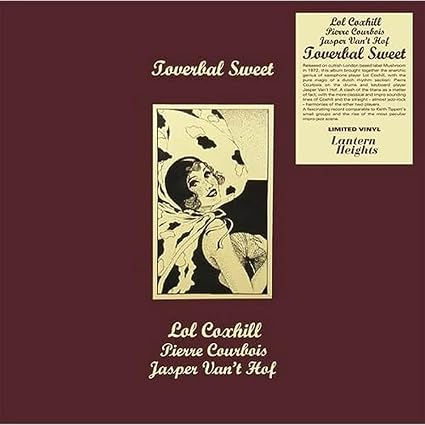
If Earwax documented Association P.C. discovering how its combination of electric instruments and improvisation might work, Sun Rotation captured a band that had begun to understand the possibilities of that combination from the inside. By late 1971, Pierre Courbois, Toto Blanke, Jasper van ’t Hof and Siggi Busch were no longer simply musicians with compatible interests testing a new ensemble. They had spent enough time performing together for the interaction itself to become recognizable. The distinction matters because Association P.C. did not mature by settling into a more predictable version of jazz-rock. The opposite occurred. As the musicians became more familiar with one another, they could take greater structural risks without losing collective direction. Rhythmic figures could be interrupted, harmonic centers could disappear and extended improvisations could move through several different levels of intensity without requiring conventional transitions. Sun Rotation emerged from this period as a record in which the band’s electric character and its free-jazz instincts no longer sounded like competing ideas. They had become parts of the same language.
An important step toward that album occurred at the Berliner Jazztage on November 7, 1971. Association P.C.’s appearance brought the group to the attention of Joachim-Ernst Berendt, one of the most influential figures in postwar European jazz broadcasting and production. Berendt subsequently became involved in bringing the group to MPS/BASF, connecting Association P.C. with a label that was documenting an unusually broad range of European and international jazz. Later that month, from November 24 to 27, the quartet recorded Sun Rotation. The circumstances were significant. MPS offered a very different platform from the smaller context surrounding Earwax, but the opportunity did not push Association P.C. toward a safer or more commercial sound. Instead, the album gave the musicians room to make the collective improvisational approach more explicit.
Inside Sun Rotation
The quartet on Sun Rotation is the formation most closely associated with the classic Association P.C. sound: Courbois on drums, Blanke on electric and twelve-string guitars, van ’t Hof on electric piano and organ, and Busch on bass and electric bass. The instrumental balance is immediately important. No saxophone or trumpet permanently occupies the melodic foreground, and no vocalist provides an obvious center. Guitar and keyboards can assume leading roles, but both can just as easily become part of the texture, leaving bass and drums to redirect the music. The result is a quartet in which hierarchy remains fluid.
The compositions provide frameworks without dictating every stage of a performance. “Idee A” begins the album relatively concisely, but the sequence formed by “Scorpion,” “Neuteboom” and “Scorcussion” opens the music considerably. Rhythmic complexity is present, yet the unusual meters are not interesting merely as technical exercises. They change how the musicians interact. A pattern that does not fall into an immediately comfortable four-beat cycle forces every member of the quartet to listen differently, particularly when Courbois begins altering accents around the underlying meter. Blanke can reinforce a rhythmic figure for several measures and then move away from it, while van ’t Hof may answer through a chord, a repeated keyboard pattern or a line that temporarily functions like another solo instrument.
This is one reason the term “fusion” can become misleading when applied too casually to Association P.C. In later commercial usage, fusion sometimes came to suggest tightly executed compositions, polished electric timbres and extended displays of instrumental virtuosity. Sun Rotation belongs to an earlier and less standardized moment. Its musicians certainly possess technique, but the record’s central drama comes from uncertainty. A listener cannot always predict whether a passage will tighten into a groove or dissolve into freer interaction, and the musicians themselves appear interested in maintaining that instability.
The long “Totemism,” occupying much of the second side, provides the broadest canvas for this approach. Rather than behaving like an extended rock composition divided into carefully arranged episodes, it develops through changes in collective pressure. Busch can establish enough bass definition to suggest a center while Courbois alters the rhythmic emphasis around him; van ’t Hof and Blanke can then either strengthen that center or destabilize it. The important element is not simply that the piece is long. Many progressive rock and jazz recordings of the period contained long tracks. What distinguishes Association P.C. is the degree to which duration becomes an opportunity for negotiation.
Rhythm Without a Fixed Destination
Courbois is central to this process, but not because he treats the drum kit as a continuous solo instrument. His importance comes from the way he manages momentum. His background in free jazz meant that pulse did not have to function as a cage, while his interest in rock made him attentive to the physical power of repeated rhythm. Association P.C. could therefore establish a groove strongly enough for the listener to feel its weight without promising that the groove would remain unchanged.
Busch became an essential partner in this balance. The bassist had to provide enough stability for the group’s electric passages to retain their physical impact while remaining flexible enough to follow Courbois into less predetermined territory. The interaction between bass and drums consequently differs from the conventional idea of a rhythm section supporting two featured soloists. Busch and Courbois participate in the shape of the improvisation, and changes originating in the lower part of the ensemble can reorganize what guitar and keyboards do above them.
Blanke’s role is equally difficult to reduce to the familiar fusion image of the virtuoso electric guitarist. He could certainly push the instrument toward distortion and intensity, but Association P.C. benefited from his willingness to withdraw from the foreground. His twelve-string guitar added another color, and his electric playing could move between lines, chords, noise and rhythmic figures. Van ’t Hof possessed similar flexibility. Electric piano and organ allowed him to create very different densities, from relatively transparent harmonic suggestions to sustained textures that could transform the entire ensemble.
The result was a band in which instrumentation did not determine function. That may be Association P.C.’s most important contribution to the European jazz-rock vocabulary of the period.
Erna Morena: The Band on Stage
If Sun Rotation showed what the quartet could construct in the studio, Erna Morena documented the music under the less controllable conditions of performance. Recorded live during an SWF Jazz Session in Freiburg on April 25, 1972, the album retained Courbois, Blanke, van ’t Hof and Busch while adding reed player Karl-Heinz Wiberny. His presence altered the architecture immediately. For the first time in this phase of the group’s recorded history, a horn could enter the ensemble as an additional melodic and textural force.
Yet Wiberny’s reeds do not convert Association P.C. into a conventional quintet. The underlying quartet had already developed too strong an interactive identity for that. Instead, the additional voice increases the number of possible relationships inside the music. A saxophone or clarinet line can emerge above the electric instruments, challenge them or become absorbed into the collective texture. The live setting intensifies this unpredictability because the musicians cannot rely on editing or studio reconstruction to impose order afterward.
The material on Erna Morena remains connected with the language of Sun Rotation, but the performances feel less concerned with demonstrating the architecture of individual compositions. The group can stretch ideas according to what happens onstage. This is where Association P.C.’s reputation as a touring ensemble becomes essential to understanding the records. The band was not developing primarily through isolated studio sessions. Its musical language was being tested repeatedly in front of audiences across Europe and, increasingly, beyond it.
The touring schedule became remarkable. Contemporary reports document extensive journeys organized through cultural institutions, including a 1972 tour that took Association P.C. through Tehran, India, Hong Kong, Kyoto, Manila, Singapore, Indonesia and other Asian destinations before the musicians returned toward Europe and further engagements. The significance goes beyond an impressive itinerary. A European jazz-rock ensemble was participating in an international circuit at a time when the geographical structure of jazz was changing rapidly. The band’s identity was being shaped not only between the Netherlands and Germany but through sustained exposure to audiences and musical environments far beyond both countries.
Europe as a Network
Association P.C.’s international activity complicates the idea that European jazz-rock belonged to a collection of isolated national scenes. The band itself was multinational, its recording career was tied strongly to Germany, its members came from Dutch and German musical environments, and its touring routes extended much farther. What held this together was not a single national tradition but a network of festivals, radio organizations, record labels and cultural institutions capable of moving adventurous music across borders.
MPS played an important role in that network. The label’s catalog allowed Association P.C. to exist alongside musicians representing many different approaches to modern jazz rather than forcing the group into a narrowly defined progressive-rock market. This context helps explain why the band could retain so much improvisational freedom while using electric instrumentation. There was no need to simplify the music into a rock format merely because the instruments were amplified.
At the same time, the audience for adventurous rock was becoming increasingly receptive to long forms, unconventional meters and improvisation. Association P.C. could therefore occupy territory between established markets without fully belonging to either one. Jazz listeners could recognize Courbois’s improvisational lineage, while listeners coming from progressive and experimental rock could respond to Blanke’s guitar, van ’t Hof’s keyboards and the group’s electric intensity.
The overlap created opportunities, but it did not resolve the band’s identity. Association P.C. remained difficult to classify because classification was never the central objective.
The Departure of Jasper van ’t Hof
The classic quartet could not remain unchanged indefinitely. By the beginning of 1973, Jasper van ’t Hof was moving toward other opportunities and soon left Association P.C. His subsequent path would include a short connection with Jean-Luc Ponty and, more significantly, the creation of Pork Pie with musicians including Charlie Mariano and Philip Catherine. Van ’t Hof would continue developing into one of Europe’s most distinctive keyboard players, eventually exploring musical territories far removed from the early Association P.C. recordings.
For many groups, losing a musician whose sound had become so central would create pressure to find the closest possible replacement. Association P.C. took another route.
Joachim Kühn entered the group.
The choice immediately changed the possibilities of the ensemble. Kühn was already an established German pianist with a substantial background in modern and free jazz. His musical personality was not a substitute for van ’t Hof’s. He brought another history, another attack and another relationship with improvisation.
That difference became the point.
Association P.C. did not attempt to reproduce Sun Rotation with a new keyboard player.
The band’s next major recording would instead push more decisively toward collective free improvisation.
Rock Around the Cock
Released in 1973, Rock Around the Cock documents a substantially altered Association P.C. The personnel listed by MPS includes Courbois, Blanke, Busch, Joachim Kühn and reed player Karl-Heinz Wiberny. More revealing than the names is the method: according to MPS, all but one of the album’s pieces were freely improvised.
This represented a significant shift.
The early Association P.C. had already allowed improvisation to reshape composed frameworks, but Rock Around the Cock moved the balance further toward spontaneous construction. Kühn was particularly suited to such an environment. His own description of what attracted him to the band emphasized openness and the refusal to become tied to a single style.
That statement could almost serve as Association P.C.’s working principle.
The album’s provocative title and pieces such as “Phenis” can distract from the seriousness of the musical experiment. Beneath the humor was a band testing whether the electric vocabulary it had developed could survive when predetermined structures were reduced even further. The answer was not always orderly, nor was it meant to be. The performances depend on musicians establishing temporary relationships and abandoning them when another direction becomes more interesting.
Blanke and Courbois, as continuing members from the original core, provide an important thread through the transition. Busch maintains another connection with the classic quartet, but Kühn and Wiberny change the balance sufficiently that the group no longer sounds like Sun Rotation with different material. Association P.C. has become more volatile.
Change as Identity
By 1973, it was increasingly difficult to define Association P.C. through a stable lineup or a single characteristic sound. That instability might have weakened a group built around tightly arranged repertoire, but it suited Courbois’s conception remarkably well. The word “Association” now seemed increasingly appropriate. Musicians could enter the ensemble and change its internal balance without requiring the project to abandon its identity.
What remained constant was a method: electric sound, improvisational openness, rhythmic awareness and resistance to fixed instrumental roles. Those principles were broad enough to survive personnel changes.
They were also broad enough to accommodate another musician whose instrument would transform the group’s sound once again.
American flutist Jeremy Steig came from a different part of the jazz world, bringing an aggressive and highly individual approach to an instrument too often associated with delicacy. When he joined Association P.C. in live performances during 1973, the encounter created one of the most unusual chapters in the band’s history.
The recordings would become Mama Kuku.
By then, Association P.C. had traveled a considerable distance from the exploratory quartet heard on Earwax. It had developed a powerful electric language, expanded it on Sun Rotation, tested it before international audiences, opened it further on Erna Morena and survived the departure of one of its defining musicians by moving toward still freer territory with Joachim Kühn.
The group had never found a permanent formula.
That was precisely why it continued to matter.
Buy Amazon
Mama Kuku and the Legacy of Association P.C.
By the time Jeremy Steig began appearing with Association P.C. in 1973, the group had already undergone enough change to make the idea of a definitive lineup increasingly irrelevant. Pierre Courbois and Toto Blanke provided continuity with the earliest recordings, while Siggi Busch remained an important presence and Joachim Kühn had brought a different keyboard language after Jasper van ’t Hof’s departure. What held Association P.C. together was no longer the precise instrumental balance heard on Sun Rotation, but a method: musicians entered a performance with enough structure to establish direction and enough freedom to alter that direction collectively. Steig was particularly well suited to such an environment. The American flutist had spent the previous decade demonstrating that his instrument could occupy musical territory far removed from the delicate role traditionally assigned to it in jazz. His playing could be breathy, aggressive, rhythmically insistent and physically intense, and he had already worked in settings that crossed boundaries between jazz, rock and electric improvisation. With Association P.C., he did not need to adapt himself to an established front-line role. He could enter an ensemble already accustomed to reorganizing itself around whatever happened in the moment.
The collaboration was documented on Mama Kuku, released by MPS in 1974 from live performances recorded the previous year. Rather than presenting Steig as a featured soloist placed in front of a European rhythm section, the album captures a genuine encounter. His flute introduces a new register into the band, but it does not replace the interaction among guitar, keyboards, bass and drums. On pieces such as “Bassamagic,” “Bold ’n’ Steig” and the title track, the music can move rapidly between groove and open improvisation, while the extended “Lausanne” gives the ensemble more than twenty minutes in which to test how far an idea can be stretched before another one takes its place. The attraction of these performances lies less in formal perfection than in the sense that the musicians are discovering the scale of the music as they play it.
Jeremy Steig and the Flute as a Different Kind of Voice
Steig brought a history that made the collaboration especially appropriate. By the early 1970s he had recorded with Bill Evans and developed his own projects in which flute, amplification and electric rhythm sections could coexist without treating the instrument as an ornamental color. His work around albums such as Wayfaring Stranger and Energy had already positioned him close to the changing relationship between jazz improvisation and electric sound in the United States. Association P.C. approached similar questions from another direction, rooted in European free jazz and the increasingly interconnected Dutch and German scenes.
When these histories met, the difference between them remained productive. Steig could drive a performance through repeated phrases, overblowing and abrupt rhythmic gestures, while Courbois responded as an improvising partner rather than merely maintaining the beat beneath him. Blanke’s guitar could answer the flute with an amplified line or move into texture, and Kühn could create harmonic density before withdrawing from it. Busch’s bass gave the music enough weight to prevent the freer passages from losing their connection with the physical energy that had always distinguished Association P.C. from purely abstract improvisational groups.
The result illustrates an important aspect of the band’s history. Association P.C. was most convincing when collaboration altered the ensemble rather than merely decorating it. Steig’s presence mattered because the group had to respond to him, just as the arrival of Kühn had changed the music after van ’t Hof. The identity of Association P.C. was therefore increasingly located in its capacity to absorb change.
Mama Kuku as a Live Document
It is tempting to treat Mama Kuku as the culmination of Association P.C.’s development because it arrived near the end of the group’s recording history, but that would impose a neat trajectory on music that rarely behaved neatly. The album is better understood as a document of one particular configuration. Its value lies in hearing the musicians negotiate a live situation in which composition, groove and improvisation continually exchange importance.
“Lausanne” makes this especially clear. Its extended duration is not used simply to provide each musician with a long solo. The performance evolves collectively, with changes in density and rhythmic emphasis creating sections that do not always require sharply defined boundaries. Steig can dominate the surface for a period and then recede while another relationship becomes central. Courbois can intensify the performance without forcing it into a conventional climax, and the electric instruments can produce considerable density before allowing the music to open again.
This ability to expand and contract had been present since the earliest Association P.C. recordings, but years of touring had made it increasingly instinctive. The musicians did not need to signal every transition dramatically. A small rhythmic change could redirect the ensemble. A bass figure could become structural. A guitar texture could replace a chord sequence. The music remained electric and frequently powerful, yet volume itself was never the organizing principle.
The live character of Mama Kuku therefore tells us something that studio descriptions of the band can miss. Association P.C. belonged to the stage as much as to the record catalog. Its reputation developed through performances, festivals and long tours in which the same musical material could change according to personnel, venue and circumstance. The albums are snapshots of that process rather than definitive versions of a fixed repertoire.
A Different European Fusion Story
By the middle of the 1970s, jazz-rock had become an international phenomenon, and some of its most visible characteristics were increasingly standardized. The spectacular technique of Mahavishnu Orchestra, the elaborate electric textures of Weather Report and the enormous influence of Miles Davis provided obvious reference points for listeners trying to understand the new territory. Association P.C. shared certain elements with those musicians, but forcing the band into the same narrative obscures what made it distinctive.
The difference was not simply European geography. Association P.C. had emerged from a particular relationship between Dutch free improvisation, German jazz, experimental rock and a continental touring circuit that allowed musicians to cross national boundaries constantly. Courbois brought experience from free jazz; van ’t Hof developed an unusually flexible keyboard language; Blanke used the guitar without accepting a permanent soloist role; Busch combined rhythmic stability with improvisational mobility. Later, Kühn intensified the free element, while Steig brought an American voice that nevertheless fitted the group’s open structure.
This produced music whose relationship with rock was often rhythmic and textural rather than formal. Association P.C. could use amplified instruments and strong grooves without adopting the architecture of a rock song. Equally, it could move into free improvisation without abandoning the possibility of returning to pulse. That middle territory was never completely stable, and the instability became one of the band’s defining strengths.
This is also why the frequently used label “kraut-jazz” is inadequate. It may evoke the German experimental climate surrounding part of the group’s history, but Association P.C. was never simply German, nor did its music arise as a jazz extension of krautrock. The personnel, geography and musical influences were too international for that. The band belonged more convincingly to the emerging European network in which musicians could share stages and ideas across borders while retaining markedly different backgrounds.
When the Members Moved On
Association P.C. continued performing after the recordings that established its reputation, but by 1975 the group’s original cycle had effectively reached its end. The dissolution did not produce a dramatic historical rupture because its members were already moving into other projects. The same mobility that had made Association P.C. possible now carried its musicians elsewhere.
Jasper van ’t Hof had already begun the next stage of his career. In 1974 he formed Pork Pie, whose lineup included saxophonist Charlie Mariano, guitarist Philip Catherine, bassist Jean-François Jenny-Clark and drummer Aldo Romano. The group extended van ’t Hof’s interest in electric jazz while creating a different balance between composition, melody and improvisation. His later career would range widely, including solo work and projects such as Pili Pili, confirming that the exploratory keyboard player heard in Association P.C. represented only an early phase of a much longer musical development.
Toto Blanke likewise continued building a career that crossed jazz, electric music and improvisation, recording under his own name and participating in numerous European projects. Joachim Kühn had already established an independent identity before joining Association P.C. and would become one of the most prominent German pianists of his generation, moving repeatedly between free improvisation, acoustic jazz and other settings. Siggi Busch remained active as a bassist and educator.
Courbois continued perhaps the most direct extension of the principles behind Association P.C. His later projects did not attempt to recreate the group, but his career retained a fascination with rhythm, unusual structures and the possibilities created by changing ensemble formats. He eventually formed New Association and continued composing and performing in Dutch and European jazz for decades. Association P.C. had been a crucial chapter rather than a style he needed to preserve indefinitely.
Why Association P.C. Became Easy to Overlook
The band’s relative obscurity today cannot be explained by the quality of the music alone. Jazz history tends to become organized around a limited number of canonical recordings and easily narrated movements. American fusion has obvious landmarks and personalities. British jazz-rock can be connected to recognizable progressive-rock histories. German experimental music eventually acquired the internationally marketable category of krautrock.
Association P.C. sits awkwardly between these narratives.
The group was multinational. Its records appeared across different labels and have not always remained continuously available. Its personnel changed. Its music moved between categories that later became easier to separate in historical writing than they had been for the musicians themselves. There was also no single album that entered the wider popular canon in the way Bitches Brew, Heavy Weather or The Inner Mounting Flame did.
But obscurity should not be converted into another form of mythology. Association P.C. does not need to be described as a “lost masterpiece,” a “forgotten secret” or the band that secretly invented European fusion before everyone else. Those claims simply replace one distortion with another.
The more interesting history is already there.
Between 1969 and 1975, a group of Dutch and German musicians created an unusually flexible electric ensemble, toured extensively, recorded a small but varied catalog and worked with musicians including Joachim Kühn and Jeremy Steig. Its albums document the moment when jazz-rock in Europe was still an open question rather than an established style.
Listening Back to the Records
That openness makes the Association P.C. catalog rewarding to revisit in sequence. Earwax captures the early quartet discovering how electric piano, guitar, bass and drums could operate without a fixed soloist. Sun Rotation presents the Courbois–Blanke–Busch–van ’t Hof formation with greater collective assurance, stretching rhythm and form while retaining the physical energy of electric jazz. Erna Morena shows the group responding to the expanded possibilities of a live setting, while Rock Around the Cock documents the move toward freer collective improvisation after Joachim Kühn’s arrival. Mama Kuku adds Jeremy Steig and reveals how readily the ensemble could reorganize itself around a new instrumental personality.
Heard this way, the records do not form a progression toward a single masterpiece. They document movement. Every change of personnel alters the balance, and every recording captures a different answer to the same underlying question: how much structure does an improvising electric ensemble actually need?
Association P.C. never produced a permanent answer.
That was part of the achievement.
The Legacy of an Unstable Band
More than half a century later, Association P.C. occupies an interesting position in European jazz history. Its members went on to careers more extensive than the life of the band itself, and some became better known through later projects. Yet the group’s short existence captures a period when European musicians were increasingly confident that modern jazz did not have to develop through imitation or opposition. They could learn from American jazz, respond to rock, participate in free improvisation and draw upon the particular musical networks surrounding them without having to declare one source dominant.
Association P.C. embodied that confidence before the terminology around European jazz-rock became settled. Its music could be rough because it was exploratory, but it was never directionless. Courbois and his collaborators understood that collective improvisation required intense listening and that electricity could enlarge rather than restrict those possibilities. The best performances derive their tension from that combination: rhythmic force without permanent rigidity, instrumental freedom without complete detachment from form.
The band’s disappearance in the mid-1970s did not end those ideas. They continued through the musicians who had passed through the group and through a broader European scene increasingly comfortable with hybrid forms. Van ’t Hof, Kühn, Blanke and Courbois followed very different paths, but the freedom to move between contexts was itself part of the environment Association P.C. had helped represent.
That is ultimately a more useful legacy than claiming the group “invented” a style.
Association P.C. belonged to a generation that made the borders of European jazz increasingly porous. Its musicians did not erase those borders through declarations about genre. They did it by playing together, changing the rules when necessary and allowing each new configuration to alter what the band could become.
For six years, instability was not the problem Association P.C. needed to solve.
It was the method that kept the music alive.