
A New Italian Language for Jazz
When Perigeo appeared in Italy in 1972, jazz was passing through one of the most unsettled and productive periods in its history. The electric transformations initiated by Miles Davis had already demonstrated that amplification, rock rhythm and studio technology could become part of a modern jazz vocabulary, while groups such as Weather Report and the Mahavishnu Orchestra were beginning to establish very different possibilities for the emerging language of fusion. In Britain, the boundaries between jazz and progressive rock had become increasingly porous, and across continental Europe musicians were questioning the assumption that modern jazz needed to reproduce styles developed in the United States. Italy was especially fertile territory for this kind of experimentation. Progressive rock had developed an unusually ambitious local identity, film composers were creating sophisticated combinations of orchestration, electronics and popular music, and Italian jazz musicians were becoming increasingly confident about pursuing ideas that reflected their own musical environment. Perigeo emerged from this moment, but the group cannot be understood simply as Italy’s answer to American jazz-rock. From the beginning, its music suggested a different set of priorities: collective improvisation rather than instrumental competition, carefully shaped compositions rather than extended displays of virtuosity, and an unusual sensitivity to texture, space and melody. The result was one of the most distinctive European responses to the transformation of jazz in the 1970s.
The group was formed in Rome around bassist and composer Giovanni Tommaso, already an experienced figure in Italian jazz. Rather than assembling a conventional leader-and-sidemen ensemble, Tommaso brought together musicians capable of contributing independent personalities to a collective language. Pianist Franco D’Andrea had already developed formidable experience within Italian modern jazz and would become one of the country’s most important improvisers. Saxophonist Claudio Fasoli brought a tone capable of moving from lyrical restraint to more abrasive forms of expression without losing melodic clarity. Bruno Biriaco approached drums and percussion with the flexibility required by music that might move between jazz pulse, rock momentum, irregular structures and open improvisation. Guitarist Tony Sidney completed the original quintet, bringing an electric vocabulary shaped partly by rock and blues into a group whose other members had stronger jazz backgrounds. With Tommaso moving between electric bass and double bass, Perigeo possessed the instrumentation of a fusion band but not yet a fixed idea of what fusion was supposed to sound like. That uncertainty became one of its greatest strengths.
Italy at the Beginning of the Seventies
The cultural environment surrounding Perigeo matters because Italian music in the early 1970s was unusually resistant to rigid categories. Jazz musicians worked alongside composers, studio players and figures connected to film and television; progressive rock groups drew freely from classical composition, electronics and improvisation; and audiences accustomed to dramatic experimentation were willing to follow musicians into territory that did not fit conventional popular forms. Italy’s progressive scene included groups whose ambitions reached far beyond standard rock songwriting, yet jazz was developing along its own parallel routes. Perigeo stood at an intersection between these worlds without belonging entirely to either one. The group could appear in discussions of Italian progressive rock because of its electric instrumentation, extended compositions and openness to experimentation, but improvisation remained too fundamental to its identity for the music to be understood primarily as progressive rock. Conversely, calling Perigeo a jazz-rock band explains part of its rhythmic and instrumental vocabulary while overlooking how extensively the musicians drew upon European compositional thinking, free improvisation and a specifically Italian sense of melodic development.
This ambiguity can be heard from the group’s earliest recordings. Perigeo rarely sounds interested in proving that jazz and rock can coexist; by 1972 that question had already been answered elsewhere. The more interesting problem was what Italian musicians could do once the combination was available to them. Instead of reproducing the muscular intensity associated with some American fusion or the virtuosic extremes increasingly common within jazz-rock, Perigeo often allowed compositions to unfold gradually. Themes could emerge from quiet textures before gaining rhythmic weight, and improvisation frequently developed as an extension of the arrangement rather than as a separate section inserted for a soloist. Electric piano and guitar contributed color as much as power. Fasoli’s saxophones could carry a central melodic statement without dominating the ensemble, while Tommaso’s bass often operated as an independent melodic voice. Biriaco’s drumming provided momentum but remained responsive to the changing density of the group. What makes the music compelling is not simply the ability of each musician but the impression that all five are continually negotiating the direction of the composition.
That collective quality distinguished Perigeo from the increasingly familiar image of fusion as a showcase for technical brilliance. The musicians were certainly capable of virtuosity, but technique served the architecture of the music. D’Andrea could move through complex harmonic ideas without turning every passage into a demonstration of keyboard speed; Fasoli understood the expressive value of leaving space around a phrase; Sidney’s guitar could become aggressive when required but did not need to occupy the foreground continuously. Tommaso’s conception depended upon maintaining this balance. His compositions provided enough structure to establish a recognizable identity while leaving sufficient freedom for the group to transform that structure in performance. Perigeo therefore belonged to jazz not because it reproduced American stylistic conventions but because interaction remained central to how the music functioned.
Azimut: Finding the Direction
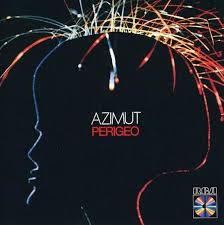
Perigeo’s first album, Azimut, was recorded at RCA’s Studio D in Rome and released in 1972. The title was appropriate for a band trying to determine its position within a rapidly changing musical landscape: an azimuth is a direction, a way of locating oneself in relation to a horizon. The record contains Giovanni Tommaso on electric bass, bowed double bass and vocals, Franco D’Andrea on piano and electric piano, Claudio Fasoli on alto and soprano saxophones, Tony Sidney on electric guitar and Bruno Biriaco on drums and percussion. Contemporary documentation also identifies Tommaso as the arranger, reinforcing the extent to which his compositional vision provided the framework within which the group’s collective personality could develop.
What is striking about Azimut is not that Perigeo had already perfected a style but that the group was comfortable allowing several possible directions to coexist. “Posto di non so dove” opens the album in an atmosphere that resists the expected entrance of a conventional jazz-rock band. Voice, instrumental color and an almost dreamlike sense of suspension establish a world before the rhythm becomes more insistent. Elsewhere, electric bass and guitar provide the kind of repeating figures associated with rock and fusion, but D’Andrea’s piano refuses to behave simply as harmonic accompaniment. His lines introduce instability and movement, while Fasoli’s saxophones add another melodic layer rather than merely occupying the traditional position of jazz soloist. The record moves between composed passages and improvisational freedom with a looseness that would become increasingly refined on later albums. Even when the music becomes energetic, it rarely abandons the sense that the ensemble is listening inwardly as much as projecting outward. Contemporary accounts of the album emphasize precisely this mixture of jazz foundations, rock-derived riffs, Italian folk or ethnic elements, free improvisation and experiments with atonality.
“Grandangolo” illustrates how quickly Perigeo could shift perspective. Its title — literally “wide angle” — suggests an expansive field of vision, and the music behaves accordingly, opening room for contrasting instrumental roles without allowing the composition to disintegrate into disconnected episodes. “Aspettando il nuovo giorno” carries another aspect of the group’s identity: the ability to create tension patiently rather than through constant escalation. On the second side, the title piece further demonstrates the group’s attraction to atmosphere, while “Un respiro” and “36° parallelo” expand the sense that geography and movement were already implicit in Perigeo’s imagination. These titles are not incidental. Across the group’s work, places, directions, landscapes and historical memory repeatedly appear as conceptual frames. The music rarely attempts literal description, yet there is often a spatial quality to its compositions, as though the musicians were interested in how sound could suggest distance and terrain.
That quality helps explain why Perigeo sounds different from several better-known fusion groups of the same period. Weather Report was developing an increasingly sophisticated approach to collective electric improvisation; the Mahavishnu Orchestra used volume, speed and rhythmic complexity to create music of extraordinary physical intensity; Return to Forever would soon bring Latin rhythm and virtuosity into another influential version of fusion. Perigeo shared certain materials with all of these groups but occupied a separate aesthetic territory. The comparison is useful only up to a point. Tommaso and his colleagues were not trying to establish an Italian equivalent of any American band. Their strongest music emerges precisely when such comparisons stop being necessary.
The Ensemble as a Single Voice
The relationship between composition and improvisation became central to that independence. In conventional jazz structures, the distinction between theme and solo can often be clearly heard: an ensemble states a composition, individual improvisers move through its harmonic structure, and the theme returns. Perigeo frequently blurred those boundaries. An improvised phrase might trigger a collective change in texture; accompaniment could become as important as the apparent foreground; and a written motif could reappear transformed by what had happened around it. This approach gave the music a conversational character without sacrificing direction. The musicians could sound free without sounding arbitrary.
Franco D’Andrea was particularly important to this balance. His role in Perigeo preceded the long solo career that would establish him as a major figure in European jazz, but many of the qualities associated with his later work are already evident: rhythmic curiosity, harmonic independence and an unwillingness to use the piano merely to fill empty space. Claudio Fasoli provided a complementary voice. His saxophone playing could be lyrical, but the lyricism was never sentimental; phrases often contained an edge that prevented the music from becoming decorative. Biriaco’s rhythmic intelligence allowed the group to move between meters and intensities without making those changes sound like compositional tricks, while Sidney supplied an important connection to the electric vocabulary of rock. Tommaso’s achievement was to recognize how these personalities might coexist.
The band’s debut performance took place at La Bussola in Marina di Pietrasanta in 1972, and Azimut followed approximately a month later. Perigeo therefore arrived not as a studio experiment assembled temporarily around a recording session but as a functioning ensemble. That distinction would become increasingly important as the group developed. Its music depended upon familiarity — musicians learning how one another responded to changes in dynamics, how long a motif could be sustained, when an arrangement could be opened and when it needed to tighten again. The albums that followed would document this process almost year by year.
If Azimut sounds exploratory, that is part of its value. Perigeo had found the fundamental ingredients of its language but had not yet reduced them to a formula. The record moves between jazz, rock, abstraction and melody with the excitement of musicians discovering that none of those territories needs to exclude the others. Its importance lies less in announcing a fully finished aesthetic than in establishing the conditions from which one could emerge.
By 1973, those conditions were already changing. The second album, Abbiamo tutti un blues da piangere, would broaden the group’s rhythmic vocabulary and bring rock and funk elements more decisively into the music, while Genealogia the following year would reveal a band increasingly comfortable with synthesizers and a more immediately recognizable compositional identity. Contemporary discographic records confirm the rapid sequence: Azimut in 1972, Abbiamo tutti un blues da piangere in 1973 and Genealogia in 1974. Perigeo was evolving at remarkable speed.
The important point, however, is that the evolution did not represent a gradual movement toward American fusion. It moved in the opposite direction: toward a more confident understanding of what Perigeo itself could be. The musicians had absorbed jazz, rock, contemporary composition and the electric transformations of their era, but their strongest work would increasingly reorganize those influences according to its own internal logic. Azimut had established the coordinates. What followed was the journey.
Buy Amazon
From Abbiamo Tutti un Blues da Piangere to La Valle dei Templi
The exploratory character of Azimut did not last long as Perigeo’s defining condition. The group’s second album, Abbiamo tutti un blues da piangere, released in 1973, already reveals musicians who had developed a clearer understanding of how their contrasting backgrounds could function together. If the debut often sounds like five accomplished players testing the boundaries of a new collective language, its successor is more assured in the way it connects composition, improvisation and rhythm. The title — roughly, “We All Have a Blues to Cry” — acknowledges the African American tradition at the foundation of jazz without suggesting that Perigeo intended to reproduce the blues in an orthodox form. Instead, the album treats jazz history as one element within a wider musical vocabulary. Rock rhythms become more integrated, electric instruments feel less like additions to an acoustic jazz framework, and the group begins to exploit repetition with greater confidence. What had sounded exploratory on Azimut increasingly becomes deliberate: Perigeo is no longer searching for a position between established genres but constructing a space in which those distinctions matter less.
The album’s compositions demonstrate how rapidly the ensemble had matured through continuous work together. Giovanni Tommaso’s bass increasingly provides more than a foundation, sometimes establishing melodic or rhythmic ideas around which the entire group organizes itself. Franco D’Andrea moves between acoustic and electric keyboards without treating the latter merely as a symbol of modernity; the electric piano becomes part of the ensemble’s changing palette, capable of providing harmonic density, rhythmic punctuation or atmospheric space. Claudio Fasoli’s saxophone continues to supply one of Perigeo’s most immediately recognizable voices, while Tony Sidney and Bruno Biriaco give the music enough physical momentum to connect with rock without reducing the rhythmic language to a heavy backbeat. The crucial development is integration. Individual influences become harder to isolate because they have begun to operate inside a common grammar.
Beyond the First Definition of Fusion
This evolution occurred at a moment when jazz fusion itself was becoming increasingly recognizable as a genre. By 1973, the radical uncertainty that had surrounded the first major encounters between jazz and electric rock was beginning to produce identifiable conventions. Certain combinations of synthesizer, electric guitar, electric bass and amplified keyboards could already signal “fusion” before a musician played a note. Virtuosity, volume and complex rhythmic structures were becoming part of the genre’s public identity. Perigeo participated in this transformation but remained slightly outside its emerging center. The group could play forcefully, and its members possessed more than enough technique to compete with the instrumental standards of contemporary fusion, yet the music rarely seems organized around the spectacle of difficulty. Even when the rhythms become intricate, they tend to serve the movement of the composition rather than calling attention to themselves.
This distinction becomes more important when Perigeo is considered within its Italian context. The country’s progressive rock scene had demonstrated that extended forms and technical ambition could reach a substantial audience, while Italian composers and arrangers had long cultivated an unusually strong relationship between popular music and sophisticated orchestration. Perigeo drew indirectly from this environment without surrendering its jazz identity. Its compositions could contain abrupt transitions or carefully organized sections, but improvisation prevented them from becoming fixed architectural exercises. Conversely, the freedom of jazz was constantly shaped by a compositional sensibility that distinguished the group from open-ended jam bands. The tension between these impulses — structure and spontaneity, electricity and acoustic space, rhythmic drive and melodic introspection — became increasingly central to the Perigeo sound.
Abbiamo tutti un blues da piangere also reveals a band becoming more comfortable with groove. Funk had become impossible for jazz musicians to ignore by the early 1970s, but Perigeo’s relationship with it was characteristically indirect. Rather than adopting American funk as a complete stylistic package, the group absorbed the possibilities of repeated bass patterns and tightly organized rhythmic figures. A groove might anchor a composition for an extended period while the melodic instruments moved in less predictable directions above it. This produced a productive contradiction: the listener could feel a stable physical pulse even when the harmonic or melodic environment remained unsettled. That combination would become increasingly important as Perigeo moved toward the middle of the decade.
Genealogia and the Expansion of Color
With Genealogia in 1974, the group reached another stage of development. The title itself — “Genealogy” — suggests an interest in origins, continuity and the relationships between different musical histories. Perigeo’s music had always contained traces of several traditions, but Genealogia presents those relationships with greater confidence and refinement. Electronics assume a more significant role, particularly through keyboards and synthesizer textures, yet the album does not abandon the organic interaction that had defined the earlier records. Instead, the expanded palette allows the group to create environments that feel broader and sometimes more mysterious. Electric sound becomes a means of extending atmosphere rather than simply increasing intensity.
The record also makes the inadequacy of the term jazz-rock increasingly apparent. There are passages that clearly belong to the electric jazz language of the period, but the music continually moves beyond that description. Mediterranean melodic sensibilities, abstract improvisation, funk-derived rhythm and the influence of contemporary European jazz can appear within the same composition without requiring a dramatic stylistic transition. Perigeo had learned to make these elements coexist at a deeper level. The group’s identity no longer depended on the novelty of combination.
D’Andrea’s keyboards are especially important to the atmosphere of Genealogia. His use of electric piano and synthesizer expands the space surrounding the acoustic instruments, creating textures through which Fasoli’s saxophone can move with unusual freedom. Tommaso’s bass remains central, often functioning as the point where rhythmic and melodic ideas meet. Sidney’s guitar becomes one component within the larger ensemble rather than assuming the heroic role that electric guitar often occupied in 1970s fusion. Biriaco continues to manage changes in density with remarkable sensitivity. When the music intensifies, he can push the group forward; when it opens into quieter passages, percussion becomes a source of detail rather than force.
This collective balance gives Genealogia much of its durability. Many records from the fusion era can be immediately dated by particular synthesizer sounds, production techniques or displays of instrumental fashion. Perigeo certainly belongs to the 1970s, and there is no reason to pretend otherwise, but its strongest music survives because the arrangements are built around relationships rather than effects. Electronic instruments are part of those relationships. They do not replace the ensemble.
The album also reinforces the sense of landscape already present on Azimut. Perigeo frequently creates music that feels spatial, not because it imitates specific natural environments but because compositions seem to move through changing distances and perspectives. A melody may appear clearly in the foreground and then recede into collective improvisation; a rhythmic figure may emerge gradually from an atmospheric passage; an electronic texture can create a horizon behind acoustic instruments. This ability to suggest movement without relying on narrative programs became one of the band’s most distinctive characteristics. It also helps explain why the group’s music feels connected to a Mediterranean sensibility without needing to quote folk material continuously. Geography is present as atmosphere and memory rather than as a collection of obvious regional markers.
La Valle dei Templi
That relationship between music, landscape and historical memory became explicit on La valle dei templi, released in 1975. Its title refers to Sicily’s Valley of the Temples near Agrigento, one of the most extraordinary surviving landscapes of the ancient Mediterranean world. For Perigeo, the reference provided an appropriate frame for music increasingly interested in the interaction between modernity and deeper cultural memory. The album does not attempt to create a literal soundtrack for archaeological ruins, nor does it turn toward nostalgic reconstruction. Instead, the title reinforces an idea already present throughout the group’s development: modern European jazz could acknowledge the cultural landscapes from which its musicians emerged without abandoning the international language of jazz.
By this point Perigeo had become a remarkably cohesive ensemble. The transitions between composed and improvised material are increasingly natural, and the group can move from delicate passages to forceful rhythmic sections without sounding as though it has changed genres. The music often possesses greater immediacy than on the debut, but accessibility has not come through simplification. It comes from confidence. Themes are stronger, grooves settle more naturally into the compositions, and the musicians appear less concerned with establishing what the group can do. They simply do it.
The Mediterranean dimension of La valle dei templi is particularly significant because it offers an alternative to the idea that European jazz established its independence primarily through abstraction. Free improvisation and avant-garde experimentation were enormously important to the development of a distinct European jazz identity, but they were not the only routes available. Perigeo demonstrated that an electric, rhythmically accessible band could also become recognizably European by reorganizing the materials of fusion around different cultural instincts. Melody remained important. Space remained important. Historical and geographical imagination could coexist with electric bass, synthesizers and rock-derived rhythm.
This does not mean that Perigeo developed a simple “Italian sound.” Italy itself contained multiple musical traditions, and the musicians in the group were cosmopolitan professionals working inside an international jazz culture. Their achievement was subtler. They stopped treating American jazz-rock as the destination toward which modern European jazz needed to travel. Jazz became a method through which they could organize their own encounters with rock, electronics, improvisation and Mediterranean culture.
A European Band on an International Stage
Perigeo’s growing reputation increasingly carried the group beyond Italy. The band performed extensively during the decade and appeared in contexts that placed its music alongside major international jazz and rock artists. This exposure mattered because it tested the group’s identity outside the cultural environment that had produced it. Perigeo did not need an audience already familiar with Italian progressive music or the country’s jazz scene for its compositions to function. The ensemble’s rhythmic energy and improvisational skill were immediately communicative, while the particular organization of those elements distinguished it from better-known fusion groups.
International contact also reinforced the broader transformation taking place within European jazz. By the middle of the 1970s, it was increasingly difficult to speak of European musicians simply as followers of developments occurring in the United States. Labels, festivals and local scenes had created networks through which musicians from Scandinavia, Britain, Germany, France, Italy, Poland and elsewhere could develop distinct approaches while remaining connected to one another. The rise of ECM was one visible part of this transformation, but European jazz was far more diverse than the spacious acoustic aesthetic often associated with that label. Perigeo represented another possibility: electric, rhythmically powerful, open to rock and funk, yet still unmistakably shaped by European musical experience.
The group’s development from Azimut through La valle dei templi occurred in only a few years, and the speed of that evolution is remarkable. The exploratory openness of the debut had not disappeared; it had become internalized. Perigeo no longer needed to move visibly between jazz, rock and experimentation because those languages had become parts of the same vocabulary. What remained constant was the commitment to collective identity. There was no single virtuoso around whom the music revolved, and no instrumental formula capable of explaining the band’s sound. Perigeo existed in the interaction between Tommaso, D’Andrea, Fasoli, Sidney and Biriaco.
By 1975, that interaction had produced one of the strongest bodies of work in Italian jazz of the period. Yet the group was not finished changing. The following years would bring further encounters with international audiences, another shift in musical emphasis and eventually the end of the original trajectory. Non è poi così lontano would push Perigeo toward the final phase of its classic period, while the musicians themselves would continue into careers that extended far beyond the band.
What had begun with Azimut as a search for direction had become something considerably more important: evidence that jazz fusion could acquire a European identity without becoming a copy of its American models. Perigeo had found its direction not by choosing between jazz, rock and the musical culture surrounding it, but by making the distinctions between them increasingly unnecessary.
Beyond the Italian Fusion Moment
By 1976, Perigeo had reached a point that would have been difficult to predict from the exploratory atmosphere of Azimut only four years earlier. The original quintet had remained remarkably stable while its musical language changed around it, moving from the open-ended encounters of the debut through the stronger rhythmic identity of Abbiamo tutti un blues da piangere, the expanded electronic colors of Genealogia and the mature balance of composition, improvisation and Mediterranean atmosphere achieved on La valle dei templi. Few European jazz groups of the period developed so rapidly without replacing the musicians responsible for the original idea. Giovanni Tommaso, Franco D’Andrea, Claudio Fasoli, Tony Sidney and Bruno Biriaco had learned one another’s instincts through recording and performance, and the continuity gave Perigeo a collective personality that could survive considerable stylistic movement. Yet continuity also created a difficult question. Once the group had established a recognizable language, where could it go next? Fusion itself was changing, audiences were changing, and the electric vocabulary that had seemed radical at the beginning of the decade was becoming increasingly familiar. Perigeo’s final years would unfold inside that transition.
The fifth studio album, Non è poi così lontano, appeared in 1976 and represented another shift in perspective. Recorded at RCA Studios in Toronto, the album took the group physically outside the Italian environment that had shaped its previous records. Its seven compositions — “Fata Morgana,” “Tarlumbana,” “Myosotis,” “Take Off,” “Acoustic Image,” “Terra Rossa” and “New Vienna” — reveal a band still capable of intricate ensemble playing but operating in a musical landscape that was becoming more polished and internationally oriented. The album did not abandon Perigeo’s identity, yet its balance differed from the spacious Mediterranean character that had made La valle dei templi such a convincing statement. There was greater emphasis on the language of contemporary jazz-rock, and the production placed the group within the increasingly professionalized sound of mid-1970s fusion. In the United States, the material would also appear as Fata Morgana, reinforcing the sense that Perigeo had reached beyond the specifically Italian context in which its career had begun.
Non è poi così lontano and the End of a Cycle
It would be easy to interpret this phase simply as a decline from the earlier records, but the situation is more revealing when understood historically. Jazz-rock in 1976 was no longer the unstable territory it had been when Perigeo recorded Azimut. Weather Report, Return to Forever, the Mahavishnu Orchestra and numerous other groups had helped establish an international market for electric jazz, and many of the sounds once associated with experimentation had entered the vocabulary of professional studio music. Synthesizers, electric piano, complex bass lines and rock-influenced drumming no longer automatically signaled an avant-garde position. Fusion had acquired conventions of its own.
Perigeo therefore faced the problem encountered by many innovators: a language developed in opposition to established categories can eventually become another category itself. The group had been most compelling when jazz, rock, funk, electronics and European musical ideas interacted without obvious hierarchy. By the middle of the decade, some of those combinations had become normal enough to carry fewer implications. The challenge was no longer simply to combine them but to preserve a distinctive point of view within an increasingly crowded international field.
Non è poi così lontano remains valuable precisely because it documents that tension. “Fata Morgana” retains the group’s ability to construct a composition around atmosphere and gradual movement, while pieces such as “Take Off” reveal a more direct electric momentum. “Acoustic Image,” as its title suggests, provides another change in perspective, reminding the listener that Perigeo’s identity had never depended entirely on amplification. “Terra Rossa” returns implicitly to the geographical imagination that had appeared throughout the group’s catalog: landscapes, colors, places and directions remain part of the way Perigeo conceptualizes music even as the production moves toward a more international fusion sound.
The performances themselves confirm how deeply the five musicians had developed as an ensemble. D’Andrea and Fasoli can move through passages of considerable complexity without disrupting the overall shape of a composition, Tommaso’s bass remains both structural and melodic, and Biriaco and Sidney maintain the rhythmic flexibility required by music that continues to move between jazz and rock. What has changed is less the musicianship than the historical environment surrounding it. The group that once seemed to be discovering a new territory now existed inside a territory that had become recognizable.
That distinction helps explain why Perigeo’s career should not be judged by a simple upward or downward curve. The band’s importance lies in the process documented across its albums. Azimut captures discovery; Abbiamo tutti un blues da piangere shows the vocabulary becoming more integrated; Genealogia expands its colors; La valle dei templi represents perhaps the most complete realization of the group’s distinctive aesthetic; and Non è poi così lontano records what happens when that aesthetic encounters the changing conditions of the later 1970s. Taken together, the albums form a compact history of European jazz-rock’s transformation from experiment into established language.
Leaving Perigeo Behind
The original group reached the end of its trajectory in 1977. The separation did not erase the relationships that had developed during the previous years, nor did it mark the end of the musicians’ involvement with jazz. On the contrary, the careers that followed help clarify what Perigeo had actually contained. Franco D’Andrea would become one of the major figures of Italian and European jazz piano, pursuing an increasingly personal approach to improvisation over a long career. Claudio Fasoli likewise developed an extensive body of work as saxophonist, composer and educator, moving through settings that placed him firmly within the evolution of modern European jazz. Bruno Biriaco continued working as drummer, arranger and bandleader, while Giovanni Tommaso remained a central presence in Italian jazz as bassist, composer and organizer. Tony Sidney’s contribution to the original group belonged to a somewhat different trajectory, but his guitar had been essential to the particular balance between jazz and rock that defined Perigeo’s classic period.
The subsequent activities of these musicians demonstrate why the group should never be reduced to progressive rock with jazz instrumentation. Perigeo had been built around improvisers whose musical lives extended far beyond the 1970s fusion boom. The electric setting was one chapter in their development rather than the only context in which they could function. When the original group disappeared, its members did not lose their musical identities because those identities had never depended entirely upon Perigeo.
The name itself nevertheless returned. A reunion under the banner Perigeo Special appeared around 1980, and Giovanni Tommaso subsequently assembled New Perigeo with a different lineup that included pianist Danilo Rea, saxophonist Maurizio Giammarco, guitarist Carlo Pennisi and drummer Agostino Marangolo. The new formation produced Effetto amore in 1981. These projects belong to the history surrounding Perigeo, but they should not obscure the particular significance of the original quintet. By the beginning of the 1980s, both jazz and popular music had changed dramatically. The cultural conditions that had allowed a band such as Perigeo to occupy the border between experimental jazz, progressive rock and comparatively broad audiences were no longer the same.
The later projects are more interesting as evidence of the continuing relationships between Italian musicians than as attempts to reproduce the classic group. Danilo Rea and Maurizio Giammarco, in particular, would become significant figures in Italian jazz in their own right. Their presence shows how the Perigeo idea could connect different generations, but it also emphasizes the uniqueness of the original combination. Tommaso could retain the name and some of its principles, yet the chemistry created by D’Andrea, Fasoli, Sidney and Biriaco could not simply be reconstructed with different personnel.
What Perigeo Changed
Perigeo’s legacy becomes clearer when the band is placed within the wider history of European jazz rather than treated solely as part of Italian progressive music. During the 1960s and 1970s, European musicians increasingly challenged the assumption that artistic authority in jazz flowed in only one direction from the United States outward. This did not mean rejecting American jazz. The music of Miles Davis, John Coltrane, Charles Mingus and countless other American musicians remained fundamental. What changed was the belief that European jazz needed to demonstrate authenticity by sounding American.
Different scenes responded to that challenge in different ways. Musicians associated with British jazz developed their own relationships with free improvisation, composition and rock. German and Dutch scenes pursued increasingly radical forms of improvisation. Scandinavian musicians explored other balances between melody, space and abstraction. Polish jazz developed a particularly strong compositional identity despite political constraints. In Italy, the situation was complicated by the simultaneous vitality of jazz, progressive rock, film music and experimental composition.
Perigeo belongs within this larger emancipation. Its contribution was to show that jazz-rock could become part of the process rather than an obstacle to it. European independence in jazz did not have to mean rejecting electric instruments or the rhythmic influence of American funk and rock. A musician could use those materials while reorganizing them according to another cultural imagination.
This is where the Mediterranean quality of Perigeo becomes important. It should not be understood as a fixed musical formula or a set of regional clichés. The group did not need mandolins, folk costumes or obvious quotations to establish an Italian identity. Its relationship with place operated more subtly through melody, atmosphere, pacing and the recurring imagination of landscape. Album and composition titles — Azimut, “36° parallelo,” Genealogia, “Monti pallidi,” “Grandi spazi,” La valle dei templi, “Periplo,” “Terra Rossa” — repeatedly evoke geography, travel, memory and historical space. Across the catalog, they form an implicit map.
That map distinguishes Perigeo from the futuristic imagery associated with much 1970s fusion. Where other groups frequently looked toward technology, speed and an imagined future, Perigeo often seems to place modern electric music beside landscapes carrying much older histories. Synthesizers and electric bass do not erase geography; they become ways of viewing it from the present. This tension between ancient landscape and contemporary instrumentation gives some of the group’s strongest work its unusual emotional character.
Rediscovery Without Reinvention
Like many groups positioned between jazz and progressive rock, Perigeo would eventually benefit from later generations of listeners reconsidering the musical boundaries of the 1970s. Reissues made the original albums easier to encounter, while the growth of interest in Italian progressive music introduced the group to audiences that had not necessarily arrived through jazz. At the same time, listeners exploring European jazz began to reassess bands whose use of electric instruments had once caused them to be treated as peripheral to more canonical histories.
The availability of live recordings has added another dimension to that reassessment. Performances from the group’s original period reveal music that could expand beyond studio arrangements, confirming the importance of improvisation to Perigeo’s identity. The later release of concert material from Montreux and Italy allows listeners to hear how compositions changed onstage rather than functioning as fixed reproductions of the albums. This matters because the studio records alone can sometimes make Perigeo’s carefully structured writing appear closer to progressive rock than the musicians’ actual working method suggests. In performance, the jazz foundation becomes unmistakable.
The original musicians themselves eventually returned to the material in reunion settings, but Perigeo’s reputation no longer depends upon proving that the band can exist continuously. Its classic work belongs to a specific period, and part of its value comes from that concentration. Five principal studio albums between 1972 and 1976 document a complete artistic evolution in remarkably little time. There is no need to invent a mythology of endless reinvention around the group. What Perigeo achieved during those years is sufficient.
More importantly, those records now provide a different way of hearing the history of fusion. The genre is too often narrated through a small group of American landmarks, as though musicians elsewhere merely responded to innovations created by Miles Davis and the ensembles formed by his former collaborators. Perigeo demonstrates how incomplete that picture is. The electric transformation of jazz became international almost immediately, and once it crossed borders it generated languages that could not be explained simply as copies of American originals.
Perigeo was one of those languages.
The band’s greatest achievement was not the invention of a completely isolated style. Jazz itself develops through exchange, and Perigeo never concealed its relationship with American jazz, rock, funk or the wider experimental culture of the 1970s. What mattered was what happened after those influences entered the group. Through the interaction of Tommaso, D’Andrea, Fasoli, Sidney and Biriaco, they were reorganized into music whose identity belonged to the musicians and the cultural environment surrounding them.
That is why the records still matter. Azimut does not sound important because it resembles the beginning of an Italian Weather Report. Genealogia does not need to be measured against the better-known fusion albums of 1974, and La valle dei templi does not require validation through comparison with an American counterpart. Heard on their own terms, these albums document musicians discovering that European jazz could engage with the electric age without sacrificing a sense of place.
Perigeo’s career was relatively brief, but brevity sharpened the argument. In five years, the group moved from uncertainty to a fully recognizable identity and then confronted the moment when the language it had helped explore was becoming conventional. The story therefore mirrors the history of fusion itself, but from a vantage point too often left outside the standard narrative.
The horizon suggested by Azimut had never been a destination. It was an invitation to determine where Italian jazz might go once it stopped asking for permission to belong.