
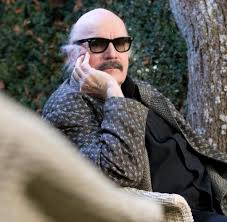
The Pianist Who Refused to Accept Boundaries
Throughout jazz history, certain musicians become associated with a single style so completely that their names immediately evoke a recognizable sound. Others spend their entire careers escaping categories. Wolfgang Dauner belonged decisively to the second group. Pianist, composer, bandleader, electronic experimenter, educator and relentless musical explorer, Dauner spent more than five decades proving that jazz could absorb virtually any influence without sacrificing its identity. At a time when many European musicians still felt compelled either to imitate American traditions or to reject them entirely, Dauner proposed a more adventurous alternative. Jazz could become a meeting place where classical composition, free improvisation, rock, electronic music and contemporary European culture interacted naturally.
This philosophy placed him among the most innovative figures of postwar European jazz.
Yet his influence often unfolded quietly.
Rather than creating a single revolutionary recording, Dauner transformed countless musical conversations.
Young pianists discovered new possibilities for the instrument.
Composers encountered different relationships between structure and freedom.
European jazz itself gradually expanded beyond stylistic boundaries previously considered fixed.
His legacy therefore extends far beyond the piano.
He helped redefine what a jazz musician could imagine.
Germany After the War
Wolfgang Dauner was born on December 30, 1935, in Stuttgart, Germany, during one of the most turbulent periods in modern European history.
His childhood unfolded amid the aftermath of the Second World War.
Cities rebuilt themselves.
Institutions slowly recovered.
Artists searched for new cultural identities.
Music played a remarkable role in this process.
American jazz entered Germany through military radio broadcasts, imported recordings and touring musicians.
For many young listeners, the music represented far more than entertainment.
It symbolized openness.
Improvisation.
Democratic expression.
Creative freedom.
Dauner absorbed these influences eagerly.
Yet from the beginning, he also remained deeply connected to European classical traditions.
Rather than choosing between the two worlds, he explored the possibilities emerging where they overlapped.
Classical Foundations, Improvisational Curiosity
Like many European jazz musicians of his generation, Dauner began with classical piano training.
The discipline proved invaluable.
Technique became second nature.
Harmony acquired architectural clarity.
Large-scale musical form became intuitive.
At the same time, he found himself increasingly fascinated by improvisation.
Written scores no longer felt sufficient.
He wanted music to evolve in real time.
To surprise both performer and audience.
Jazz offered precisely that possibility.
Unlike musicians who abandoned classical music entirely after discovering improvisation, Dauner carried its structural thinking into every subsequent project.
Throughout his career, composition and spontaneity would remain inseparable.
Stuttgart: A Different Kind of Jazz City
Although cities such as Paris, London and Copenhagen often dominate discussions of postwar European jazz, Stuttgart quietly developed one of Germany’s most adventurous musical communities.
Experimental composers.
Classical musicians.
Jazz improvisers.
Electronic pioneers.
They frequently collaborated across artistic disciplines.
Wolfgang Dauner quickly became one of the central figures within this environment.
The city’s openness encouraged unusual projects.
Traditional stylistic divisions mattered little.
Curiosity mattered more.
This atmosphere proved essential to Dauner’s artistic development.
Rather than specializing narrowly, he embraced diversity as a creative principle.
JazzLatitude Insight
Wolfgang Dauner reminds us that innovation rarely begins by rejecting tradition. It begins by asking whether traditions that seem unrelated might actually have something meaningful to say to one another.
The Rise of European Free Jazz
During the 1960s, European jazz entered one of the most transformative periods in its history.
Inspired partly by the radical experiments of Ornette Coleman, Cecil Taylor and Albert Ayler, musicians across the continent began exploring improvisation unconstrained by conventional harmonic structures.
Yet European free jazz soon developed its own distinctive identity.
Rather than simply extending American avant-garde practices, many artists incorporated influences from twentieth-century classical music, contemporary composition and European folk traditions.
Dauner emerged as one of the movement’s most original voices.
His piano combined explosive energy with remarkable structural awareness.
Freedom never became chaos.
Improvisation remained thoughtfully organized.
Every performance suggested hidden architectural logic beneath apparent spontaneity.
Dream Talk and the Early Recordings
Wolfgang Dauner’s earliest recordings already revealed extraordinary artistic ambition.
Albums such as Dream Talk introduced audiences to a pianist unwilling to remain confined within mainstream modern jazz.
Unexpected harmonic movement.
Bold rhythmic ideas.
Experimental textures.
The influence of contemporary classical music.
All appeared naturally within his improvisations.
Critics quickly recognized exceptional originality.
Some listeners found the music challenging.
Others immediately understood that Dauner represented a new generation determined to redefine European jazz from within.
History would ultimately confirm that assessment.
Toward a New Musical Language
By the end of the 1960s, Wolfgang Dauner had established himself as one of Germany’s leading creative musicians.
Yet his most important work still lay ahead.
He had mastered bebop.
Explored free improvisation.
Absorbed classical composition.
The next step would prove even more ambitious.
Rather than choosing among these influences, he would begin combining them with electronic instruments, rock energy and entirely new approaches to ensemble interaction.
European jazz was about to enter another era of remarkable transformation.
And Wolfgang Dauner would stand near its center.
Buy Amazon
Reinvention as a Permanent Artistic Principle
By the end of the 1960s, Wolfgang Dauner had already established himself as one of Germany’s most adventurous pianists. Many musicians would have consolidated that reputation by refining a recognizable style. Dauner chose the opposite direction. Every new project became an opportunity to dismantle habits that had only recently become comfortable. He viewed artistic identity not as something to preserve but as something continually rebuilt through curiosity.
This restless imagination became the defining characteristic of his career.
No decade sounded quite like the previous one.
Acoustic piano gave way to electronic keyboards.
Free improvisation encountered rock rhythms.
Contemporary classical ideas merged with jazz ensembles.
Unexpected collaborations continually reshaped his musical language.
Rather than appearing inconsistent, this remarkable diversity revealed a deeper coherence.
Dauner believed that jazz remained alive precisely because it refused fixed definitions.
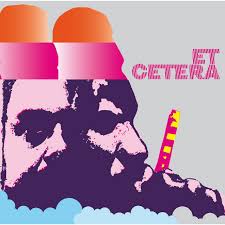
Et Cetera: One of Europe’s Most Visionary Ensembles
Among Wolfgang Dauner’s most important artistic achievements was the creation of Et Cetera, an ensemble that became one of the boldest laboratories of European jazz during the 1970s.
The group’s very name suggested openness.
Nothing remained final.
Nothing remained complete.
Every performance invited new possibilities.
Et Cetera combined improvisation with electronics.
Rock energy with chamber-like precision.
African and Asian rhythmic influences with European avant-garde composition.
The resulting music often resisted conventional classification.
Some listeners heard jazz fusion.
Others recognized elements of progressive rock.
Still others emphasized contemporary classical composition.
Dauner welcomed every interpretation.
His ambition had never been to create another genre.
It was simply to expand musical imagination.
JazzLatitude Insight
Wolfgang Dauner approached every new instrument with the same question: not “What is this supposed to do?” but “What has no one imagined it doing yet?” That curiosity made him one of Europe’s great musical innovators.
The Piano Meets Electronics
During the 1970s, electronic instruments began transforming popular music around the world.
Within jazz, however, many musicians remained uncertain about their artistic value.
Some viewed synthesizers as commercial novelties.
Others feared they would weaken acoustic improvisation.
Dauner adopted a remarkably different perspective.
For him, electronic keyboards represented additional colors rather than replacements.
They expanded the piano’s expressive possibilities.
Created new textures.
Suggested new compositional forms.
His electronic work remained deeply musical because it never prioritized technology over listening.
Machines served imagination.
Not the reverse.
In retrospect, Dauner anticipated many developments that would later become central to contemporary jazz.
The Jazz Ensemble Baden-Württemberg
Alongside his experimental projects, Dauner devoted considerable energy to large ensemble writing.
His work with the Jazz Ensemble Baden-Württemberg demonstrated another side of his musical personality.
The spontaneous freedom of his smaller groups gave way to carefully structured orchestration.
Complex arrangements.
Sophisticated counterpoint.
Room for improvisation within larger formal designs.
Rather than abandoning experimentation, Dauner simply explored it on a different scale.
These projects confirmed his reputation not only as a remarkable pianist but also as one of Germany’s most imaginative composers and arrangers.
A Composer Beyond the Jazz Club
One reason Wolfgang Dauner’s music possesses such unusual dramatic range is that much of his creative life unfolded beyond conventional jazz performance.
He composed for:
Film.
Television.
Radio.
Theatre.
Multimedia productions.
Each medium required different forms of musical storytelling.
Instead of relying exclusively upon improvisation, Dauner learned to shape atmosphere with extraordinary precision.
This experience enriched his jazz writing.
His later compositions display remarkable cinematic pacing.
Scenes unfold naturally.
Themes evolve gradually.
Silence becomes narrative.
Listeners often describe his music as visual even when no images accompany it.
The United Jazz + Rock Ensemble
Perhaps no project better illustrates Wolfgang Dauner’s collaborative spirit than the legendary United Jazz + Rock Ensemble.
Formed during the mid-1970s, the group assembled many of Europe’s greatest improvisers, including Albert Mangelsdorff, Volker Kriegel, Charlie Mariano, Eberhard Weber, Ian Carr, Ack van Rooyen, Barbara Thompson and others.
The ensemble quickly became known as a kind of European jazz supergroup.
Its music refused predictable formulas.
Jazz improvisation met rock energy.
Sophisticated composition coexisted with collective spontaneity.
Every concert became a celebration of creative dialogue.
Dauner stood naturally at the center of this remarkable conversation.
Not as dominating leader.
But as catalyst.
Eberhard Weber and a Shared Aesthetic
Among Dauner’s many collaborators, bassist Eberhard Weber occupies a particularly important place.
Both musicians shared remarkable openness toward new sounds.
Classical influence.
Electronic experimentation.
Architectural composition.
Yet their personalities differed significantly.
Weber cultivated extraordinary lyricism.
Dauner embraced constant reinvention.
Together they achieved a remarkable balance.
The partnership reflects one of the defining strengths of European jazz during this period.
Difference became creative energy rather than artistic conflict.
Between Structure and Freedom
Listening across Wolfgang Dauner’s extensive discography reveals a fascinating paradox.
No matter how experimental the music becomes, it rarely loses structural coherence.
Improvisation appears fearless.
Yet never arbitrary.
The influence of classical composition remains audible beneath spontaneous interaction.
Conversely, even his most carefully written pieces preserve the feeling that anything might happen.
This balance between freedom and architecture distinguishes Dauner from many contemporaries.
He neither abandoned form nor allowed it to restrict imagination.
Instead, the two continually enriched one another.
Essential Albums
For listeners discovering Wolfgang Dauner for the first time, these recordings provide the clearest introduction to one of Europe’s most inventive musical minds.
- Dream Talk (1964) — An early statement revealing Dauner’s remarkable originality within modern European jazz.
- Output (1970) — A bold exploration of free improvisation, contemporary composition and emerging electronic textures.
- Et Cetera (1971) — One of the defining recordings of experimental European jazz, combining electronics, improvisation and global influences.
- Knirsch (1972) — A vibrant fusion of jazz, rock and avant-garde composition that showcases Dauner’s restless creativity.
- United Jazz + Rock Ensemble – Live — Essential listening for understanding one of the most celebrated collaborative projects in European jazz history.
Together, these recordings document a career devoted not to preserving musical traditions, but to continually expanding them.
Buy Amazon
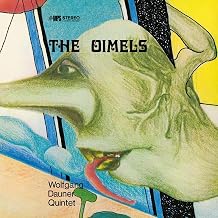
The Musician Who Expanded Europe’s Musical Imagination
Jazz history often remembers those who transformed a single instrument or introduced a new style. Wolfgang Dauner achieved something broader and, in many ways, more enduring. He expanded the very definition of what European jazz could become. Throughout more than five decades of creativity, he refused to accept artificial divisions between genres, technologies and artistic disciplines. His work demonstrated that improvisation could coexist naturally with contemporary classical composition, electronic experimentation, theatre, cinema and progressive rock without losing the spontaneity that lies at the heart of jazz.
This openness profoundly influenced later generations.
Many European musicians who today move freely between acoustic and electronic performance, composed structures and free improvisation, owe an important artistic debt to pioneers such as Dauner.
His influence is sometimes indirect.
Yet it remains unmistakable.
The freedom contemporary European jazz enjoys did not emerge by accident.
It was built patiently by artists willing to question inherited boundaries.
Dauner stood among the most courageous of them.
Germany as a Creative Center
When discussions of European jazz began expanding beyond Paris and London, Germany emerged as one of the continent’s most fertile artistic environments.
Figures such as Albert Mangelsdorff, Eberhard Weber, Joachim Kühn, Volker Kriegel and Wolfgang Dauner collectively transformed international perceptions of German jazz.
Each followed a distinct path.
Yet they shared several essential values.
Curiosity.
Technical excellence.
Respect for composition.
Openness toward experimentation.
Rather than defining themselves in opposition to American jazz, they enriched its international evolution through new perspectives.
Dauner’s contribution proved especially significant because of his remarkable stylistic breadth.
He connected communities that often remained separate.
Jazz musicians.
Classical composers.
Rock performers.
Electronic artists.
His career became a meeting place for ideas.
JazzLatitude Insight
Wolfgang Dauner reminds us that innovation is rarely the result of abandoning the past. It comes from refusing to believe that yesterday’s categories must also define tomorrow’s possibilities.
The Piano Reimagined
Although Dauner’s artistic legacy extends far beyond any single instrument, his contribution to jazz piano deserves particular recognition.
Unlike many virtuosos who sought increasingly elaborate technical display, Dauner approached the keyboard as an open laboratory.
Acoustic resonance.
Prepared piano.
Electric keyboards.
Synthesizers.
Percussive textures.
Unexpected timbres.
Every possibility interested him.
Importantly, experimentation never became an end in itself.
New sounds existed to support new musical ideas.
This philosophy anticipated the increasingly hybrid nature of contemporary keyboard performance, where acoustic and electronic instruments now coexist naturally within modern jazz.
Collaboration Without Hierarchy
Another defining aspect of Wolfgang Dauner’s career was his remarkable generosity as a collaborator.
Whether leading his own ensembles or participating in collective projects, he consistently approached music as conversation rather than competition.
The United Jazz + Rock Ensemble perhaps illustrates this quality most clearly.
Despite assembling many of Europe’s strongest musical personalities, the group avoided becoming a showcase for individual virtuosity.
Instead, dialogue remained central.
Dauner excelled in precisely this environment.
His confidence allowed him to support others without diminishing his own artistic voice.
The result was music that continues sounding unusually fresh decades later.
Beyond Labels
Critics have described Wolfgang Dauner as a jazz pianist.
A fusion pioneer.
An avant-garde composer.
An electronic innovator.
A classical modernist.
Each description contains elements of truth.
None proves entirely sufficient.
Perhaps the most accurate understanding recognizes that Dauner never sought stylistic identity as an objective.
He pursued curiosity.
Whenever musical boundaries appeared fixed, he explored what lay beyond them.
This attitude explains why his recordings resist chronological aging.
Many experiments that once seemed radical now appear remarkably prophetic.
Electronic textures.
Cross-genre collaboration.
Multimedia performance.
Global rhythmic dialogue.
These have become defining characteristics of contemporary music itself.
Essential Collaborations and Artistic Connections
Wolfgang Dauner’s extraordinary career was shaped by collaborations that reveal both his remarkable versatility and his central role within modern European jazz.
Among the most significant are:
- Eberhard Weber — Their shared interest in lyrical composition, electronic experimentation and structural innovation helped define important directions within German and European jazz.
- Albert Mangelsdorff — Together they explored new possibilities for free improvisation while contributing to the international reputation of German avant-garde jazz.
- United Jazz + Rock Ensemble — As one of the ensemble’s central creative forces, Dauner participated in one of Europe’s most influential collaborative projects, bringing together leading jazz and rock musicians from across the continent.
- Volker Kriegel — Their artistic relationship reflected the growing dialogue between jazz improvisation and progressive rock that reshaped European music during the 1970s.
- Charlie Mariano — The remarkable saxophonist’s openness to global musical traditions found an ideal creative partner in Dauner’s own boundary-crossing artistic philosophy.
Together, these collaborations reveal an artist who consistently viewed musical diversity not as stylistic experimentation but as a natural condition of creative life.
Technical Profile
Born:
- December 30, 1935
Died:
- January 10, 2020
Birthplace:
- Stuttgart, Germany
Primary Instruments:
- Piano
- Electric Piano
- Synthesizers
Professional Roles:
- Pianist
- Composer
- Arranger
- Bandleader
- Educator
Primary Styles:
- European Jazz
- Free Jazz
- Jazz Fusion
- Avant-Garde Jazz
- Contemporary Classical
- Electronic Jazz
Musical Characteristics:
- Bold harmonic imagination
- Integration of electronics
- Strong compositional architecture
- Free improvisation balanced by structural clarity
- Cross-genre experimentation
- Extraordinary stylistic versatility
Essential Albums:
- Dream Talk (1964)
- Output (1970)
- Et Cetera (1971)
- Knirsch (1972)
- United Jazz + Rock Ensemble – Live
Five Lesser-Known Facts About Wolfgang Dauner
1. He embraced electronic keyboards long before they became common in European jazz.
Rather than treating synthesizers as novelties, Dauner explored their expressive possibilities as legitimate instruments for improvisation and composition.
2. He composed extensively outside the jazz world.
His work for theatre, film, television and multimedia productions enriched the cinematic quality of his later jazz compositions.
3. The United Jazz + Rock Ensemble became known as Europe’s first jazz supergroup.
Dauner helped transform the ensemble into one of the continent’s most celebrated collaborative projects.
4. He believed improvisation and composition were complementary rather than opposing forces.
Throughout his career, carefully structured forms and spontaneous creation remained inseparable elements of his artistic language.
5. His influence reaches far beyond jazz piano.
Many contemporary European composers, improvisers and electronic musicians continue drawing inspiration from Dauner’s fearless approach to crossing artistic boundaries.
Frequently Asked Questions
Who was Wolfgang Dauner?
Wolfgang Dauner was a German pianist, composer and musical innovator widely regarded as one of the pioneers of modern European jazz. His work combined improvisation, contemporary classical music, electronic experimentation and jazz fusion into a uniquely original artistic language.
Why is Wolfgang Dauner important?
Dauner helped redefine European jazz by expanding its relationship with electronics, composition, free improvisation and interdisciplinary collaboration, profoundly influencing later generations of musicians.
What is Wolfgang Dauner’s most important group?
Among his many projects, Et Cetera and the United Jazz + Rock Ensemble remain his most historically significant, both demonstrating his remarkable ability to unite musicians across stylistic boundaries.
Did Wolfgang Dauner record for ECM Records?
Although not exclusively associated with ECM, Dauner worked within the broader creative environment that shaped modern European jazz, sharing artistic ideals with many musicians closely connected to the label.
Which artists are similar to Wolfgang Dauner?
Listeners who appreciate Wolfgang Dauner often explore Joachim Kühn, Eberhard Weber, Jan Garbarek, Volker Kriegel, Keith Jarrett, Chick Corea, Herbie Hancock, Soft Machine, Weather Report and Nik Bärtsch, all of whom explore different relationships between improvisation, composition and innovation.
JazzLatitude Rating
| Category | Rating |
|---|---|
| Piano Performance | ★★★★★ |
| Compositional Originality | ★★★★★ |
| Artistic Innovation | ★★★★★ |
| Contribution to European Jazz | ★★★★★ |
| Electronic Experimentation | ★★★★★ |
| Cross-Genre Influence | ★★★★★ |
| Replay Value | ★★★★★ |
| Historical Importance | ★★★★★ |
| JazzLatitude Essential | ★★★★★ |
Final Thoughts
Wolfgang Dauner occupies a singular place in the history of modern jazz because he never viewed musical categories as permanent realities. Throughout his remarkable career, he approached every new style, instrument and collaboration with the curiosity of an explorer rather than the certainty of a specialist. Whether performing acoustic piano, experimenting with synthesizers, composing for theatre or leading groundbreaking ensembles, Dauner consistently expanded the creative possibilities available to European jazz.
His importance extends far beyond Germany. At a time when many musicians still understood jazz through relatively fixed stylistic boundaries, Dauner demonstrated that improvisation could thrive in dialogue with contemporary classical composition, electronic music, progressive rock and multimedia performance. This openness anticipated artistic practices that have since become central to twenty-first-century music, making many of his boldest experiments feel strikingly modern even today.
Equally significant was his role as a collaborator. Projects such as Et Cetera and the United Jazz + Rock Ensemble revealed a musician whose greatest strength lay not in dominating conversations but in creating environments where extraordinary ideas could emerge collectively. His work with Eberhard Weber, Albert Mangelsdorff, Volker Kriegel and Charlie Mariano illustrates a broader vision of European jazz as an international network of creative exchange rather than a collection of isolated national traditions.
Looking back across his vast discography, one quality remains constant despite decades of stylistic evolution: an unwavering belief that music should remain open to surprise. Wolfgang Dauner never treated innovation as a fashionable gesture or an intellectual exercise. For him, curiosity itself was an artistic responsibility. Every composition, every performance and every collaboration became another opportunity to ask what jazz might still become.
For anyone seeking to understand how European jazz evolved from postwar modernism into the adventurous, boundary-crossing music we know today, Wolfgang Dauner is far more than a remarkable pianist.
He is one of the essential architects of modern European musical imagination.