
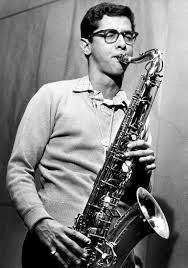
When Paris Became the Capital of Modern Jazz
For much of the twentieth century, no city outside the United States embraced jazz with greater passion than Paris. During the years following the Second World War, the French capital became a sanctuary for American musicians seeking artistic freedom and a meeting place for an emerging generation of European improvisers determined to develop voices of their own. Night after night, the cellars of Saint-Germain-des-Prés echoed with bebop, cool jazz and modern improvisation. Writers, painters, philosophers and filmmakers shared cafés with saxophonists, pianists and trumpeters. Existentialism, cinema and jazz became inseparable elements of the city’s cultural identity.
Among the young musicians who emerged from this extraordinary environment, Barney Wilen possessed a rare combination of qualities. He admired the great American masters deeply, yet he never sounded like an imitator. His tenor and soprano saxophone carried the elegance of Lester Young, the harmonic curiosity of modern jazz and an unmistakably European sense of lyricism. Long before critics began discussing a distinct European jazz identity, Wilen was already helping to create one.
Unlike many celebrated virtuosos, his influence was often subtle.
He preferred atmosphere to spectacle.
Narrative to technical display.
Conversation to competition.
These characteristics made him an ideal collaborator not only for jazz musicians but also for filmmakers searching for new emotional languages.
His career would soon intersect with one of the defining artistic movements of the twentieth century.
The French New Wave.
A Childhood Between Worlds
Bernard Jean Wilen was born on March 4, 1937, in Nice, France, into an unusually cosmopolitan family.
His father was American.
His mother was French.
From an early age, he experienced different languages, cultures and artistic traditions.
This international upbringing proved significant.
Jazz never appeared to him as foreign music.
Nor did European culture seem isolated from American artistic developments.
Instead, both traditions coexisted naturally.
Listening became an act of cultural dialogue.
This openness would later distinguish Wilen from many musicians whose artistic identities developed within more narrowly defined national traditions.
Paris After the War
When Wilen arrived in Paris as a young musician, the city occupied a unique position within international jazz.
American artists such as Sidney Bechet, Kenny Clarke, Bud Powell and later Miles Davis found enthusiastic audiences there.
French musicians absorbed bebop with extraordinary enthusiasm.
Record shops imported new recordings almost as quickly as they appeared in New York.
Jazz clubs multiplied throughout Saint-Germain-des-Prés.
The atmosphere encouraged experimentation.
Unlike the commercial pressures affecting many American musicians, Paris often rewarded artistic curiosity.
Improvisation flourished alongside literature, cinema and philosophy.
For a young saxophonist with Barney Wilen’s sensitivity, it proved the ideal artistic environment.
Learning from the Masters
Like nearly every saxophonist of his generation, Wilen began by studying the giants of American jazz.
Lester Young taught him lyricism.
Charlie Parker demonstrated rhythmic freedom.
Dexter Gordon revealed the expressive possibilities of modern tenor saxophone.
Later, Sonny Rollins and John Coltrane expanded the instrument’s harmonic vocabulary even further.
Yet Wilen’s development followed a remarkably independent path.
He admired these musicians profoundly.
But he listened analytically rather than imitatively.
What interested him most was not reproducing their phrases.
It was understanding how they communicated personality through sound.
That search for an individual voice would soon attract the attention of one of jazz’s greatest innovators.
JazzLatitude Insight
Barney Wilen reminds us that originality often begins with listening rather than speaking. Before he developed one of Europe’s most distinctive saxophone voices, he spent years understanding why the American masters sounded unmistakably like themselves.
The Meeting That Changed Everything
In 1957, Barney Wilen’s career took a dramatic turn when Miles Davis arrived in Paris.
Already one of the world’s leading jazz musicians, Davis had been invited to record the soundtrack for Louis Malle’s film Ascenseur pour l’Échafaud (Elevator to the Gallows).
Rather than bringing an American ensemble, Miles assembled a group of outstanding French musicians.
Among them stood the twenty-year-old Barney Wilen.
The sessions have since entered jazz history.
Watching scenes from the unfinished film projected inside the studio, the musicians improvised directly to the images.
No elaborate written score existed.
Only mood.
Emotion.
Silence.
Atmosphere.
Miles’ muted trumpet floated through the darkness.
Wilen’s saxophone responded with extraordinary restraint.
Together they created one of cinema’s most influential soundtracks.
The recording permanently changed relationships between jazz and film.
Jazz and the French New Wave
Although Ascenseur pour l’Échafaud technically preceded the full emergence of the French New Wave, its artistic philosophy anticipated many of the movement’s defining characteristics.
Improvisation replaced rigid structure.
Mood outweighed narrative explanation.
Urban space became emotional landscape.
Jazz ceased functioning as background music.
It became another character.
Barney Wilen’s contribution proved essential.
His lyrical phrasing captured the melancholy, uncertainty and quiet elegance that would soon define an entire generation of French cinema.
Few jazz musicians have become so closely associated with the emotional identity of a cinematic movement.
A New European Voice
Following the success of the Miles Davis sessions, Barney Wilen rapidly established himself among Europe’s most respected young saxophonists.
Critics admired his technical refinement.
Fellow musicians valued his listening.
Audiences responded to the remarkable emotional honesty of his playing.
Without seeking attention, Wilen had become one of the central figures in a new chapter of jazz history.
Europe was beginning to discover its own voice.
And Barney Wilen was among those quietly teaching it how to speak.
Buy Amazon

Becoming the Voice of French Modern Jazz
The sessions with Miles Davis transformed Barney Wilen’s reputation almost overnight, but they did not define his artistic identity. For many musicians, such an early collaboration with a legendary figure might have become an impossible shadow to escape. Wilen chose another path. Rather than building a career upon proximity to greatness, he quietly developed a musical language that reflected Paris itself—elegant without pretension, intellectually curious without becoming detached, lyrical without surrendering to sentimentality.
This independence soon became evident in his own recordings.
His improvisations unfolded patiently.
Melodies emerged with remarkable naturalness.
Silence carried emotional meaning.
Technical brilliance remained almost invisible beneath extraordinary musical taste.
Listeners were drawn not toward displays of virtuosity but toward atmosphere.
That quality would distinguish Barney Wilen throughout his career.
Jazz sur Seine
Released in 1959, Jazz sur Seine remains one of the defining recordings of postwar French jazz.
The album captures a remarkable moment when European musicians had begun moving beyond imitation while still maintaining profound respect for the American tradition.
Wilen’s tenor saxophone leads the session with quiet confidence.
His phrasing feels conversational.
His melodic imagination avoids predictable bebop formulas.
Instead of filling every space, he allows ideas to breathe.
The rhythm section responds with similar sensitivity.
Collectively, the ensemble achieves an intimacy more commonly associated with chamber music than nightclub performance.
Today, Jazz sur Seine is widely regarded as one of the essential documents of modern European jazz.
JazzLatitude Insight
Barney Wilen understood that sophistication does not come from complexity alone. His music demonstrates that restraint, timing and careful listening often communicate more deeply than the busiest improvisation.
Sharing the Stage with American Masters
During the late 1950s and early 1960s, Paris remained one of the world’s great meeting places for jazz musicians.
American artists touring Europe frequently found themselves performing alongside local players.
Barney Wilen quickly became one of the musicians they most respected.
He collaborated with Art Blakey.
Performed with Kenny Clarke.
Worked alongside Bud Powell.
Encountered Thelonious Monk.
Each collaboration broadened his understanding of jazz while reinforcing his confidence in the emerging European scene.
Importantly, Wilen never approached these encounters as opportunities merely to prove himself.
He listened.
Adapted.
Contributed.
His generosity made him an exceptionally valued ensemble musician.
Paris, Cinema and the Arts
Unlike New York, where jazz often evolved within clubs and concert halls, postwar Paris encouraged constant interaction between artistic disciplines.
Filmmakers attended jazz performances.
Writers discussed improvisation.
Painters collaborated with musicians.
Existentialist philosophy shaped conversations extending long into the night.
Barney Wilen moved naturally within this environment.
His music reflected cinematic pacing.
Literary subtlety.
Visual imagination.
Rather than composing dramatic emotional climaxes, he often created atmosphere through suggestion.
This multidimensional artistic culture explains why his recordings continue appealing to listeners beyond traditional jazz audiences.
The African Journey
One of the most remarkable episodes in Barney Wilen’s life began in the late 1960s, when he embarked upon an ambitious journey across Africa.
Rather than touring conventional concert circuits, Wilen traveled extensively through the continent, documenting local musical traditions while reflecting upon jazz’s deeper historical connections to Africa.
The expedition fundamentally altered his artistic perspective.
Improvisation acquired new meanings.
Rhythm became increasingly organic.
Listening assumed greater importance than performance.
The resulting experiences eventually inspired one of the most fascinating recordings in his catalogue.
Moshi
Released in 1972, Moshi stands apart from virtually everything else Barney Wilen recorded.
Part travel diary.
Part ethnographic reflection.
Part jazz experiment.
The album incorporates field recordings, spoken voices, environmental sounds and improvisation into an unusually immersive listening experience.
Commercially, it puzzled many listeners upon release.
Artistically, it anticipated developments that would later become common within contemporary jazz, ambient music and sound art.
Today, Moshi enjoys growing recognition as one of Wilen’s most adventurous achievements.
It reveals an artist willing to question not only jazz vocabulary but the very definition of what an album could become.
Years Away from the Spotlight
Unlike many celebrated jazz musicians who maintained continuous international visibility, Barney Wilen experienced extended periods during which public attention shifted elsewhere.
Changing musical fashions.
The rise of rock.
Economic realities.
Personal artistic choices.
All contributed to his reduced profile.
Yet these quieter years never represented creative stagnation.
Wilen continued studying.
Listening.
Writing.
Exploring different artistic directions.
Rather than chasing trends, he remained patiently committed to musical authenticity.
This refusal to compromise would later allow an extraordinary artistic renaissance.
A Remarkable Return
During the 1980s and especially throughout the 1990s, a new generation of listeners rediscovered Barney Wilen.
Reissues of earlier recordings attracted international attention.
Critics reassessed his historical importance.
Young European musicians recognized him as one of the architects of their own musical heritage.
Wilen himself responded not through nostalgia but through renewed creativity.
His later recordings possess remarkable maturity.
The lyricism remains.
The elegance deepens.
Silence becomes even more expressive.
Far from simply revisiting past achievements, he demonstrated that artistic growth could continue throughout an entire lifetime.
Essential Albums
For listeners discovering Barney Wilen for the first time, these recordings provide the ideal introduction to one of Europe’s most lyrical and influential saxophonists.
- Ascenseur pour l’Échafaud (1958) — Miles Davis’ legendary soundtrack featuring Barney Wilen’s unforgettable contribution to one of cinema’s greatest jazz recordings.
- Jazz sur Seine (1959) — The defining statement of Wilen’s early career and one of the masterpieces of French modern jazz.
- Tilt (1957) — An elegant early recording revealing the remarkable maturity of the young saxophonist.
- Moshi (1972) — A visionary and experimental project inspired by Wilen’s journey through Africa.
- La Note Bleue (1991) — A beautiful late-career recording that reflects his artistic renaissance with extraordinary warmth and sophistication.
Together, these albums reveal a musician whose artistic curiosity continually expanded while preserving one of the most distinctive lyrical voices in European jazz.
Buy Amazon

The Quiet Architect of European Modern Jazz
Jazz history often celebrates its loudest revolutionaries. The musicians whose innovations transformed the music overnight naturally occupy prominent places in books and documentaries. Yet the evolution of jazz has also depended upon quieter figures whose influence spread gradually through elegance, curiosity and artistic integrity rather than spectacle. Barney Wilen belongs unmistakably to this second tradition. He never sought the public mythology surrounding many of his American contemporaries, nor did he cultivate the image of a virtuoso determined to redefine the saxophone through technical extremes. His revolution was subtler. He helped demonstrate that European jazz could develop its own emotional vocabulary while remaining deeply connected to the music’s African American origins.
This achievement continues to resonate throughout contemporary jazz.
Today, countless European improvisers approach melody with similar patience.
Atmosphere carries equal importance to harmonic sophistication.
Cinema, literature and visual art naturally enter musical conversation.
Silence becomes expressive rather than empty.
These qualities did not originate solely with Barney Wilen.
Yet few musicians embodied them more completely.
Jazz Beyond National Borders
One of the remarkable aspects of Wilen’s career is the ease with which he moved between artistic worlds.
American bebop.
French cinema.
African musical traditions.
European chamber-like lyricism.
Modern improvisation.
Rather than treating these influences as separate categories, Wilen understood them as different expressions of the same creative curiosity.
His music therefore avoided cultural nationalism.
It remained unmistakably French.
Yet equally international.
This openness explains why his recordings continue speaking naturally to listeners across generations and continents.
JazzLatitude Insight
Barney Wilen proved that elegance is never the opposite of innovation. Some of jazz’s most enduring revolutions occur quietly, through musicians who expand the emotional possibilities of the music without announcing that they are changing history.
Rediscovery and Reassessment
During the final decades of the twentieth century, critics and musicians increasingly returned to Barney Wilen’s catalogue with fresh ears.
Earlier recordings acquired new historical significance.
His collaborations with Miles Davis were reexamined.
Jazz sur Seine became recognized as one of the foundational documents of French modern jazz.
Moshi appeared remarkably ahead of its time.
Rather than viewing Wilen as an interesting footnote within postwar European jazz, historians began acknowledging him as one of its principal architects.
This reassessment reflected broader changes in jazz scholarship.
Increasing attention was finally being given to the independent development of European improvisation rather than interpreting it solely through American comparisons.
In that expanded narrative, Barney Wilen occupies an essential position.
The French Sound
Although France produced many distinguished jazz musicians during the twentieth century, Barney Wilen remains uniquely associated with the lyrical sophistication often identified with French modern jazz.
His playing reflects qualities deeply rooted in French artistic culture.
Refinement.
Emotional restraint.
Narrative subtlety.
Sensitivity to atmosphere.
Rather than overwhelming listeners through dramatic intensity, he invited them into carefully shaped emotional landscapes.
These characteristics made his music especially compatible with cinema.
Yet they also explain why his recordings continue aging so gracefully.
Nothing feels exaggerated.
Nothing depends upon fashion.
The performances remain timeless because they trust simplicity.
A Legacy of Listening
Perhaps Barney Wilen’s greatest lesson for younger musicians concerns listening itself.
He approached improvisation not as an opportunity to dominate conversation but to deepen it.
Every collaborator mattered.
Every silence mattered.
Every phrase responded to what had already occurred.
This philosophy continues influencing European jazz education today.
Students increasingly recognize that originality emerges not only from technical development but from the ability to hear others with unusual sensitivity.
Wilen exemplified that principle throughout his career.
Essential Collaborations and Artistic Connections
Barney Wilen’s remarkable artistic journey was shaped by collaborations that illuminate both his extraordinary versatility and his central role in the evolution of European jazz.
Among the most significant are:
- Miles Davis — Their work on Ascenseur pour l’Échafaud created one of the most influential jazz soundtracks in cinema history and introduced Wilen to an international audience.
- Art Blakey — Performing alongside one of jazz’s greatest bandleaders strengthened Wilen’s connection to the hard bop tradition while confirming his place among Europe’s finest young improvisers.
- Kenny Clarke — One of bebop’s founding drummers, Clarke became a key figure in postwar Paris and an important collaborator during the formative years of French modern jazz.
- Bud Powell — Their musical relationship reflected the extraordinary artistic exchanges taking place in Paris during the 1950s, when many American jazz masters found creative freedom in France.
- The French New Wave — Although not a musician, the cinematic movement profoundly shaped Wilen’s artistic identity, encouraging an approach to improvisation based upon atmosphere, narrative and emotional subtlety.
Together, these collaborations reveal an artist who consistently moved across artistic disciplines while helping define a uniquely European approach to jazz.
Technical Profile
Born:
- March 4, 1937
Died:
- May 25, 1996
Birthplace:
- Nice, France
Primary Instruments:
- Tenor Saxophone
- Soprano Saxophone
Professional Roles:
- Saxophonist
- Composer
- Bandleader
Primary Styles:
- Modern Jazz
- Cool Jazz
- Hard Bop
- European Jazz
- French Jazz
Musical Characteristics:
- Warm lyrical phrasing
- Elegant melodic development
- Cinematic atmosphere
- Refined harmonic language
- Exceptional ensemble sensitivity
- Thoughtful use of silence
Essential Albums:
- Ascenseur pour l’Échafaud (1958, with Miles Davis)
- Jazz sur Seine (1959)
- Tilt (1957)
- Moshi (1972)
- La Note Bleue (1991)
Five Lesser-Known Facts About Barney Wilen
1. He was only twenty years old when Miles Davis invited him to record Ascenseur pour l’Échafaud.
That extraordinary opportunity launched one of the most important careers in European jazz.
2. He explored Africa long before “world music” became a common concept.
His travels inspired Moshi, one of the earliest jazz albums to integrate field recordings, environmental sound and cross-cultural reflection into a unified artistic statement.
3. Cinema profoundly shaped his musical imagination.
Wilen approached improvisation with an unusually visual sense of pacing, atmosphere and emotional storytelling.
4. He disappeared from public attention without ever abandoning artistic exploration.
During years outside the spotlight, he continued studying, traveling and refining his musical language, paving the way for his celebrated artistic renaissance.
5. His influence exceeds his commercial fame.
Many leading European saxophonists regard Barney Wilen as one of the defining architects of modern French jazz, despite his relatively modest international visibility during much of his lifetime.
Frequently Asked Questions
Who was Barney Wilen?
Barney Wilen was a French saxophonist and composer widely regarded as one of the pioneers of modern European jazz. His collaborations with Miles Davis, his association with French cinema and his uniquely lyrical improvisational style helped define the identity of postwar French jazz.
Why is Barney Wilen important?
Wilen played a central role in the emergence of European jazz as an independent artistic voice. His recordings demonstrated that French musicians could contribute original ideas to modern jazz while maintaining deep respect for the music’s American roots.
What is Barney Wilen’s most famous recording?
He is best known internationally for his work with Miles Davis on the soundtrack to Ascenseur pour l’Échafaud and for his landmark album Jazz sur Seine, one of the masterpieces of French modern jazz.
What style of jazz did Barney Wilen play?
His music combined cool jazz, hard bop and modern European lyricism with remarkable melodic sensitivity, creating an elegant and cinematic approach to improvisation.
Which artists are similar to Barney Wilen?
Listeners who appreciate Barney Wilen often explore Jan Garbarek, Wayne Shorter, Stan Getz, Lee Konitz, Martial Solal, Chet Baker, Steve Lacy, Paul Desmond, Dexter Gordon and Charles Lloyd, all of whom reveal different approaches to lyrical improvisation and expressive restraint.
JazzLatitude Rating
| Category | Rating |
|---|---|
| Saxophone Performance | ★★★★★ |
| Melodic Lyricism | ★★★★★ |
| Artistic Originality | ★★★★★ |
| Contribution to European Jazz | ★★★★★ |
| Cinematic Influence | ★★★★★ |
| Historical Importance | ★★★★★ |
| Replay Value | ★★★★★ |
| Legacy | ★★★★★ |
| JazzLatitude Essential | ★★★★★ |
Final Thoughts
Barney Wilen’s career reminds us that jazz history is shaped not only by its most celebrated innovators but also by artists whose influence unfolds quietly over time. His music never demanded attention through spectacle or virtuosity alone. Instead, it invited listeners into a world where melody, atmosphere and attentive listening carried extraordinary expressive power. In doing so, Wilen helped establish an artistic identity for European jazz that continues to resonate more than half a century later.
His contribution reached far beyond France. Through collaborations with Miles Davis, performances alongside American masters and his close relationship with the creative energy of postwar Paris, Wilen became a bridge between traditions. He absorbed the language of bebop without becoming confined by it. He embraced cinema, literature and visual art without losing sight of jazz’s improvisational essence. His recordings reveal an artist who believed that elegance and emotional honesty could communicate more profoundly than technical excess.
The enduring fascination with albums such as Jazz sur Seine, Moshi and Ascenseur pour l’Échafaud reflects more than historical nostalgia. These recordings continue to feel remarkably contemporary because they explore ideas that remain central to modern improvisation: the importance of atmosphere, the expressive value of silence and the possibility of genuine dialogue between cultures. Long before such conversations became commonplace, Barney Wilen was already living them through his music.
Today, the richness of European jazz owes much to pioneers who quietly expanded its possibilities without seeking to replace the traditions that inspired them. Among those pioneers, Barney Wilen occupies a distinctive place. He proved that French jazz could develop its own poetic voice while remaining part of the broader international story of improvisation.
For anyone seeking to understand how jazz evolved beyond its American birthplace into a truly global art form, Barney Wilen is far more than an elegant saxophonist.
He is one of the essential storytellers who gave European jazz its lyrical, cinematic and unmistakably human voice.