
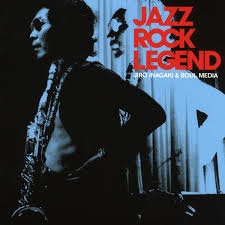
The Chronicle of an Era: The Tokyo Economic Miracle and the Birth of a High-Fidelity Future
By 1975, Tokyo had transformed into a sprawling, hyper-futuristic metropolis operating at a dizzying, electric velocity. The Japanese economic miracle was in full swing, turning the city into a global epicenter of high technology, architectural avant-garde, and a neon-drenched nightlife that never slept. Inside this urban pressure cooker, a profound cultural mutation was taking place. The young, hyper-educated generation of Japanese musicians was no longer content with just mastering the complex structures of American bebop or classical music. They were obsessed with groove, fidelity, and electricity. They wanted to build a native sound that could soundtrack the fast-paced, late-night reality of a city driving into the 21st century.
At the absolute vanguard of this sonic revolution stood the legendary saxophonist and bandleader Jiro Inagaki. Inagaki was a visionary engineer of rhythm who understood that the traditional boundaries dividing modern jazz, heavy American funk, and psychedelic rock were completely obsolete. In the hot, humid summer of 1975, Inagaki gathered his elite studio supergroup, Soul Media, inside the high-fidelity sanctuary of Nippon Columbia’s studios. When the tapes began to roll for the recording of Funky Stuff, they weren’t looking to create a polite, background jazz record. They came to construct a massive, gleaming machine of syncopated rhythm—an album so clean, so powerful, and so devastatingly precise that it permanently redefined the parameters of global Jazz-Funk and became the ultimate, holy grail blueprint for what international collectors would later call the golden era of Japanese groove.
The Biography & The Construction of a Myth: The Saxophone General and His Electric Army
Jiro Inagaki was a perfectionist with a general’s mind and a soul drenched in the blues. Born in Tokyo, he had spent the 1960s climbing the ranks of the fierce Japanese jazz scene, a musician possessing a sharp, biting tone on the tenor and alto saxophones that was heavily inspired by the soulful grit of King Curtis and the modal intellect of John Coltrane. But Inagaki’s true genius lay in his unmatched ability as a bandleader and conceptualist. He realized that to make jazz survival-ready for the 1970s, it needed to be injected with the raw, physical grease of James Brown, Sly and the Family Stone, and the electric, distorted edge of Miles Davis’s Bitches Brew era.
To achieve this, Inagaki assembled Soul Media, a hand-picked collective of Japan’s most terrifyingly proficient session musicians who operated less like a traditional jazz combo and more like a high-performance Formula 1 engine. At the rhythmic core of this machine was the phenomenal bass player Akira Okazawa, a man whose thumb and fingers could lock into a heavy, repetitive funk pattern with the unbreakable consistency of a Swiss watch. Alongside him stood the brilliant drummer Hajime Ishimatsu, a master of the hard, snapping backbeat who brought a rock-and-roll muscle to the jazz grid, and the extraordinary keyboardist Hiromasa Suzuki, who treated the Fender Rhodes electric piano not just as a chord instrument, but as a textural weapon, using wah-wah pedals, phasers, and synthesizers to create a rich, midnight-blue atmosphere.
When this group entered the studio, they brought a uniquely Japanese artistic philosophy to American funk: an obsession with absolute spatial clarity, crystalline separation of instruments, and a flawless technical execution where not a single note or drum hit was wasted. Every arrangement was calculated to maximize the physical impact of the groove, leaving no room for sloppy improvisations. It was high-art chemistry played at 120 miles per hour.
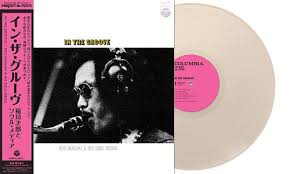
The Anatomy of the Vinyl: A Sensorial Walk Through the Midnight Highways of Shibuya
To drop the diamond tip onto the original 1975 Columbia/Project-G Japanese lacquer of Funky Stuff is to feel a physical surge of electricity hit your speakers. The album detonates its opening statement with the earth-shattering groove of “Painted Paradise”. The track starts with a legendary, naked bassline from Akira Okazawa that is instantly joined by a crisp, snapping snare drum break. Then, the Soul Media horn section hits you like a wall of brass thunder—perfectly synchronized, razor-sharp lines that cut through the air with surgical precision. Inagaki takes the first solo on tenor saxophone, delivering a gritty, blues-soaked sermon that rides over Suzuki’s bubbling, distorted Fender Rhodes chords. The energy is urgent, nocturnal, and completely intoxicating.
The sonic landscape shifts into a deeper, cooler state of high-fidelity luxury with the title track, “Funky Stuff”. Here, the band slows the tempo down to a heavy, low-slung, seductive strut that sounds like a sports car cruising through the neon lights of Shibuya at 3:00 AM. Suzuki’s electric piano work on this track is a masterclass in atmospheric depth, using a soft, sweeping tremolo effect that cushions the track’s hard rhythmic edge. Inagaki switches to the alto saxophone, bending his phrases with a sensual, breathy romanticism that proves that Soul Media could deliver deep emotional nuance just as easily as explosive speed.
Flip the heavy vinyl over to Side B, and you are confronted by the spectacular, progressive fusion of “Breeze”. Written by Hiromasa Suzuki, the track is a beautifully complex, modal jazz-funk journey that stretches the band’s improvisational limits. Ishimatsu’s drumming here is a pointillistic marvel, shifting accents across the bar lines while Okazawa’s bass line remains completely unshakeable, anchoring the universe. The horns weave in and out of the composition like shifting winds, leading into a blistering, psychedelic guitar solo from guest axeman Tsunehide Matsuki that injects a raw, rock-and-roll danger right into the center of the sophisticated arrangement.
The record achieves its absolute peak of late-night euphoria with the closing sprint of “Get Up”. A furious, high-speed reimagining of the classic funk ethos, the track features the horns playing a dizzying, unison melody at breakneck speed without ever losing a microsecond of timing. As the track mounts to its climax, Inagaki’s saxophone screams into the upper register, backed by a thunderous drum outro that leaves the room vibrating with pure, kinetic energy long after the final revolution of the vinyl enters the run-out groove.
The Legacy and Modern Coordinates: The Immortal Renaissance of the Nippon Groove
The historical and global resonance of Jiro Inagaki & Soul Media is one of the most fascinating phenomena in modern music culture. While Funky Stuff was highly respected by Japanese audiophiles and jazz purists upon its release in 1975, the album spent decades as a deeply hidden, mythic secret known only to the most hardcore international crate-diggers. However, with the arrival of the digital age and the global explosion of interest in Japanese City Pop, Jazz-Fusion, and Vaporwave culture, the record underwent an unprecedented, global renaissance.
Today, Funky Stuff is universally recognized by modern DJs, hip-hop producers, and electronic artists as a foundational holy grail of global groove. Its flawless drum breaks and heavy basslines are constantly sampled by contemporary boom-bap and lo-fi producers looking to inject that pristine, 1970s Tokyo nighttime warmth into their tracks; modern jazz-funk outfits across Europe and America study Inagaki’s tight horn arrangements to replicate his signature balance of raw grit and architectural precision; and original vinyl pressings of the album now command legendary, astronomical prices on the global collector market. Jiro Inagaki and his electric army carved a sharp, glittering, and permanently neon-indigo coordinate on the map of Jazz Latitude: an immortal, midnight lighthouse that reminds us that when absolute technical perfection meets the untamed soul of the groove, the music becomes permanently timeless.