Before Kind of Blue: When Harmony Became a Cage
By the end of the 1950s, Miles Davis had reached a point that great improvisers eventually confront: mastery of an existing language had begun to reveal its limitations. Bebop and hard bop had expanded jazz harmony to extraordinary levels of sophistication, but that sophistication came with a cost. A soloist navigating rapidly changing chord progressions had to devote enormous attention to negotiating harmony measure by measure. The system could produce astonishing improvisation—Charlie Parker had already demonstrated that—but Miles was increasingly attracted to another possibility. What might happen if the harmonic landscape changed more slowly? What if a musician were given fewer chords, longer stretches of tonal space and greater responsibility for deciding what to place inside them?
This was not a rejection of harmony. Miles was looking for a different relationship with it. Instead of improvisation functioning primarily as a brilliant journey through predetermined chord changes, a mode or limited harmonic field could become an environment. Melody, rhythm, tone, register and silence would consequently acquire greater importance. A musician confronted with fewer harmonic instructions did not necessarily have less to think about. In some ways, the opposite was true. Reduced harmonic movement removed familiar solutions. The improviser had to create direction rather than rely on the progression to provide it. This search had already begun to surface in Miles’s music before 1959, and Kind of Blue would not invent modal jazz from nothing. What the album accomplished was to bring a developing set of ideas into an unusually concentrated, persuasive and influential form.
George Russell and the Modal Possibility
Any account of this transition needs to acknowledge George Russell, whose theoretical work helped formalize an alternative way of thinking about jazz improvisation. Russell’s Lydian Chromatic Concept of Tonal Organization, first published in the 1950s, explored relationships between scales and tonal centers in ways that differed from conventional chord-by-chord thinking. It would be an exaggeration to draw a straight line from Russell’s theory to Kind of Blue and claim that Miles simply applied a system. Jazz history rarely develops so neatly. But Russell belonged to the intellectual and musical environment in which musicians were reconsidering the dominance of functional harmony, and Bill Evans had worked directly with him.
Miles did not need to become a theoretician to recognize the musical possibilities. His instincts had always favored economy. From the muted trumpet performances that helped establish his reputation to the spacious phrasing that distinguished him from more densely virtuosic contemporaries, Miles understood that what a musician omitted could be as expressive as what he played. Modal structures gave that instinct a larger compositional framework.
The connection between theory and practice therefore matters less as a question of who “invented” modal jazz than as evidence of a broader transformation. Musicians were searching for ways to escape harmonic routines that had become increasingly codified. Miles was one of several artists exploring the territory, but he possessed an unusual ability to turn an experimental idea into music that sounded inevitable.
Milestones: The Door Opens
The clearest immediate precursor was Milestones, recorded in 1958. The album still contains hard-bop language, blues and conventional harmonic structures, but its title composition points decisively toward the future. “Milestones” creates extended modal areas rather than forcing improvisers through a dense sequence of chord changes.
The effect is liberating but demanding.
A conventional progression continually supplies new harmonic information. On a modal composition, the improviser may remain in the same harmonic area for much longer. The musician must therefore generate contrast through melodic development, rhythm, dynamics, articulation and interaction with the rhythm section.
Miles immediately understood the value of this environment.
So did John Coltrane, although he responded to it very differently.
That difference would become one of the great dramatic tensions of Kind of Blue.
Miles reduced.
Coltrane expanded.
Both found freedom in the same space.
The Sextet
The ensemble Miles assembled around this period was extraordinary even before Kind of Blue existed. John Coltrane played tenor saxophone, Julian “Cannonball” Adderley alto, Paul Chambers bass and Jimmy Cobb drums. The piano chair had recently passed from Bill Evans to Wynton Kelly, but for the Kind of Blue sessions Miles brought Evans back, while Kelly appeared on “Freddie Freeloader.” The official session documentation confirms the personnel and this unusual division of the piano role.
What made the group remarkable was not simply the future historical importance of its members. Their musical personalities were radically different.
Cannonball possessed an earthy, blues-inflected exuberance.
Coltrane was becoming increasingly intense and harmonically searching.
Evans brought a refined approach to voicing, touch and harmonic color.
Kelly had an unmistakable rhythmic buoyancy rooted in blues and swing.
Chambers could anchor the ensemble while remaining melodically inventive.
Cobb possessed the restraint necessary to allow all of these personalities room.
And Miles stood in the middle without trying to make anyone sound like him.
The differences were the point.
Bill Evans and the Color of the Album
Bill Evans’s role has sometimes been exaggerated into the claim that he was essentially responsible for the aesthetic of Kind of Blue. That goes too far. Miles was the leader, conceptual center and principal composer credited on the original album, and his interest in modal structures had already become audible before these sessions.
But Evans was crucial.
His approach to harmony gave Miles access to colors that differed from the more blues-oriented language of many hard-bop pianists. Evans had studied classical repertoire extensively and absorbed harmonic possibilities extending beyond standard jazz vocabulary. Discussions of his playing often invoke European composers such as Debussy and Ravel, but reducing his style to “classical influence” misses how thoroughly he integrated those sounds with jazz rhythm, standards, bebop and his own developing conception of the piano.
Miles heard something useful in that combination.
Evans had actually left Miles’s working band by late 1958, with Wynton Kelly replacing him. Yet when Miles prepared Kind of Blue, he specifically invited Evans back. The official Miles Davis archive describes him as an “integral spark” in the album’s concept.
The decision would profoundly affect the record.
The Difference Between Evans and Kelly
The presence of Wynton Kelly on only one track—“Freddie Freeloader”—provides an almost perfect demonstration of how much a pianist can alter an ensemble without changing its personnel elsewhere.
Kelly swings differently.
His playing has a sharper blues impulse and a rhythmic bounce that immediately changes the atmosphere. “Freddie Freeloader” remains unmistakably part of Kind of Blue, yet it carries a more direct connection to the hard-bop and blues language from which Miles was moving.
The contrast with Evans is not a question of sophistication.
It is one of orientation.
Evans tends to open harmonic space.
Kelly activates the groove.
Miles understood both.
Choosing Kelly for “Freddie Freeloader” shows that Kind of Blue was never intended as a rigid manifesto for modalism. The album contains blues, modal structures and harmonic approaches that resist simple classification. Its unity comes less from one theoretical system than from a shared attitude toward space, spontaneity and sound.
Columbia’s 30th Street Studio
The sessions took place at Columbia’s 30th Street Studio in New York, one of the legendary recording spaces of the twentieth century. The original album was created during two dates: March 2 and April 22, 1959. “So What,” “Freddie Freeloader” and “Blue in Green” came from the March session; “All Blues” and “Flamenco Sketches” were recorded in April. Producer Irving Townsend supervised the sessions, with Fred Plaut engineering.
The room itself mattered. The converted church was celebrated for its natural resonance, and Kind of Blue benefits enormously from the sense of air surrounding the instruments. Chambers’s bass has physical presence without swallowing the ensemble. Cobb’s cymbals seem to occupy space around the horns rather than sitting directly behind them. Miles’s trumpet can sound intimate while retaining depth.
But acoustics alone cannot explain the album’s atmosphere.
The musicians were given very little opportunity to become comfortable with the material.
That was deliberate.
No Long Rehearsal, No Polished Routine
Miles wanted spontaneity. According to his later recollection, the musicians entered the sessions without conventional advance rehearsals and worked from sketches that provided the essential musical information. The Miles Davis archive describes the process similarly: Miles supplied melodic sketches and relied on the quality of the musicians to make the concept work.
This fact has sometimes been romanticized into the idea that Kind of Blue simply appeared magically in the studio.
It did not.
These musicians had years of accumulated vocabulary behind them. Several had played together extensively. Miles had already been exploring modal structures. Evans brought specific harmonic ideas. Coltrane was undergoing one of the most intensive periods of development in jazz history.
Spontaneity succeeded because preparation existed at a deeper level.
They did not need to rehearse every answer.
They shared enough language to respond to the question.
March 2, 1959
The first session produced three radically different performances.
“So What” would become the album’s most famous expression of modal improvisation.
“Freddie Freeloader” retained a stronger blues identity.
“Blue in Green” compressed an extraordinary amount of emotional and harmonic ambiguity into a brief performance.
All three were recorded on March 2.
The sequence itself is instructive because it undermines the idea that Miles had discovered one formula and repeated it. “So What” and “Freddie Freeloader” do not solve the same musical problem. “Blue in Green” barely seems to inhabit the same emotional world.
What connects them is restraint.
The arrangements do not overload the musicians with instructions.
Each piece establishes a framework strong enough to create identity but open enough for radically different improvisational personalities to emerge.
This balance—between composition and freedom—is the real architecture of Kind of Blue.
“So What”: A Question With Two Answers
The opening of “So What” has become so familiar that its strangeness is easy to forget. Evans and Chambers create an introduction that seems to suspend ordinary time before the famous bass theme establishes the composition. The horns answer with the compact figure that gives the piece its title-like gesture.
The formal concept is remarkably economical. Much of the performance operates within a limited modal framework, with a shift upward providing contrast before returning.
On paper, that can look almost primitive compared with the harmonic density of bebop.
In performance, it creates enormous possibility.
Miles responds with characteristic economy. His phrases are clearly shaped, separated by enough air that the listener can follow their direction. He does not treat the open harmonic environment as permission to fill every measure.
Then Coltrane enters.
The contrast is immediate.
Coltrane: Freedom Through Density
Coltrane heard the modal environment differently from Miles. Where Miles could treat the absence of rapid chord changes as an invitation to simplify, Coltrane could use the same space to explore patterns, subdivisions and melodic permutations with extraordinary intensity.
This is one of the reasons Kind of Blue remains such an effective introduction to improvisation. The listener can hear two great musicians confronted with essentially the same harmonic conditions and producing entirely different answers.
Neither answer invalidates the other.
Miles demonstrates that freedom can mean playing less.
Coltrane demonstrates that freedom can mean exploring more possibilities inside a smaller harmonic field.
Cannonball then brings another perspective, grounded more visibly in blues and bebop vocabulary.
Three horn players.
One composition.
Three philosophies of movement.
The modal framework does not make them sound alike.
It makes their differences easier to hear.
Paul Chambers: The Architecture Underneath
The openness of “So What” would collapse without Paul Chambers.
His bass introduction is one of the most recognizable moments on the album, but his importance extends far beyond the theme. Modal improvisation places unusual responsibility on the bassist because fewer chord changes mean that small decisions about note placement, register and rhythmic direction become more audible.
Chambers establishes stability without making the music static.
He gives the soloists a tonal center they can trust while continuing to create movement underneath them. His sound is firm but never unnecessarily dominant.
This is essential to Miles’s concept.
Space requires boundaries.
Without Chambers, openness could become vagueness.
He gives it shape.
Jimmy Cobb and the Discipline of Restraint
The same is true of Jimmy Cobb.
A drummer can destroy spacious music very quickly by interpreting openness as an invitation to add information. Cobb does the opposite. His cymbal beat creates forward motion without demanding attention, while his accents respond to the soloists rather than constantly announcing themselves.
His performance illustrates a principle running through the entire album:
Restraint is not inactivity.
Cobb is listening continuously.
Small changes in dynamics alter the intensity of a solo. A cymbal accent can make a horn phrase feel more decisive. The rhythmic foundation remains stable enough that the soloists never need to wonder where the time is.
Like Chambers, Cobb creates freedom by being dependable.
The rhythm section does not compete with the horns for visibility.
It makes their risk possible.
“Freddie Freeloader”: The Blues Never Left
After the suspended atmosphere of “So What,” “Freddie Freeloader” reconnects the album with the blues. Wynton Kelly replaces Evans at the piano, and the change in personality is immediate. The official session documentation confirms Kelly’s appearance only on this track.
Kelly’s solo swings with an ease that makes the piece feel almost conversational. Miles follows the blues structure without treating it as a limitation. Cannonball sounds completely at home, his alto carrying the language of blues, gospel and bebop. Coltrane again provides contrast, approaching familiar territory with a searching intensity that points toward the music he would make during the following years.
The track is important because it prevents Kind of Blue from becoming an overly tidy historical story.
Miles did not leave the blues behind in order to discover modal jazz.
The new language grew beside the old one.
Innovation did not require amnesia.
“Blue in Green” and the Authorship Question
Then comes “Blue in Green.”
The piece occupies one of the most delicate areas in the album’s history because its authorship has long been debated. The original album credits the composition to Miles Davis, and Miles’s official catalog continues to list him as songwriter. Yet Bill Evans later asserted a substantial role in its creation, and official Legacy material itself acknowledges that the piece is directly connected to musical material Evans had previously used.
The most responsible way to discuss “Blue in Green” is therefore not to pretend the controversy has a perfectly clean resolution.
Miles was the credited composer.
Evans’s creative contribution was clearly significant.
What matters musically is how perfectly the piece concentrates the album’s aesthetic. Its circular harmonic movement creates the sensation of returning without truly arriving. Evans’s voicings resist blunt resolution. Miles plays with extraordinary economy, and Coltrane adapts his normally expansive language to a much smaller emotional space.
The performance lasts only a few minutes.
Nothing feels missing.
A Different Definition of Virtuosity
The first session of Kind of Blue already reveals why the album became so influential. It proposes a different definition of virtuosity.
Technical mastery remains everywhere. Coltrane, Cannonball, Evans, Kelly, Chambers and Cobb were formidable musicians. Miles himself possessed far more technical command than his reputation for economy sometimes suggests.
But technique is subordinated to decision-making.
Which note?
When?
How long?
What happens if nothing follows it immediately?
These questions become unusually audible because the arrangements leave room for them.
The music does not reject complexity.
It relocates complexity from the written harmonic structure into the choices made by the improvisers.
Six Weeks Later
When the musicians returned to Columbia’s 30th Street Studio on April 22, 1959, the album was still incomplete. Two compositions remained: “All Blues” and “Flamenco Sketches.” Bill Evans was again at the piano, with Miles, Cannonball, Coltrane, Chambers and Cobb completing the sextet.
Those two performances would expand the concept dramatically.
One would demonstrate how modal thinking could coexist with the ancient architecture of the blues.
The other would largely abandon conventional song form in favor of a sequence of modal environments through which each improviser could move with extraordinary freedom.
And in “Flamenco Sketches,” the relationship between Miles and Bill Evans would become impossible to separate neatly.
The March session had established the language.
The April session would open it even further.
Buy Amazon
April 22, 1959: Completing the Album
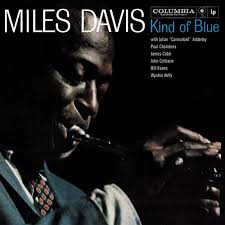
When Miles Davis returned to Columbia’s 30th Street Studio on April 22, 1959, nearly seven weeks had passed since the session that produced “So What,” “Freddie Freeloader” and “Blue in Green.” The personnel returned to the configuration heard on most of the album: Miles on trumpet, John Coltrane on tenor saxophone, Cannonball Adderley on alto, Bill Evans on piano, Paul Chambers on bass and Jimmy Cobb on drums. Only two pieces remained to be recorded, but they would expand the album’s conception considerably. “All Blues” demonstrated that modal thinking did not require abandoning one of jazz’s oldest structures, while “Flamenco Sketches” moved in almost the opposite direction, reducing conventional song form until improvisation could unfold through a sequence of tonal environments rather than a familiar progression.
The contrast is important because Kind of Blue is often summarized as “the modal jazz album,” a description that is useful historically but incomplete musically. Miles was not constructing a theoretical demonstration. He was exploring different ways of giving improvisers enough structure to create coherence without determining too much of what they would play. Sometimes that structure came from a mode. Sometimes from the blues. Sometimes from a repeated bass figure or a distinctive rhythmic pattern. The revolutionary aspect was not the elimination of harmony but the recalibration of how much harmonic information musicians actually needed.
“All Blues”: Old Form, New Space
“All Blues” begins with one of the album’s most recognizable textures. The rhythm section establishes a rolling 6/8 feel, while the piano and horns create a repeated figure above it. The composition remains rooted in the blues, but Miles alters the familiar architecture enough to make the form feel newly spacious.
This is one of the record’s central achievements. Innovation does not arrive by destroying tradition. Miles takes a form deeply embedded in jazz history and changes the environment surrounding it.
The blues remains audible.
But its possibilities expand.
The rhythm is particularly important. Jimmy Cobb never allows the unusual meter to become an intellectual exercise. The performance moves naturally, almost physically, while Chambers anchors the shifting harmonic areas with characteristic clarity.
Bill Evans, meanwhile, avoids crowding the structure with unnecessary chordal information. His voicings help define color rather than continuously announce harmonic function.
The musicians understand that the form already knows where it is going.
They do not need to explain it constantly.
Miles and the Sound of Authority
Miles’s solo on “All Blues” demonstrates one of the paradoxes at the center of his artistry. His playing can sound almost casual because he refuses to advertise technical difficulty, yet every phrase reveals extraordinary control over timing.
He enters the music rather than attacking it.
Notes are placed in relation to Cobb’s cymbal pattern and Chambers’s pulse with enough precision that silence becomes part of the phrasing. A pause is not simply an absence between ideas. It changes the listener’s expectation of what comes next.
This is why imitating Miles by simply playing fewer notes rarely works.
Economy without direction becomes emptiness.
Miles’s economy is structured.
He understands where a phrase begins, where it should stop and how long the music can remain open before another statement becomes necessary.
His tone performs another function. Even without seeing the album cover or knowing the personnel, the trumpet is immediately identifiable. The sound itself becomes compositional information.
Miles does not merely play the piece.
His sound defines part of what the piece is.
Cannonball: The Blues Inside Modal Jazz
Cannonball Adderley provides one of the album’s essential counterweights. Discussions of Kind of Blue naturally emphasize modal innovation, but Cannonball continually reconnects the music with blues, bebop and the expressive directness that characterized much of his own work.
His solo on “All Blues” feels inevitable because the form speaks a language he understands deeply.
Yet he does not simply reproduce familiar blues vocabulary. The openness of Miles’s conception allows Cannonball to stretch phrases and explore melodic ideas without being forced through constant harmonic transitions.
This is where Kind of Blue becomes particularly revealing as an ensemble document.
Miles did not ask Cannonball to become a modal specialist.
He created conditions under which Cannonball’s existing identity could sound different.
The same is true of Coltrane.
Great bandleading does not necessarily mean making musicians conform.
Sometimes it means designing a situation that reveals what makes them distinct.
Coltrane and the Road Ahead
By 1959, John Coltrane was already developing at extraordinary speed. Within a year he would record Giant Steps, an album often treated as the opposite pole from Kind of Blue. Where Miles reduced harmonic movement, Giant Steps presented improvisers with rapidly shifting tonal centers that demanded intense harmonic navigation.
Yet Coltrane was fascinated by both possibilities.
That apparent contradiction is central to his development.
Complex chord progressions allowed him to investigate one kind of freedom: mastery through harmonic movement.
Modes offered another: extended exploration within a more stable tonal field.
His experience with Miles helped establish possibilities that would later become fundamental to albums such as My Favorite Things and eventually to the increasingly open spiritual music of the 1960s.
Kind of Blue therefore sits at an extraordinary historical intersection.
Miles was finding a mature language of reduction.
Coltrane was still accelerating toward expansion.
For a brief period, those trajectories occupied the same band.
“Flamenco Sketches”: Form Becomes Geography
If “All Blues” demonstrates how Miles could transform an established form, “Flamenco Sketches” asks what might happen if conventional song form were loosened almost entirely.
The piece moves through a sequence of modal areas. Rather than following a predetermined number of measures for each section, the improvisers were given considerable freedom to remain within each tonal environment before moving onward.
This changes the psychology of improvisation.
In a standard form, the musician knows when the next chord or section will arrive. Time is organized externally.
In “Flamenco Sketches,” the soloist participates more directly in deciding when the musical landscape should change.
The mode becomes almost geographical.
The improviser enters an area, explores it and eventually moves somewhere else.
The composition supplies the map.
It does not dictate the speed of travel.
Bill Evans and “Peace Piece”
The connection between “Flamenco Sketches” and Bill Evans is especially important. Its opening harmonic atmosphere is closely related to Evans’s “Peace Piece,” recorded for his 1958 album Everybody Digs Bill Evans. Both works use a repeated harmonic foundation that allows melodic exploration to unfold above a relatively stable base.
This does not mean “Flamenco Sketches” is simply “Peace Piece” transformed into a Miles Davis composition. The ensemble context, modal sequence and improvisational structure create something different. But the relationship illustrates why Evans’s presence mattered so much to the project.
Miles recognized possibilities in Evans’s harmonic thinking that aligned with his own desire for space.
The collaboration worked because their musical personalities were different but compatible.
Evans could create harmonic ambiguity.
Miles could turn ambiguity into drama.
Flamenco and Miles’s Imagination
The title also points toward another important development. Miles’s fascination with Spanish musical color would soon become explicit in Sketches of Spain, recorded with arranger Gil Evans beginning later in 1959.
It would be too simple to claim that “Flamenco Sketches” directly reproduces flamenco practice. Miles’s relationship with Spanish music was interpretive rather than ethnographic. He heard scales, melodic inflections and emotional qualities that could be incorporated into his own musical world.
What matters is that modal thinking opened another door.
If improvisation did not need to depend primarily on conventional jazz chord progressions, then scales and tonal materials associated with other musical traditions could provide alternative structures.
That possibility would become increasingly important not only to Miles but to the broader development of jazz during the 1960s.
Five Modal Environments
The construction of “Flamenco Sketches” is remarkably economical. The musicians move through five scalar or modal areas, each establishing a distinct tonal atmosphere.
The brilliance lies in what Miles does not specify.
He provides enough information to make the performance coherent but leaves crucial decisions to the improvisers.
This is controlled freedom.
Too little structure and six musicians might simply wander.
Too much structure and the very openness Miles sought would disappear.
The performance survives because everyone involved possesses enough musical judgment to recognize when an idea has been developed sufficiently.
The musicians do not merely know how to play.
They know when to move on.
Miles’s Solo: Space as Narrative
Miles’s performance on “Flamenco Sketches” may be the purest expression of his mature philosophy on the album. His solo does not attempt to demonstrate every possibility contained within the modes.
He chooses.
A note can remain suspended against Evans’s harmony.
A phrase can end before the listener expects.
The transition from one modal environment to another becomes emotionally significant because Miles does not rush to fill the new space.
His improvisation therefore behaves almost like narrative.
The importance of each statement depends partly on what preceded it and what has been withheld.
This is why the word “minimalist” can be misleading when applied to Miles.
He is not reducing music toward abstraction.
He is concentrating attention.
Every note becomes more exposed.
That exposure increases rather than decreases risk.
Coltrane: Another Map Entirely
Then Coltrane enters the same modal sequence and constructs a completely different landscape.
His phrases are denser.
He explores subdivisions and patterns.
Where Miles emphasizes the distinction between silence and sound, Coltrane often explores how much melodic information a tonal area can sustain before the transition arrives.
Again, Kind of Blue refuses to prescribe one correct response to modal improvisation.
The structure reveals personality.
This is perhaps Miles’s greatest accomplishment as a bandleader on the album. He establishes a framework flexible enough to make differences audible rather than forcing everyone toward a unified style.
Cannonball does not sound like Coltrane.
Coltrane does not sound like Miles.
Evans does not sound like Kelly.
And none of them needs to.
Cannonball’s Melodic Intelligence
Cannonball’s performance on “Flamenco Sketches” deserves particular attention because he is sometimes positioned historically between the supposedly revolutionary Miles and Coltrane as though his role were simply to provide a more conventional voice.
That understates his sophistication.
Cannonball’s melodic instinct allows him to navigate the modal areas with remarkable naturalness. He frequently creates phrases that feel vocal, drawing on blues inflection without forcing the piece into a blues form.
His solo demonstrates another possibility of modal improvisation.
One does not need either Miles’s austerity or Coltrane’s density.
A mode can support melodic storytelling.
Cannonball finds continuity across changing tonal environments by allowing phrasing itself to become the connective tissue.
This is one reason the album remains so rewarding after countless hearings.
Its musicians do not merely take turns.
They present different theories of what improvisation can be.
Paul Chambers and Jimmy Cobb: Making Freedom Possible
The freedom granted to the horn players places enormous responsibility on Paul Chambers and Jimmy Cobb.
In “Flamenco Sketches,” they must maintain enough continuity that the performance remains coherent even as the harmonic environments change according to the soloist’s pacing.
Chambers does not overdefine the harmony. Cobb does not force transitions through dramatic rhythmic signals.
They listen.
This is an easy contribution to underestimate because it rarely calls attention to itself. Yet imagine the same piece with a bassist constantly insisting on harmonic resolution or a drummer filling every opening.
The atmosphere would collapse.
Chambers and Cobb understand that the rhythm section’s job is not merely to create momentum.
Sometimes its responsibility is to protect possibility.
The First-Take Myth
One of the enduring legends surrounding Kind of Blue is that the album consists entirely of complete first takes, reinforcing the image of six musicians entering the studio and spontaneously producing perfection.
The reality is slightly more complicated.
The album does capture remarkable early-take spontaneity, and the musicians had not rehearsed the pieces conventionally in advance. But session documentation includes false starts and alternate material. “Flamenco Sketches,” notably, survives in an alternate take later issued on reissues.
This correction does not diminish the achievement.
It makes it more human.
The significance is not that the musicians performed everything perfectly at the first possible moment.
It is that Miles deliberately prevented the music from becoming over-rehearsed.
He wanted discovery to remain audible.
There is a difference between spontaneity and mythology.
The first is musically valuable.
The second is unnecessary.
Teo Macero and the Question of Production
Another name inevitably associated with Miles Davis’s later studio work is Teo Macero, whose editing would become fundamental to albums such as In a Silent Way and Bitches Brew.
But Kind of Blue belongs to an earlier production environment. The sessions were produced by Irving Townsend, not Macero, and the album’s coherence comes primarily from performances rather than the radical tape construction Miles would explore a decade later.
That distinction is historically important.
Miles’s later electric albums would increasingly treat the studio itself as a compositional instrument.
Kind of Blue achieves something different.
The musicians create most of the architecture in real time.
The recording preserves the conversation rather than radically reconstructing it.
The Recording-Speed Problem
The album’s technical history contains another fascinating detail. For decades, the original LP and many subsequent releases presented the three tracks from the March 2 session at a slightly incorrect speed because of a tape-machine issue. Later reissues corrected the pitch.
The difference is subtle enough that generations of listeners absorbed the album without necessarily recognizing anything wrong, yet it illustrates how recording technology can quietly become part of musical history.
A mechanical discrepancy altered the sound of one of the most famous jazz recordings ever made.
The performances remained powerful enough that the mistake became normalized.
Eventually technology allowed listeners to hear those pieces closer to the pitch at which the musicians actually performed them.
August 17, 1959
Kind of Blue was released by Columbia Records on August 17, 1959.
At that moment, no one could have known the scale of the album’s eventual reputation. It would become widely regarded as one of the defining recordings in jazz and one of the most commercially successful jazz albums ever released.
But historical importance can distort listening.
Once an album becomes a monument, listeners begin hearing the reputation before they hear the music.
Kind of Blue deserves something better.
Ignore, temporarily, the sales figures.
Ignore the rankings.
Ignore the claim that everyone must own it.
Return to what actually happens in the room.
Six musicians—seven counting Wynton Kelly’s crucial appearance—are given unusually open musical frameworks and asked to make decisions.
That is the event.
Everything else came later.
The Album as a Crossroads
The extraordinary thing about Kind of Blue is how many futures emerge from it.
Miles would continue searching and eventually move toward electric music, studio construction and the radical ensembles surrounding In a Silent Way and Bitches Brew.
Coltrane would develop modal improvisation toward increasingly intense and spiritual forms.
Bill Evans would transform the interactive possibilities of the piano trio.
Cannonball Adderley would become one of the defining bandleaders of soul jazz and hard bop.
The rhythm-section conception represented by Chambers and Cobb would remain a model of restraint and responsiveness.
Yet none of those futures is fully contained by Kind of Blue.
The album is not a prophecy.
It is a crossroads.
For two days in 1959, several musicians whose careers were moving in different directions occupied the same musical space.
Miles gave them enough structure to meet.
Then he left enough room for them to remain themselves.
That balance is why the album still feels open more than six decades later.
The final question, however, is larger than the sessions themselves: What did Kind of Blue actually change? Did it truly create modal jazz? Why did it become more culturally dominant than other innovative records of the period? How did its influence reach Coltrane, Herbie Hancock, Chick Corea, rock musicians and generations of listeners far beyond jazz? And has its enormous reputation sometimes simplified the richer history surrounding it?
What Did Kind of Blue Actually Change?
The historical status of Kind of Blue can make it difficult to separate what the album actually accomplished from what later generations have claimed for it. It is frequently described as the record that invented modal jazz, changed improvisation forever and opened the door through which much of the jazz of the 1960s would eventually pass. There is truth inside those claims, but taken literally they flatten a more interesting history. Modal thinking did not suddenly appear at Columbia’s 30th Street Studio in March 1959. George Russell had already been developing theoretical alternatives to conventional tonal organization, musicians had experimented with extended scalar environments, and Miles himself had explored modal structures before Kind of Blue, most obviously on “Milestones.” What happened in 1959 was different. Miles assembled several of the most distinctive improvisers in jazz, gave them unusually economical frameworks and produced an album in which modal possibility became not merely an experiment but an extraordinarily coherent musical language.
That distinction matters. Revolutionary records do not always invent their materials. Sometimes their importance comes from organizing existing possibilities so persuasively that musicians can suddenly hear a future inside them. Kind of Blue did precisely that. It demonstrated that reducing harmonic information did not reduce sophistication. Fewer chord changes could increase responsibility rather than remove it. Melody, tone, rhythm, register, interaction and silence became more exposed because the progression was no longer constantly pushing the improviser forward. The musician had to create movement from within. This was not easier jazz. It was complexity relocated from the page into the decisions of the player.
Modal Jazz Before and After Miles
The temptation to identify a single beginning for modal jazz should therefore be resisted. Jazz had always contained passages in which improvisation was not governed exclusively by rapidly changing functional harmony, and composers and theorists were already searching for alternatives during the 1950s. Russell’s work was especially significant because it provided a systematic framework for thinking about relationships between scales, tonal centers and improvisation outside conventional chord-by-chord logic.
Miles’s genius was practical rather than theoretical.
He heard what the new freedom could sound like.
“Milestones” had already offered evidence. Kind of Blue expanded the experiment across an entire album while allowing different compositions to use openness differently. “So What” offered extended modal areas. “All Blues” retained the blues while changing its rhythmic and harmonic atmosphere. “Flamenco Sketches” approached form as a sequence of tonal landscapes through which improvisers could move with unusual freedom.
There was no single modal formula.
That is precisely why the album proved so fertile.
Coltrane Takes the Door Elsewhere
No musician demonstrates the consequences more dramatically than John Coltrane.
The Coltrane heard on Kind of Blue was still in rapid transformation. His improvisations often respond to Miles’s spacious structures with extraordinary density, exploring patterns and subdivisions that create movement even when the harmony remains relatively stable. Yet the freedom of extended modal improvisation would become increasingly important to him during the following years.
My Favorite Things in 1960 provides one of the clearest early examples. Coltrane took a familiar Broadway melody and transformed it through extended modal improvisation, using soprano saxophone and a rhythm section capable of sustaining long stretches of harmonic stability without losing intensity.
The implications would grow deeper.
By the time of A Love Supreme and the increasingly open music that followed, Coltrane was pursuing forms of improvisation in which the harmonic density of his Giant Steps period could coexist with, or give way to, extended tonal centers and spiritual intensity.
This does not mean Kind of Blue caused Coltrane’s later development.
Coltrane was far too independent for such a simple lineage.
But Miles gave him an important laboratory.
The experiment continued after Coltrane left.
Bill Evans and the Interactive Trio
Bill Evans carried another part of the album’s legacy into his own work. His celebrated trio with Scott LaFaro and Paul Motian would soon challenge the conventional hierarchy of piano, bass and drums. Instead of piano dominating while rhythm section accompanied, all three musicians could participate in a continuously changing conversation.
This concept was not simply derived from Kind of Blue, but the philosophical relationship is striking.
Miles had reduced compositional instructions so individual musicians could assume greater responsibility.
Evans’s trio redistributed responsibility among the instruments.
LaFaro’s bass could become melodic and contrapuntal. Motian could treat time elastically. Evans could accompany as much as lead.
The underlying principle was similar:
Freedom becomes meaningful when musicians listen closely enough to use it.
This is one reason Kind of Blue belongs to a larger transformation in jazz rather than standing alone as an isolated masterpiece. Across the late 1950s and early 1960s, musicians were reconsidering hierarchy—between composition and improvisation, soloist and rhythm section, chord progression and melody.
Miles’s album captured one especially influential solution.
Cannonball Takes the Blues Forward
Cannonball Adderley’s future reminds us that not everyone leaving the Kind of Blue sessions followed the same modal path. Cannonball’s subsequent groups became central to the development of soul jazz, combining hard bop, blues, gospel influence and memorable compositions with extraordinary improvisational sophistication.
This is important because historical narratives often present innovation as a straight line: bebop becomes hard bop, hard bop becomes modal jazz, modal jazz becomes free jazz.
Real musicians do not behave that way.
Older languages do not vanish when new ones appear.
Cannonball could absorb what he experienced with Miles without abandoning the blues-centered vocabulary fundamental to his musical personality.
Miles himself would do the same.
Even at his most experimental, he never completely escaped the expressive logic of the blues.
Jazz history accumulates.
It rarely replaces.
The Second Great Quintet
The next major stage in Miles’s development would come with the Second Great Quintet, featuring Wayne Shorter, Herbie Hancock, Ron Carter and Tony Williams.
Here the lessons of space and structural flexibility developed into something different. The quintet often worked with conventional compositions and recognizable harmonic forms, but the musicians could destabilize those forms from within. Time became elastic. Accompaniment could transform instantaneously. A rhythm section could suggest several interpretations of the same passage during a single performance.
Herbie Hancock’s piano playing was crucial. Like Evans, he understood sophisticated harmony and the power of withholding information, but his rhythmic conception was different. Tony Williams could radically reshape pulse, while Ron Carter’s bass supplied both structural authority and extraordinary flexibility.
Miles again placed himself inside an ensemble whose members could challenge him.
The principle remained consistent.
Hire musicians capable of surprising you.
Then avoid telling them too much.
From Modal Space to Electricity
By the late 1960s, Miles’s search had moved elsewhere.
Rock, funk, electric instruments and studio technology were changing the musical environment. Younger musicians were listening simultaneously to jazz and popular music, and Miles was paying close attention.
Albums such as Miles in the Sky and Filles de Kilimanjaro documented the transition. Then came In a Silent Way in 1969, with a remarkable ensemble including Wayne Shorter, Herbie Hancock, Chick Corea, Joe Zawinul, John McLaughlin, Dave Holland and Tony Williams.
The relationship with Kind of Blue is not sonic.
It is philosophical.
Once again Miles reduced conventional instructions and created an environment.
But now the environment was electric.
And producer Teo Macero could use tape editing to reorganize performances after they had occurred, turning the studio itself into part of the compositional process.
The idea of freedom had moved from modal harmony into sound and production.
Bitches Brew
With Bitches Brew in 1970, the transformation became more radical. Dense percussion, electric keyboards, bass, guitar, horns and studio editing created music almost impossible to describe through the conventional jazz hierarchy of theme-solos-theme.
The contrast with Kind of Blue could hardly be greater.
One is spacious.
The other can be overwhelming.
One is largely acoustic.
The other helped redefine electric jazz.
Yet Miles’s leadership strategy remained recognizable.
He created conditions.
He assembled extraordinary musicians.
He supplied enough direction to establish identity.
Then he allowed uncertainty to produce results.
This continuity helps explain why Miles’s career cannot be reduced to a sequence of stylistic reinventions. Beneath the changes in sound was a remarkably consistent fascination with possibility.
The Influence Beyond Jazz
The impact of Kind of Blue eventually traveled far beyond musicians explicitly interested in modal jazz. Rock guitarists, ambient composers, film musicians, singer-songwriters and producers could respond to its atmosphere without necessarily understanding its harmonic construction.
Part of that reach comes from the album’s accessibility.
There is no requirement that a listener understand modes.
“So What” works before one knows what Dorian means.
“All Blues” communicates without knowledge of its formal construction.
“Blue in Green” can affect a listener who has never analyzed a chord.
This is not evidence that the music is simple.
It demonstrates the difference between structural complexity and perceptual complexity.
The musicians understand enormous amounts of information.
The listener does not need to process all of it consciously.
That is one definition of mastery.
Why It Became the Jazz Album
There are many jazz recordings as innovative as Kind of Blue, and some are arguably more radical. Why, then, did this particular album become such a universal gateway?
Several factors converged.
The personnel is extraordinary.
The recording is spacious and immediately attractive.
The compositions are memorable.
There is enough blues language to remain grounded in jazz tradition.
The improvisation is sophisticated without requiring listeners to decode rapid harmonic movement.
And the album works equally well as attentive listening and as atmosphere.
That final characteristic sometimes makes serious jazz listeners uncomfortable. Music that can function beautifully in the background risks being dismissed as easy listening.
But Kind of Blue survives distraction because its surface is beautiful.
It rewards concentration because underneath that surface is extraordinary detail.
Few albums succeed so completely at both.
The Danger of Canonization
Its enormous reputation, however, creates a problem.
When one album becomes the default answer to “What jazz record should I hear?”, the rest of jazz can appear to orbit around it.
It does not.
1959 alone produced an extraordinary range of music. Charles Mingus recorded Mingus Ah Um. Dave Brubeck released Time Out. Ornette Coleman recorded The Shape of Jazz to Come. John Coltrane was working toward Giant Steps.
Jazz was not moving in one direction.
It was exploding into several.
Kind of Blue represents one of those futures.
Ornette proposed another.
Mingus another.
Brubeck another.
Coltrane would eventually create several of his own.
Understanding this context makes Miles’s achievement larger rather than smaller because we can stop pretending he single-handedly transformed jazz.
He was surrounded by transformation.
He made one of its most enduring statements.
“Blue in Green” and the Problem of Genius
The authorship debate surrounding “Blue in Green” also reminds us to be careful with the mythology of the solitary genius.
Miles deserves enormous credit for Kind of Blue. He assembled the musicians, established the concept and created the environment in which the sessions occurred.
But great albums are collective achievements.
Bill Evans contributed ideas that shaped the harmonic atmosphere.
Coltrane and Cannonball brought improvisational identities Miles could not have composed in advance.
Chambers and Cobb created the foundation that allowed openness to function.
Wynton Kelly transformed “Freddie Freeloader” simply by being Wynton Kelly.
Miles’s genius included understanding that he did not need to manufacture every detail personally.
Leadership sometimes means recognizing what other people can contribute.
The Sound of the Room
There is also a physical reason the album continues to feel unusually present. Columbia’s 30th Street Studio gave the instruments room to breathe, and the engineering preserved a sense of musicians occupying an acoustic environment together.
Modern recordings can provide extraordinary clarity, but clarity is not the same as space.
On Kind of Blue, one can almost imagine distances.
The trumpet appears somewhere in front of the rhythm section.
Cymbals extend into the room.
The bass has wood and air around it.
The piano does not need to be artificially enormous.
That sonic environment complements Miles’s musical philosophy perfectly.
The arrangements leave space.
The room makes that space audible.
Listening Today
The most useful way to hear Kind of Blue today may be to temporarily forget that it is supposed to be important.
Do not listen for a revolution.
Listen to decisions.
Hear how long Miles waits before the next phrase.
Hear how Coltrane reacts differently to the same modal space.
Hear Cannonball bring blues inflection into an environment often described primarily through theory.
Hear the difference when Wynton Kelly replaces Bill Evans.
Follow Chambers rather than the horns for an entire performance.
Listen only to Cobb’s ride cymbal during “All Blues.”
Then return to the whole ensemble.
The album becomes new again when its reputation stops speaking over it.
Where to Go After Kind of Blue
For listeners using the album as an entrance into Miles Davis, the next move should not necessarily be another record that sounds similar.
Go backward to Milestones and hear the modal experiment developing inside hard bop.
Then hear Sketches of Spain to understand how Miles and Gil Evans expanded ideas of orchestration and non-jazz source material.
Move to E.S.P. and the Second Great Quintet to hear structural freedom developing inside a different generation of musicians.
Then reach In a Silent Way.
Finally, confront Bitches Brew.
The surface changes dramatically.
The underlying curiosity does not.
For Coltrane, move from Kind of Blue toward Giant Steps and My Favorite Things. Hearing those albums together reveals just how many apparently contradictory musical problems he was attempting to solve simultaneously.
The path should branch.
Jazz did.
The Birth of Infinity
The phrase “Birth of Infinity” works only if infinity is understood not as grandeur but as possibility.
Miles did not create unlimited music by adding more.
He did it by removing instructions.
Fewer chord changes.
More responsibility.
More space between phrases.
More room for individual identity.
This is the paradox at the heart of Kind of Blue.
Restriction created freedom.
The modes established boundaries, but those boundaries allowed musicians to explore aspects of melody, rhythm and tone that dense harmonic movement could obscure.
The canvas became simpler.
The decisions became more exposed.
Final Thoughts: Six Musicians Inside an Open Door
There is a tendency to imagine revolutionary moments as loud events.
Kind of Blue offers another model.
No manifesto was printed on the cover.
The musicians did not announce that jazz had entered a new era.
Miles did not abandon the blues.
Coltrane did not stop exploring complex harmony.
Bill Evans did not invent impressionism at the piano.
George Russell’s theoretical work did not suddenly become the governing law of jazz.
Something subtler happened.
Miles opened a door.
He gave exceptional musicians less information than they might normally receive and trusted them to create more from it.
Cannonball walked through carrying the blues.
Coltrane walked through searching for expansion.
Evans brought harmonic color.
Kelly brought swing.
Chambers brought stability.
Cobb brought time spacious enough to breathe.
Miles brought the question.
The answers were different.
That was the point.
More than six decades later, Kind of Blue remains extraordinary not because it solved the future of jazz but because it demonstrated how much could happen when musicians were given enough room not to know exactly what came next.
The revolution was not a chord.
It was possibility.