Between Harlem, Puerto Rico and the Language of Jazz
Before Ray Barretto became one of the defining percussionists of salsa, before Fania Records turned New York Latin music into an international phenomenon, and before albums such as Acid, Barretto Power, Indestructible and Rican/Struction established him as a major bandleader, he was a young New Yorker trying to understand where he belonged musically. That question would remain at the center of his career. Barretto was Puerto Rican and American, deeply connected to Afro-Caribbean rhythm but equally fascinated by bebop, hard bop and the language of Black American jazz. His career never completely resolved those identities into a single category. Instead, he spent decades moving between them, sometimes comfortably and sometimes with visible tension. The result was a body of work in which the conga became not merely a marker of “Latin” color but a genuine participant in modern jazz, soul, boogaloo and the music that would eventually be called salsa.
Born Raymond Barretto Pagán in Brooklyn on April 29, 1929, Barretto was the son of Puerto Rican parents and grew up largely in East Harlem and the Bronx. His childhood soundtrack did not observe the boundaries that later record stores would impose. Puerto Rican music existed alongside the swing orchestras of Duke Ellington, Count Basie and Benny Goodman, while New York itself provided constant evidence that musical identities could overlap. The National Endowment for the Arts, which named Barretto an NEA Jazz Master in 2006, describes precisely this mixture of Puerto Rican music and American swing as central to his development.
That background is essential because Barretto is sometimes discussed as though he were primarily a Latin percussionist who later developed an interest in jazz. His own career suggests almost the reverse. Jazz was foundational to how he understood himself as a musician. Afro-Cuban rhythm gave him the instrument through which he would articulate that relationship.
Germany, Bebop and “Manteca”
The decisive encounter occurred far from New York. During his military service in the late 1940s, Barretto was stationed in Germany, where he attended jam sessions involving American servicemen in Munich. Bebop was still a relatively new musical revolution, and for Barretto the experience opened another world. Then he heard Dizzy Gillespie’s “Manteca,” the landmark collaboration associated with Cuban percussionist Chano Pozo. Barretto later credited that recording with helping inspire his decision to become a professional musician.
The importance of “Manteca” was larger than the conga itself. Gillespie and Pozo demonstrated that Afro-Cuban rhythm and modern jazz could interact structurally. Percussion did not have to appear as an exotic addition placed behind a conventional jazz arrangement. Rhythm could participate in the composition’s architecture.
For a Puerto Rican New Yorker immersed in jazz, that possibility must have been profound. Barretto could hear two musical worlds that were often separated by marketing categories speaking directly to one another.
After returning from military service in 1949, he began teaching himself conga and entered New York’s extraordinarily competitive musical environment. His route was not glamorous. Like countless musicians, he learned through jobs, jam sessions and proximity to players who knew more than he did. But New York gave him something few other cities could offer: Afro-Cuban dance music and modern jazz were developing close enough geographically for one musician to participate seriously in both.
José Curbelo, Tito Puente and the Education of a Conguero
Barretto’s early professional work included pianist Eddie Bonnemere and then several years with Cuban bandleader José Curbelo. The major breakthrough came in 1957, when he replaced Mongo Santamaría in Tito Puente’s orchestra. Barretto subsequently appeared on Puente’s celebrated Dance Mania.
Playing with Puente required a kind of discipline different from the freedom of a late-night jazz jam. This was dance music, and percussion had responsibilities. The rhythm had to function collectively. Conga, timbales, bongos, bass and piano could create interlocking patterns in which individual brilliance mattered only if the larger rhythmic structure remained intact.
Barretto learned that world deeply.
But he never stopped entering jazz spaces.
By the end of the 1950s and into the early 1960s, he had become one of New York’s most sought-after conga players for recording sessions. His credits extended across musicians including Lou Donaldson, Red Garland, Gene Ammons, Eddie “Lockjaw” Davis, Cannonball Adderley, Freddie Hubbard, Cal Tjader, Dizzy Gillespie and others. The NEA describes him as the most widely recorded conguero in jazz and notes that by 1960 he was working extensively on sessions connected with Prestige, Blue Note and Riverside.
This period is crucial to understanding what Barretto later did as a leader.
He was learning jazz from inside the recording studio.
When the Conga Was Still Treated as an Accessory
The conga occupied an ambiguous position in many jazz sessions of the period. Musicians respected the instrument, particularly after the breakthroughs associated with Chano Pozo, Machito, Dizzy Gillespie and the development of Afro-Cuban jazz, but it could still be treated as an additional color rather than a fully integrated voice. The Smithsonian’s account of Barretto’s career notes that conga was often regarded as an accessory within larger ensembles, even as Barretto became increasingly sought after.
Barretto’s importance lies partly in how naturally he challenged that assumption.
Listen to a good conguero inside a jazz rhythm section and the contribution cannot be reduced to “extra percussion.” The hand drum creates another layer of time. It can reinforce the pulse, argue with it, create subdivisions around the drummer or respond directly to a soloist. The relationship is conversational.
Barretto understood this because he spoke both languages.
He knew what dancers needed from rhythm.
He also knew what jazz improvisers needed from time.
That combination made him unusually valuable.
The Sideman Years Were Not a Detour
Jazz history often treats the years before a musician becomes a famous leader as preparation for the “real” career. In Barretto’s case, that interpretation misses the point. His sideman years were one of his major achievements.
Consider the environment. Hard bop was flourishing. Blue Note, Prestige and Riverside were documenting musicians who were combining bebop vocabulary with blues, gospel, R&B and increasingly varied rhythmic ideas. Barretto entered those sessions not as a horn player attempting to become another great soloist but as a percussionist capable of subtly changing the rhythmic character of an ensemble.
That experience later distinguished him from bandleaders who came primarily through the Latin dance-band tradition. Barretto knew that jazz musicians thought differently about arrangement, solo space and rhythmic elasticity. He also understood that a groove could remain disciplined without becoming rigid.
The lessons moved in both directions.
Jazz changed the way he played Latin music.
Latin rhythm changed what he could bring to jazz.
Becoming a Leader
Barretto’s first significant opportunity to record as a leader arrived through Riverside producer Orrin Keepnews, who asked him to form a charanga-oriented group for Pachanga with Barretto. By the early 1960s, pachanga had become enormously fashionable, and Barretto entered the market at a moment when New York Latin dance music was evolving rapidly.
The breakthrough came with Charanga Moderna and “El Watusi.”
Released during the early 1960s, “El Watusi” became an extraordinary crossover success, reaching the American pop market at a level unusual for a Latin recording of its time. The NEA notes that it became the first Latin number to penetrate the Billboard Top 20 and went gold.
For Barretto, success brought opportunity but also a problem that would recur throughout his career.
Audiences wanted to know what kind of musician he was.
The answer kept changing.
Beyond “El Watusi”
A musician could easily spend years trying to reproduce a crossover hit. Barretto did not build his career around endless variations of “El Watusi.” He continued altering his ensemble and responding to changes in New York music.
The city itself was becoming a laboratory. Cuban-derived dance traditions remained fundamental, but young Puerto Rican and African American musicians were listening to R&B, soul and jazz simultaneously. English and Spanish existed side by side. The musical result increasingly reflected the experience of neighborhoods rather than the purity of genre definitions.
This environment helped produce Latin boogaloo, which mixed Afro-Cuban rhythmic structures with R&B, soul and English-language vocals. Some established Latin bandleaders regarded the style suspiciously.
Barretto understood it instinctively.
Fania’s historical notes on Acid emphasize that he embraced boogaloo rather than rejecting it and connected that openness directly to his New York identity.
The point was not simply commercial adaptation.
Barretto had grown up hearing cultures overlap.
Boogaloo sounded like the city.
Fania and a New Beginning
In 1967, Barretto signed with Fania Records, the label that would become inseparable from the international rise of salsa. His arrival coincided with a period when New York Latin music was becoming harder, more urban and increasingly connected to the experiences of Puerto Rican and other Caribbean communities in the city.
Barretto reorganized his musical approach. The charanga configuration gave way to a brass-oriented conjunto built around trumpets and rhythm. This was not merely an instrumentation change. It altered the physical character of the music.
Strings could give charanga lightness.
Trumpets could hit.
Congas could answer.
Bass could become heavier.
The music was ready for a different kind of New York.
The first major document of this phase would be Acid.
Acid: A Record Between Categories
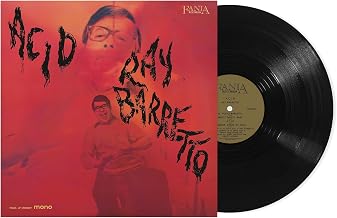
Recorded in 1967 and released by Fania in 1968, Acid remains one of the most revealing albums in Barretto’s career because it refuses to settle comfortably into one category. Fania describes it as Barretto’s debut for the label and documents a band featuring Roberto Rodriguez and René López on trumpets, Orestes Vilató on timbales, Louis Cruz on piano, Bobby “Big Daddy” Rodriguez on bass, Adalberto Santiago and Pete Bonet on vocals, with Barretto directing from the congas.
The album moves among Afro-Cuban rhythm, soul, R&B, boogaloo and jazz without behaving as though these elements require permission to coexist.
That is the real importance of Acid.
The title can encourage listeners to hear it simply as a psychedelic-era curiosity, but the deeper story is New York hybridity. Spanish-language singing can sit beside English vocals. Soul phrasing can coexist with Afro-Cuban percussion. Jazz improvisation can emerge inside arrangements designed to move dancers.
Barretto did not have to invent those cultural relationships.
He had lived them.
The Title Track
The title track “Acid” pushes that mixture especially far. Fania’s detailed history describes the piece through its use of the bembé rhythmic foundation, Barretto’s percussion interaction and blues-inflected piano, emphasizing its movement toward an African rhythmic conception.
What makes the track compelling is the way rhythm becomes drama. Barretto’s congas do not merely maintain an expected pattern underneath the arrangement. Percussion participates in the conversation. The ensemble builds tension collectively.
This is the Barretto principle in concentrated form.
Rhythm is not background.
Rhythm is information.
That distinction would become essential as his bands moved toward the harder sound associated with Fania’s emerging salsa era.
Hard Hands
Later in 1968 came Hard Hands, an album whose title supplied one of Barretto’s most enduring nicknames. The image was appropriate: a large, imposing percussionist whose hands could produce tremendous force from the conga.
Yet the nickname can be misleading if it encourages us to hear only power.
Barretto’s playing depended equally on placement, tonal variation and listening. Congas do not produce one generic “Latin percussion” sound. Different strokes create different pitches, attacks and resonances. A skilled player can shape an entire rhythmic conversation through changes that casual listeners may initially experience simply as groove.
Barretto’s hands could be hard.
His ears had to be subtle.
That combination separated him from the caricature of the percussionist whose role is merely to add excitement.
Salsa Before the Word Became a Global Brand
As the 1960s turned into the 1970s, the music surrounding Fania increasingly came to be marketed internationally as salsa. The term was convenient, powerful and commercially successful, but the music itself contained multiple histories: Cuban son, mambo, guaracha, guaguancó, Puerto Rican traditions, jazz, soul and the specific experience of Caribbean communities in New York.
Barretto belonged at the center of this world without ever fitting comfortably inside the label.
That tension is crucial.
He could make extraordinary dance music.
He could lead a salsa orchestra.
He could participate in the Fania All-Stars.
But jazz remained what the NEA later described through Barretto’s own words as his lifelong musical foundation.
The two worlds were not enemies.
For Barretto, however, they did not always demand the same things.
Barretto Power
By Barretto Power in 1970, the band had developed a muscular identity ideally suited to the changing New York scene. The title sounds almost like a manifesto. The ensemble could drive dancers with enormous force while preserving the leader’s interest in jazz-informed instrumental interplay.
The important word is band.
Barretto’s success was never simply the result of spectacular conga playing. He understood how to construct ensembles. Vocals, piano, bass, timbales, trumpets and congas had to function as a system. A percussionist leader cannot simply stand above that system because his own instrument exists inside its rhythmic center.
This may explain part of Barretto’s effectiveness as a bandleader.
He led from within the groove.
The Fania All-Stars and a Larger Stage
Barretto also became a major participant in the Fania All-Stars, the ensemble through which the label projected New York salsa onto increasingly international stages. The Smithsonian notes that the All-Stars toured Europe, Africa and Asia during the mid-1970s.
The movement was becoming global.
Yet just as Barretto’s position inside salsa appeared increasingly secure, his relationship with his own music became more complicated.
The success brought expectations.
Dance audiences wanted one thing.
The record industry wanted another.
Barretto’s jazz instincts kept pulling elsewhere.
Then his band fractured.
Several important members departed to form Típica 73, forcing Barretto to reconsider the ensemble he had spent years developing. Fania’s own history describes the departure as the event that led him toward an explicitly jazz-oriented response.
The album that followed was The Other Road.
The title could hardly have been more appropriate.
For Ray Barretto, the road between jazz and Latin music had always run in both directions.
Buy Amazon
The Other Road: The Jazz Musician Steps Forward
The title The Other Road was unusually revealing. Released in 1973, the album appeared at a moment when Ray Barretto had already achieved the kind of position many bandleaders would have protected carefully. His Fania recordings had established him as a central figure in New York Latin music, his orchestra had developed a recognizable identity, and the salsa movement was expanding rapidly beyond the neighborhoods and clubs that had produced it. Yet Barretto’s relationship with success was complicated by a musical allegiance that predated Fania: jazz. When several important members of his band left to form Típica 73, Barretto responded not simply by rebuilding the existing formula but by recording an album that moved deliberately toward his jazz interests.
That decision makes sense when viewed against the first half of his career. Barretto had spent years recording with jazz musicians before becoming internationally known as a Latin bandleader. He had learned conga partly through the revelation of Dizzy Gillespie and Chano Pozo, worked in the studios of Blue Note, Prestige and Riverside, and developed the unusual ability to move between the discipline of Afro-Caribbean dance rhythm and the elasticity demanded by modern jazz. Salsa had not replaced that history. It had temporarily become the most visible part of it. The Other Road allowed another identity to re-emerge.
The album therefore should not be interpreted as Barretto abandoning Latin music for jazz. His career rarely fits such clean divisions. Instead, it reveals a musician refusing to let commercial success define the limits of his musical personality.
A Bandleader Forced to Rebuild
The departure of musicians who formed Típica 73 was a serious disruption. A successful Latin orchestra depends on more than arrangements. Long-term interaction creates rhythmic confidence, especially in music where percussion, piano, bass, horns and vocals have to operate with extraordinary precision. Replacing musicians can therefore alter the entire physical character of a band.
Barretto rebuilt.
The ability to survive these personnel changes became one of the defining features of his career. He was not merely a conguero surrounded by replaceable accompanists. He understood how to recognize musicians capable of operating within his conception and how to reconstruct an ensemble when circumstances demanded it.
That capacity would become essential because the 1970s were about to produce some of his strongest music.
Rather than retreat after losing personnel, Barretto returned with one of the most assertive statements of his career.
Indestructible
Released in 1973, Indestructible became one of the records most closely associated with Barretto’s image and resilience. Even the title has acquired symbolic weight. The famous cover presents Barretto through the visual language of a superhero, transforming the bandleader into an almost mythic figure of physical strength.
The music justifies much of the confidence.
Indestructible belongs firmly to the salsa world, yet hearing it after The Other Road reveals why Barretto cannot be reduced to a conventional dance-band leader. His arrangements possess a structural awareness developed through jazz. The rhythm section can drive with enormous force while horn figures create tension above it, and instrumental passages retain enough flexibility for individual personalities to remain audible.
The album also demonstrates an important distinction between power and speed. Barretto’s strongest performances do not depend simply on playing faster or louder. Power comes from the coordination of the ensemble. When bass, piano, timbales, congas and vocals lock into a common rhythmic direction, the band generates force collectively.
Barretto’s congas are at the center.
But the center is not the whole machine.
The Conga as a Conversational Instrument
This is where the familiar claim that Barretto “redefined the conga” needs precision. He did not single-handedly transform an instrument with a deep Afro-Cuban history, nor should the contributions of figures such as Chano Pozo, Mongo Santamaría, Candido Camero and others be reduced in order to make Barretto appear more important.
His achievement was more specific.
Barretto became one of the musicians who demonstrated, across an unusually broad range of settings, how the conga could participate fully in modern jazz and contemporary Latin music. His playing could support dancers, interact with a jazz drummer, respond to a soloist, generate rhythmic tension or become part of a larger percussion conversation.
The instrument did not need to function as decoration.
It could listen.
It could answer.
And because Barretto spent so much time around jazz improvisers, his rhythmic responses often possess the conversational quality associated with a horn player reacting to another horn.
The vocabulary is percussion.
The logic is improvisational.
Adalberto Santiago and the Importance of the Singer
The strength of Barretto’s Fania years also depended heavily on singers, particularly Adalberto Santiago. Modern discussions centered on Barretto’s percussion can understate how essential vocalists were to the music’s identity. Salsa is not simply instrumental jazz played over Afro-Caribbean rhythms. Song, language, storytelling, coro and the interaction between lead singer and ensemble are fundamental.
Santiago gave Barretto’s band a recognizable human voice.
This created another interesting tension in Barretto’s career. The leader was deeply attracted to instrumental jazz, yet his greatest commercial success often depended on vocal music designed for dancing. The singer could communicate with an audience in ways an extended conga improvisation could not.
Barretto understood this.
He also occasionally resisted it.
That push and pull between the instrumentalist’s desire for exploration and the bandleader’s responsibility to singers, dancers and audiences would follow him for decades.
Salsa as New York Music
By the middle of the 1970s, salsa had become far more than a local style, but Barretto’s music retained a distinctly New York character. This matters because the word salsa can sometimes blur geography. The music drew profoundly from Cuban forms and Afro-Caribbean traditions, but the Fania-era sound was also shaped by Puerto Rican migration, African American music, bilingual urban life and the specific social environment of New York.
Barretto embodied those intersections almost perfectly.
He was born in Brooklyn to Puerto Rican parents.
He grew up hearing swing.
He discovered Afro-Cuban jazz through Dizzy Gillespie and Chano Pozo.
He played with Tito Puente.
He recorded hard bop.
He scored a crossover hit with “El Watusi.”
He embraced boogaloo.
Then he became one of salsa’s major bandleaders.
Trying to assign that biography to one pure tradition misses the point.
New York itself was the fusion.
The Fania All-Stars at Full Scale
The Fania All-Stars amplified that identity. Through concerts, recordings and international tours, the ensemble transformed musicians who had been central to New York’s Latin scene into global figures. Barretto’s imposing physical presence and instantly visible congas made him one of the collective’s recognizable personalities.
Yet the All-Stars also reveal something about percussion hierarchy. In an ensemble filled with singers, brass, piano and multiple percussionists, rhythmic roles must remain sharply defined. Conga cannot simply compete with timbales and bongos for volume. The percussion section functions through interlocking patterns.
Barretto’s effectiveness in this environment came from discipline as much as force.
The nickname Hard Hands emphasized physicality.
The music required architecture.
Barretto and the Continuing Jazz Pull
During this period Barretto continued making records that refused to separate his jazz interests completely from his salsa career. The 1975 album Barretto became another major statement, balancing strong dance material with the increasingly sophisticated ensemble language he had developed.
The tension between jazz and salsa should not be exaggerated into personal conflict at every moment. Barretto clearly loved Afro-Caribbean music and spent much of his life advancing it. But his later interviews and career choices demonstrate that jazz remained a central artistic aspiration.
This becomes particularly important when considering the way commercial categories operate.
Record companies need shelves.
Radio needs formats.
Audiences develop expectations.
Musicians rarely experience their own influences so neatly.
Barretto could play a salsa concert at night and still think like the jazz listener who had once been transformed by “Manteca.”
Tomorrow: Barretto Live
Live performance was where the distinction between musical sophistication and dance-floor effectiveness became especially meaningless. Barretto’s bands were built to generate collective momentum in a room. A studio recording can isolate details, but a live audience changes how rhythm functions. Dancers respond physically, musicians react to that energy, singers extend sections, percussionists intensify patterns and arrangements become flexible.
Tomorrow: Barretto Live documents part of this relationship between ensemble and audience. The point is not simply that Barretto was exciting on stage. It is that his conception required communication beyond the bandstand.
Jazz often celebrates concentrated listening.
Salsa expects participation.
Barretto understood both experiences.
His career continually moved between them.
The Commercial Problem
Success, however, created pressure. As salsa became an international business, labels understandably wanted records capable of sustaining the market. Barretto could deliver them.
But commercial expectations tend to reward repetition.
A successful bandleader is encouraged to reproduce the characteristics that made the previous album successful. The very qualities that build an audience can become restrictions.
Barretto’s jazz instincts made him particularly resistant to that process. Improvisation depends on uncertainty. A musician shaped by bebop does not necessarily want to recreate the same rhythmic and harmonic solution indefinitely.
This helps explain the restless quality of his discography.
He could make dance music with enormous conviction and then move toward a project that confused part of the audience.
The restlessness was not a flaw.
It was the engine.
Rican/Struction
That engine produced one of Barretto’s defining records in 1979: Rican/Struction.
The title itself operates on several levels. It evokes reconstruction while placing Puerto Rican identity inside the word. For Barretto, who had spent decades moving between cultural and musical categories, the concept was unusually appropriate.
The album arrived after a difficult period that included changes in personnel and health problems. Rather than sounding diminished, Barretto returned with a record whose ambition reaffirmed his position as one of the era’s major bandleaders.
Rican/Struction is particularly useful for understanding why Barretto’s best salsa work should not be separated from his jazz experience. The arrangements are carefully structured, but they leave space for instrumental personality. Rhythm drives the music without flattening it. The horns possess precision, yet the performances retain urgency.
Barretto was rebuilding.
Musically and symbolically.
Recognition Without Resolution
Rican/Struction became highly regarded and reinforced Barretto’s status, but it did not resolve the central question of his career.
Was he primarily a salsa musician who loved jazz?
Or a jazz musician whose greatest fame came through salsa?
The question may be impossible by design.
Barretto’s importance comes partly from refusing to provide an easy answer.
His conga playing belonged naturally inside Afro-Caribbean dance music, but his listening habits and improvisational instincts continually pulled toward jazz. He did not need to choose culturally between Puerto Rican identity and American jazz because his New York experience contained both.
The industry, however, still needed categories.
That tension would become more visible in the next stage of his career.
Beyond the Salsa Boom
The musical environment changed rapidly during the 1980s. The classic Fania era was losing some of its commercial dominance. Latin popular music evolved, recording technology changed and the salsa market increasingly favored different production aesthetics.
For Barretto, this created an opportunity.
The enormous commercial machinery surrounding 1970s salsa had given him international visibility, but it had also defined him publicly in ways that did not fully reflect his musical identity.
As that environment shifted, jazz could move back toward the foreground.
Not as nostalgia.
As unfinished business.
A Conguero Returns to Jazz
Barretto increasingly devoted energy to Latin jazz and eventually formed ensembles in which instrumental improvisation occupied a more central role. The most important late-career vehicle became New World Spirit, through which he surrounded himself with musicians capable of navigating both jazz harmony and Afro-Caribbean rhythm without treating either as an exotic addition to the other.
This was not a late-life stylistic conversion.
It was a return.
The young Barretto who had heard “Manteca” in Germany had never disappeared.
Neither had the sideman who recorded alongside major hard-bop musicians.
The salsa star had simply become the most publicly visible version of him.
New World Spirit
With New World Spirit, Barretto could explore a different balance. The percussion remained Afro-Caribbean, but the ensemble’s logic increasingly emphasized jazz composition and improvisation. Rather than building primarily around singers and dancers, the music could place extended instrumental conversation at the center.
This brought Barretto closer to the artistic problem that had fascinated him from the beginning: not how to add Latin percussion to jazz, but how to create music in which jazz and Afro-Caribbean rhythm belonged to the same structural language.
That distinction is crucial.
A jazz tune with congas is not automatically Latin jazz.
A salsa arrangement with a saxophone solo is not automatically jazz.
The integration occurs when rhythm, harmony and improvisation affect one another deeply enough that removing either tradition changes the entire musical logic.
Barretto had spent a lifetime learning how to create that integration.
The Grammy Story Requires Precision
Barretto’s later career also includes a distinction that is sometimes confused in biographies. His major Grammy victory came not with New World Spirit but through his collaboration with Celia Cruz on Ritmo en el Corazón, which won the Grammy Award for Best Tropical Latin Performance in 1990.
This matters because the older version of the JazzLatitude article blurred separate periods and projects.
New World Spirit represents Barretto’s increasingly explicit late-career return to jazz.
Ritmo en el Corazón represents another achievement: a master percussionist and bandleader working with one of the defining singers of Latin music.
They belong to the same career.
They are not the same story.
Maintaining those distinctions is essential if Barretto’s versatility is to mean anything beyond a list of famous names.
Jazz Was Waiting
By the 1990s, Barretto had achieved something unusual. He no longer needed to prove his significance to salsa. That history was secure. The Fania recordings, All-Stars performances and classic albums had already established him permanently.
Jazz offered another challenge.
There, his congas could return to the role he had begun exploring decades earlier in countless sessions: not background color, not a marker of Latin identity, but an improvisational rhythmic voice operating beside horns, piano, bass and drums.
The circle was beginning to close.
But Barretto’s final period would not simply repeat the hard-bop sessions of his youth.
He had changed.
Jazz had changed.
Latin jazz had changed.
And after decades spent moving between categories, Barretto was finally in a position to make music in which those categories mattered less than they ever had before.
New World Spirit and the Return to the Beginning
By the time Ray Barretto established New World Spirit in the early 1990s, the decision could appear from the outside to be another stylistic change in an unusually restless career. In reality, it represented something closer to a return. Decades earlier, before “El Watusi,” before Fania, before the Fania All-Stars and before Barretto became internationally associated with salsa, he had been a young percussionist fascinated by bebop. His professional development had taken place partly inside jazz recording studios, where he learned how the conga could interact with musicians accustomed to improvisational conversation rather than simply reinforce a dance arrangement. Salsa made Barretto famous, but jazz had shaped the musician who entered salsa in the first place. New World Spirit allowed those priorities to move back toward the center without requiring him to abandon everything he had learned during the intervening decades.
The difference was important. Barretto was no longer the young conguero entering someone else’s hard-bop session and finding a place between bass, drums and soloists. He had become a veteran bandleader with decades of experience organizing rhythm sections, working with singers, touring internationally and understanding the enormous expressive possibilities of Afro-Caribbean percussion. When he returned to a more explicitly jazz-centered format, he brought that history with him. New World Spirit was therefore not an attempt to recreate the 1950s. It represented the convergence of two careers that had always belonged to the same musician.
Latin Jazz as Integration, Not Decoration
Barretto’s late work helps clarify a term that is frequently used too loosely: Latin jazz. The label can refer to music of enormous stylistic diversity, and at its weakest it becomes shorthand for jazz with additional percussion. Barretto’s history demonstrated why that definition is inadequate. He had spent too much time inside both traditions to treat Afro-Caribbean rhythm as surface color.
True integration changes the behavior of the entire ensemble. A pianist cannot simply play ordinary jazz accompaniment while percussion creates an unrelated pattern underneath. Bass must understand the rhythmic structure. Drums and congas need to negotiate overlapping responsibilities. Horn players have to phrase in relation to a rhythmic environment that may organize time differently from swing. Improvisation occurs inside that architecture rather than above it.
Barretto had understood this intuitively since hearing Dizzy Gillespie and Chano Pozo’s “Manteca.” The late-career difference was that he now possessed decades of experience with which to explore the idea on his own terms.
The circle had become wider.
But the starting question remained recognizable.
New World Spirit
The New World Spirit ensemble became the principal vehicle for this exploration. Its recordings placed instrumental improvisation more prominently than much of Barretto’s commercially successful salsa work while retaining the Afro-Caribbean rhythmic intelligence that had always distinguished his playing. The objective was not to demonstrate that Barretto could “also play jazz.” His enormous sideman discography had established that long before.
The more interesting achievement was the balance.
Barretto could now construct ensembles in which percussion was neither an exotic addition to jazz nor merely a functional foundation for dance music. Congas could participate in the improvisational logic of the group. Horns could respond rhythmically. Arrangements could move through sophisticated harmonic environments without disconnecting from the physical pulse.
This was where the different strands of his career became easiest to hear simultaneously.
Hard bop was present.
Afro-Cuban rhythm was present.
Puerto Rican identity was present.
New York was present.
And none needed to be announced as a novelty.
Contact! and a Mature Language
Recordings associated with New World Spirit, including Contact!, show how naturally Barretto had come to inhabit this territory. The music does not depend on dramatic genre collisions. That is precisely what makes it convincing. By this point, jazz and Afro-Caribbean rhythm had been interacting for generations, and Barretto himself had spent most of his life inside that relationship.
The maturity lies in refusing spectacle.
A younger musician might emphasize the contrast between traditions to demonstrate fusion. Barretto no longer needed to. The conga could converse with a drummer without calling attention to the fact. A horn solo could develop over an Afro-Caribbean rhythmic structure without being advertised as a cross-cultural experiment.
Integration had become ordinary.
That ordinariness was the achievement.
The Conga Beside the Drum Set
Barretto’s relationship with jazz drummers remains one of the most revealing aspects of his musicianship. Adding congas to a conventional rhythm section can create congestion very quickly. Both drummer and percussionist operate across overlapping rhythmic frequencies, and if each plays without listening to the other, the result becomes dense rather than powerful.
Barretto understood that his role changed according to context.
Sometimes he reinforced.
Sometimes he answered.
Sometimes he created another subdivision of the pulse.
Sometimes the most musical decision was to leave space.
This ability came from decades of ensemble experience. The “Hard Hands” image captures only part of the story. Barretto could generate tremendous physical force, but force without placement would have made him far less useful in jazz.
The hands mattered.
The listening mattered more.
Ritmo en el Corazón: A Different Achievement
Barretto’s collaboration with Celia Cruz on Ritmo en el Corazón belongs to another part of his late-career story and should remain distinct from New World Spirit. Released in 1988, the album brought together two musicians whose histories were deeply connected to the development and internationalization of Afro-Caribbean popular music. It subsequently won the Grammy Award for Best Tropical Latin Performance.
The importance of the collaboration lies partly in what it demonstrates about Barretto’s range. His return toward jazz did not require him to reject vocal Latin music or treat his salsa history as an artistic compromise. He could work with Celia Cruz and create music built around one of the great voices of the tradition while continuing to pursue instrumental jazz elsewhere.
That coexistence is a better way to understand his career than imagining a permanent struggle between “commercial salsa” and “serious jazz.”
Barretto loved both worlds.
What frustrated him were the boundaries imposed between them.
Jazz Was Never a Prestige Upgrade
There is another trap in describing his later jazz work. To say that Barretto “returned to jazz” can accidentally imply that jazz represented a higher artistic level than salsa. His career provides no support for such a hierarchy.
Leading a first-rate salsa band requires extraordinary musicianship. The rhythmic architecture is complex, arrangements must support dancers and singers simultaneously, and the relationship among percussion instruments demands precision that musicians unfamiliar with the tradition can easily underestimate.
Barretto’s desire to play jazz was therefore not an attempt to escape supposedly simpler music.
It was personal.
Jazz had formed his imagination.
He wanted improvisational space.
He wanted the musical conversation he had experienced as a young sideman.
Those desires are different from claiming one tradition superior to another.
His best work demonstrates how much he respected both.
The Sideman Discography Reconsidered
Returning to Barretto’s early jazz recordings after hearing his complete career changes the way those sessions sound. He appears across an extraordinary range of albums, frequently in contexts where conga adds a subtle but decisive rhythmic layer.
The temptation is to treat these appearances as trivia: another famous album on which Ray Barretto happened to play.
But collectively they reveal something larger.
Barretto helped normalize the presence of Afro-Caribbean percussion inside modern jazz. He was not alone, and he did not invent the process, but his extraordinary recording activity made him one of its most persistent participants.
His presence on sessions associated with musicians such as Lou Donaldson, Gene Ammons, Red Garland, Cannonball Adderley and others helped create a familiar rhythmic possibility: hard bop and soul jazz could accommodate conga without becoming a novelty “Latin number.”
That shift matters.
What begins as special eventually becomes vocabulary.
Chano Pozo and the Generation After
Any assessment of Barretto’s influence should return to Chano Pozo, because Barretto himself did. The encounter between Pozo and Dizzy Gillespie in the late 1940s remains foundational to the history of Afro-Cuban jazz. Pozo demonstrated that Cuban percussion could participate structurally in bebop-era experimentation rather than merely decorate it.
Barretto belonged to the generation that inherited that breakthrough.
His task was different.
He expanded the possibilities across a much longer career and through changing musical environments. He brought conga into hard bop sessions, charanga, boogaloo, soul-inflected Latin music, salsa and modern Latin jazz. Few percussionists traveled across so many adjacent worlds while retaining such a recognizable musical identity.
Pozo helped open the door.
Barretto spent decades walking through it in both directions.
Mongo Santamaría and Different Paths
The comparison with Mongo Santamaría is equally useful. Both musicians became central figures in bringing Afro-Cuban percussion to broader American audiences, both interacted extensively with jazz and both achieved crossover recognition.
Yet their careers were not interchangeable.
Santamaría developed his own powerful synthesis of Afro-Cuban music, jazz and soul, while Barretto’s trajectory became especially intertwined with the rise of Fania and New York salsa. Barretto also maintained an unusually persistent desire to return to jazz-centered improvisation late in his career.
The comparison reminds us that “Latin percussionist” is far too broad a category to explain individual musicians.
Instrument does not determine artistic identity.
History does.
Salsa’s Jazz Musician
Barretto’s position within salsa therefore remains fascinating. He was not an outsider who reluctantly participated in the movement. He helped define it. Albums such as Acid, Hard Hands, Barretto Power, Indestructible and Rican/Struction belong to the core history of New York Latin music.
At the same time, his relationship with jazz distinguishes him from any simple salsa narrative.
He could lead one of the strongest dance bands in New York while thinking about improvisation.
He could become an international salsa star while still identifying deeply with bebop.
He could perform with the Fania All-Stars and later organize a group whose priorities moved back toward instrumental jazz.
Rather than contradiction, this should be understood as a particularly New York form of musical identity.
Barretto did not live between two worlds.
He lived where they overlapped.
Time Was – Time Is
Late in his career, Barretto released Time Was – Time Is, a title that feels almost autobiographical. The recording appeared in 2005, when the percussionist was in his seventies, and demonstrated that his jazz commitment remained active rather than ceremonial.
The title suggests continuity: past and present existing simultaneously.
That is an appropriate way to hear Barretto.
The young soldier discovering “Manteca” remained inside the veteran.
The studio conguero remained inside the salsa star.
The leader of New World Spirit still carried the discipline learned in Tito Puente’s orchestra.
The musician did not progress by discarding earlier identities.
He accumulated them.
NEA Jazz Master
In 2006, Barretto was named an NEA Jazz Master, the United States’ highest federal honor specifically recognizing jazz artists. The distinction carried particular meaning for a musician whose public identity had often been associated more strongly with salsa.
It recognized what his career had demonstrated all along.
Barretto belonged to jazz history.
Not because he eventually returned to it.
Because he had never really left.
His contributions as a sideman, percussionist, improviser and bandleader had helped expand the rhythmic vocabulary available to jazz musicians across several generations.
The honor arrived near the end of his life.
Barretto died on February 17, 2006, at the age of 76.
The timing gave the recognition a bittersweet quality.
But the history was already secure.
What Ray Barretto Actually Changed
The claim that Barretto “redefined the conga” becomes meaningful only when stated carefully. He did not reinvent an Afro-Cuban instrument whose traditions existed long before him. Nor was he the first percussionist to bring congas into jazz.
His contribution was breadth.
He demonstrated how the instrument could function across an extraordinary range of modern settings without losing rhythmic integrity.
In hard bop, it could converse.
In soul jazz, it could deepen the groove.
In boogaloo, it could connect Afro-Caribbean rhythm with New York R&B.
In salsa, it could become part of an enormous collective rhythmic engine.
In Latin jazz, it could participate directly in improvisational architecture.
Barretto’s career did not prove that the conga belonged in jazz.
The instrument never needed jazz’s permission.
He demonstrated how much jazz could gain by listening to it properly.
Beyond “Latin Flavor”
This is perhaps his most useful lesson for contemporary listeners. For decades, jazz criticism frequently described percussion through phrases such as “Latin flavor,” language that reduces entire rhythmic traditions to seasoning added to an otherwise complete musical dish.
Barretto’s work exposes the weakness of that idea.
Rhythm is not flavor.
It is structure.
Change the rhythmic architecture and the behavior of every musician changes. Bass lines shift. Piano patterns change. Horn phrasing responds differently. The relationship with the audience changes.
Barretto understood this because he was simultaneously a percussionist and a jazz listener.
He heard rhythm from inside it.
He also heard what it did to everyone else.
Where to Begin
For listeners discovering Ray Barretto, there is no single album capable of representing the entire career.
Start with Acid to hear the New York mixture of Afro-Caribbean rhythm, boogaloo, soul and jazz emerging at the end of the 1960s.
Move to Barretto Power for the increasingly muscular Fania sound.
Hear Indestructible for one of the great statements of his salsa period.
Then listen to Rican/Struction to understand how sophisticated his bandleading had become.
After that, go backward.
Find the jazz sessions.
Listen for the conga behind the horns.
Then move forward again toward New World Spirit and Time Was – Time Is.
The path should not be straight.
Neither was his career.
Ray Barretto and the Story of New York
Ultimately, Barretto’s biography is inseparable from the city that formed him. New York allowed Puerto Rican culture, Cuban musical traditions, African American jazz, R&B and later soul to encounter one another with unusual intensity.
Barretto absorbed all of them.
His career therefore challenges the idea that musical traditions develop independently and then occasionally “fuse.” In cities such as New York, musicians often experience multiple traditions simultaneously from childhood. The fusion has already occurred socially before anyone enters the studio.
Barretto did not need to discover multiculturalism.
He grew up inside it.
That is why his movement between jazz and salsa could be artistically complicated but never culturally unnatural.
Both belonged to his world.
Final Thoughts: The Hands and the Ears
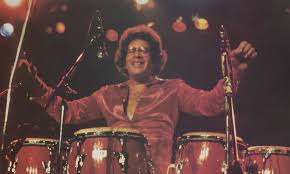
The photographs make Ray Barretto easy to mythologize. He was physically imposing, seated behind the congas, hands suspended above the drums. The nickname Hard Hands seemed inevitable.
But focusing on the hands misses half the musician.
Barretto’s greatest skill may have been listening.
He listened to swing as a child.
He listened to “Manteca” while serving in Germany.
He listened to the musicians around him in New York jam sessions.
He listened inside Tito Puente’s orchestra.
He listened to hard-bop soloists in recording studios.
He listened to dancers.
He listened to singers.
He listened to the changing streets of New York when boogaloo emerged.
He listened to salsa audiences when Fania became an international force.
And when commercial success began defining him too narrowly, he listened again to the jazz that had first made him want to become a musician.
That listening explains the hands.
The conga was powerful because Barretto understood what surrounded it.
His career stretched from bebop’s aftermath through the golden era of salsa and into modern Latin jazz, yet the central principle remained remarkably consistent: rhythm should participate in the conversation rather than merely accompany it.
That is why Ray Barretto belongs simultaneously to the history of salsa and the history of jazz.
Not halfway between them.
At the center of their conversation.