
Before the Cosmic Echoes
Long before Expansions became a jazz-funk anthem, before the Fender Rhodes seemed capable of turning a recording studio into an imaginary landscape, Lonnie Liston Smith had already lived several musical lives. His later reputation can make his career appear almost inevitable: a keyboardist discovers the electric piano, forms a group called the Cosmic Echoes and develops one of the defining sounds of 1970s spiritual jazz. The reality was considerably richer. Smith arrived at that language after years inside hard bop, modal jazz, avant-garde improvisation and the increasingly expansive music of artists such as Rahsaan Roland Kirk, Pharoah Sanders and Gato Barbieri. He even entered the turbulent electric world surrounding Miles Davis. By the time the Cosmic Echoes appeared in 1973, Smith was not escaping jazz tradition. He was reorganizing everything he had learned from it.
Born in Richmond, Virginia, on December 28, 1940, Smith grew up in a musical household where gospel was part of everyday life. His father sang with the Harmonizing Four, and gospel performers circulated through the family’s environment. That background matters because the spiritual dimension of Smith’s later music did not suddenly arrive with titles such as Astral Traveling or Visions of a New World. Long before synthesizers, electric keyboards and cosmic imagery entered the picture, music had already been connected in his life with transcendence, community and emotional communication. At the same time, Smith developed as a formally capable musician, studying piano and eventually entering the professional jazz world with a foundation broad enough to function in very different settings.
Learning Jazz From the Inside
Smith’s early professional career placed him alongside musicians who were actively stretching the language of jazz rather than merely preserving it. His work with Roland Kirk, later known as Rahsaan Roland Kirk, was particularly significant. Kirk’s music could move freely between jazz history, blues, gospel, experimentation and theatricality, often within the same performance. For a young keyboardist, this was a useful education in refusing false divisions. Tradition and experimentation did not have to be opposites.
Smith was never the kind of pianist whose identity depended on dominating the ensemble. That would become even more important later. His strength increasingly lay in creating an environment around other musicians: a chord held at the right moment, a harmonic field that allowed a horn player to move freely, a repeating figure that could stabilize an improvisation without restricting it. The qualities that would eventually define the Cosmic Echoes were therefore developing before the group existed. Smith was learning that keyboards could do more than provide conventional accompaniment or virtuosic solo display. They could determine the emotional climate of a performance.
That understanding placed him in an ideal position when jazz entered one of its most exploratory periods at the end of the 1960s. Modal improvisation had expanded harmonic space. Free jazz had challenged conventional structure. Musicians were drawing more openly from African, Middle Eastern, Latin American and Asian musical traditions, while the political and spiritual atmosphere surrounding Black music was changing rapidly. Smith would soon find himself at the center of that transformation.
Pharoah Sanders and the Spiritual-Jazz Crucible
The relationship with Pharoah Sanders was decisive. By the late 1960s, Sanders had become one of the central figures in the spiritual-jazz movement that emerged partly from the later work of John Coltrane but quickly developed its own language. Long compositions, collective improvisation, percussion, chants, modal structures and a search for transcendence could coexist within the same performance. Smith’s keyboards became part of that environment, contributing to recordings from a period when Sanders was creating some of his most enduring work. Smith’s credits include projects such as Karma, Jewels of Thought, Summun Bukmun Umyun and Thembi.
This experience matters enormously when considering Smith’s later career. The Cosmic Echoes did not invent his interest in spiritual music; they gave him a vehicle for expressing ideas already developing through these collaborations. With Sanders, Smith encountered music in which harmony could become almost architectural. A pianist did not need to move constantly through chord sequences. A sustained tonal area could create room for percussion, saxophone and collective improvisation to accumulate intensity. Repetition could become ritual rather than redundancy.
Yet Smith’s temperament differed from Sanders’s. Where Sanders could push the tenor saxophone toward screams, multiphonics and overwhelming peaks of intensity, Smith increasingly seemed interested in another path toward transcendence. His music would become less confrontational, more spacious and eventually more groove-centered. Spiritual jazz did not have to reach ecstasy through explosion. It could also arrive through calm.
That difference would become his signature.
The Fender Rhodes Changes the Landscape
One of the pivotal moments in Smith’s musical development occurred during his work with Sanders. According to accounts of the sessions that produced Thembi, Smith encountered a Fender Rhodes electric piano in the studio and began exploring it. From that experiment came the composition “Astral Traveling.” The piece would first be associated with Sanders before becoming the title track of Smith’s own debut as a leader.
The importance of the Rhodes cannot be reduced to its distinctive tone. It changed the way Smith could organize musical space. Acoustic piano produces a relatively immediate attack and decay; the electric piano could create a softer, more sustained field, especially when amplification and effects became part of the equation. Smith could allow chords to hover. Melodies could seem suspended rather than struck. The instrument blended naturally with electric bass, percussion and soprano saxophone while still retaining enough definition to guide the harmony.
Smith did not invent the Fender Rhodes, nor was he the only jazz musician exploring it. Herbie Hancock, Chick Corea, Joe Zawinul and many others were transforming the role of electric keyboards during the same broad period. What distinguished Smith was the particular emotional world he built around the instrument. His Rhodes rarely sounded like a technological demonstration. It became an atmosphere: warm, floating and immediately recognizable.
The instrument was not the idea.
It allowed the idea to become audible.
Gato Barbieri and a More Earthbound Intensity
Smith’s extensive work with Gato Barbieri added another dimension. He collaborated with the Argentine saxophonist across several recordings during the early 1970s, including Fenix, El Pampero, Under Fire and Bolivia. Barbieri’s music brought together free-jazz intensity, Latin American identity and political consciousness in ways that differed considerably from Sanders’s spiritual universe.
For Smith, these collaborations reinforced the possibility that jazz could absorb cultural material without reducing it to decoration. Barbieri’s work was not simply American jazz with Latin percussion added to the surface. Rhythm, melody and identity were structurally connected. Smith had to respond to that environment as an ensemble musician, and his ability to create harmonic space again became more valuable than constant pianistic display.
This period also complicates the later image of Smith as a musician devoted almost exclusively to smooth, meditative grooves. Before the Cosmic Echoes established their characteristic sound, he had spent years inside highly charged improvisational settings. The serenity of his later music was informed by experience with intensity. Like Tomasz Stańko’s mature restraint, it makes more sense when we understand what preceded it.
A Brief Encounter With Miles Davis
Then came Miles Davis. In the early 1970s, Davis was radically reconstructing his music through electric instrumentation, studio editing, funk-derived rhythm and increasingly unconventional ensemble configurations. Smith entered this environment during the period associated with On the Corner. Accounts of the sessions note that Miles asked him to play organ, an instrument Smith had not been using as his primary voice, forcing him to adapt quickly.
Smith’s relationship with Miles was not long enough to define his career, and it should not be exaggerated merely because Davis’s name carries enormous historical weight. Its significance lies elsewhere. Smith had now experienced several radically different approaches to expanding jazz. Sanders pursued spiritual intensity. Barbieri connected avant-garde improvisation with Latin American musical and political consciousness. Miles was dismantling conventional jazz structure through electric sound, rhythm and studio production.
Smith absorbed elements from all of these environments.
But his own music would sound like none of them.
Bob Thiele and Flying Dutchman
The opportunity to establish that identity came through producer Bob Thiele and the Flying Dutchman label. Thiele had already played an important role in modern jazz through his work with John Coltrane at Impulse!, and Flying Dutchman became home to music that frequently crossed jazz, soul, spoken word, political expression and experimentation. It was an appropriate environment for Smith’s transition from highly valued sideman to bandleader.
In 1973, he recorded Astral Traveling, the first album credited to Lonnie Liston Smith & The Cosmic Echoes. The initial ensemble was substantial: George Barron on saxophones, Joe Beck on guitar, Cecil McBee on bass, David Lee Jr. on drums, James Mtume and Sonny Morgan on percussion, Badal Roy on tabla and Geeta Vashi on tamboura.
The instrumentation immediately reveals how far Smith’s conception extended beyond a conventional piano-led jazz quartet. Multiple percussionists broadened the rhythmic field. Tabla and tamboura introduced additional textures. Cecil McBee brought the experience of one of the period’s most important bassists. The ensemble could operate as a jazz group, but it could also create sustained environments in which rhythm and timbre mattered as much as chord progression.
The name Cosmic Echoes suited the music because the project was conceived as more than a showcase for its leader.
Astral Traveling
The debut remains one of the clearest bridges between Smith’s spiritual-jazz apprenticeship and the jazz-funk language he would soon develop. Astral Traveling was entirely instrumental, and its title track carried a direct connection to the musical world Smith had explored with Pharoah Sanders. The album also included pieces such as “Let Us Go Into the House of the Lord,” “Rejuvenation,” “I Mani (Faith),” “In Search of Truth” and “Aspirations.” Even the titles reveal a consistent philosophical orientation.
But titles alone do not make music spiritual. What matters is how the ensemble behaves. Smith avoids filling every measure with keyboard activity. Percussion creates movement without always forcing a conventional backbeat. Saxophone lines can float above the rhythm rather than constantly driving toward climactic solos. The Rhodes gives the music continuity, often functioning less like a piano and more like an illuminated surface across which the other instruments move.
The influence of Sanders is audible, but Smith is already moving toward a different balance. The music seeks elevation without requiring sustained extremity. Instead of building every performance toward ecstatic release, the Cosmic Echoes often allow listeners to remain inside the atmosphere.
That was an important shift.
Cosmic Music Without Escaping the World
The cosmic language surrounding 1970s jazz can easily be dismissed as period imagery: stars, astral travel, new worlds, consciousness, peace and universalism. But for many Black musicians of the period, cosmic imagery had deeper implications. It could offer a conceptual space beyond the limitations imposed by contemporary social reality. Sun Ra had built an entire mythology around outer space and alternative Black futures. Alice Coltrane pursued spiritual transformation through another path. Sanders used devotional intensity. Smith’s version was gentler but belonged to the same broader search for expanded possibilities.
His cosmic vocabulary was not about science fiction in a narrow sense. It was about imagining another emotional and social condition. Peace, spiritual development, collective consciousness and liberation recur throughout the titles and lyrics of the Cosmic Echoes period.
Yet Smith increasingly connected those ideas to groove.
This is where his music began separating itself from much of the spiritual-jazz avant-garde. The body and the spirit did not need different soundtracks.
You could contemplate and dance.
Cosmic Funk
The transition became explicit with Cosmic Funk in 1974. The title itself announces the synthesis. The spiritual and astral vocabulary remains, but funk is now named directly. The album also introduced a crucial new element to the Cosmic Echoes recordings: Donald Smith, Lonnie’s brother, on vocals. Sources documenting the group’s history identify Cosmic Funk as the first Cosmic Echoes album to feature Donald’s singing.
Donald changed the architecture of the music. Instrumental spiritual jazz could communicate through atmosphere and improvisation, but vocals allowed philosophical ideas to become explicit. Peace, consciousness and collective aspiration could now be articulated directly to listeners. His voice also brought the project closer to soul without forcing it to abandon jazz improvisation.
This became one of the Cosmic Echoes’ defining tensions. The group could produce extended instrumental passages rooted in jazz while using vocals that communicated with audiences accustomed to soul and R&B. The categories began to overlap.
Smith was discovering that accessibility did not require abandoning the exploratory values of his earlier career.
The Meaning of “Cosmic Funk”
The phrase cosmic funk is useful because it describes more than a combination of synthesizers and rhythm. Smith’s emerging language depended on the interaction between repetition and openness. Funk offered cyclical rhythm and physical momentum. Spiritual jazz offered modal space and the possibility of extended improvisation. Electric keyboards provided texture. Soul vocals provided direct communication.
The elements changed one another when combined.
Smith did not simply place a funk bass line underneath a jazz solo. His keyboard language became more economical because the groove could carry structural responsibility. The bass became increasingly important. Percussion could maintain continuity while the harmony remained relatively static. A saxophone did not need to outline complex chord changes to create movement.
This gave the music room.
And room became one of Smith’s greatest compositional resources.
Donald Smith and the Human Voice
Donald Smith deserves particular attention because his role is sometimes overshadowed by the fame of Lonnie’s keyboard sound. His vocals helped prevent the Cosmic Echoes from becoming purely instrumental “space jazz.” The human voice brought intimacy and directness to music that might otherwise have floated too far into abstraction.
The brothers also shared a background in gospel, which gave the vocal material a foundation deeper than stylistic fashion. Even when the arrangements became increasingly electric and funk-oriented, the idea that music could carry an uplifting or transformative message remained connected to earlier experience.
The Cosmic Echoes were therefore becoming something unusual: not quite a spiritual-jazz ensemble in the Sanders tradition, not a conventional funk band, not fusion in the virtuosic jazz-rock sense and not simply soul.
The ambiguity was productive.
Toward Expansions
By the end of 1974, Smith had assembled the pieces necessary for his breakthrough. He had the Fender Rhodes language. He had years of experience with adventurous improvisers. He understood how percussion could expand a jazz rhythm section. Donald Smith had introduced a vocal dimension. Flying Dutchman provided a label environment comfortable with music that crossed categories.
The next album would bring those elements into unusually clear focus.
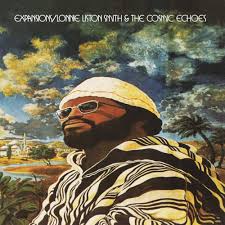
Recorded in late 1974 and released in 1975, Expansions became the record most closely associated with Lonnie Liston Smith & The Cosmic Echoes. Its title track would eventually travel far beyond the audience that originally encountered the album, becoming important to jazz-funk listeners, club DJs, rare-groove culture and later generations exploring the intersection of jazz and dance music. The album itself retained substantial jazz content while making groove increasingly central; contemporary descriptions emphasize precisely this balance between open jazz playing and funk-oriented rhythm.
But reducing the story to a successful title track would miss what Smith had accomplished.
Expansions was not an abrupt commercial reinvention.
It was the result of a decade of accumulation.
Gospel was there.
Roland Kirk was there.
Pharoah Sanders was there.
Gato Barbieri was there.
Miles Davis was there.
The electric experiments of the early 1970s were there.
And underneath everything was Smith’s growing conviction that jazz could become more accessible without becoming less exploratory.
The Cosmic Echoes were ready to prove it.
The Groove Opens Up
The opening bass movement of “Expansions” immediately establishes a different relationship with the listener from much of the spiritual jazz that preceded it. The music does not ask the body to wait while the mind enters some elevated state. Rhythm begins the argument. The groove itself becomes the vehicle through which the larger idea travels.
Donald Smith’s vocal turns the composition outward. The language of expansion, consciousness and collective possibility is no longer confined to instrumental implication. Yet the recording remains unmistakably connected to jazz. The musicians have room to respond, the harmony remains open enough for improvisational movement, and Lonnie’s keyboards create atmosphere without smothering the rhythm section.
This balance is the key to the Cosmic Echoes.
Smith did not solve the tension between spiritual jazz and funk by choosing one side.
He made the tension productive.
And with Expansions, that approach was about to carry his music from the spiritual-jazz underground toward dance floors and audiences he could hardly have reached through the avant-garde alone.
Buy Amazon
When Expansions Changed the Scale
When Expansions appeared in 1975, Lonnie Liston Smith & The Cosmic Echoes had reached a point where the different strands of Smith’s musical history no longer sounded like separate influences. Spiritual jazz, modal improvisation, funk, soul, gospel memory, percussion and electric-keyboard texture had become parts of the same language. The achievement was not simply that Smith made jazz more danceable. Jazz had possessed a relationship with dance from its beginnings, and by the mid-1970s many musicians were already working with funk rhythms. What distinguished the Cosmic Echoes was the particular emotional environment in which the groove existed. Their music could move physically without surrendering the sense of openness Smith had absorbed from Pharoah Sanders and the broader spiritual-jazz movement.
The title track became the clearest expression of that synthesis. “Expansions” begins with a bass line that immediately establishes motion, but the groove does not close the music down. It creates a stable center around which keyboards, vocals and improvisational details can circulate. Donald Smith’s vocal carries the philosophical message outward, turning spiritual aspiration into something direct and communal. The song’s enduring appeal comes partly from this balance: it can function as a dance-floor record without becoming merely functional, and it can communicate an idealistic message without requiring the listener to approach it as a solemn spiritual statement.
“Expand Your Mind”
The lyrical message of “Expansions” belongs unmistakably to its period. Ideas of universal consciousness, peace, collective development and the expansion of human awareness circulated widely through 1970s spiritual jazz, soul and counterculture. Taken outside that context, the language can sound idealistic to the point of naïveté. Inside the music, however, the message acquires weight because the arrangement enacts what the lyrics propose. Individual instruments occupy distinct spaces while participating in a shared groove. The composition is repetitive without becoming static. Jazz improvisation and accessible song form coexist rather than compete.
This is one reason the track survived beyond the cultural moment that produced it. Listeners did not need to adopt an entire 1970s spiritual philosophy to respond to the record. The bass line communicated immediately. The Rhodes created warmth. The vocal hook was memorable. DJs could hear its rhythmic usefulness. Jazz listeners could follow the instrumental interaction. Different audiences could enter through different doors.
That flexibility would become essential to Smith’s afterlife.
The Fender Rhodes as an Environment
By Expansions, Smith’s relationship with the Fender Rhodes had matured into something more distinctive than a recognizable keyboard tone. He was using the instrument to organize space. This is an important difference. Many musicians of the period played electric piano brilliantly, and the 1970s produced some of the most celebrated Rhodes performances in jazz. Smith’s contribution was not based on outplaying Herbie Hancock or Chick Corea technically. His identity emerged through placement, sustain and atmosphere.
A Rhodes chord in a Cosmic Echoes arrangement can function almost like light in a room. It changes how everything else is perceived without necessarily becoming the primary object of attention. Smith could hold a harmonic color while bass and percussion established movement beneath it. Small melodic figures could return without feeling like conventional riffs. Effects and electric textures extended the decay of the instrument, allowing the keyboards to connect sections that might otherwise have felt separate.
This restraint is one of the reasons Smith’s music aged so effectively. The arrangements often leave enough space for the individual sounds to retain identity.
Cecil McBee and the Importance of the Bass
The emphasis placed on Smith’s keyboards can also obscure how essential bass was to the Cosmic Echoes language. Cecil McBee, who participated in the early recordings, brought an extraordinary background in adventurous jazz and understood how a bass line could provide structure without becoming mechanically repetitive. As Smith’s music moved further toward funk, the low end became increasingly central to the listener’s experience.
This was not a minor adjustment. In much acoustic jazz, harmonic movement can be carried substantially by piano and bass together. In groove-oriented music, bass may assume a different responsibility: establishing a cyclical pattern strong enough that harmony can remain relatively open above it. That gave Smith additional freedom. The Rhodes no longer needed to explain every chord. A repeating bass figure could anchor the composition while the keyboards supplied atmosphere and the horns moved across a broader modal field.
The Cosmic Echoes sound therefore cannot be reduced to Rhodes plus spiritual imagery.
The rhythm section made the cosmos move.
Visions of a New World
Later in 1975, Smith released Visions of a New World, an album that deepened the balance established on Expansions. If the previous record had demonstrated that spiritual jazz and funk could inhabit the same structure, Visions of a New World showed how many emotional directions that structure could contain. The album moves between groove-centered material, vocal passages and more reflective instrumental spaces without treating them as incompatible categories.
The title itself continued Smith’s interest in transformation and possibility. Yet the important development was musical rather than philosophical. The Cosmic Echoes were becoming more confident as an ensemble. Smith did not need to announce the fusion of jazz and funk as dramatically because it had already become the group’s natural vocabulary. The compositions could simply exist inside that language.
Tracks including “A Chance for Peace,” “Love Beams,” “Colors of the Rainbow,” “Devika” and the title piece demonstrate the breadth of Smith’s conception. The music can be gentle without becoming passive and rhythmically direct without losing harmonic openness. Donald Smith’s vocals continue to provide a human center, while the instrumental passages remind listeners that the group’s foundations remain deeply connected to jazz.
“A Chance for Peace”
“A Chance for Peace” captures Smith’s optimism particularly well. The title could easily invite vague commentary about 1970s idealism, but the arrangement tells us more. Rather than presenting peace as an abstract intellectual concept, the Cosmic Echoes turn it into communal music. Rhythm creates connection. Vocals make the message explicit. The electric keyboard gives the track the floating quality associated with Smith while maintaining enough harmonic simplicity for the groove to remain central.
This is one of the major differences between Smith and some of the more confrontational spiritual-jazz artists who influenced him. Pharoah Sanders could pursue transcendence through overwhelming intensity. Alice Coltrane could create devotional environments of enormous harmonic and timbral richness. Smith increasingly approached similar questions through accessibility.
He did not make spirituality less serious.
He made it easier to enter.
Jazz-Funk Without Virtuosity as Spectacle
The rise of jazz-rock fusion during the 1970s often brought extraordinary technical virtuosity to the foreground. Groups associated with Weather Report, Return to Forever and the Mahavishnu Orchestra demonstrated how electric instrumentation could support complex rhythms, rapid improvisation and large-scale instrumental power. Smith’s music developed in another direction.
The Cosmic Echoes rarely depend on instrumental competition.
Smith could play sophisticated jazz, but the purpose of the arrangement was not to demonstrate how difficult the music was. His keyboard parts often became simpler as the groove became stronger. That simplicity was functional. If bass, percussion and vocals were already establishing the primary movement, additional keyboard density could reduce rather than increase the music’s effectiveness.
This made Smith’s jazz-funk unusually inviting.
The listener did not need specialist knowledge to understand why the groove worked.
Reflections of a Golden Dream
In 1976, Reflections of a Golden Dream pushed Smith further into electronic texture. The album is particularly significant because of his growing use of synthesizers alongside the Fender Rhodes. The cosmic dimension of the music could now be expressed not only through titles and atmosphere but through timbre itself. Electronic tones could stretch beyond the familiar attack and decay of acoustic instruments, creating layers that seemed to float above the rhythm section.
Yet Smith’s use of synthesizers generally avoided the temptation to make technology the subject. The instruments remained tools for creating environments. The warm Rhodes continued to provide a human center, while synthesizers expanded the edges of the sound. This balance helped prevent the music from becoming trapped in the novelty of 1970s electronic production.
The album also demonstrates that Smith’s development was not simply a progression toward more funk. Texture was becoming increasingly important. The question was no longer only how jazz improvisation could coexist with groove but how electronic sound could alter the emotional space around both.
The Cosmic Echoes as a Production Concept
At this point, The Cosmic Echoes can be understood as more than a fixed band. Personnel changed across the recordings, yet the musical identity remained coherent because Smith’s conception extended beyond individual players. Certain elements could be rearranged—vocals, saxophone, percussion, electric bass, Rhodes, synthesizers—while the larger architecture survived.
That makes the Cosmic Echoes comparable in one respect to Roy Ayers Ubiquity. Both projects used a collective identity to create music that could move among jazz, funk and soul without being confined by the expectations attached to a conventional jazz leader’s group. But their emotional centers were different. Ayers increasingly integrated R&B songwriting, sensuality and urban soul into his music, while Smith maintained a stronger connection with the language of spiritual aspiration and cosmic consciousness.
The comparison is useful precisely because neither artist needs to be reduced to the other.
They arrived at jazz-funk through different histories.
Roy Ayers and Lonnie Liston Smith
Ayers and Smith also demonstrate two distinct approaches to electric texture. Ayers’s vibraphone could become a luminous melodic accent inside groove-based arrangements. Smith’s Rhodes often became the harmonic environment itself. Both understood the power of space, repetition and carefully controlled arrangement, and both would later become important to DJs, hip-hop listeners, acid-jazz audiences and neo-soul musicians.
But Smith’s route to that later influence remained deeply connected to the spiritual-jazz world of Sanders. His music often carries a sense of searching even when the rhythm is direct. The groove is not merely sensual; it can suggest movement toward another state.
Ayers might give you sunshine.
Smith frequently gives you horizon.
Leaving Flying Dutchman
The Flying Dutchman period established the essential Cosmic Echoes identity, but Smith’s career eventually moved to Columbia Records. This transition occurred as jazz-funk, disco and R&B were becoming increasingly intertwined in the late 1970s. The musical marketplace had changed considerably since Astral Traveling appeared in 1973.
Smith now faced a problem encountered by many artists whose innovations had become commercially useful. Once the broader industry begins absorbing a musical language, how does the musician who helped develop that language continue evolving without becoming a version of his own influence?
The answer was not simple.
As production became more polished and dance music increasingly dominant, some of the open improvisational qualities of the earlier Cosmic Echoes recordings became less central. Smith continued making sophisticated electric music, but the balance among jazz, funk, soul and commercial production shifted.
That shift should not automatically be treated as decline.
It reflects a changing environment.
Renaissance
The title Renaissance, released in 1976, was appropriate for a musician whose sound was already moving through another transition. Smith’s music retained the recognizable warmth of electric keyboards while incorporating increasingly polished arrangements. The spiritual vocabulary remained, but the production environment around it was changing.
This period reveals how difficult genre labels become. Was this still spiritual jazz? Jazz-funk? Soul? Fusion? The answer depends partly on which track is being heard and partly on what the listener expects those terms to mean.
Smith’s music had always depended on overlap.
The later 1970s simply made that overlap more commercially visible.
The Changing Meaning of Funk
Funk itself was changing. Earlier in the decade, jazz musicians could use funk rhythm as a disruptive alternative to swing or post-bop convention. By the later 1970s, funk had become a major commercial language, while disco increasingly shaped dance-floor production. What had once sounded like an adventurous crossing of boundaries could now resemble mainstream Black popular music.
For Smith, this created both opportunity and tension. His instinct for groove made the transition natural, but the increasingly polished production surrounding funk and R&B could reduce the open space that had made the early Cosmic Echoes recordings so distinctive.
The best later work preserves the balance.
The weaker moments tend to occur when arrangement becomes more predictable than interaction.
That distinction is more useful than dismissing an entire period as “commercial.”
Loveland and the Expansion of the Audience
By the late 1970s, albums such as Loveland reflected Smith’s growing engagement with smoother funk and soul textures. Vocals became increasingly prominent, arrangements more concise and the production more closely aligned with contemporary R&B.
For listeners who entered through the searching atmosphere of Astral Traveling, this could sound like a substantial change. For audiences approaching Smith through funk and soul, it could make the music more immediate.
Both responses are valid.
Artists do not control the point at which listeners enter their careers.
What matters historically is that Smith’s identity remained audible through the changing production. The Rhodes, harmonic spaciousness and preference for warmth continued to distinguish him even when the surrounding musical language became more conventional.
Exotic Mysteries
Exotic Mysteries in 1978 continued this movement toward polished jazz-funk and soul. The album included “Space Princess,” featuring vocals from Donald Smith, a track that would become particularly attractive to later listeners and DJs interested in the deeper corners of late-1970s jazz-funk.
The title demonstrates how Smith’s cosmic vocabulary had changed. Earlier records used space and astral imagery primarily in connection with spiritual searching. By the late 1970s, similar imagery could coexist comfortably with more explicitly dance-oriented production.
The cosmos had entered the club.
That transformation would prove crucial to Smith’s later rediscovery.
When the Original Context Disappeared
By the early 1980s, the cultural environment that had produced the Cosmic Echoes had changed substantially. Spiritual jazz no longer occupied the same position. Disco had risen and suffered a commercial backlash. R&B production was moving toward new electronic technologies. Jazz labels and audiences were reorganizing around different priorities.
Smith continued recording, but the classic Cosmic Echoes period increasingly belonged to a previous decade.
Then something unexpected happened.
The records began acquiring a second life.
Not through conventional jazz institutions.
Through DJs.
Britain Hears the Cosmic Echoes Again
In Britain, DJs and collectors searching through 1970s soul, funk and jazz records began constructing what became known as rare groove culture. The value of an album could now be determined by entirely different criteria from those used by traditional jazz criticism.
Could a track move a dance floor?
Did it contain an irresistible bass line?
Was there an unusual break?
Could a record create an atmosphere that contemporary releases did not?
Lonnie Liston Smith’s catalog answered those questions repeatedly.
“Expansions” was particularly powerful because it had never required a choice between jazz and dancing. The record had been built around that coexistence from the beginning.
A new generation was discovering what the Cosmic Echoes already knew.
Acid Jazz Finds Its Ancestors
The emergence of acid jazz during the late 1980s and 1990s made the connection even clearer. DJs, bands and labels began explicitly reconnecting jazz with funk, soul and club culture. Rhodes keyboards returned as central textures. Repeated grooves became compatible with improvisation again. Records from the 1970s were not merely historical references; they became working materials for a contemporary scene.
Smith suddenly sounded less like a musician from an obsolete fusion era and more like an ancestor.
The irony is important.
The very qualities that could once make jazz purists suspicious—electric keyboards, repetitive bass lines, accessible vocals, danceable rhythm—became the reasons younger listeners considered the music forward-looking.
History had changed the meaning of the recordings without changing a single note.
Hip-Hop Listens Differently
Hip-hop introduced yet another mode of rediscovery. Producers listened to records not necessarily as complete albums but as archives of sound: a drum pattern, keyboard phrase, bass figure or atmospheric fragment could become the foundation of something new.
Smith’s catalog was particularly suitable because his arrangements often contained clear layers. Rhodes, percussion, bass and vocals could occupy distinct enough spaces for producers to hear possibilities inside them.
As with Roy Ayers, describing Smith primarily through sampling would be a mistake. The later use of the records matters because it demonstrates their durability, not because it explains their original achievement.
The Cosmic Echoes created the architecture.
Later musicians discovered that they could build inside it.
The Road Toward Neo-Soul
By the 1990s, another generation of R&B musicians was developing a language increasingly associated with neo-soul. Warm keyboards, live rhythm sections, jazz harmony, hip-hop-informed production and a preference for groove over excessive arrangement became central to many recordings.
Again, Smith’s music sounded unexpectedly contemporary.
The connection was not necessarily based on direct imitation. It was structural. Smith had already demonstrated that sophisticated harmony could remain understated, that electric keyboards could create warmth rather than technological spectacle and that repetition could make room for emotional depth rather than eliminate it.
Those principles traveled easily.
The 1970s cosmic imagery might belong to another era.
The musical architecture did not.
More Than Expansions
The success of “Expansions” created the same problem that canonical songs often create for their authors: one recording can become so representative that it hides the career around it.
Smith deserves better.
Astral Traveling explains where the Cosmic Echoes came from.
Cosmic Funk captures the moment vocals and funk became more explicit.
Expansions delivers the synthesis with exceptional clarity.
Visions of a New World demonstrates its emotional range.
Reflections of a Golden Dream expands the electronic vocabulary.
The later records reveal what happened when the language entered a changing commercial environment.
Heard together, they show movement rather than formula.
The Question of Legacy
By the time rare groove, acid jazz, hip-hop and neo-soul had all found different uses for Smith’s musical vocabulary, his historical position had become far larger than the category jazz-funk keyboardist suggests.
Yet this creates another danger.
Influence can become a collection of fashionable associations.
Sampled by whom?
Played by which DJ?
Connected to which later genre?
Those questions are useful only if they lead back to the music itself.
Why did the Rhodes sound so distinctive?
Why could spiritual aspiration coexist with a dance-floor groove?
Why did Smith’s arrangements leave enough room for later producers to hear new possibilities?
Why does Astral Traveling feel different from Expansions, even though both belong unmistakably to the same musical imagination?
And why did a musician who had played with Pharoah Sanders, Gato Barbieri and Miles Davis ultimately become most recognizable through music that often sounded calmer than any of theirs?
Those questions take us beyond influence toward the actual architecture of Lonnie Liston Smith’s music.
What Lonnie Liston Smith Actually Changed
Lonnie Liston Smith’s importance becomes clearer when we stop asking whether he belongs primarily to spiritual jazz, jazz-funk, fusion, soul or some later category invented to organize records after the fact. His most significant work exists precisely because those boundaries were unstable. He arrived as a pianist formed within jazz, learned from musicians who were radically expanding improvisation, experienced Pharoah Sanders at the height of spiritual jazz, worked inside Gato Barbieri’s turbulent fusion of Latin American identity and avant-garde expression, briefly entered Miles Davis’s electric universe and then built a language that sounded less confrontational than almost all of them. The Cosmic Echoes transformed that experience into music where modal openness could coexist with a strong bass line, spiritual aspiration with accessibility, and serious improvisational knowledge with the simple physical pleasure of groove.
That combination helps explain why Smith’s recordings survived changes in fashion unusually well. A record designed exclusively around the production conventions of 1975 might remain historically interesting but sound trapped within its period. Smith’s strongest work contains enough space to escape that fate. The Fender Rhodes gives the music a recognizable texture, but the arrangements rarely depend entirely on studio effects. Bass and percussion provide movement that remains effective without explanation. The melodies are direct enough to be remembered while leaving room for improvisation. Even the cosmic vocabulary, unmistakably connected to the 1970s, functions as part of a broader search for peace, consciousness and human connection. The clothes of the music belong to an era. Its architecture proved more durable.
Spiritual Jazz Did Not Have to Scream
One of Smith’s most important contributions was demonstrating how many forms spiritual jazz could take. The movement is often remembered through its moments of maximum intensity: John Coltrane’s late-period searching, the ecstatic tenor of Pharoah Sanders, large percussion ensembles, chants and collective improvisations that build toward overwhelming climaxes. That music remains essential, but Smith carried some of its underlying ideas into another emotional environment.
His approach increasingly emphasized invitation rather than confrontation. The listener could enter through warmth. A repeating bass line might establish the foundation. Rhodes chords could open the harmonic space. Percussion could create a gently cyclical sense of motion. A vocal message could articulate the spiritual idea directly. Improvisation remained available, but it did not need to dominate every moment.
This was not spiritual jazz diluted for commercial consumption. At its best, it was another answer to the same question: how can music create the sensation of moving beyond ordinary experience? Sanders often pursued transcendence through intensity. Smith discovered that repetition, warmth and groove could also alter consciousness.
The difference expanded the vocabulary of the music.
The Rhodes Was Never Just a Sound
Smith is so closely associated with the Fender Rhodes that the instrument can become a shortcut for discussing him. Yet focusing on tone alone misses the larger achievement. Many musicians played Rhodes during the 1970s, and several developed instantly recognizable approaches. Herbie Hancock could turn the instrument into a vehicle for complex funk and electronic experimentation. Chick Corea gave it another identity in electric jazz. Joe Zawinul used keyboards to transform the orchestral possibilities of a jazz ensemble.
Smith’s approach was different because he frequently treated the Rhodes as an environment rather than a protagonist. He did not need to fill every available space with runs. Sustained chords could establish atmosphere. Small melodic gestures could recur. Effects could extend the instrument without making technology the center of attention. The Rhodes connected bass, percussion, saxophone and voice by giving them a harmonic landscape in which to operate.
That approach has become so familiar in later soul, jazz-funk and neo-soul that it is easy to underestimate how effective Smith’s restraint was. His influence is often audible not when a later keyboardist plays a spectacular solo, but when the musician chooses a warm chord, places it carefully and allows the groove to breathe around it.
Groove as Structure
The role of groove deserves similar attention. Smith understood that repetition does not automatically reduce musical complexity. A repeated bass figure can actually increase improvisational freedom if it provides enough structural stability for other elements to move independently.
“Expansions” is the obvious example. Its bass foundation establishes identity almost immediately. Because the groove is so clear, Smith does not need constant harmonic movement to maintain the listener’s attention. Keyboards can become atmospheric. Vocals can communicate the larger message. Instrumental details can enter and disappear without threatening the composition’s coherence.
This principle became fundamental to enormous areas of Black popular music. Funk already understood it deeply, and hip-hop would later make repetition one of its central creative tools. Smith’s significance lies in bringing that logic into a musical environment still connected to modal jazz and spiritual improvisation.
The groove was not underneath the composition.
The groove was part of the composition.
Why Expansions Endured
The enduring reputation of Expansions therefore makes sense, even if it risks overshadowing Smith’s broader catalog. The title track sits at an unusually productive intersection. It is accessible without being simplistic, repetitive without becoming static, idealistic without becoming completely detached from physical experience, and jazzy without requiring the listener to approach it as a jazz performance.
Most importantly, the recording works in several environments. It can be heard through headphones as an arrangement, played in a jazz-funk set, used by DJs as a dance-floor record or encountered as part of a historical exploration of spiritual jazz. Each context reveals something different.
Few recordings survive by doing only what their creators originally intended.
The strongest survive because later listeners discover additional uses for them.
“Expansions” did exactly that.
But Astral Traveling Tells Another Story
If Expansions demonstrates where Smith’s synthesis could go, Astral Traveling remains essential because it reveals where the Cosmic Echoes came from. The album is closer to Smith’s experiences with Pharoah Sanders and the open-ended spiritual jazz of the early 1970s. Percussion occupies a larger conceptual space. The music is less dependent on song form. The Rhodes already has its characteristic warmth, but the relationship between jazz improvisation and funk has not yet settled into the balance heard later.
Listening to the albums chronologically makes Smith’s development much easier to understand. Astral Traveling is not an immature version of Expansions. It represents a different point in the journey. The leader was still determining how much of his earlier improvisational experience could be carried into the music he wanted to make under his own name.
By Cosmic Funk, another piece of the identity had appeared.
By Expansions, the language had become coherent.
That progression is more interesting than treating the catalog as a collection of interchangeable cosmic-jazz records.
Donald Smith and the Importance of Voice
The contribution of Donald Smith also deserves a stronger place in the Cosmic Echoes story. His arrival gave Lonnie a way to communicate ideas that instrumental titles alone could only suggest. The brothers’ gospel background provided an important foundation for this development. Spiritual aspiration could now be stated through the human voice rather than carried exclusively by atmosphere.
Donald also helped the group move toward soul without abandoning its jazz identity. His vocals were not merely added to make the records commercially accessible. They changed how compositions were organized. Space had to be created for lyrics. Instrumental sections could answer vocal sections. Repetition became useful not only rhythmically but rhetorically, allowing a message to settle into the listener’s memory.
This contributed directly to the later durability of the music. DJs and soul listeners could respond to the vocal hooks, while jazz audiences could continue hearing the improvisational structure around them.
The Cosmic Echoes became broader without becoming anonymous.
Cosmic Consciousness in Historical Context
The cosmic imagery surrounding Smith also deserves to be understood historically rather than mocked or romanticized. During the 1960s and 1970s, ideas of space, ancient civilizations, spirituality and alternative futures appeared across significant areas of Black music. Sun Ra developed perhaps the most elaborate cosmology, turning outer space into a site of mythology and liberation. Alice Coltrane drew from Hindu spiritual traditions and devotional practice. Pharoah Sanders used titles, chants and large-scale improvisations to articulate another form of transcendence.
Smith’s approach was less esoteric. His vocabulary often emphasized peace, love, expanded consciousness and the possibility of a better human condition. The optimism could be direct, sometimes almost utopian. But that optimism should be understood against a period marked by racial conflict, political violence, the aftermath of the civil-rights movement and widespread disillusionment.
Imagining another world was not necessarily a refusal to engage with this one.
Sometimes imagination itself was the argument.
Sun Ra, Alice Coltrane and Smith: Three Different Universes
Comparisons among cosmic or spiritual jazz artists become useful only when they reveal differences. Sun Ra constructed an alternative universe through composition, performance, costume, mythology and an enormous discography that could range from swing to extreme abstraction. Alice Coltrane developed music increasingly connected to devotional practice, harp, organ, orchestral texture and her own spiritual path. Lonnie Liston Smith moved toward groove, electric keyboards and a language that could communicate with jazz, funk and soul audiences simultaneously.
All three could be described as cosmic.
They do not sound remotely interchangeable.
That distinction matters because genre labels often flatten precisely the qualities that make artists interesting. Smith’s cosmic identity is meaningful because of how he translated it into his own musical vocabulary: Rhodes warmth, modal harmony, percussion, repetition and accessibility.
The cosmos was personal.
Pharoah Sanders Remained Inside the Music
Of all Smith’s major collaborators before the Cosmic Echoes, Pharoah Sanders may provide the clearest route into understanding what changed. Smith learned inside music capable of extraordinary intensity, but he did not simply reproduce Sanders’s approach when he became a leader.
Instead, he retained several underlying principles: the use of relatively open harmonic areas, the importance of percussion, the possibility of repetition as a spiritual device and the idea that music could carry an explicit message about human consciousness.
What changed was the emotional delivery.
Smith lowered the temperature.
That does not make the music less serious. It reveals how influence can work creatively. A musician receives a set of possibilities and discovers which ones belong to his own temperament.
Smith did not become another Pharoah Sanders.
He discovered what he could do that Sanders would never need to do.
Miles Davis and Another Lesson in Independence
The brief association with Miles Davis carries a similar lesson. Miles was moving toward increasingly dense electric music in the early 1970s, often using rhythm as a central organizing force. Smith could have taken that experience and pursued a similarly aggressive fusion language.
He did not.
What he absorbed was the freedom to reconsider the function of instruments and the relationship between jazz and contemporary rhythm. The lesson was methodological rather than stylistic.
This is a recurring pattern in Smith’s career. He worked with major figures but did not emerge sounding like an obvious disciple of any one of them. Roland Kirk, Sanders, Barbieri and Miles all contributed to his education, yet the Cosmic Echoes ultimately occupied their own space.
A successful sideman learns the leader’s language.
A successful future leader eventually learns when to leave it.
Lonnie Liston Smith and Roy Ayers
The comparison with Roy Ayers becomes especially revealing when considering the later influence of both musicians. Ayers and Smith helped establish music in which jazz knowledge could coexist naturally with funk and soul, and both were rediscovered enthusiastically by DJs, hip-hop producers and neo-soul audiences. Both also understood that sophisticated harmony did not require dense arrangements.
Yet their musical personalities remain distinct. Ayers’s vibraphone often provides a bright, tactile melodic center, and Ubiquity increasingly moved toward the vocabulary of R&B and soul songwriting. Smith’s Rhodes tends to create a broader harmonic atmosphere, while the Cosmic Echoes retained a stronger connection to spiritual-jazz imagery and modal openness.
Their catalogs therefore make excellent companion listening.
They show that jazz-funk was never one formula.
One artist could emphasize sunshine, sensuality and urban soul.
Another could build grooves that seemed to point toward the horizon.
Why DJs Understood Smith So Quickly
When British rare-groove DJs rediscovered Smith’s records, they approached them with priorities different from those of conventional jazz criticism. They were listening for rhythm, atmosphere, unusual textures and the ability of a record to transform a room.
Smith’s music had been built for exactly those qualities, even though he could not have anticipated the scene that would rediscover it.
A jazz critic might ask about harmonic development or improvisational sophistication. A DJ might notice that a bass line still works perfectly fifteen years after it was recorded. Neither perspective is inherently superior. Together they reveal why the records survived.
The rare-groove revival also corrected a historical bias. Jazz-funk had sometimes been treated as a commercially compromised descendant of more serious acoustic jazz. Dance-floor culture demonstrated that the supposed compromise contained its own sophisticated understanding of rhythm, texture and arrangement.
Smith’s records did not need rehabilitation.
Listeners needed another way to hear them.
Acid Jazz Makes the Connection Explicit
Acid jazz took that rediscovery further by making the relationship between jazz and club culture explicit. Rhodes keyboards, funk bass lines, percussion, horn arrangements and improvisational elements became central ingredients in a new scene. The Cosmic Echoes suddenly sounded less like artifacts and more like prototypes.
Again, this should not be exaggerated into a claim that Smith “invented acid jazz.” Musical histories are rarely that simple. Numerous artists contributed to the vocabulary later scenes would use, including Roy Ayers, Donald Byrd, the Mizell brothers, Herbie Hancock, Johnny Hammond, Pleasure and many others.
Smith’s place within that lineage is nevertheless substantial.
His music demonstrated early that a jazz-rooted ensemble could make rhythmically accessible records without treating groove as an artistic concession.
That idea became fundamental.
Hip-Hop and the Value of Space
Hip-hop producers found another quality in Smith’s recordings: space.
Sampling works particularly well when a recording contains identifiable layers that can be isolated, repeated or recontextualized. Smith’s arrangements often provide exactly that. A Rhodes figure may remain exposed. A percussion passage may establish a self-contained texture. A bass movement can carry enough identity to survive repetition.
This does not mean Smith composed with future sampling in mind. It means his arrangements were clear.
And clarity travels.
The relationship between Smith and hip-hop therefore illustrates a larger truth about musical influence. Later artists often value characteristics that the original musician did not consider central to the work. A jazz listener may have focused on improvisation in 1975. A producer two decades later might hear four seconds of keyboard texture and imagine an entirely new composition.
The recording becomes larger than its original context.
Neo-Soul and the Return of Warmth
The connection with neo-soul is even more structural. During the 1990s and early 2000s, musicians and producers increasingly embraced warm electric keyboards, live bass, understated jazz harmony and grooves that left room around vocals. These qualities had never disappeared entirely, but they acquired renewed cultural prominence.
Smith’s classic recordings fit naturally into this environment.
The Fender Rhodes in particular had become symbolic of a kind of warmth that digital production often attempted to recreate. Yet Smith’s relevance was not merely tonal. His arrangements demonstrated how harmonic sophistication could remain almost invisible to the casual listener. A chord could be rich without demanding attention. The musicians could know more than they needed to display.
That principle remains valuable far beyond any particular genre.
The Problem With “Smooth”
Smith’s later reputation sometimes suffers from another misleading word: smooth. Because his music could be warm, accessible and relatively relaxed, it is occasionally grouped mentally with later smooth jazz.
There is nothing inherently wrong with smooth jazz, but the label obscures Smith’s historical position.
His classic Cosmic Echoes recordings emerged directly from a world that included free jazz, spiritual improvisation and some of the most adventurous musicians of the late 1960s and early 1970s. The accessibility was not the starting point. It was something Smith developed after experiencing more turbulent musical environments.
That history remains audible beneath the surface.
The music is calm because Smith chose calm.
Not because he lacked alternatives.
How to Enter the Catalog
For listeners discovering Lonnie Liston Smith today, Astral Traveling remains the logical starting point if the goal is to understand his development. It reveals the strongest connection to the spiritual-jazz environment from which the Cosmic Echoes emerged and establishes the Rhodes-centered atmosphere that would become fundamental.
Cosmic Funk should follow because it captures the transition toward a more rhythmically explicit language and introduces Donald Smith’s vocals into the group’s developing identity. Then comes Expansions, the obvious landmark and the clearest synthesis of Smith’s jazz, spiritual and funk instincts.
Visions of a New World demonstrates that the formula could contain more than one emotional mood, while Reflections of a Golden Dream expands the electronic dimension. From there, the later recordings make more sense because the listener can hear how Smith responded as jazz-funk moved toward increasingly polished soul and R&B production.
Chronology reveals choices.
A playlist of famous tracks can hide them.
Beyond the Five-Star Canon
One reason to revisit artists such as Smith carefully is that jazz writing often replaces criticism with celebration. Everything becomes essential, visionary, groundbreaking or a masterpiece. That language ultimately makes it harder to understand what an artist actually accomplished.
Not every Lonnie Liston Smith album is equally important.
Not every experiment worked equally well.
The shift toward more commercial production sometimes reduced the openness that distinguished the early Cosmic Echoes. Certain later arrangements are more tied to their period than the strongest Flying Dutchman recordings.
Acknowledging that does not diminish Smith.
It makes the achievement of the best records clearer.
Astral Traveling, Expansions and Visions of a New World endure because their balance is unusually difficult to reproduce. They are accessible without becoming anonymous and atmospheric without losing rhythmic purpose.
That is enough.
The Cosmic Echoes Were About Balance
Ultimately, the central achievement of Lonnie Liston Smith & The Cosmic Echoes was balance.
Between jazz and funk.
Between improvisation and repetition.
Between contemplation and movement.
Between instrumental sophistication and direct communication.
Between the acoustic tradition Smith inherited and the electric possibilities he encountered in the 1970s.
The group’s best music never resolves those tensions completely. It allows them to coexist.
That is why describing Smith simply as a jazz-funk keyboardist feels insufficient. Jazz-funk identifies part of the sound, but not the purpose. Spiritual jazz identifies part of the history, but not the groove. Fusion identifies the crossing of styles but says little about what Smith did with them.
The music itself remains more precise than the categories.
Final Thoughts: Music for a Larger Room
Imagine the trajectory from another angle. A young pianist from Richmond enters professional jazz and works with Roland Kirk. He becomes part of Pharoah Sanders’s spiritual-jazz world, contributes to music where improvisation can reach extraordinary intensity and discovers new possibilities in the Fender Rhodes. He works with Gato Barbieri, briefly enters the electric orbit of Miles Davis and then decides to create a group under his own direction.
The obvious outcome might have been another avant-garde jazz ensemble.
Instead came the Cosmic Echoes.
Smith took the openness he had learned from adventurous jazz and made room inside it for groove. He allowed vocals to carry ideas that saxophones once had to express alone. He treated the Rhodes not as an electronic novelty but as an atmosphere. He understood that repetition could be liberating rather than restrictive.
Then the audience changed.
Rare-groove DJs heard dance music.
Acid-jazz musicians heard a blueprint.
Hip-hop producers heard fragments waiting to be rearranged.
Neo-soul heard warmth and space.
Jazz listeners returned and discovered that the records had never stopped being jazz simply because people could dance to them.
That may be Lonnie Liston Smith’s most durable achievement.
He did not ask listeners to choose between the body and the imagination.
He built a musical world spacious enough for both.
And when the bass line of “Expansions” begins again, decades after the Cosmic Echoes first recorded it, the reason the music survived becomes remarkably simple.
The future Smith imagined may have been cosmic.
But the groove was always human.