The Conservatory Rebellion: From Rigid Academic Walls to the Underground Loop
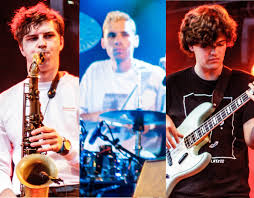
To locate the absolute, most rebellious, and genre-blurring coordinate of 21st-century instrumental music on The Jazz Compass, one must look to Toronto, Canada, at the dawn of the 2010s. This is the birthplace of BadBadNotGood (BBNG). Formed by keyboardist Matthew Tavares, bassist Chester Hansen, and drummer Alexander Sowinski (later joined by multi-instrumentalist Leland Whitty), the band emerged from the prestigious jazz program at Humber College. However, instead of bonding over a shared love for polite, traditional big-band swing, the young musicians connected over a passionate, mutual hatred for their professors’ rigid academic elitism. They were bored by the idea of treating jazz like a dusty museum piece.
They preferred to spend their nights listening to the unquantized, gritty, and loop-based hip-hop production of underground hip-hop royalty like MF DOOM, Madlib, and the Wu-Tang Clan. In 2011, they recorded a live, hyper-aggressive jazz interpretation of tracks by the rap collective Odd Future and posted it online. The video went massively viral, catching the attention of Tyler, The Creator himself. BBNG didn’t just cross over into the hip-hop world; they tore down the invisible wall between the academic jazz conservatory and the raw, heavy physics of the underground street beat.
The Unquantized Pocket: Analyzing the Analog Textures of Contemporary Noir
For the high-art connoisseur tracking landmark moments of modern transcultural orchestration, BadBadNotGood’s original studio catalog—specifically III (2014), IV (2016), and their Grammy-winning collaborative efforts—represents an absolute masterclass in atmospheric production. They pioneered a unique recording methodology, tracking everything live to tape using vintage analog equipment, tube compressors, and ribbon microphones.
The band’s legendary tracks like “Can’t Leave the Night” and the breathtaking masterpiece “Time Moves Slow” (featuring vocal icon Sam Herring) showcase the true scale of their sonic matrix. BBNG completely rejects the clean, hyper-calculating digital polish of modern studio jazz. Instead, they engineer a thick, muddy, and late-night atmosphere. The rhythm section operates in a slow, heavy, behind-the-beat pocket where the drums feel like a dusty vinyl sample rather than a live instrument. Over this dark cushion, Whitty’s saxophone or flute drifts like a lone detective in a rain-slicked city alleyway, deploying rich minor intervals that feel deeply melancholic, cinematic, and urgent. It is a style that demands physical head-nodding from hip-hop fans, yet holds the sophisticated harmonic depth to satisfy the most hardcore jazz purists.
The Ultimate Studio Alchemists Across the Modern Latitude
True to the forward-thinking, borderless spirit of Jazz Latitude, BadBadNotGood’s continuous evolution stands as an unshakeable monument to the total decentralization of modern music genres. Becoming the absolute go-to studio band and production team for global superstars across the artistic spectrum—collaborating extensively with Ghostface Killah, Kendrick Lamar, Daniel Caesar, and Kali Uchis—they proved that modern jazz musicians do not need to look to the past to find relevance; they can sit comfortably at the very head of contemporary urban culture.
With later masterworks like Talk Memory (2021) and their recent 2024 EP series Mid Spiral, the band has pushed even deeper into psychedelic jazz-rock, spiritual modalism, and complex orchestral textures, proving that their sonic universe is completely infinite. BadBadNotGood has etched a sharp, neon-green-and-asphalt tinted coordinate on our map—a beautiful, swinging, and fiercely modern reminder to the universe that when absolute technical discipline surrenders to the lawless, syncopated soul of hip-hop culture, the music becomes timeless, dangerous, and foundational to the sounds of tomorrow.