Los Angeles Before The Epic
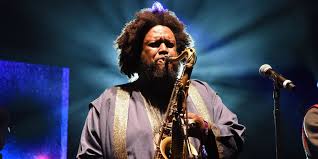
When The Epic appeared in May 2015, Kamasi Washington seemed to arrive fully formed: a tenor saxophonist leading an enormous ensemble through nearly three hours of jazz, soul, gospel, orchestral writing and improvisation. The scale alone demanded attention. Seventeen tracks spread across three discs, a core band expanded by strings and choir, long compositions that refused radio-length expectations, and a visual presentation that treated the record almost as a self-contained universe. Yet the idea that Washington suddenly emerged in 2015 obscures the more interesting story. By the time The Epic reached listeners, he had spent years inside a remarkably interconnected Los Angeles musical community, performing and recording across jazz, hip-hop, R&B and popular music. His own biography traces early work with the Young Jazz Giants, touring with Snoop Dogg while studying at UCLA, playing in Gerald Wilson’s orchestra and later working with musicians across several generations and genres.
That background is essential because The Epic was not an attempt by an outsider to make jazz relevant by adding contemporary influences. Washington and many of the musicians around him had developed in an environment where those distinctions were already porous. Jazz and hip-hop belonged to the same city. Funk, gospel and soul were part of the musical vocabulary. Improvisers could play with established jazz musicians and then enter sessions with rappers or R&B artists without treating those activities as contradictory careers. Washington’s breakthrough therefore tells us as much about Los Angeles as an ecosystem as it does about one unusually ambitious saxophonist.
The West Coast Get Down
At the center of that ecosystem was the West Coast Get Down, the collective with which Washington became closely identified. The importance of the group lies less in a fixed stylistic manifesto than in the relationships among its musicians. Washington’s circle included players such as Thundercat, Ronald Bruner Jr., Cameron Graves, Miles Mosley and Ryan Porter, musicians whose careers would eventually extend into jazz, funk, hip-hop, electronic music and numerous collaborative projects.
They had histories together long before international attention arrived.
That matters.
An ensemble can hire excellent musicians and still require time to develop a genuine collective language. Washington’s band had the advantage of musicians who already understood one another’s instincts. They knew how far a solo could stretch, how quickly the rhythm section could change direction and how much intensity the ensemble could sustain without collapsing into noise. When The Epic eventually presented this community on an enormous scale, the orchestration was new to many listeners, but the human relationships underneath it were not.
The record’s size can therefore be deceptive.
At its center is something intimate: musicians who had been listening to one another for years.
Kamasi Washington Before He Became “Kamasi Washington”
The mythology surrounding breakthrough albums often divides careers into before and after. Before The Epic, Washington supposedly existed in obscurity; afterward, he became one of contemporary jazz’s most recognizable musicians.
Reality is more useful.
Washington had already worked professionally across several areas of the Los Angeles music industry. His résumé included performances and recordings with artists ranging from jazz figures to major names in R&B and hip-hop. His biography lists collaborations with musicians including Gerald Wilson, McCoy Tyner, Freddie Hubbard, Kenny Burrell, George Duke, Lauryn Hill and Chaka Khan, among others.
This experience helped shape a particularly broad understanding of what a saxophonist could do.
Playing in a jazz ensemble rewards improvisational responsiveness.
Playing behind a vocalist requires restraint.
Large ensembles demand awareness of orchestration.
Hip-hop sessions can make timbre, repetition and arrangement as important as harmonic complexity.
Washington absorbed these environments without needing to rank them.
By the time he began attracting wider attention, stylistic openness was not a marketing concept.
It was professional experience.
Kendrick Lamar and To Pimp a Butterfly
The timing of Washington’s breakthrough cannot be separated from To Pimp a Butterfly. Kendrick Lamar’s album appeared in March 2015, only weeks before The Epic, and placed musicians associated with Los Angeles jazz inside one of the most discussed popular records of the decade. Washington played saxophone and contributed string arrangements to the project; he has explained that saxophonist and producer Terrace Martin, another musician with deep connections across jazz and hip-hop, brought him into the sessions.
The connection mattered enormously for visibility, but it should not be misunderstood.
Kendrick Lamar did not create Kamasi Washington.
Nor did hip-hop suddenly rescue jazz from irrelevance.
What To Pimp a Butterfly revealed to a wider audience was that the separation between these musical communities had already become much less rigid among the musicians themselves. Jazz-trained players were participating directly in contemporary Black popular music, not simply providing samples from the past.
For listeners who discovered Washington through Kendrick Lamar, The Epic arrived almost immediately as evidence that the saxophonist possessed an enormous musical world of his own.
The sequence was unusually powerful.
First, millions of listeners encountered the sound.
Then Washington opened the door to the universe behind it.
Brainfeeder and the Right Context
The label that released The Epic was equally significant. Brainfeeder, founded by Flying Lotus, already occupied territory between electronic music, hip-hop, beat culture, jazz and experimental composition. Releasing Washington through that environment positioned the album differently from the way a conventional jazz label might have done.
The context encouraged curiosity.
Listeners who followed Flying Lotus or Thundercat did not necessarily need to identify as jazz fans before approaching a three-hour saxophone-led album. Washington’s music could reach them through an existing network of musical relationships rather than through arguments about why younger audiences ought to appreciate jazz.
This is one of the underestimated reasons The Epic mattered.
The music did not become simpler to reach a larger audience.
The path to the music changed.
That is a very different achievement.
Three Hours Instead of Forty Minutes
Washington originally struggled with how to fit the material that became The Epic into a conventional album. He later explained that he spent considerable time trying to reduce the project before realizing that cutting it down would remove something essential. The solution was not compression.
It was expansion.
The final album contains 17 tracks and runs for approximately two hours and fifty-three minutes. It was released by Brainfeeder in May 2015.
That decision tells us something important about Washington’s artistic temperament.
Ambition is often discussed as though it means technical complexity. In The Epic, ambition is also a refusal to accept ordinary scale. Washington was willing to ask listeners for nearly three hours of attention at a moment when music consumption was moving increasingly toward playlists, individual tracks and streaming-driven immediacy.
The apparent contradiction helped the album.
Its excess became part of its identity.
You did not casually summarize The Epic.
You entered it.
Why the Title Matters
Calling an album The Epic invites skepticism.
The word announces magnitude before the listener has heard a note. It could easily have become an example of self-importance overwhelming the music.
Washington understood the risk and embraced it.
The project’s conceptual framework included ideas of generational succession, struggle and transformation. The label’s description presents a story involving an old master and younger challengers, eventually framing the idea around a changing of the guard.
That narrative connects directly with the album’s opening composition, “Change of the Guard.”
But the most interesting interpretation is not that Washington was declaring himself the musician who would overthrow the jazz establishment.
The generational change was broader.
A community of Los Angeles musicians was becoming visible to audiences that previously had little reason to know their names.
The “guard” changing was not simply one saxophonist replacing another.
The infrastructure around jazz was changing too.
“Change of the Guard”
The opening track immediately establishes the album’s scale. At more than twelve minutes, “Change of the Guard” has no interest in functioning as a concise introduction. Washington allows the ensemble to establish an environment before the music develops through improvisation and increasing density.
The arrangement introduces several characteristics that will recur throughout the record: massed sound, powerful tenor statements, rhythmic intensity, layered ensemble writing and a willingness to let compositions expand rather than hurry toward resolution.
Washington’s tenor is central, but the album does not sound like a conventional saxophone record.
This distinction matters.
The orchestra and choir are not simply prestige additions surrounding a soloist. They help establish the almost cinematic scale through which Washington frames the ensemble. Apple Music describes the core ten-piece band as being augmented by strings and choir, while contemporary accounts emphasized how unusually large the project felt for a jazz debut on an independent label.
The title The Epic begins to make sense before the first composition ends.
Two Drummers, Two Bassists
One of the most important characteristics of Washington’s ensemble is rhythmic architecture. The core group used two drummers and two bassists, creating a foundation very different from the conventional piano-bass-drums-plus-horns jazz configuration. Contemporary personnel descriptions of The Epic identify Ronald Bruner Jr. among the drummers and Stephen “Thundercat” Bruner among the bassists, alongside keyboards, horns and vocalist Patrice Quinn.
Doubling instruments does not automatically make music richer.
It can make it muddy.
The challenge is distributing functions.
One bassist can establish a foundation while another creates movement around it. Two drummers can produce interlocking rhythmic information instead of merely increasing volume. The arrangement can become almost orchestral before the strings or choir even enter.
This helps explain the physical character of Washington’s music.
The ensemble does not simply swing.
It surges.
The Tenor Sound
Washington’s tenor tone is frequently described through its size: huge, muscular, forceful. Those descriptions are understandable, but they can obscure the expressive detail in his playing.
Power is only effective when there is something to contrast with it.
Washington can sustain long melodic statements, repeat figures until they accumulate emotional weight and move gradually from relatively clear phrasing toward greater intensity. His solos often work through escalation rather than constant complexity.
This creates an obvious historical connection with the more ecstatic branches of post-Coltrane saxophone playing.
John Coltrane and Pharoah Sanders are difficult names to avoid when discussing Washington’s tone and the spiritual scale of some of his music. Contemporary reviews of The Epic made those connections immediately.
But influence is not identity.
Washington’s context is Los Angeles decades later, surrounded by hip-hop, funk, beat culture and musicians whose careers cross stylistic boundaries routinely.
His tenor carries history.
The rhythm section tells us what year it is.
Spiritual Jazz Without Reenactment
Washington is frequently placed within spiritual jazz, and there are obvious reasons. Choirs, expansive compositions, modal passages, collective intensity and a tenor vocabulary associated with the post-Coltrane tradition all encourage the comparison.
But treating The Epic as a revival of late-1960s spiritual jazz understates what makes it contemporary.
Washington is not attempting to recreate Karma.
The relationship is more interesting than imitation.
Pharoah Sanders demonstrated that simple melodic material, collective improvisation and enormous timbral intensity could coexist within a spiritually charged long-form composition. Washington inherits a world in which that achievement is already part of jazz history.
He then places related ideas inside another cultural environment.
Strings become cinematic.
Gospel choir interacts with contemporary production aesthetics.
The rhythm section carries funk and hip-hop awareness.
The musicians belong to an L.A. network whose collaborations extend far outside jazz.
The historical vocabulary remains audible, but the social context has changed.
“The Rhythm Changes”
One of The Epic‘s most approachable pieces also provides a clue to why Washington could reach listeners beyond specialist jazz audiences. “The Rhythm Changes”, featuring vocalist Patrice Quinn, does not ask the listener to admire complexity from a distance.
It invites participation.
The melody is memorable.
The groove is immediate.
The vocal presence creates another point of entry into a record dominated by long instrumental forms.
This accessibility is not a compromise.
It is part of Washington’s broader musical philosophy.
Jazz can be intellectually ambitious without requiring emotional distance. A composition can contain sophisticated harmony and improvisation while still offering a melody someone remembers after the record ends.
Washington repeatedly returns to this balance.
It helps explain why The Epic could be enormous without becoming inaccessible.
Rewriting “Cherokee”
Washington’s version of “Cherokee” provides another revealing moment. The Ray Noble standard has a long history as a vehicle for jazz improvisation, particularly within bebop. For generations of musicians, its harmonic movement became almost a technical proving ground.
Washington refuses to treat it merely as an examination.
His arrangement transforms the piece through the sound world of The Epic, connecting historical repertoire with the soul, vocal and rhythmic languages surrounding the rest of the album. Contemporary reviews noted precisely this unusual treatment of a canonical jazz standard.
The decision says something important about Washington’s relationship with tradition.
He does not avoid standards because they are old.
He changes the environment around them.
That is a more productive form of respect than preservation through imitation.
Debussy Inside the Same Universe
Then there is “Clair de Lune.”
Placing Debussy beside jazz originals, “Cherokee” and “Malcolm’s Theme” might appear designed simply to demonstrate range. But within The Epic, the piece participates in the album’s broader argument that musical traditions can be reorganized through arrangement.
Washington does not need every composition to originate from the same cultural source for the record to feel coherent.
The ensemble itself provides coherence.
A piece enters Washington’s world and is subjected to the same questions:
What can the rhythm section do with it?
Where can improvisation enter?
How can orchestration alter its emotional scale?
What happens when a familiar melody passes through this particular community of musicians?
The repertoire changes.
The identity of the ensemble remains.
The Album That Became an Event
When The Epic was released, its reception extended well beyond normal jazz coverage. Critics who rarely devoted significant space to contemporary jazz discussed Washington, while listeners arriving through Kendrick Lamar, Flying Lotus, Thundercat and Brainfeeder encountered a record that demanded engagement with jazz history without behaving like a history lesson. Pitchfork described the project as a three-hour statement drawing from soul jazz, Coltrane and 1970s fusion, while emphasizing Washington’s unusual ability to reach listeners who had previously shown little interest in jazz.
This is where claims that Washington “saved jazz” become especially unhelpful.
Jazz was not dead in 2015.
Brilliant musicians were making important records before The Epic, during The Epic and after it.
What Washington changed was visibility and scale.
He demonstrated that an unapologetically enormous jazz project could become part of a broader cultural conversation without stripping away long improvisations, orchestration, historical references or instrumental ambition.
That achievement is concrete enough.
It does not require mythology.
What Happened After The Epic
The danger of producing a breakthrough as distinctive as The Epic is that the rest of a career can become an attempt to recreate the moment.
Washington did not follow that route.
Harmony of Difference arrived in 2017 with a more concentrated structure, followed by the expansive Heaven and Earth in 2018. His work subsequently extended into film scoring, including the music for Michelle Obama’s documentary Becoming, and into the collaborative group Dinner Party with Robert Glasper, Terrace Martin and 9th Wonder. His official biography identifies both projects as significant parts of the period following Heaven and Earth.
Then, in 2024, Fearless Movement changed the emphasis again.
Washington described it as a kind of dance album, though not in a literal genre sense. Movement became a metaphor for expression and change, while the music placed greater emphasis on rhythm and brought collaborators including André 3000 and George Clinton into his world.
That evolution matters because it changes how we should understand The Epic.
It was not the formula.
It was the opening of a door.
Behind it was a musician whose ambitions were larger than one monumental record.
And to understand how those ambitions developed, we have to look at what happened when Kamasi Washington faced the most difficult question created by a breakthrough:
What do you do after making an album called The Epic?
Buy Amazon
After The Epic: The Problem of Following a Monument
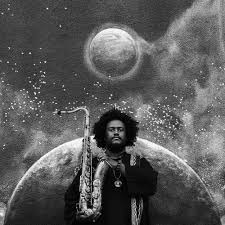
The success of The Epic created an unusual problem for Kamasi Washington. The album’s identity depended partly on excess: almost three hours of music, choir, strings, an expanded rhythm section, long improvisations and a title that announced its scale before the first note sounded. Repeating that formula would have been easy to recognize and difficult to justify. Making something deliberately smaller merely to demonstrate versatility could have seemed equally calculated. Washington’s response was more interesting. Rather than rejecting the musical language that had brought him international attention, he began reorganizing it. The records that followed retained many of the elements listeners associated with him—large ensemble writing, forceful tenor saxophone, spiritual intensity and a strong rhythmic foundation—but changed the structures through which those elements operated.
That distinction is central to understanding Washington beyond the phenomenon of 2015. The Epic remains the album through which many listeners first encounter him, but his subsequent work demonstrates that magnitude was never the complete point. What mattered was the ability to create a musical world large enough to contain different histories and communities without forcing them into a single stylistic identity. Once that principle had been established, Washington could change the dimensions of the world without abandoning it.
Harmony of Difference: Scale Through Structure
Released in 2017, Harmony of Difference offered the clearest immediate response to The Epic. Instead of another three-hour statement, Washington presented a six-part suite originally created for the Whitney Biennial. Its conceptual foundation was the musical technique of counterpoint, which Washington used as a metaphor for social relationships: independent melodies could retain their identities while creating something larger through coexistence. The project developed five shorter compositions before bringing their materials together in the final piece, “Truth.”
This is an important development because it shows Washington thinking structurally rather than simply expansively. The Epic achieves much of its impact through abundance. Harmony of Difference asks whether similar emotional magnitude can emerge through organization.
“Truth” provides the answer.
Themes heard separately earlier in the suite begin to coexist. The composition gradually reveals that what appeared to be independent material was part of a larger architecture. Washington’s metaphor is clear without requiring the music to become an academic demonstration of counterpoint.
Difference does not have to disappear for unity to become possible.
Musically, that principle also describes the community surrounding Washington. His ensembles contain musicians with substantial identities of their own. The goal is not to erase those personalities under the leader’s vision.
The larger sound depends on them remaining audible.
“Truth” and the Power of Accumulation
“Truth” became one of Washington’s most recognizable compositions because it condenses several of his strengths into a relatively concentrated form. Melodic material is immediately accessible, but repetition gradually increases emotional weight. Horns, rhythm section, strings and voices accumulate without requiring a conventional dramatic twist.
Washington understands something fundamental about repetition: a melody can change even when its notes do not.
Context changes it.
The first statement establishes recognition.
The next adds familiarity.
Additional instrumentation increases weight.
Improvisation changes perspective.
When the theme returns after the ensemble has expanded, the listener is no longer hearing exactly the same thing because memory has become part of the composition.
This principle connects Washington with spiritual jazz without requiring direct imitation. Repetition played a crucial structural role in music by John Coltrane, Pharoah Sanders, Alice Coltrane and many others, but Washington applies it through his own orchestral and rhythmic environment.
The historical relationship is audible.
So is the distance.
Heaven and Earth: Two Sides of the Same Music
If Harmony of Difference demonstrated concentration, Heaven and Earth in 2018 returned to large-scale thinking. The project was organized around two complementary halves—Earth and Heaven—with an additional hidden component, The Choice, physically concealed within the original CD packaging.
The conceptual division allowed Washington to explore the relationship between external and internal realities. He described Earth in terms of the world experienced outwardly and Heaven in relation to the internal world that shapes how reality is perceived. The structure made the album’s scale meaningful rather than simply impressive.
This is where Washington’s tendency toward grand concepts becomes both his strength and one of the legitimate points of criticism surrounding his work.
He thinks in large frames.
Sometimes very large frames.
Titles such as The Epic, Heaven and Earth and Harmony of Difference announce themes of enormous philosophical scope. Choirs and strings reinforce that scale. The music frequently aims for transcendence rather than understatement.
For listeners who respond to this language, the effect can be overwhelming.
For others, it can feel excessive.
Both responses are reasonable.
The Case Against Kamasi Washington
A serious assessment of Washington should acknowledge the criticism his music has received. His importance does not require pretending that every listener experiences his scale as profundity.
Some critics have found the arrangements overly grand, the solos too dependent on intensity, or the spiritual and philosophical framing too explicit. Others hear echoes of earlier jazz languages—particularly Coltrane, Sanders and 1970s fusion—without finding the same degree of harmonic or formal innovation.
These criticisms raise useful questions.
Does magnitude automatically produce depth?
No.
Does an enormous ensemble make a composition more sophisticated?
No.
Does playing with extraordinary intensity guarantee meaningful improvisation?
Again, no.
But those questions should then be applied to the actual recordings rather than used to dismiss Washington’s project in advance.
His strongest music succeeds when scale serves structure.
“Truth” works because accumulation reveals relationships among themes.
The Epic works because the large ensemble amplifies a musical community already capable of deep interaction.
The weaker moments, for listeners who find them excessive, often occur when the language of transcendence becomes more predictable than the musical development beneath it.
That tension is part of Washington’s work.
It makes him more interesting, not less.
The Problem With Calling Him a “Savior of Jazz”
Washington’s rise generated another problematic narrative: that he had somehow made jazz relevant again.
This interpretation misunderstands both jazz and Washington.
Jazz never stopped developing.
During the years immediately preceding The Epic, musicians across the United States, Europe, Africa and elsewhere were producing significant work. Vijay Iyer, Ambrose Akinmusire, Jason Moran, Robert Glasper, Esperanza Spalding and many others were already demonstrating radically different possibilities for contemporary jazz.
What Washington accomplished was different.
He helped make one ambitious form of contemporary jazz unusually visible outside established jazz audiences.
That is significant enough.
There is no need to inflate it into resurrection.
In fact, the “savior” narrative diminishes the West Coast Get Down community because it transforms a collective musical environment into the heroic story of one individual.
Washington’s own history argues against that interpretation.
Los Angeles Is Still in the Music
Even as Washington became an international festival headliner, Los Angeles remained fundamental to his musical identity. His sound developed through relationships built there, and those relationships continued to appear across projects.
This makes his career different from the traditional story of the jazz musician who must relocate to New York to enter the center of the music.
New York remains enormously important to jazz, but Washington’s generation demonstrated that another infrastructure could produce internationally significant work without treating New York as the inevitable destination.
Los Angeles offered different connections.
Film and television industries.
Hip-hop.
Electronic music.
R&B.
Studio culture.
Large immigrant communities.
A distinctive history of Black music.
And musicians comfortable moving among all of them.
Washington’s music sounds like this multiplicity.
The West Coast Get Down as an Alternative Model
The West Coast Get Down also provides an alternative way to think about jazz careers.
Instead of musicians primarily building reputations through individual leader projects and assembling different sidemen for each session, the collective emphasized long-term relationships.
This does not mean everyone played identical music.
Quite the opposite.
Thundercat developed an unmistakable combination of bass virtuosity, funk, electronic production and eccentric songwriting.
Cameron Graves pursued a particularly aggressive relationship between jazz piano, metal and composition.
Ryan Porter developed his own trombone-led projects.
Miles Mosley explored bass, vocals and groove-driven songwriting.
The community worked because individuality did not threaten collective identity.
This resembles the principle Washington formalized in Harmony of Difference.
Independent voices can strengthen the whole.
Kendrick Lamar Was a Connection, Not an Origin
The relationship between Washington’s community and Kendrick Lamar also deserves a more precise interpretation. To Pimp a Butterfly unquestionably increased the visibility of musicians associated with the Los Angeles jazz scene, but their presence on the album was not a record-industry experiment designed to make hip-hop sound sophisticated.
The connections already existed.
Terrace Martin was crucial to this bridge. His career had long demonstrated how jazz musicianship, production and hip-hop could operate within the same creative identity.
Washington’s participation therefore reflected a local musical network rather than an artificial crossover.
This distinction matters because “jazz meets hip-hop” is often described as though two strangers have been introduced.
For these musicians, they were already neighbors.
Dinner Party
That principle became especially clear with Dinner Party, the collaborative project involving Washington, Robert Glasper, Terrace Martin and producer 9th Wonder. The group’s 2020 debut placed Washington’s tenor inside a setting where jazz improvisation, R&B, hip-hop production and beat culture were not treated as separate ingredients requiring explanation.
Dinner Party also demonstrates how Washington behaves when he is not responsible for the entire conceptual universe.
His saxophone becomes one voice among several strong personalities.
That role is useful because it reveals qualities that can be obscured by the enormous scale of his leader albums. Washington can operate economically. He does not require choir, orchestra and extended compositions to remain identifiable.
Tone is enough.
Phrasing is enough.
A few well-placed notes can establish his presence.
Film and Becoming
Washington’s score for the 2020 documentary Becoming, centered on Michelle Obama’s memoir and tour, offered another environment requiring restraint. Film scoring changes the composer’s responsibilities because music must interact with narrative, dialogue, pacing and images.
A composer cannot assume uninterrupted attention.
The score has to know when to lead and when to disappear.
Washington’s work in this context reinforced the broader lesson already visible in his collaborations: the maximalism of The Epic was a choice, not a limitation.
He could think on smaller scales when the medium required it.
This makes his large records more convincing.
Excess is more interesting when the musician is capable of restraint.
From Spiritual Jazz to Movement
By the time Washington began developing Fearless Movement, another shift was occurring. The spiritual language associated with his earlier work remained present, but rhythm and physical movement moved closer to the center.
Washington described the 2024 record as his “dance album”, while immediately clarifying that he meant dance in a broader sense: movement as expression and transformation rather than adherence to a specific club genre.
The distinction is important.
Washington was not suddenly making conventional dance music.
He was asking what happens when the body becomes part of the compositional idea.
Jazz has always contained physical movement, but certain narratives about modern jazz have emphasized intellectual listening so strongly that dance can seem like an external influence.
Historically, that separation is artificial.
Washington’s framing reconnects the two.
Fearless Movement
Released in May 2024, Fearless Movement brought another large group of collaborators into Washington’s orbit, including André 3000, George Clinton, Thundercat, Terrace Martin, Patrice Quinn, D Smoke and BJ the Chicago Kid, among others.
The guest list could easily have produced a record that felt like a collection of high-profile appearances.
Instead, the album is most interesting when those collaborators enter Washington’s established world without being absorbed completely into it.
George Clinton brings decades of funk history.
André 3000 arrives in the context of his increasingly exploratory flute work.
Thundercat carries both personal history with Washington and his own distinctive musical universe.
The album therefore reinforces something visible since the West Coast Get Down years:
Washington’s music grows through relationships.
Scale is social before it is orchestral.
“Prologue”
The opening composition “Prologue” demonstrates that Washington had not abandoned the large-scale instrumental language associated with his earlier work. The track develops patiently, allowing the ensemble to establish rhythmic and harmonic environments before the tenor becomes increasingly prominent.
But the context has changed.
After Harmony of Difference, Heaven and Earth, Dinner Party and Becoming, Washington no longer needs to prove that he can create monumental jazz.
The listener already knows.
This gives the music a different kind of freedom.
Instead of asking, “How large can this become?” the more interesting question is, “Where can this movement lead?”
André 3000 and “Dream State”
The appearance of André 3000 on “Dream State” attracted understandable attention. By this point, André’s flute-centered work had already challenged expectations surrounding his own career, making the collaboration more than a celebrity feature.
The encounter connects musicians whose public histories are very different but whose later work shares an interest in exploration outside established commercial expectations.
Washington does not need André to rap.
André does not need Washington to recreate The Epic.
The collaboration works because neither musician is asked to perform the identity audiences know best.
That is a healthy form of crossover.
A Family Dimension
Fearless Movement also introduced a particularly personal compositional element. Washington’s daughter contributed musical material to the project, an unusual example of family experience entering directly into the creative process.
This adds another meaning to “movement.”
Washington’s earlier records often dealt with community, generations and large philosophical ideas.
Here, generational continuity becomes intimate.
Not an abstract changing of the guard.
Family.
That evolution makes sense for an artist entering another stage of life.
Spirituality becomes less about cosmic scale alone and more about relationships close enough to change everyday existence.
What Washington Actually Changed
Nearly a decade after The Epic, Washington’s significance becomes easier to describe without exaggeration.
He did not invent spiritual jazz.
He did not revive a dead genre.
He did not single-handedly reconnect jazz and hip-hop.
He did not make large ensembles new.
What he did was demonstrate that these elements could be assembled into a contemporary jazz project of unusual cultural visibility without being reduced for accessibility.
Long solos remained.
Choirs remained.
Complex arrangements remained.
Historical references remained.
The music could be excessive, sincere, ambitious and occasionally divisive.
And a surprisingly large audience was willing to follow it.
That is a substantial achievement.
The Question of Legacy
Washington was born in 1981. Any attempt to provide a definitive judgment on his legacy is therefore premature.
His career is still developing.
But we can already identify a change in the landscape surrounding him.
The barriers separating jazz from hip-hop audiences are less rigid than they appeared to some listeners a generation ago. Brainfeeder helped normalize jazz within an ecosystem associated with electronic music and beat culture. The West Coast Get Down demonstrated the power of a long-term musical community. The Epic proved that scale itself could become a point of attraction rather than a commercial obstacle.
Washington contributed to all of those changes.
The next question is how his music should be heard now that the initial excitement surrounding The Epic has become history.
Because once the mythology is removed, something more interesting remains:
the music itself.
Hearing Kamasi Washington After the Hype
More than a decade after The Epic, Kamasi Washington is easier to hear without the burden of the arguments that surrounded his breakthrough. In 2015, discussions about him often became discussions about jazz itself. Could a three-hour record attract younger listeners? Was spiritual jazz experiencing a revival? Had hip-hop brought jazz back into popular culture? Was Washington an innovator, a revivalist or an overpraised beneficiary of unusually effective marketing? Those questions helped create the cultural event surrounding the album, but they could also obscure what was happening inside the music. With greater distance, the most useful way to understand Washington is neither as the savior of jazz nor as a musician whose success depended mainly on timing. His importance lies in the particular musical environment he helped make visible: Los Angeles musicians with deep jazz foundations who considered gospel, funk, hip-hop, soul, orchestral composition and popular music part of the same working vocabulary.
That perspective also makes Washington’s later career easier to understand. Harmony of Difference, Heaven and Earth, Dinner Party, Becoming and Fearless Movement are not attempts to escape The Epic. They test different dimensions of the same underlying idea. Sometimes the ensemble becomes enormous. Sometimes Washington occupies a collaborative role. Sometimes composition becomes more important than soloing. Sometimes rhythm and bodily movement move toward the foreground. The continuity is not one production style. It is a belief that jazz can operate at the center of contemporary culture without pretending the rest of contemporary music does not exist.
Is Kamasi Washington Really a Spiritual Jazz Musician?
The label spiritual jazz remains both useful and incomplete. Washington’s music clearly shares characteristics with recordings historically placed in that tradition: modal harmony, long-form improvisation, repetition, large emotional arcs, collective intensity and an interest in transcendence. His tenor vocabulary also makes comparisons with John Coltrane and Pharoah Sanders understandable.
But historical context matters.
The spiritual jazz associated with the late 1960s and 1970s emerged from particular social, political and religious conditions. Coltrane, Sanders, Alice Coltrane and their contemporaries were responding to worlds shaped by the civil rights struggle, Black cultural nationalism, changing religious consciousness, antiwar movements and radical experiments in musical organization.
Washington inherited that history.
He did not inhabit the same historical moment.
His world includes hip-hop as an established cultural tradition, digital production, contemporary Los Angeles, film scoring, beat culture and decades of jazz history that his predecessors could not have known.
Calling him a spiritual jazz musician can therefore help locate part of his vocabulary.
It should not become the complete explanation.
The Pharoah Sanders Connection
Of all the historical comparisons applied to Washington, Pharoah Sanders may be the most immediately audible. Both saxophonists can build improvisations through repeated figures, rising intensity and a tenor sound capable of moving from warmth toward extraordinary force. Both have worked with large ensemble textures and music framed through ideas of transcendence and community.
But hearing the differences is more valuable than simply identifying the influence.
Sanders’s Karma emerged in 1969 from the post-Coltrane avant-garde and uses repetition, percussion, voice and collective improvisation to create a long-form spiritual environment. Washington’s The Epic arrives forty-six years later with orchestral arrangements, gospel-derived vocal textures, a rhythm section shaped by funk and hip-hop awareness and a Los Angeles community operating across genres.
The connection is real.
So is the historical distance.
Washington’s achievement is not that he became a new Pharoah Sanders.
It is that music associated with Sanders could become part of a contemporary vocabulary without remaining trapped in 1969.
The John Coltrane Question
Coltrane’s shadow is even larger because almost every spiritually inclined tenor saxophonist eventually faces comparison with him. Washington’s long solos, modal passages and escalating intensity naturally invite the association.
Yet using Coltrane as the primary measuring stick can become restrictive.
If every tenor saxophonist after 1967 is judged according to how radically they extend Coltrane’s innovations, most will appear derivative by definition. A more useful question is what each musician does with the possibilities Coltrane helped establish.
Washington emphasizes orchestral scale, community and accessibility differently.
His melodic materials can be unusually direct.
His ensembles often use grooves that connect with funk and hip-hop.
Choirs and strings contribute a cinematic quality far removed from the relatively raw sound of many late-Coltrane recordings.
Washington does not escape Coltrane’s history.
He changes the room around it.
Why Melody Matters
One of the reasons Washington reached listeners outside specialist jazz audiences is relatively simple: he writes melodies people can remember.
This quality can be undervalued when jazz criticism emphasizes harmonic innovation or improvisational complexity. But melody has always been central to the music’s ability to communicate beyond musicians themselves.
Washington understands how repetition can make a theme feel communal.
“The Rhythm Changes” is an obvious example.
“Truth” is another.
The melodic ideas are strong enough to survive large arrangements and extended improvisation. When they return after passages of greater complexity, recognition becomes emotionally powerful.
This principle links Washington with gospel, soul and spiritual jazz as much as with modern instrumental composition.
A melody does not become less sophisticated because an audience can remember it.
Sometimes memorability is the hardest part.
The Criticism of Excess
Washington’s tendency toward maximalism remains the most reasonable point of disagreement surrounding his work. The choir, strings, multiple rhythm-section instruments, extended solos and grand conceptual titles can produce an enormous amount of information.
Not every composition benefits equally.
There are moments when another climax can feel less surprising because the listener has already experienced several. A tenor solo pushed toward maximum intensity loses some impact if maximum intensity becomes predictable. Orchestral weight can occasionally obscure details that might have been more effective in a smaller setting.
These are legitimate criticisms.
They also reveal something important about Washington’s aesthetic.
He is willing to risk excess.
Minimalism protects an artist from certain kinds of failure. A restrained arrangement rarely gets accused of trying too hard. Washington operates closer to the opposite extreme.
When the music succeeds, the scale can feel exhilarating.
When it does not, the ambition remains visible.
That risk is part of the project.
The Audiophile Trap
Washington’s recordings can be impressive on high-quality audio systems. The combination of tenor saxophone, multiple bass instruments, drums, choir, strings and dense arrangements provides enormous dynamic and frequency-range information.
But that should remain secondary when discussing the music.
The value of The Epic is not that it can test a loudspeaker’s ability to separate complex layers.
The doubled rhythm section matters because it changes the physical architecture of the ensemble.
The choir matters because it enlarges the communal dimension.
The strings matter because they alter emotional scale.
Washington’s tenor matters because of what he plays, not because its harmonics reveal the quality of a tweeter.
This distinction is important for JazzLatitude.
Equipment can help listeners experience music.
Music should not exist merely to evaluate equipment.
How to Listen to The Epic
For someone approaching The Epic for the first time, listening to all three hours in one uninterrupted session is not mandatory. The record rewards immersion, but its size can obscure individual compositions if treated as an endurance test.
Start with “Change of the Guard.”
It establishes the scale and ensemble language.
Then hear “The Rhythm Changes” to understand Washington’s relationship with melody, vocals and accessibility.
Move to “Clair de Lune” to hear how the ensemble reorganizes material from outside the jazz repertoire.
Then hear “Cherokee” and compare Washington’s treatment with more conventional versions of the standard.
After those points of entry, return to the full album.
The enormous scale becomes easier to understand once the listener recognizes the different kinds of material Washington is assembling.
Where to Go After The Epic
The obvious next step is Harmony of Difference.
Its shorter duration and six-part structure reveal Washington’s compositional thinking with greater clarity. “Truth” alone provides one of the best demonstrations of his ability to build emotional intensity through accumulation.
Then move to Heaven and Earth.
Its scale reconnects with The Epic, but the conceptual organization is different enough to demonstrate development rather than repetition.
After that, listen to Dinner Party. Hearing Washington in a collaborative environment alongside Robert Glasper, Terrace Martin and 9th Wonder is valuable because the saxophone no longer carries responsibility for the entire musical universe.
Finally, hear Fearless Movement.
The sequence makes the evolution much clearer.
Washington begins as the leader of a project defined by extraordinary magnitude and gradually explores different relationships between composition, collaboration, rhythm and movement.
The West Coast Get Down Beyond Kamasi
Anyone interested in Washington should also listen beyond Washington.
That may be the most appropriate way to understand his importance.
Explore Thundercat.
Listen to Cameron Graves.
Find the work of Ryan Porter and Miles Mosley.
Follow Ronald Bruner Jr.
Then move outward toward Terrace Martin, whose role connecting jazz and hip-hop in Los Angeles is fundamental to the larger story.
The point is not to construct a required syllabus.
It is to recognize that The Epic did not emerge from one musician’s imagination in isolation.
The album documents a community.
Hearing the other musicians restores that context.
Los Angeles as a Jazz Center
Washington’s career also contributes to a broader reconsideration of American jazz geography. New York’s historical importance is unquestionable, but jazz has never belonged exclusively to one city.
Los Angeles has its own deep history.
Central Avenue.
Dexter Gordon.
Charles Mingus.
Gerald Wilson.
Horace Tapscott and the Pan Afrikan Peoples Arkestra.
The city’s studio musicians.
West Coast jazz.
Fusion.
Jazz education.
Hip-hop.
Washington’s generation enters that long history rather than beginning a new one.
The West Coast Get Down is therefore better understood as another chapter in Los Angeles jazz than as a sudden anomaly.
The city already knew how to produce musical communities.
Washington’s generation created one suited to its own time.
From Horace Tapscott to Kamasi Washington
The connection with Horace Tapscott is particularly valuable because Tapscott’s work complicates the stereotypical image of Los Angeles jazz as primarily cool, polished or commercially oriented.
Tapscott built music around community, Black cultural identity, large ensembles and local infrastructure. His Pan Afrikan Peoples Arkestra developed an alternative model in which artistic practice and community engagement were inseparable.
Washington belongs to a different generation and cultural environment, and the comparison should not imply direct equivalence.
But placing both musicians inside Los Angeles history reveals continuity.
Large ensemble thinking did not begin with The Epic.
Community-centered jazz did not begin with the West Coast Get Down.
Washington’s visibility allows listeners to travel backward and discover histories that mainstream jazz narratives sometimes treated as peripheral.
That may be one of his most useful unintended contributions.
Jazz and the Audience Question
Washington’s success also challenges assumptions about what contemporary audiences will tolerate.
Nearly three hours of jazz sounds commercially improbable.
Extended tenor solos sound commercially improbable.
Choirs and orchestral arrangements surrounding improvisation sound commercially improbable.
Yet The Epic reached far beyond the audience expected for a debut jazz album.
Why?
Part of the answer is context.
Brainfeeder connected Washington with listeners already interested in experimental electronic music and hip-hop.
Kendrick Lamar created another point of discovery.
Thundercat created another.
Festivals exposed the music to audiences outside traditional seated jazz venues.
But the music itself also communicated directly.
The grooves were physical.
The melodies were memorable.
The performances were dramatic.
Washington did not ask audiences to study jazz before responding to it.
That matters.
What The Epic Actually Changed
The title of this article asks how The Epic changed the scale of contemporary jazz.
The answer is not that jazz suddenly became orchestral.
Jazz had used orchestras for generations.
It is not that long albums became possible.
Extended jazz works existed decades earlier.
And Washington did not invent the combination of spirituality and improvisation.
What changed was the visibility of those possibilities within a contemporary cultural network.
A nearly three-hour jazz record could circulate alongside hip-hop and electronic music.
A tenor saxophonist could become recognizable to festival audiences who did not primarily identify as jazz listeners.
An independent label associated with beat culture could provide a natural home for a massive orchestral jazz project.
A Los Angeles collective could become internationally visible without reorganizing itself around traditional jazz-industry expectations.
The Epic made those possibilities difficult to ignore.
A Gateway Record
This may ultimately be the album’s most enduring cultural function.
The Epic became a gateway.
A listener arriving through Kendrick Lamar might discover Washington.
Washington might lead that listener toward Pharoah Sanders.
Sanders might lead toward John and Alice Coltrane.
Another listener might move sideways into Thundercat, Terrace Martin or Robert Glasper.
Someone else might discover Horace Tapscott and begin exploring an entirely different history of Los Angeles jazz.
The value of a gateway record is not that it contains everything.
It is that it makes the listener curious about what exists beyond it.
Karma can do that.
Kind of Blue can do that.
Head Hunters can do that.
The Epic has done it for a generation of listeners.
Essential Kamasi Washington
If only four Washington projects are available, the most useful sequence is:
The Epic — for the breakthrough and the complete large-ensemble language.
Harmony of Difference — for structural concentration and “Truth.”
Heaven and Earth — for the expansion of his conceptual and orchestral approach.
Fearless Movement — for the later emphasis on rhythm, collaboration and physical movement.
Together they reveal more development than the familiar image of Washington as simply “the man who made The Epic.”
His career is not one enormous album followed by variations.
It is an ongoing negotiation between scale and focus.
Final Thoughts: An Epic Without the Mythology
Kamasi Washington does not need to have saved jazz.
Jazz was alive before him.
He does not need to be the new John Coltrane.
Jazz already had John Coltrane.
He does not need to replace Pharoah Sanders or prove that contemporary musicians can equal the spiritual jazz of the 1960s.
Those comparisons eventually become obstacles.
What Washington actually accomplished is more specific and more convincing.
He emerged from a deep Los Angeles musical community and carried that community into an unusually visible cultural position. He helped demonstrate that jazz musicians could move naturally through hip-hop, soul, funk, orchestral composition and experimental music without presenting those relationships as novelty. He made a nearly three-hour debut on Brainfeeder feel like an event. He brought musicians from the West Coast Get Down into a larger conversation. And after that breakthrough, he continued changing the scale and context of his work rather than simply remaking it.
That is enough.
The most revealing moment in the story may therefore be the one before The Epic appeared.
A group of musicians had been playing together in Los Angeles for years.
The world had not noticed yet.
Then the doors opened.
The sound that came through seemed enormous because it was being heard by millions of people for the first time.
But the community behind it was already there.
And perhaps that is the real meaning of The Epic.
Not the arrival of one visionary who transformed jazz.
The moment when a musical world that already existed became impossible to overlook.