Zimbo Trio: How Three Musicians Helped Define Brazilian Instrumental Jazz
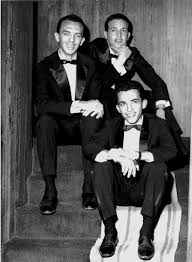
When pianist Amilton Godoy, bassist Luís Chaves and drummer Rubinho Barsotti formed Zimbo Trio in São Paulo in 1964, Brazilian music was already undergoing one of the most fertile transformations in its history. Bossa nova had radically altered harmony, rhythm, vocal interpretation and international perceptions of Brazilian music, while a generation of instrumentalists was discovering that the relationship between samba and jazz could lead somewhere beyond accompaniment. Zimbo Trio emerged directly from this environment, but its significance would come from refusing to remain simply a reflection of it. The group developed a piano-trio language in which Brazilian rhythmic identity, jazz improvisation, sophisticated arrangements and unusually precise ensemble playing could coexist without one element becoming subordinate to another. The original lineup would become one of the enduring formations in Brazilian instrumental music.
The trio’s official beginning can be dated with unusual precision. On March 17, 1964, Godoy, Chaves and Barsotti appeared together at the Oásis nightclub in São Paulo, accompanying actress and singer Norma Bengell in a production associated with Aloysio de Oliveira. “Consolação,” by Baden Powell and Vinicius de Moraes, was among the pieces performed. The date is more than biographical trivia. It places Zimbo Trio at the intersection of several musical currents that were reshaping Brazil: bossa nova’s harmonic refinement, samba’s rhythmic foundations, the growing influence of modern jazz and a São Paulo performance culture increasingly receptive to ambitious instrumental music.
The musicians themselves were hardly beginners. Chaves, Godoy and Barsotti had accumulated professional experience before adopting the Zimbo name, and their musical relationship had precedents in earlier sessions. A UNESP study of the group identifies Chaves’s 1963 LP Projeção as an important step in bringing the three musicians together. This helps explain why the ensemble’s identity developed so quickly. Zimbo Trio did not begin as three young musicians discovering their instruments together. It began with players who already possessed individual languages and enough experience to understand what a trio could become when the rhythm section was treated as a conversation rather than a hierarchy.
What “Zimbo” Meant
Even the group’s name suggested an identity broader than conventional jazz terminology. “Zimbo” has been associated with an old African currency and with meanings connected to good fortune, happiness and success. Amilton Godoy later recalled the African origin of the word when discussing the group’s history. Whether listeners knew that etymology or not, the name had an advantage: it did not define the musicians by genre.
They were not the “São Paulo Jazz Trio.”
They were not the “Bossa Nova Trio.”
They were Zimbo Trio.
That distinction became increasingly useful because the music would repeatedly resist narrow classification. Samba-jazz is probably the most convenient historical description, but even that term captures only part of their repertoire. Brazilian song, bossa nova, jazz harmony, improvisation, arrangements of major composers and eventually collaborations with singers and other instrumental traditions all became part of their working language.
The trio format provided the constant.
Everything inside it could move.
Amilton Godoy: The Piano as Orchestra
The most immediately recognizable voice in the group was often Amilton Godoy’s piano. His classical training gave him a technical foundation capable of handling dense harmonic structures and demanding arrangements, but the significance of his playing lies in what happened when that technique encountered Brazilian rhythm.
Godoy could treat the piano as much more than a harmonic support instrument. Chords could become rhythmic events. Right-hand lines could move rapidly without losing their relationship to the groove. Registers could be used almost orchestrally, allowing the trio to sound larger than three musicians without requiring constant density.
This approach distinguished Zimbo from the stereotype of the cocktail-lounge piano trio in which bass and drums discreetly support a featured pianist. Godoy was unquestionably prominent, but his playing depended on the rhythmic intelligence around him.
That relationship becomes particularly clear when attention shifts away from the piano.
Luís Chaves: More Than the Bottom of the Trio
Luís Chaves provided the acoustic bass foundation, but describing him simply as the musician responsible for the low frequencies misses his role in the ensemble. Chaves was a bassist, composer and arranger whose experience preceded Zimbo Trio. His 1963 Projeção session already brought together the musicians who would form the group the following year.
In a trio without guitar or additional percussion, the bass has unusual responsibility. It must provide harmonic direction while maintaining rhythmic definition, yet excessive rigidity can make samba feel heavy. Chaves understood how to keep the foundation clear while leaving enough elasticity for Godoy and Barsotti to interact.
The result is one of Zimbo Trio’s essential characteristics: the music can sound highly organized without sounding mechanically fixed.
Bass lines establish direction, but they also participate in dialogue.
That balance would become especially important as the trio approached increasingly sophisticated arrangements. The more harmonically ambitious the piano became, the more valuable a bassist capable of maintaining clarity without simply doubling harmonic roots.
Chaves provided that stability for decades.
Rubinho Barsotti and the Brazilian Drum Set
Then there was Rubinho Barsotti, whose drumming helped determine how the trio’s relationship between jazz and samba actually functioned.
Brazilian rhythm translated to drum set presents a particular challenge. Samba developed through interacting percussion voices, not from the conventional ride-cymbal patterns of American jazz. A drummer working in samba-jazz therefore has to make choices about which rhythmic information to preserve, imply or redistribute across the kit.
Barsotti approached this with precision rather than excess.
His drumming could swing, but the rhythmic identity did not simply imitate American jazz. Cymbal, snare, bass drum and accents worked together to suggest Brazilian rhythmic structures while leaving room for improvisational interaction.
This is an important reason the term “Brazilian jazz” should not be understood as jazz harmony placed on top of a samba beat.
The exchange happens at a deeper level.
Barsotti could respond to Godoy’s phrasing in ways associated with jazz interaction while maintaining a rhythmic vocabulary grounded in Brazilian music. Chaves operated between those forces.
The trio’s identity emerged from the negotiation.
The First Album
The group’s recording history began almost immediately. Discographical records list Zimbo Trio as an LP released in 1964, followed by a remarkably productive sequence of recordings during the remainder of the decade.
The early albums are particularly valuable because they document the trio at a moment when the boundaries among bossa nova, samba-jazz and modern Brazilian instrumental music were still being negotiated in real time.
Rather than thinking of these records simply as Brazilian versions of American piano-trio jazz, it is more useful to listen for the reverse process: Brazilian musicians using the trio format to reorganize their own musical materials.
The repertoire could draw from composers already central to modern Brazilian music, but arrangement changed familiar songs. Melodies became opportunities for rhythmic displacement. Harmonic sequences could be expanded. Introductions, transitions and endings became compositional spaces rather than functional necessities.
The song remained recognizable.
The trio changed the perspective from which it was heard.
Bossa Nova Was Not Enough
Zimbo Trio emerged during the bossa nova era, but describing the group simply as a bossa nova trio creates problems. Bossa nova’s understated rhythmic conception and intimate aesthetic were only part of the musical environment from which Zimbo developed.
The trio could be considerably more forceful.
Jazz improvisation gave the musicians permission to extend material. Samba provided rhythmic energy that did not require the restraint associated with João Gilberto’s vocal-and-guitar model. Godoy’s pianism could become virtuosic and expansive, while Barsotti and Chaves generated a degree of propulsion that pushed the music toward samba-jazz and instrumental MPB.
This distinction matters historically because Brazilian music in the early 1960s was not moving along a single line.
Bossa nova opened doors.
Musicians walked through them in different directions.
Some pursued the intimate song form.
Others moved toward politically engaged MPB.
Instrumentalists explored increasingly complex relationships between Brazilian rhythm and jazz improvisation, a movement that produced some of the essential samba-jazz albums of the 1960s.
Zimbo Trio became one of the clearest examples of that third path.
O Fino da Bossa: When the Trio Entered Brazilian Homes
The group’s visibility changed dramatically in 1965, when Zimbo Trio became the regular instrumental ensemble for O Fino da Bossa, the TV Record program associated with Elis Regina and Jair Rodrigues. Contemporary historical sources identify the program as a crucial platform for the trio, and academic research has examined specifically how its appearances there contributed to the development and dissemination of a new approach to Brazilian popular music.
Television altered the scale of the trio’s cultural presence.
Instrumental jazz groups often develop reputations through clubs, records and specialist audiences. O Fino da Bossa placed Zimbo inside a popular television environment where singers, composers and instrumentalists reached listeners who might never have entered a jazz club.
This could have reduced the trio to accompaniment.
Instead, accompaniment became another demonstration of its musical intelligence.
Playing behind a singer requires different decisions from performing an instrumental arrangement. Space becomes essential. A pianist who fills every opening can suffocate the vocal line. A drummer who treats every song as an opportunity for display can destroy its emotional scale. A bassist must support both harmony and phrasing.
Zimbo Trio learned how to retain its identity while serving another musical center.
That ability would become crucial in its relationship with Elis Regina.
Elis Regina and the Art of Accompaniment
By the middle of the 1960s, Elis Regina was becoming one of the defining voices of Brazilian popular music. Her interpretive style demanded a rhythm section capable of reacting quickly to dynamics, accents and phrasing. Zimbo Trio’s precision made it an unusually effective partner.
The collaboration was documented on O Fino do Fino, released in 1965 and credited to Elis Regina and Zimbo Trio.
This partnership helps correct another misconception about instrumental sophistication: complexity does not always mean adding more.
Accompanying a great singer can require removing information.
The trio had to recognize when harmonic color strengthened a phrase and when it distracted from it; when rhythmic intensity supported Elis’s interpretation and when restraint was more effective.
That experience enriched Zimbo’s instrumental playing as well.
Accompaniment teaches listening.
And listening was central to the trio’s longevity.
Television, Festivals and a Changing Brazil
The timing of O Fino da Bossa was historically significant. Brazilian popular music was moving toward the festival era, television was becoming increasingly important to the circulation of new songs and performers, and the political environment had changed dramatically after the 1964 military coup.
Zimbo Trio was not primarily a political ensemble, and it would be misleading to force every arrangement into a political interpretation. But the musicians operated inside a culture in which the meaning of Brazilian popular music was being intensely debated.
Questions of national identity, foreign influence, tradition and modernity were everywhere.
Jazz itself could become part of those debates. Was adopting jazz harmony or improvisational language a form of cultural dependence? Or could Brazilian musicians transform those materials into something unmistakably their own?
Zimbo Trio’s music offered a practical answer.
The trio did not resolve the debate theoretically.
It played through it.
Brazilian Music Without an Inferiority Complex
One of the most valuable ways to hear Zimbo Trio today is to abandon the old assumption that Brazilian instrumental jazz should be evaluated by how closely it approaches American models.
The trio certainly learned from jazz. The piano-bass-drums format carried a powerful American lineage, and improvisation was central to the group’s language.
But imitation does not explain the results.
Brazilian rhythmic structures change how that format behaves. The repertoire changes what improvisers emphasize. Portuguese-language song traditions influence melodic thinking even when no singer is present.
The conversation therefore moves in both directions.
Zimbo Trio could learn from jazz without asking permission to sound Brazilian.
That confidence is fundamental to its historical importance.
1968: Elizeth, Jacob and Another Brazil
By 1968, the trio had already demonstrated its ability to move between instrumental jazz and television accompaniment. Then came another encounter that revealed an even broader conception of Brazilian music.
Zimbo Trio participated in a major performance at Rio de Janeiro’s Teatro João Caetano alongside Elizeth Cardoso, Jacob do Bandolim and Época de Ouro. The concert was recorded and released across two LPs.
The personnel alone make the event remarkable.
Jacob do Bandolim represented a sophisticated choro tradition.
Elizeth Cardoso carried decades of Brazilian song history.
Época de Ouro brought the language of the regional de choro.
Zimbo Trio arrived from the modern instrumental world associated with samba-jazz, bossa nova and contemporary MPB.
These were not separate Brazils meeting accidentally on one stage.
They were connected histories.
The encounter demonstrated that musical modernity did not require abandoning earlier Brazilian traditions. Zimbo could occupy a contemporary jazz-influenced language while entering into dialogue with choro and classic Brazilian song.
That ability would become increasingly important to understanding the trio’s legacy.
A Language Larger Than Samba-Jazz
By the end of the 1960s, it was already becoming difficult to contain Zimbo Trio inside the samba-jazz label.
The group’s first six RGE albums alone show rapid expansion: Zimbo Trio (1964), Zimbo Trio Volume 2 (1965), Volume 3 (1966), É Tempo de Samba — Zimbo Trio + Cordas (1967), Zimbo Trio + Cordas Volume 2 (1968) and Decisão — Zimbo Trio + Metais (1969).
Even the titles reveal an ensemble thinking beyond the basic piano-trio format.
Strings.
Brass.
Vocal accompaniment.
Choro encounters.
Film music.
Television.
International appearances.
The trio format remained the foundation, but it was becoming a platform rather than a limitation.
And that leads to the next stage of the story.
Because Zimbo Trio’s importance would eventually extend beyond the records themselves.
In 1973, its members helped establish CLAM — Centro Livre de Aprendizagem Musical, creating an educational institution built around a principle closely related to their own music: the artificial wall between classical and popular musical training did not have to remain intact.
At that point, Zimbo Trio was no longer simply participating in Brazilian instrumental music.
It was beginning to help determine how the next generation would learn it.
Buy Amazon
CLAM: When a Trio Became a School
By the beginning of the 1970s, Zimbo Trio had already achieved something rare for an instrumental group in Brazil. Amilton Godoy, Luís Chaves and Rubinho Barsotti had built a recognizable ensemble identity, recorded extensively, accompanied some of the country’s most important singers, participated in television during a decisive period for MPB and demonstrated that a piano trio could move naturally among samba, jazz, bossa nova, choro and arranged popular song. Yet perhaps the most consequential extension of that work happened outside the recording studio. In 1973, the musicians founded CLAM — Centro Livre de Aprendizagem Musical in São Paulo, an institution created around a philosophy that reflected their own musical formation: popular music deserved rigorous study, and rigorous study did not require separating improvisation from technique, Brazilian repertoire from jazz harmony or practical musicianship from formal knowledge. The school became an important part of Zimbo Trio’s legacy because it transformed experience accumulated on stages and records into a method of transmission. (dicionariompb.com.br)
The importance of this idea becomes clearer in historical context. Formal musical education in Brazil had long been strongly associated with European classical traditions, while popular musicians frequently developed through private lessons, radio work, nightclubs, regional ensembles, jam sessions and direct professional experience. These routes produced extraordinary musicians, but the distinction between the conservatory and the popular stage could remain rigid. CLAM challenged that division. The goal was not to replace classical technique with informal learning or to treat jazz as a shortcut to modernity. It was to create a space where different forms of musical knowledge could coexist. For Zimbo Trio, this was not an abstract pedagogical theory. Their own music had already demonstrated the principle for nearly a decade.
Teaching the Music They Had Learned by Playing
Jazz education can become paradoxical when improvisation is converted into a collection of fixed rules. Brazilian popular music presents a similar challenge. Samba cannot be understood fully through notation alone, because much of its character depends on articulation, placement, interaction and cultural familiarity. The same is true of choro, bossa nova and many other traditions.
Zimbo Trio’s professional history gave its members a particular advantage as educators. They understood theory, arrangement and instrumental technique, but they also knew what happens when music enters a real performance environment.
A chart does not tell a pianist exactly how much space to leave for a singer.
Notation cannot completely describe the microtiming that makes a samba groove breathe.
A written bass line cannot anticipate every rhythmic decision a drummer will make.
And no scale exercise can teach an improviser how to respond when another musician changes direction unexpectedly.
These things require listening.
CLAM therefore represents an extension of one of the trio’s defining characteristics: ensemble awareness.
The school helped formalize a kind of knowledge the musicians had spent their careers acquiring in practice.
The Trio as a Model of Conversation
One reason Zimbo Trio could sustain such a long career was the balance between individual identity and collective discipline. In many piano trios, the hierarchy is immediately clear: the pianist is the featured musician, while bass and drums provide accompaniment. Zimbo could certainly operate in that format when necessary, but its strongest performances suggest something more interactive.
Godoy’s piano frequently carries melodic and harmonic information, yet Chaves and Barsotti are not merely maintaining time underneath him. Their responses influence the direction of phrases. A rhythmic accent from the drums can change how a piano figure is perceived. A bass movement can open or close harmonic possibilities. Godoy’s voicings can then reorganize the space available to both.
This interaction places Zimbo within the broader evolution of the modern jazz trio while retaining a distinctly Brazilian rhythmic foundation.
The important point is not whether the group was as interactive as Bill Evans’s trio or as rhythmically aggressive as another American ensemble. Comparisons of that kind often reduce Brazilian musicians to candidates in an imaginary international competition.
Zimbo does not need to defeat an American trio to matter.
Its achievement lies in making the format answer different musical questions.
Brazilian Rhythm Inside the Piano Trio
The standard piano trio can appear universal because it became so common in jazz, but instrumentation always carries assumptions. Piano provides harmony and melody, bass establishes low-register movement, drums organize rhythm. Brazilian music complicates these roles because samba traditionally distributes rhythmic information across multiple percussion instruments.
Zimbo Trio therefore had to imply a larger rhythmic world with only three musicians.
Barsotti’s role was crucial. Rather than attempting literally to reproduce an entire samba percussion section on drum set, he could suggest different layers through cymbal patterns, snare articulation, bass drum placement and accents. Chaves reinforced or challenged those implications through bass movement. Godoy’s left hand and chord attacks added another percussive layer.
The result is why Zimbo’s music can feel rhythmically dense without necessarily sounding crowded.
The groove is distributed.
This is also why focusing exclusively on Godoy’s solos misses much of what makes the group distinctive. The rhythmic identity often exists in the relationship among all three instruments before improvisation even begins.
Arranging Brazilian Song
Another central aspect of Zimbo Trio’s work is its relationship with repertoire. Brazilian instrumental groups of the period frequently interpreted compositions originally associated with singers, and Zimbo was especially effective at transforming song into instrumental material without destroying its identity.
This required more than replacing the vocal melody with piano.
A successful instrumental arrangement asks what information the voice had previously supplied. Lyrics create narrative, phrasing and emotional emphasis. Remove them and the arrangement must generate another form of development.
Zimbo could do this through reharmonization, rhythmic transformation, introductions, interludes, changes of register and improvisation.
A familiar composition could therefore remain recognizable while becoming structurally different.
This ability connected the trio with MPB audiences who knew the songs while simultaneously giving instrumental listeners something new to hear.
It also helped the group bridge musical communities that are sometimes treated separately in retrospect: jazz listeners, television audiences, bossa nova enthusiasts, samba musicians and admirers of Brazilian song.
Strings and Brass: Expanding the Frame
The albums É Tempo de Samba — Zimbo Trio + Cordas and Zimbo Trio + Cordas Volume 2 demonstrated the group’s interest in expanding beyond the self-contained trio, while Decisão — Zimbo Trio + Metais explored another ensemble color.
These projects are important because adding orchestration to a successful small group can easily dilute its identity. Strings can soften rhythmic edges; brass can overwhelm the balance; arrangements can leave improvisers sounding like guests on their own records.
Zimbo’s broader work instead reveals a continuing interest in arrangement as composition.
The trio remained the rhythmic and harmonic core.
Additional instruments enlarged the palette.
This distinction parallels what the group had already learned through accompaniment: flexibility does not require disappearance. Zimbo could change function depending on the musical environment while retaining enough identity to remain recognizable.
A Brazil Heard Abroad
Zimbo Trio also participated in the international circulation of Brazilian music that accelerated after bossa nova’s global success. But the group presented a different image of Brazilian modernity from the soft-focus version of bossa nova that became commercially familiar abroad.
Their music could be rhythmically assertive, harmonically dense and openly virtuosic.
This mattered because international perceptions of Brazilian music often reduced the country to a few recognizable signifiers: gentle guitar syncopation, understated vocals, beaches and a generalized idea of tropical sophistication.
Zimbo represented another Brazil.
Urban.
Instrumental.
Technically ambitious.
Connected to jazz but not dependent upon it.
Rooted in samba while willing to reorganize samba’s materials.
The trio’s international activity therefore participated in a broader correction of what Brazilian music could mean outside Brazil.
The Problem With “Brazilian Jazz”
Even today, the phrase Brazilian jazz is useful and inadequate at the same time.
It helps international listeners locate Zimbo Trio within a recognizable field. But it can imply that jazz is the primary category and Brazilian music the regional variation.
The actual history is less hierarchical.
Brazilian musicians had already developed extraordinarily complex rhythmic, harmonic and melodic traditions long before the emergence of samba-jazz. Choro alone contained improvisational practices, virtuosity and ensemble interaction that complicate any simple narrative in which jazz arrived and taught Brazil how to improvise.
Zimbo Trio belongs to an exchange rather than a one-way influence.
Modern jazz offered harmonic and improvisational possibilities.
Brazilian music supplied rhythmic systems, repertoire and phrasing that transformed those possibilities.
The resulting language cannot be reduced cleanly to either side.
That is precisely what makes it interesting.
The Trio Through the 1970s
As Brazilian popular music changed during the 1970s, Zimbo Trio continued recording and performing rather than becoming a museum piece from the bossa nova era. This longevity matters because the musical environment around the group was changing dramatically. Electric instruments became increasingly prominent. Fusion expanded internationally. Brazilian musicians were experimenting with rock, funk, regional traditions and new studio technologies.
The acoustic piano trio could easily have seemed conservative by comparison.
Zimbo’s survival suggests something different.
A format does not become obsolete merely because technology changes.
What matters is whether musicians continue finding new relationships inside it.
Godoy, Chaves and Barsotti had spent years developing an ensemble vocabulary sufficiently flexible to adapt without requiring the trio to chase every contemporary trend.
That stability gave the group unusual continuity.
From Accompaniment to Autonomy
The years associated with O Fino da Bossa and Elis Regina had demonstrated Zimbo Trio’s exceptional ability as accompanists, but the long-term significance of the group depends on its autonomous instrumental identity.
This is an important distinction in Brazilian music history. Instrumentalists frequently became widely known through singers, television orchestras or studio sessions, while their own projects received less public attention.
Zimbo managed to operate in both worlds.
The trio could support a vocalist without becoming anonymous.
It could return to instrumental performance without sounding like a backing group waiting for a singer.
That ability reflects the strength of its internal musical identity.
Accompaniment became part of the trio’s education rather than its definition.
Luís Chaves as Composer and Arranger
Chaves deserves particular emphasis because histories of piano trios naturally gravitate toward pianists. Visual attention goes to the musician playing the largest harmonic instrument, and album descriptions often discuss piano style before rhythm section interaction.
But Zimbo’s language cannot be understood without Chaves.
His arranging and compositional work contributed to the group’s broader conception, while his bass playing provided continuity through decades of stylistic change. The bassist occupies an unusual position in a trio: harmonically central but often perceptually invisible to casual listeners.
Listening specifically to Chaves changes the music.
Instead of hearing piano supported by bass, we begin to hear harmonic movement negotiated between them.
That is a much better description of Zimbo at its best.
Rubinho Barsotti and the Discipline of Time
Barsotti’s drumming similarly rewards focused listening. His importance does not come from constant display but from his ability to make complex rhythmic information feel natural.
This is one of the hardest achievements in rhythm-section playing.
Technical complexity that calls attention to itself can be impressive.
Complexity that makes the entire group sound effortless is often more valuable.
Barsotti’s playing allowed Zimbo to move between samba-derived patterns, jazz interaction and accompaniment without making those transitions sound like stylistic demonstrations.
The rhythm changes because the music requires it.
Not because the drummer wants to prove versatility.
That discipline became one of the foundations of the trio’s sound.
Amilton Godoy Beyond Virtuosity
Godoy’s technical ability is impossible to ignore, but virtuosity alone does not explain his importance. Many pianists can play quickly. Fewer can organize large amounts of information while preserving rhythmic clarity.
Godoy’s strength lies partly in this organization.
Dense chords do not necessarily interrupt momentum.
Rapid lines can remain rhythmically integrated.
Arrangements can be sophisticated without turning the performance into a demonstration of theory.
His classical background provided resources, but the Brazilian rhythmic environment transformed how those resources functioned.
The piano becomes orchestral, harmonic and percussive simultaneously.
This is one reason Zimbo Trio could remain compelling without additional instruments.
Three musicians could create substantial scale.
The Educational Legacy Becomes Musical Legacy
By establishing CLAM, Zimbo Trio ensured that its influence would not depend only on records remaining in circulation. Students could encounter the group’s ideas directly through teaching.
This kind of legacy is difficult to measure because it does not always produce obvious stylistic descendants. A student may learn from Zimbo without sounding like Zimbo.
In fact, that may be the more meaningful form of influence.
Teaching musicians how to listen, arrange, improvise and understand Brazilian rhythm creates possibilities rather than copies.
The trio’s educational work therefore extends the same principle visible in its performances: tradition should be transmitted as a living language.
Not a fixed repertoire.
A Trio Built to Survive Change
By the time Zimbo Trio entered its second decade, Brazilian music had changed enormously from the environment of 1964. Bossa nova no longer occupied the same cultural position. MPB had expanded. Tropicalismo had transformed debates around national and international influence. Rock and electric music had entered new spaces. Jazz itself had moved through free improvisation and fusion.
Yet Zimbo remained.
Not because the group refused change.
Because its original concept had always contained change.
A piano.
A bass.
A drum kit.
Brazilian repertoire.
Improvisation.
Arrangement.
Listening.
Those elements were simple enough to endure and flexible enough to be reorganized.
That longevity would eventually make Zimbo Trio something more than an important ensemble from the 1960s.
It became an institution within Brazilian instrumental music.
But institutions face another challenge: how does a group preserve its identity when the original personnel can no longer remain unchanged?
For Zimbo Trio, that question would become unavoidable.
And the answer would reveal just how strong the musical idea behind the name had become.
When a Group Becomes Larger Than Its Original Lineup
Longevity creates a problem that short-lived ensembles never have to solve. A trio may begin as the product of a particular chemistry among three musicians, but decades of activity eventually make personnel changes unavoidable. Zimbo Trio was especially vulnerable to this question because its identity had been built on interaction rather than on a leader accompanied by interchangeable sidemen. Amilton Godoy, Luís Chaves and Rubinho Barsotti were not simply the pianist, bassist and drummer occupying three predefined positions. Their collective vocabulary had developed through thousands of hours of rehearsals, recordings, television appearances, accompaniment work, concerts and teaching. When that original configuration eventually changed, the question was not merely whether another musician could play the repertoire. It was whether the underlying idea of Zimbo Trio could survive beyond the people who had created it.
The answer turned out to be more complex than simple continuity or rupture. The group entered later phases with personnel changes while retaining the principles that had always mattered most: arrangement, improvisation, rhythmic precision and an understanding of Brazilian music as a living repertoire rather than a historical archive. This distinction is essential when assessing Zimbo’s longevity. A group that lasts for decades by mechanically reproducing its early recordings has preserved a brand. A group capable of adapting its internal conversation while remaining recognizable has preserved a musical concept.
The Loss of Luís Chaves
A decisive transition came with the death of Luís Chaves in 2007. His importance to the trio extended far beyond the practical role of bassist. Chaves had participated in the musical relationships preceding Zimbo’s official formation, contributed as arranger and composer and provided the low-register architecture around which Godoy and Barsotti had developed their interplay.
Replacing such a musician cannot mean finding someone who reproduces the same notes.
The original interaction is gone.
What can survive is an approach.
Later bassists entering the group had to understand that the Zimbo role required more than maintaining harmony and time. The bass needed to participate in a Brazilian rhythmic conversation while remaining sufficiently flexible for the piano and drums to move freely.
The personnel changed.
The expectation of interaction did not.
Rubinho Barsotti and the End of an Era
The death of Rubinho Barsotti in 2020 marked another profound break with the original trio. His drumming had been present from the beginning in 1964, shaping Zimbo’s distinctive relationship between samba-derived rhythmic language and modern jazz interaction.
By then, more than half a century separated the group from its first performances.
That timespan alone is extraordinary.
Few ensembles in any musical tradition remain culturally recognizable across such a period. Fewer still do so in instrumental music, where changing commercial environments can make long-term continuity especially difficult.
Barsotti’s absence made one fact unavoidable: Zimbo Trio could no longer be understood simply as the continuing activity of the same three musicians.
The name had acquired a history of its own.
Amilton Godoy and the Continuity of the Idea
Amilton Godoy became the most direct living connection with the original formation, but even here it is important not to rewrite Zimbo’s history as though the trio had secretly been his band all along.
Its achievement was collective.
Godoy’s later role instead demonstrates how an original member can carry institutional memory without pretending that personnel changes leave everything untouched. The challenge is maintaining enough of the musical philosophy for the name to remain meaningful while allowing new musicians to bring their own personalities.
This is particularly important in jazz and improvised music.
A replacement musician who perfectly imitates a predecessor may preserve surface characteristics while destroying the principle of individuality that made the original ensemble valuable.
Zimbo’s music was built through musicians responding to one another.
The most faithful continuation therefore cannot be simple imitation.
It must allow new conversation.
Listening Back to 1964
Returning to the first Zimbo recordings after understanding the group’s later history reveals how much of the concept was present from the beginning.
The trio already sounds concerned with arrangement rather than merely theme-and-solos structure. Brazilian rhythm is not treated as exotic decoration. The piano does not behave as though bass and drums are subordinate. Familiar repertoire becomes material for reinterpretation.
These characteristics may sound natural today partly because decades of Brazilian instrumental music have followed.
In 1964, the context was different.
Bossa nova had recently transformed the international image of Brazilian music. American jazz exerted enormous influence. São Paulo possessed a sophisticated nightclub and instrumental scene, but Brazilian jazz musicians still had to negotiate questions about national identity and foreign musical models.
Zimbo’s answer was practical.
Play both histories.
Transform both.
Samba-Jazz and the Problem of Categories
The term samba-jazz remains useful for locating the trio historically, especially during its early period, but it can also flatten the range of the group’s work.
Zimbo recorded Brazilian standards, contemporary compositions and arrangements involving strings and brass. It accompanied singers. It participated in television. It entered into dialogue with choro. Its musicians became educators. The trio continued operating long after the specific early-1960s environment associated with samba-jazz had changed.
Calling Zimbo simply a samba-jazz group is therefore similar to calling Miles Davis simply a bebop trumpeter because bebop formed part of his early development.
Correct, but insufficient.
A better description is Brazilian instrumental music with jazz as one of its central languages.
That formulation places Brazilian musical experience at the center rather than treating it as a regional variation of something produced elsewhere.
Zimbo Trio and Tamba Trio
Comparisons with Tamba Trio are inevitable because both groups became central to discussions of Brazilian instrumental music during the bossa nova and samba-jazz era. The comparison is useful if it reveals differences rather than trying to decide which trio was superior.
Tamba Trio, initially built around Luiz Eça, Bebeto Castilho and Hélcio Milito, developed its own sophisticated conception involving vocal elements, distinctive percussion and arrangements closely connected to bossa nova and modern Brazilian song. Zimbo’s piano-bass-drums configuration created another balance, with a particularly strong emphasis on instrumental interaction and Godoy’s expansive pianism.
Together, the groups demonstrate why “Brazilian jazz trio” cannot describe a single sound.
The same historical environment produced different solutions.
That diversity is more valuable than ranking them.
Zimbo Trio and the São Paulo Identity
Brazilian music histories often gravitate toward Rio de Janeiro, understandably given the city’s enormous role in samba, bossa nova and the recording industry. Zimbo Trio reminds us that São Paulo developed its own crucial instrumental networks.
Nightclubs, television studios, radio, recording sessions and music education created an environment in which professional musicians could move among several roles. Zimbo’s emergence from this context helps explain its versatility.
The group was not formed around a manifesto.
It developed through work.
Accompaniment.
Sessions.
Arrangements.
Television.
Concerts.
Teaching.
This professional culture produced musicians capable of adapting quickly because adaptability was part of survival.
Zimbo transformed that practical versatility into an artistic identity.
What to Hear in the Early Records
For listeners encountering Zimbo Trio today, the early recordings are the natural starting point, but they deserve active listening.
Begin with Barsotti.
Ignore the piano temporarily and follow how the drum kit implies Brazilian percussion structures without attempting to imitate every instrument literally.
Then follow Chaves.
Notice when the bass establishes the harmonic foundation and when it begins responding melodically or rhythmically to the piano.
Only then concentrate on Godoy.
His virtuosity becomes more meaningful when heard as part of the rhythmic structure rather than simply as fast or harmonically sophisticated piano playing.
Finally, listen to all three simultaneously.
The apparent density becomes clearer.
Much of what sounds like complexity is actually coordination.
O Fino do Fino as Another Entry Point
Listeners interested in Brazilian song should approach the trio through its work with Elis Regina. O Fino do Fino reveals abilities that purely instrumental recordings cannot demonstrate in the same way.
Accompaniment requires humility without anonymity.
The trio must preserve the singer’s space while remaining musically active. Elis’s extraordinary command of dynamics and phrasing makes the interaction particularly revealing.
Hearing these recordings alongside Zimbo’s instrumental albums demonstrates how accompaniment influenced the trio’s broader musical intelligence.
The same musicians capable of substantial instrumental complexity could also understand when a song needed less.
That is musicianship, not merely technique.
The Jacob do Bandolim Encounter
The 1968 encounter involving Elizeth Cardoso, Jacob do Bandolim, Época de Ouro and Zimbo Trio deserves attention for a different reason. It places modern Brazilian instrumental jazz alongside traditions with much deeper historical roots.
Choro and samba-jazz are sometimes placed in separate chapters of Brazilian music history, but musicians themselves rarely experience history so neatly.
The performance reveals continuity.
Virtuosity existed in Brazilian instrumental music long before the rise of modern jazz.
Improvisational flexibility existed.
Sophisticated harmony existed.
Rhythmic complexity existed.
What changed were the combinations.
Zimbo’s modernity becomes richer when heard not as a break from Brazilian tradition but as another stage in its transformation.
CLAM and the Legacy You Cannot Hear on a Record
The Centro Livre de Aprendizagem Musical may ultimately be one of the trio’s most important contributions because education creates influence that discographies cannot measure.
A recording allows musicians to imitate what they hear.
A school can explain processes.
Harmony.
Arrangement.
Improvisation.
Rhythm.
Ensemble interaction.
Ear training.
The relationship between theory and performance.
Students passing through such an environment do not need to become stylistic copies of Zimbo Trio for the institution to matter. The deeper influence lies in treating Brazilian popular and instrumental music as material worthy of disciplined study.
That principle is now much less controversial than it once was.
Its normalization is part of the achievement.
Why Zimbo Trio Matters Outside Brazil
International listeners sometimes encounter Brazilian jazz through a relatively narrow route: Antônio Carlos Jobim, João Gilberto, Stan Getz, perhaps Sérgio Mendes, followed by a gradual discovery of instrumental artists.
Zimbo Trio opens another door.
The group demonstrates that Brazilian engagement with jazz was not primarily the result of American musicians discovering bossa nova and bringing it into international jazz circulation.
Brazilian instrumentalists were developing their own modern languages simultaneously.
That distinction matters.
It restores agency.
Instead of asking how jazz changed Brazilian music, we can also ask how Brazilian musicians changed what a jazz trio could do.
Zimbo provides one answer.
Essential Listening
A useful route through Zimbo Trio begins with the self-titled 1964 debut. It captures the group close to its formation and establishes the foundational relationship among Godoy, Chaves and Barsotti.
Continue with Zimbo Trio Volume 2 and Volume 3 to hear the early language develop rather than treating the debut as a complete statement.
Then hear O Fino do Fino with Elis Regina. The change of function from autonomous instrumental trio to responsive accompaniment reveals another side of the group’s intelligence.
The albums involving strings and brass demonstrate the increasing importance of arrangement and expanded instrumentation.
Finally, explore the recordings connected with Elizeth Cardoso and Jacob do Bandolim to place Zimbo inside a larger Brazilian instrumental history.
This sequence makes one thing clear: there is no single definitive Zimbo Trio sound.
There is a method.
The Method
That method can be reduced to several principles without reducing the music itself.
Know the repertoire deeply enough to transform it.
Understand harmony without allowing harmony to suffocate rhythm.
Use technique to create options rather than display superiority.
Listen to the other musicians.
Treat Brazilian rhythm as structure, not decoration.
Allow jazz to be a language of exchange rather than a standard against which Brazilian music must be measured.
And keep learning.
These principles explain both the recordings and the educational work.
They also help explain why the group lasted.
Beyond “Legendary”
The original JazzLatitude title described Zimbo Trio as “The Legendary Ensemble That Transformed Brazilian Jazz.” The word legendary is tempting because the group’s longevity and historical importance are undeniable.
But it tells us very little.
More useful questions are available.
What did Zimbo actually change?
It demonstrated that the modern piano trio could speak Brazilian rhythmic languages without simply imitating American jazz. It helped bring sophisticated instrumental playing into Brazilian television through O Fino da Bossa. It developed an important partnership with Elis Regina. It created arrangements that connected popular song with improvisational practice. It entered into dialogue with choro traditions. And through CLAM, its members helped make the study of popular music part of a serious educational project.
Those achievements are concrete.
They do not need mythology.
Final Thoughts: Three Musicians, One Continuing Conversation
Zimbo Trio began in São Paulo in 1964 with an instrumentation so familiar that it could easily have produced something conventional.
Piano.
Bass.
Drums.
What made the group distinctive was not the format but the conversation placed inside it.
Amilton Godoy brought harmonic imagination, technique and rhythmic attack. Luís Chaves gave the music foundation, movement and arranging intelligence. Rubinho Barsotti translated Brazilian rhythmic complexity into a drum-set language flexible enough for jazz interaction.
Together they discovered that modern Brazilian instrumental music did not need to choose between identities.
It could learn from jazz without becoming American.
It could inherit samba without treating tradition as untouchable.
It could accompany singers and remain an instrumental ensemble.
It could perform on television and teach in a school.
It could engage with bossa nova, choro and MPB without allowing any single label to define its limits.
That is why Zimbo Trio’s story extends far beyond the samba-jazz moment of the 1960s.
The group helped establish a principle that later generations of Brazilian musicians could take for granted:
Brazilian instrumental music could be cosmopolitan without surrendering its center.
Three musicians proved it not through theory, but through decades of playing together.
And the conversation they began in São Paulo in 1964 still belongs to the language of Brazilian jazz today.