
The Band That Changed the Sound of Modern Soul
Few contemporary groups have challenged musical boundaries as successfully as Hiatus Kaiyote. Since emerging from Melbourne in the early 2010s, the Australian quartet has developed a sound that defies easy classification, blending jazz harmony, neo-soul, funk, progressive rhythm, electronic textures and improvisational freedom into a style now widely associated with the term Future Soul.
Although often discussed within the worlds of alternative R&B or experimental soul, the band’s relationship with jazz is fundamental. Complex harmonic movement, sophisticated rhythmic structures and fearless musical interaction lie at the heart of every recording. Rather than treating jazz as an influence, Hiatus Kaiyote incorporates its spirit of exploration into every aspect of composition and performance.
The result is music that feels simultaneously intricate and deeply emotional.
Accessible yet endlessly surprising.
Modern while remaining connected to decades of Black musical tradition.
A Quartet Unlike Any Other
Hiatus Kaiyote was formed in Melbourne, Australia, in 2011 by four musicians whose diverse backgrounds would become one of the band’s greatest strengths.
The original lineup consists of:
- Nai Palm – Vocals and Guitar
- Paul Bender – Bass
- Simon Mavin – Keyboards
- Perrin Moss – Drums and Percussion
From the beginning, the quartet rejected conventional songwriting formulas.
Rather than building songs around predictable verse-and-chorus structures, the members approached composition collectively. Harmonic ideas evolved through improvisation, rhythmic concepts constantly shifted direction and arrangements developed organically during rehearsal and performance.
The result was a musical language unlike anything else emerging in contemporary soul music.
Nai Palm’s Extraordinary Voice
At the center of Hiatus Kaiyote’s sound stands vocalist, guitarist and principal songwriter Nai Palm.
Her singing combines extraordinary technical control with emotional vulnerability, moving effortlessly between delicate whispers, intricate rhythmic phrasing and soaring melodic lines. Just as distinctive is her approach to songwriting, which often blends poetic imagery with deeply personal reflection.
As a guitarist, Nai Palm contributes equally important harmonic ideas, frequently using unusual chord voicings that give the band’s music its unmistakable harmonic richness.
Rather than dominating the ensemble, however, she functions as one voice within a remarkably democratic musical conversation.
This balance between individual identity and collective creativity defines Hiatus Kaiyote’s artistic philosophy.
The Birth of Future Soul
Although the phrase Future Soul is now widely associated with Hiatus Kaiyote, the band has never treated it as a strict genre label.
Instead, it reflects an approach to music that embraces constant evolution.
Soul provides emotional depth.
Jazz contributes improvisation and harmonic sophistication.
Hip-hop shapes rhythmic flexibility.
Electronic music expands sonic possibilities.
Progressive rock encourages structural freedom.
Together, these influences create songs that constantly surprise the listener while remaining emotionally coherent.
The music feels futuristic not because of technology.
But because of imagination.
JazzLatitude Insight
Hiatus Kaiyote’s greatest innovation is not blending genres—it is treating rhythm, harmony and melody as equal creative forces. Every member contributes actively to the musical conversation, making the quartet function more like a modern jazz ensemble than a conventional soul band.
International Breakthrough
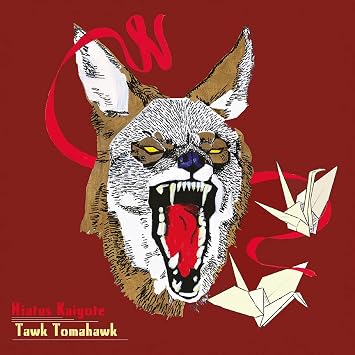
The band’s debut album, Tawk Tomahawk (2012), quickly attracted attention far beyond Australia.
Its originality caught the ears of musicians, producers and critics around the world, including Questlove, Prince, Erykah Badu and numerous jazz artists who praised the quartet’s fearless creativity.
Soon afterward, Hiatus Kaiyote received international touring opportunities, Grammy recognition and a rapidly growing global audience.
It became clear that Future Soul was no longer simply an emerging idea.
It had become one of the most influential musical movements of the twenty-first century.
Buy Amazon
From Cult Favorite to Global Influence
Following the international attention generated by Tawk Tomahawk, Hiatus Kaiyote quickly became one of the most discussed bands in contemporary music. Critics struggled to classify the quartet. Some described the group as neo-soul, others emphasized jazz fusion, while many embraced the emerging label Future Soul.
The members themselves rarely seemed interested in such distinctions.
Their goal was not to fit within a genre.
It was to create music that reflected every influence they loved without artificial boundaries.
That philosophy would define every album that followed.
Choose Your Weapon
Released in 2015, Choose Your Weapon transformed Hiatus Kaiyote from an acclaimed underground act into one of the most influential bands of the decade.
Spanning nearly seventy-five minutes and featuring eighteen tracks, the album refused every expectation of what a contemporary soul record should sound like. Intricate rhythmic shifts, lush harmonic textures, jazz improvisation, progressive structures and deeply personal songwriting combined to create an experience that rewarded repeated listening.
Songs flowed naturally between intimacy and explosive energy.
Unexpected modulations appeared without disrupting emotional continuity.
Grooves constantly evolved rather than repeating predictable patterns.
For many listeners, Choose Your Weapon became the defining statement of Future Soul.
Its influence would soon extend far beyond jazz and R&B.
Jazz Musicians Take Notice
One of the clearest signs of Hiatus Kaiyote’s importance came from the jazz community itself.
Musicians admired the quartet’s sophisticated harmonic language, unusually flexible rhythmic concepts and collective approach to improvisation. Rather than treating songs as fixed structures, the band approached composition with the same openness found in many modern jazz ensembles.
Artists such as Robert Glasper, Esperanza Spalding, Thundercat, Snarky Puppy and numerous younger improvisers have spoken publicly about the band’s originality or reflected similar ideas within their own work.
Equally significant, producers across hip-hop and neo-soul began drawing inspiration from Hiatus Kaiyote’s harmonic vocabulary.
Their influence spread quietly but rapidly.
JazzLatitude Insight
Although Hiatus Kaiyote is rarely marketed as a jazz group, its creative process reflects many of jazz’s deepest values: collective listening, rhythmic freedom, harmonic exploration and the constant search for new musical possibilities.
A Favorite Among Producers
Another remarkable aspect of Hiatus Kaiyote’s career is the respect they command within modern music production.
Their recordings have been sampled, referenced and admired by artists working in hip-hop, electronic music and contemporary R&B. Producers are particularly drawn to the band’s unusual chord progressions, layered rhythmic structures and rich harmonic colors.
Unlike music designed around repetitive loops, Hiatus Kaiyote’s songs evolve continuously.
Small rhythmic details shift.
Harmony expands.
Textures transform.
This complexity provides endless material for musicians interested in contemporary composition.
Mood Valiant
After several years marked by touring, individual projects and personal challenges—including Nai Palm’s successful battle with breast cancer—the quartet returned in 2021 with Mood Valiant.
The album revealed a noticeably more introspective side of the band.
While retaining its characteristic rhythmic sophistication, the music placed greater emphasis on emotional vulnerability, melodic clarity and spacious arrangements. Nai Palm’s songwriting became even more personal, exploring resilience, healing and gratitude without losing the poetic imagination that had always defined her lyrics.
The result was one of the group’s most emotionally resonant recordings.
It confirmed that artistic maturity need not diminish creative adventure.
Love Heart Cheat Code
Hiatus Kaiyote continued its evolution with Love Heart Cheat Code (2024), an album that combines the adventurous spirit of the band’s earlier work with an even stronger emphasis on groove, warmth and spontaneous interaction.
Many of the recordings were shaped through live ensemble performances before entering the studio, giving the album an organic quality reminiscent of classic jazz sessions. Improvisation plays a larger role, while the arrangements retain the harmonic richness and rhythmic unpredictability that have always distinguished the quartet.
Rather than reinventing its sound completely, the band refined it.
The music feels relaxed.
Confident.
Playful.
Deeply connected.
It stands as another important chapter in one of contemporary music’s most original discographies.
A Band Built on Collective Creativity
Unlike many groups centered around a single songwriter or producer, Hiatus Kaiyote functions through genuine collaboration.
Each member contributes significantly to composition, arrangement and performance.
Paul Bender’s melodic bass lines often shape harmonic direction.
Simon Mavin’s keyboards provide harmonic complexity and textural color.
Perrin Moss transforms rhythm into an active melodic force through remarkable independence and subtle dynamic control.
Nai Palm ties these elements together with extraordinary vocal expression and imaginative songwriting.
The result is music that feels alive because every musician remains fully engaged in the creative conversation.
Essential Albums
For listeners discovering Hiatus Kaiyote for the first time, these recordings provide the ideal introduction.
- Tawk Tomahawk (2012) — The breakthrough release that introduced the band’s remarkable fusion of jazz, soul and experimental rhythm.
- Choose Your Weapon (2015) — Widely regarded as the group’s masterpiece and one of the defining albums of modern Future Soul.
- Mood Valiant (2021) — A deeply personal recording balancing emotional vulnerability with sophisticated musicianship.
- Love Heart Cheat Code (2024) — A vibrant, groove-oriented album showcasing the band’s continued artistic evolution and extraordinary ensemble chemistry.
Together, these recordings document the remarkable journey of a quartet that has fundamentally reshaped the relationship between jazz, soul and contemporary popular music.
The Legacy of Hiatus Kaiyote
Few bands have expanded the possibilities of contemporary soul and jazz as profoundly as Hiatus Kaiyote. While many modern groups successfully blend multiple genres, the Australian quartet has accomplished something far more significant: it has developed a musical language that feels entirely its own.
Their recordings resist simple categorization.
They are rooted in soul.
Driven by jazz.
Inspired by funk.
Colored by electronic music.
Influenced by progressive rock.
Yet none of these descriptions fully capture what Hiatus Kaiyote sounds like.
That originality has become the band’s defining legacy.
Redefining Contemporary Soul
Before Hiatus Kaiyote emerged, much of mainstream soul and R&B had moved toward increasingly streamlined production and predictable song structures.
The quartet challenged those conventions.
Complex harmony returned to the forefront.
Rhythms became fluid and constantly evolving.
Improvisation regained importance.
Songs embraced unexpected forms without sacrificing emotional accessibility.
In doing so, Hiatus Kaiyote helped create a space where sophisticated musicianship and contemporary songwriting could coexist naturally.
The result has influenced countless artists working across jazz, soul, hip-hop and alternative R&B.
JazzLatitude Insight
Hiatus Kaiyote demonstrates that innovation often comes from collaboration rather than individual virtuosity. Each member contributes equally to the music’s rhythmic, harmonic and melodic identity, allowing the band to function much like a modern jazz ensemble built upon collective imagination.
Influence Across Modern Music
The impact of Hiatus Kaiyote extends far beyond its own recordings.
Jazz musicians admire the quartet’s harmonic sophistication.
Neo-soul artists study its melodic language.
Hip-hop producers explore its rhythmic complexity.
Progressive musicians appreciate its fearless approach to composition.
Many of today’s leading contemporary artists—including Robert Glasper, Thundercat, Terrace Martin, Esperanza Spalding, Flying Lotus and Kendrick Lamar’s creative circle—operate within a musical landscape that Hiatus Kaiyote has helped shape.
The band’s influence is often subtle.
Yet it is unmistakable.
Its ideas continue spreading through collaborations, production techniques and new generations of musicians.
Beyond the Studio
Hiatus Kaiyote has earned an equally impressive reputation as a live band.
Concert performances frequently extend beyond the studio arrangements, allowing songs to evolve through improvisation, spontaneous interaction and rhythmic experimentation. Rather than reproducing recordings note for note, the quartet approaches every performance as an opportunity to rediscover its own music.
This philosophy reflects one of jazz’s oldest traditions.
A composition is never truly finished.
It continues growing with every performance.
That openness has become one of the band’s greatest strengths and one of the reasons audiences return repeatedly to experience its concerts.
Essential Collaborations
Although Hiatus Kaiyote remains remarkably self-contained as a quartet, its members have developed important artistic relationships across contemporary music.
Among the most significant are:
- Robert Glasper — A shared commitment to dissolving the boundaries between jazz, soul and hip-hop has made Glasper one of the band’s strongest artistic allies.
- Thundercat — Their mutual fascination with adventurous harmony, rhythmic freedom and modern funk has created a natural connection within today’s jazz community.
- Flying Lotus — While not regular collaborators, both artists helped define the contemporary landscape where jazz, electronic music and experimental soul intersect.
- Esperanza Spalding — Both artists share an emphasis on compositional sophistication, improvisation and fearless musical exploration.
- Questlove — The celebrated drummer and producer became one of Hiatus Kaiyote’s earliest champions, introducing the band’s music to wider international audiences.
These relationships reflect the quartet’s central role within one of the most creative musical communities of the twenty-first century.
Technical Profile
Origin:
- Melbourne, Victoria, Australia
Founded:
- 2011
Current Members:
- Nai Palm – Vocals, Guitar
- Paul Bender – Bass
- Simon Mavin – Keyboards
- Perrin Moss – Drums, Percussion
Primary Styles:
- Future Soul
- Neo-Soul
- Contemporary Jazz
- Alternative R&B
- Jazz Fusion
- Progressive Soul
Musical Characteristics:
- Complex harmonic language
- Polyrhythmic grooves
- Collective composition
- Jazz-inspired improvisation
- Progressive song structures
Essential Albums:
- Tawk Tomahawk (2012)
- Choose Your Weapon (2015)
- Mood Valiant (2021)
- Love Heart Cheat Code (2024)
Five Lesser-Known Facts About Hiatus Kaiyote
1. The term “Future Soul” became closely associated with the band.
Although the members did not invent the phrase, Hiatus Kaiyote’s music became the clearest example of what many listeners and critics now describe as Future Soul.
2. Prince publicly praised the group.
The legendary musician became an admirer of Hiatus Kaiyote’s work, helping introduce the quartet to an even broader international audience.
3. Nai Palm overcame breast cancer during the band’s career.
Her successful treatment deeply influenced the emotional direction of Mood Valiant, making the album one of the most personal works in the group’s catalog.
4. Their songs are frequently studied by jazz musicians.
Because of their unusual harmonic progressions and rhythmic sophistication, Hiatus Kaiyote’s compositions are increasingly analyzed in conservatories and by professional musicians interested in modern composition.
5. Improvisation remains central to the band’s identity.
Many arrangements continue evolving on stage, reflecting a creative philosophy rooted in jazz rather than conventional pop performance.
Frequently Asked Questions
What is Hiatus Kaiyote?
Hiatus Kaiyote is an Australian quartet formed in Melbourne in 2011. The band is internationally recognized for combining jazz, neo-soul, funk, progressive rhythm and alternative R&B into a distinctive style often described as Future Soul.
Why is Hiatus Kaiyote important?
The band fundamentally expanded the harmonic, rhythmic and compositional possibilities of contemporary soul music while strengthening the relationship between jazz improvisation and modern songwriting.
What is Hiatus Kaiyote’s best album?
Many listeners consider Choose Your Weapon the quartet’s masterpiece because of its extraordinary compositional ambition, rhythmic innovation and lasting influence on contemporary music. Mood Valiant and Love Heart Cheat Code are also widely regarded as essential recordings.
What does “Future Soul” mean?
Future Soul describes a modern approach to soul music that embraces jazz harmony, electronic textures, progressive rhythm, hip-hop influences and experimental composition while preserving the emotional depth traditionally associated with soul.
Which artists are similar to Hiatus Kaiyote?
Listeners who enjoy Hiatus Kaiyote often explore Robert Glasper, Thundercat, Esperanza Spalding, Flying Lotus, Moonchild, BADBADNOTGOOD, Alfa Mist and Jordan Rakei, all of whom combine sophisticated musicianship with contemporary production and genre-defying creativity.
JazzLatitude Rating
| Category | Rating |
|---|---|
| Compositional Originality | ★★★★★ |
| Harmonic Innovation | ★★★★★ |
| Rhythmic Creativity | ★★★★★ |
| Ensemble Interaction | ★★★★★ |
| Cross-Genre Influence | ★★★★★ |
| Contemporary Relevance | ★★★★★ |
| Accessibility for New Listeners | ★★★★☆ |
| Long-Term Influence | ★★★★★ |
| JazzLatitude Essential | ★★★★★ |
Final Thoughts
Hiatus Kaiyote has become one of the defining musical groups of the twenty-first century because it has shown that innovation does not require abandoning tradition. Instead, the quartet demonstrates how jazz, soul, funk and contemporary production can evolve together while remaining deeply connected to their shared cultural roots.
The band’s music rewards every level of listening.
A casual listener hears memorable melodies and infectious grooves.
Musicians discover astonishing harmonic detail and rhythmic sophistication.
Repeated listening reveals new textures, subtle interactions and compositional ideas that continue unfolding over time.
This remarkable depth explains why Hiatus Kaiyote’s recordings have achieved lasting influence across multiple musical communities.
Perhaps the quartet’s greatest accomplishment, however, lies in its unwavering commitment to collective creativity. No single member dominates the artistic vision. Every composition reflects genuine collaboration, attentive listening and mutual trust, qualities that have long defined the finest jazz ensembles.
As contemporary music continues to blur traditional genre boundaries, Hiatus Kaiyote stands as one of its most compelling examples of fearless artistic exploration.
For listeners seeking music that is intellectually stimulating, emotionally rich and rhythmically adventurous, the band’s catalog remains one of the essential achievements of modern jazz, soul and alternative music.