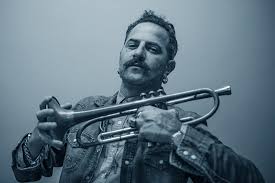
From Tel Aviv to New York and the 3 Cohens
Long before Avishai Cohen became associated with the spacious recordings he would make for ECM, his musical identity was being shaped in environments that demanded very different things from a young trumpeter. There was the discipline of formal training in Israel, the experience of playing in public while still a child, the orchestral world he encountered through the Young Israeli Philharmonic, the records through which he absorbed the history of American jazz, and eventually the intensity of New York clubs where musicians could test ideas night after night. By the time Cohen emerged internationally as a bandleader, he had already learned to move between written music and improvisation, between ensemble discipline and individual expression, and between the Israeli culture of his childhood and a jazz tradition whose major figures he initially knew primarily through recordings. Understanding those years changes the way his later music sounds. The restraint often associated with his ECM albums was not the beginning of his story. It was one stage in a much longer process of learning what the trumpet could communicate.
Born in Tel Aviv on May 23, 1978, Cohen grew up in a family where music was not an occasional activity. His older siblings would also become internationally recognized jazz musicians: Yuval Cohen on saxophone and Anat Cohen on clarinet and saxophone. The presence of three professional improvisers in one family eventually produced an obvious public narrative, but their individual development came first. Avishai began playing trumpet as a child and was already performing publicly at ten, initially appearing with a big band. The image he has recalled from those performances is wonderfully concrete: he was so small that he needed to stand on a box. What mattered was not precociousness for its own sake. Performing early meant that the trumpet was never only an instrument practiced privately. From childhood, Cohen had to understand projection, timing, ensemble responsibility and the difference between playing something correctly and making it communicate.
Learning Jazz from Records
Israel offered substantial classical training, but the jazz infrastructure available to Cohen during his childhood was far less developed than the environment he would later encounter in New York. He has described learning much of the music through records. The musicians entering his world in this way were not minor influences: Louis Armstrong, Miles Davis, John Coltrane, Sonny Rollins and Thelonious Monk belonged to the fundamental vocabulary through which he discovered jazz.
Miles Davis would become especially important, although reducing Cohen to a Davis disciple obscures what he actually learned from the tradition.
The deeper lesson was that instrumental identity mattered.
Armstrong demonstrated that the trumpet could speak with unmistakable personality. Davis showed how tone, space and phrasing could matter as much as range or speed. Monk revealed how a musician could remain inside jazz tradition while reorganizing its internal logic. Coltrane and Rollins offered different models of melodic development and improvisational concentration.
Cohen absorbed these musicians before he could participate directly in the American jazz culture that had produced them.
That distance had an unexpected advantage.
He learned jazz as a language rather than as a local social identity he automatically inherited. Every element had to be listened to, studied and reconstructed.
At the same time, another musical language surrounded him.
Older Israeli popular songs often emphasized melody and vocal expression, and Cohen later acknowledged how strongly that lyricism entered his ear. Israel also exposed him to overlapping musical cultures connected with Eastern Europe, Sephardic traditions and North Africa. He has resisted describing his own work simply as “Israeli jazz,” but the melodic environment mattered. The singing quality that later became one of the most recognizable aspects of his trumpet playing did not come exclusively from American instrumentalists.
It also came from listening to voices.
The Young Israeli Philharmonic
Cohen’s early development was not limited to jazz.
As a teenager he toured with the Young Israeli Philharmonic Orchestra, performing under conductors including Zubin Mehta, Kurt Masur and Kent Nagano. The experience placed him inside a musical system very different from the improvisational freedom he was seeking through jazz.
An orchestra demands precision of another kind.
Balance matters.
Intonation matters.
The individual musician must understand how a single line functions inside a much larger architecture. Playing beautifully is not enough if the phrase does not belong to the ensemble.
Those lessons would remain useful long after Cohen moved away from orchestral repertory.
His later compositions frequently depend on musicians understanding when not to occupy the foreground. Even in highly improvised settings, his groups can sound unusually aware of collective shape. The trumpet may lead for a moment and then retreat. Piano, bass or drums can become the central voice without requiring a dramatic change in arrangement.
That instinct did not originate exclusively in classical training, but the orchestral experience gave Cohen an early understanding of music as something larger than the soloist.
Jazz would teach him how to loosen that architecture.
Arnie Lawrence
One of the important bridges between Cohen’s record-based education and the lived practice of jazz came through American saxophonist Arnie Lawrence.
Lawrence spent significant time in Israel and became an important mentor to younger musicians there. Cohen began playing with him while still in his teens.
The significance was practical.
Records could reveal what Charlie Parker, Miles Davis or John Coltrane had played, but they could not fully explain how jazz musicians communicated in a room. A mentor could demonstrate how to listen during a solo, how to respond to a rhythm section, how to construct a set and how improvisation functioned as social interaction rather than a succession of individual performances.
Cohen would encounter this distinction repeatedly.
Formal education could provide technique.
Records could provide history.
But jazz required situations.
The next major stage of his education would provide many of them.
Berklee and America
Cohen received a full scholarship to attend Berklee College of Music in Boston.
Arriving in the United States placed him physically inside the jazz culture he had previously approached from a distance, but Berklee was not simply a destination. It was another transition.
He arrived with substantial experience.
He had already performed professionally, worked in Israeli pop and folk settings, appeared in television contexts and toured with an orchestra. He was not discovering professional music for the first time.
What America offered was density.
Musicians from many countries were studying the same tradition from different perspectives. The history Cohen had encountered through records now existed beside peers attempting to develop their own languages from it.
Competition was inevitable.
So was exchange.
In 1997, Cohen placed third in the Thelonious Monk Jazz Trumpet Competition. The result provided early international visibility, but its greater significance lies in where it appears in his development. He had demonstrated enough command of the trumpet and jazz vocabulary to be recognized in a major competition while still at the beginning of his adult career.
The next question was more difficult.
What would distinguish him once technical competence was no longer the issue?
New York would force an answer.
Smalls
After Berklee, Cohen became part of the scene around Smalls Jazz Club in Greenwich Village.
For musicians of his generation, the club was more than a venue. It was a working environment in which musicians could develop through repeated contact, long nights and constantly changing combinations of players.
Among Cohen’s important contemporaries there were pianist Jason Lindner and bassist Omer Avital.
Avital was another Israeli musician building a career in New York, but shared nationality did not automatically mean shared musical language. His interests extended deeply into Middle Eastern and North African traditions alongside American jazz, while Lindner was developing a highly rhythmic approach to piano and composition.
The scene encouraged musicians to treat jazz history as usable material rather than a closed repertory.
Bebop remained relevant.
So did hard bop.
But Latin music, Middle Eastern traditions, contemporary grooves, free improvisation and other influences could enter the conversation without requiring a new category every time they appeared.
For Cohen, this environment was decisive.
The trumpet player who had learned jazz largely from records could now develop through direct musical relationships.
Night after night, ideas had consequences.
A phrase either worked with the band or it did not.
Finding a New York Sound
The importance of New York to Cohen’s development was not that the city erased his Israeli background.
It did the opposite.
Once surrounded by musicians from different cultural and musical histories, questions of identity became more complicated. A musician could draw from home without being required to represent it. Cohen could absorb the rhythmic intensity of New York while retaining the melodic sensibility he associated with Israeli music.
He could also begin separating influence from imitation.
Miles Davis remained important, but Cohen did not need to reproduce Davis’s sound in order to retain lessons about economy and phrasing. The trumpet could be lyrical without being fragile, forceful without becoming permanently aggressive and technically accomplished without turning every solo into a demonstration.
This balance took years to develop.
The Cohen heard on later recordings did not suddenly discover restraint when he joined ECM.
The foundation was being built in clubs.
Third World Love
One of the ensembles that allowed Cohen to explore these questions was Third World Love.
Formed in the early 2000s, the group brought Cohen together with bassist Omer Avital, pianist Yonathan Avishai and drummer Daniel Freedman. The musicians shared connections to Israel, but the project resisted the idea that nationality should dictate musical content.
Their music drew from jazz while remaining open to rhythmic and melodic sources beyond conventional American post-bop.
For Cohen, Third World Love became a long-term laboratory.
The importance of the group is sometimes overshadowed by his later ECM career, yet it established several relationships that would remain central. Yonathan Avishai, in particular, would eventually become one of Cohen’s most important collaborators, appearing years later in the music that defined his ECM period.
The trust audible in those later recordings therefore had history behind it.
Musicians who have played together for years do not need to negotiate every silence.
They know how one another breathes.
Third World Love also demonstrated something that would become increasingly characteristic of Cohen’s career: he preferred maintaining several musical identities simultaneously rather than building everything around a single flagship band.
Another of those identities would be created with his own family.
Three Cohens, Three Voices
Avishai, Anat and Yuval Cohen eventually began performing and recording together as the 3 Cohens.
The concept could easily have become a novelty: three siblings, three horns, one jazz family.
The music prevented that.
Anat’s clarinet and saxophones, Yuval’s saxophone and Avishai’s trumpet created an unusual front line, but the deeper interest came from the fact that the siblings had developed distinct musical personalities before making the family connection central to a group.
They shared childhood experience.
They did not share identical careers.
That distinction made the ensemble viable.
Family familiarity created one kind of communication, while years spent developing separately created another. Their lines could interlock closely without collapsing into a single voice.
The group also placed Avishai inside a setting where trumpet virtuosity alone could never define the music. With two other horn players constantly present, listening became essential.
Who carried the melody?
Who answered?
Who left space?
How could three wind instruments create density without congestion?
These questions reinforced the ensemble instincts Cohen had been developing since childhood.
The Trumpet Player
In 2003, Cohen released his first album as a leader.
Its title was unusually direct:
The Trumpet Player.
There was a practical joke inside it.
By then another Israeli musician named Avishai Cohen — the bassist who had become internationally prominent through Chick Corea’s groups and his own recordings — was already well established. Confusion between the two musicians was inevitable.
Calling the record The Trumpet Player provided a simple distinction.
But the title also feels appropriate for another reason.
Cohen was still defining himself primarily through the instrument.
The broader compositional identity associated with his later work was developing, but the trumpet remained the clearest center of gravity.
The early leader period showed a musician willing to move between post-bop vocabulary, freer improvisation and increasingly personal melodic writing without declaring one approach definitive.
That refusal to settle would become important.
Triveni
Cohen found another essential format in Triveni, his trumpet-bass-drums trio with Omer Avital and Nasheet Waits.
Removing the piano changed everything.
Without a chordal instrument, harmony became less fixed. The trumpet could imply movement rather than constantly negotiate predetermined voicings. Avital’s bass could function harmonically, rhythmically and melodically, while Waits could treat the pulse as something elastic rather than merely supportive.
The absence of piano created space.
But this was not yet the carefully framed space that listeners would later associate with Cohen’s ECM recordings.
Triveni could be rough, playful and unpredictable.
Standards could be dismantled.
Grooves could appear and disappear.
The trio could move rapidly between tradition and abstraction because there was no harmonic instrument continuously defining the borders.
For Cohen, it was another way of testing what the trumpet required.
Sometimes the answer was less accompaniment.
Sometimes it was more risk.
The Importance of Multiple Bands
By this point, Cohen’s career no longer followed a simple progression from one ensemble to the next.
Third World Love continued.
The 3 Cohens continued.
Triveni developed.
He worked with other bandleaders and appeared in large ensembles. He became a member of the SFJAZZ Collective for six years and performed in projects ranging far beyond the narrowly defined territory of a trumpet-led post-bop quartet.
This multiplicity is essential to understanding him.
Cohen did not develop his language by isolating himself until he discovered a signature sound.
He developed through collision.
Different groups required different versions of the musician.
A family ensemble required one kind of listening.
A chordless trio required another.
A large ensemble changed the relationship between individual and arrangement.
Third World Love allowed cultural and rhythmic material to circulate differently.
Sideman work required him to enter someone else’s architecture.
The common element was not a fixed style.
It was the trumpet.
Before ECM
By the early 2010s, Cohen had accumulated a career substantial enough that the later ECM period should be understood as a new chapter rather than an arrival.
He had already led records.
He had built long-term ensembles.
He had developed through the New York scene.
He had worked alongside Omer Avital, Jason Lindner, Nasheet Waits, Yonathan Avishai and his siblings. He had spent years exploring what happened when the trumpet was placed inside very different musical structures.
He was also increasingly recognizable by sound.
That is one of the hardest achievements for any improviser.
Technique can be taught.
Vocabulary can be studied.
A personal sound cannot simply be selected.
It emerges from thousands of decisions: attack, breath, vibrato, register, dynamics, the length of a note, the decision to continue a phrase or stop it.
Cohen’s playing was becoming identifiable because those decisions were beginning to belong to the same musical personality.
The next transition came not through a sudden reinvention but through another collaboration.
In 2014, Cohen recorded with saxophonist Mark Turner’s quartet for Lathe of Heaven.
The album was released by ECM.
Producer Manfred Eicher heard something in Cohen’s contribution that suggested another possibility.
Within two years, the trumpeter would make his first ECM album as a leader.
But the music that emerged on Into the Silence cannot be understood simply as the product of a label famous for spacious recordings.
The space had a history.
It came from orchestras and clubs, from family ensembles and chordless trios, from Tel Aviv and Boston, from Smalls and years of listening to Miles Davis without becoming Miles Davis.
And when Cohen entered the studio for Into the Silence, another experience had changed the emotional stakes entirely.
His father had died.
The next album would begin there.
Buy Amazon
Into the Silence and the ECM Years
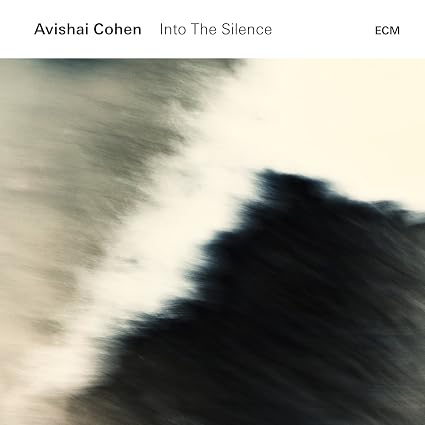
When Avishai Cohen entered Studios La Buissonne in southern France in September 2015 to record what would become Into the Silence, he was not arriving at ECM in search of an identity. More than two decades of playing had already given him one. He had grown up between classical training and jazz records in Israel, moved through Berklee and the New York scene around Smalls, built lasting musical relationships through Third World Love, worked alongside his siblings in the 3 Cohens and explored the freedom of a chordless trio with Triveni. His appearance on Mark Turner’s Lathe of Heaven had also given producer Manfred Eicher an opportunity to hear Cohen inside the particular conditions of an ECM session. What changed with Into the Silence was therefore not simply the label attached to the recording. Cohen had reached a moment when composition, personal loss and years of ensemble experience converged. His father had recently died, and the music he brought into the studio emerged directly from the emotional period surrounding that loss. The resulting album would become one of the defining recordings of his career, but its strength came from something more complicated than sadness or restraint. Cohen was discovering how autobiographical experience could shape composition without requiring the music to explain itself.
Grief can easily become a narrative imposed on instrumental music after the fact. In this case, however, the connection was explicit. Cohen composed much of the material following his father’s death, and Into the Silence was dedicated to his memory. That knowledge changes the context in which the record is heard, but it does not provide a simple key to every phrase. The music does not behave like a sequence of elegies. It contains tension, movement, uncertainty and passages in which the ensemble pushes forcefully against the reflective character that surrounds much of the album. What grief seems to have changed most fundamentally was Cohen’s relationship with musical necessity. The compositions do not constantly search for climaxes. They allow ideas to remain unresolved. The trumpet can state a line without immediately expanding it into a long solo. Other instruments are allowed to redirect the emotional trajectory. Instead of presenting the band as a frame around the leader, the recording repeatedly makes the ensemble itself the subject.
Five Musicians, Not a Trumpet Showcase
The personnel were crucial. Cohen was joined by pianist Yonathan Avishai, tenor saxophonist Bill McHenry, bassist Eric Revis and drummer Nasheet Waits. The group brought together musicians with very different histories, but several relationships were already deeply established. Yonathan Avishai had played with Cohen in Third World Love. Nasheet Waits had worked with him in Triveni. Their familiarity meant that the quieter passages did not require cautious negotiation; the musicians already understood how Cohen shaped musical time.
Bill McHenry introduced another voice.
His tenor saxophone does not function simply as a second horn arranged beneath Cohen’s trumpet. The two instruments can approach the material from contrasting emotional positions. Cohen’s tone often carries a concentrated clarity, while McHenry can bring a grainier and more oblique presence. When the horns meet, the effect is not the polished symmetry of a conventional front line. Their differences remain audible.
Eric Revis gives the music weight.
His bass playing prevents the album’s reflective character from drifting toward abstraction. Nasheet Waits provides another essential tension. Waits can make even restrained passages feel unstable because his relationship with pulse is active rather than decorative. He does not merely maintain the tempo beneath Cohen. He questions it, pushes against it and sometimes changes how the listener perceives the shape of a phrase.
This interaction is one reason Into the Silence cannot be adequately described by repeatedly invoking silence.
The record is about conversation.
What Space Actually Does
Cohen’s later work is frequently described through words such as space, restraint and silence. All are relevant, but repeated too often they stop explaining anything.
Space in improvisation is not an aesthetic decoration.
It changes responsibility.
When one musician plays less, another musician gains room to make a decision. A pause can expose the bass. A sustained trumpet note can make the drummer’s movement suddenly audible. A piano chord allowed to decay can temporarily become the harmonic center of the performance.
Cohen’s restraint works because the musicians around him are active listeners.
This is particularly important with Yonathan Avishai.
The pianist does not continuously fill the harmonic field. His voicings can be sparse, but their placement gives Cohen’s trumpet a context that would disappear if the same chords were repeated mechanically. The relationship between the two musicians had been developing for years, and Into the Silence benefits from that history.
The result is music in which absence becomes functional.
Not mystical.
Not decorative.
Functional.
A phrase ends because another possibility has opened.
“Life and Death”
The opening composition, “Life and Death,” establishes the album’s emotional territory without reducing it to mourning.
The title is direct, but the music avoids theatrical grief. Cohen’s writing allows melody to emerge gradually while the ensemble creates a sense of suspended movement. The trumpet does not need to announce emotional significance through extreme register or dramatic volume.
Its authority comes from control.
This is where Cohen’s relationship with Miles Davis can be acknowledged without allowing the comparison to dominate.
Davis demonstrated repeatedly that a trumpet line could gain power through placement rather than quantity. Cohen clearly absorbed that lesson. But the surrounding musical world is different. The rhythmic language belongs to another generation, the compositions reflect Cohen’s own experience and the ensemble relationships developed through his years in New York.
Influence survives.
Imitation does not.
“Dream Like a Child”
Other pieces reveal how memory enters the album without becoming literal biography.
“Dream Like a Child” suggests a different emotional register from the darker implications of the album’s title and dedication. Cohen’s melodic instinct is central here. His themes often possess a vocal quality even when they are not based on songs.
This singing character connects several parts of his musical history.
There is the trumpet tradition itself, particularly musicians who understood the instrument as an extension of breath rather than a vehicle for technical display. There is Cohen’s exposure to Israeli song. There is also his experience playing with musicians for whom melody remains meaningful even inside open improvisational structures.
The composition does not require the listener to identify these sources.
They have already become part of Cohen’s language.
That is an important distinction.
A mature musical identity rarely sounds like a list of influences.
The sources have been absorbed too deeply to remain separate.
“Into the Silence”
The title composition provides perhaps the clearest example of how Cohen’s writing had changed.
Rather than treating the trumpet as the unquestioned center, the piece depends on the ensemble’s ability to sustain a fragile architecture. Dynamics matter. Register matters. The distance between gestures matters.
But the composition is not empty.
Its apparent openness is carefully organized.
Cohen understood by this stage that quiet music can require greater ensemble discipline than dense music. When several musicians are playing rapidly, small differences in timing may disappear inside the collective activity. When only a few notes occupy the space, every entrance becomes exposed.
This gives the performance its tension.
The listener becomes aware not merely of what is being played but of when each musician chooses to enter.
That temporal awareness would remain central to Cohen’s ECM recordings.
The ECM Question
Because Into the Silence appeared on ECM, it is tempting to explain its character through the label.
ECM has developed one of the most recognizable identities in recorded jazz: carefully controlled acoustics, detailed instrumental separation and a catalog containing many musicians who value spaciousness and dynamic nuance.
But assigning Cohen’s musical development to the label reverses the chronology.
He had already been exploring space.
Triveni had shown what removing a chordal instrument could do to the structure of improvisation. Third World Love had taught him how long-term collaborators could communicate without constant explanation. His orchestral experience had introduced ensemble balance early in his life. Miles Davis had demonstrated the expressive possibilities of economy through records Cohen had studied since youth.
ECM did not invent those instincts.
What the label provided was an environment in which they could be documented with unusual clarity.
Manfred Eicher’s role as producer mattered because he was not simply capturing a live band unchanged. ECM sessions historically involve decisions about repertoire, sequencing, performance and sound. Cohen entered that process with a developed language, and the encounter produced a particularly concentrated version of it.
The distinction preserves agency on both sides.
After the Silence
A successful album can become a trap.
Once listeners and critics identify a particular quality with a musician, there is pressure to reproduce it. For Cohen, the obvious temptation after Into the Silence would have been to make another record built around grief, spaciousness and subdued emotional intensity.
He did not.
The next ECM album was recorded in September 2016 with a revised quartet: Cohen on trumpet, Yonathan Avishai on piano, Barak Mori on double bass and Nasheet Waits on drums.
Bill McHenry’s saxophone was gone.
The instrumentation became leaner.
The album was Cross My Palm with Silver.
The title came from an expression associated with fortune-telling, but the music was less interested in predicting Cohen’s future than expanding the possibilities of the group.
Without a second horn, the relationship between trumpet and piano became even more exposed.
Yonathan Avishai
If Into the Silence established Cohen’s ECM identity publicly, Cross My Palm with Silver made the importance of Yonathan Avishai impossible to overlook.
The pianist is one of the central figures in Cohen’s musical story.
Their collaboration extends back to Third World Love, meaning that by the time these ECM sessions occurred they possessed years of shared experience.
That history can be heard in the way they avoid competing for harmonic authority.
Avishai does not accompany Cohen in the conventional sense of continuously supporting a trumpet solo. Sometimes the piano provides only enough information to suggest the harmonic environment. Sometimes it initiates movement. Sometimes it disappears.
Cohen responds accordingly.
The trumpet does not behave as if accompaniment were guaranteed.
The two musicians construct the space together.
This makes their relationship fundamentally different from a leader-and-sideman hierarchy.
Cohen may write the music and carry the name on the cover, but the sound depends on trust accumulated elsewhere.
Barak Mori and Nasheet Waits
Barak Mori’s arrival changed the lower register of the ensemble.
An Israeli bassist with extensive experience in New York, Mori brought another connection between Cohen’s geographic worlds. His playing could ground the compositions without making them rigid, leaving Nasheet Waits considerable freedom around the pulse.
Waits remained one of the most important rhythmic partners of Cohen’s career.
Their work together illustrates why describing Cohen primarily through lyricism misses half the story.
His trumpet lines may often be melodic, but the music underneath them can be rhythmically restless.
Waits constantly alters pressure.
He can suggest acceleration without changing tempo, destabilize a repeated figure through placement or make a quiet passage feel intensely active.
Cohen’s best performances respond to that energy rather than float above it.
The trumpet becomes part of the rhythm section’s argument.
Cross My Palm with Silver
The album contains five Cohen compositions, and its concentrated scale gives it a different character from Into the Silence.
Where the earlier record was inseparable from personal loss, Cross My Palm with Silver feels more outward-facing.
The quartet can be forceful.
The music can become turbulent.
The improvisations sometimes stretch the compositions toward areas where the original melody seems temporarily distant.
This matters because it complicates the image of Cohen as primarily a restrained, introspective trumpeter.
He can play with considerable intensity.
The difference is that intensity is rarely treated as a permanent condition.
A forceful passage matters because the music can move away from it.
Dynamics create narrative.
The ensemble can expand and contract.
Cohen’s trumpet can become abrasive and then return to a clean melodic statement without either sound being presented as the “true” voice of the musician.
That flexibility is closer to the center of his identity than restraint alone.
“Will I Die, Miss? Will I Die?”
One composition on Cross My Palm with Silver makes the relationship between music and contemporary reality unusually explicit.
“Will I Die, Miss? Will I Die?” took its title from words associated with a wounded Syrian girl.
Cohen had spoken publicly about political and humanitarian questions, and the composition shows that his music could respond to events without becoming programmatic in a simplistic sense.
There are no lyrics explaining what the listener should think.
The title establishes a context.
The music carries the rest.
This approach is consistent with Cohen’s broader resistance to separating artistic life completely from the world around him. Yet he also avoids making every instrumental gesture function as a political symbol.
The distinction matters.
A composition can emerge from political reality without becoming a slogan.
Beyond the Ballad Trumpeter
By the end of Cross My Palm with Silver, the outline of Cohen’s mature trumpet language was clearer.
Melody remained central.
So did tone.
But neither quality required permanent softness.
His sound could become rough at the edge. Notes could fracture. The trumpet could push into the upper register or engage aggressively with the drums. Improvisation could abandon the lyrical theme temporarily and enter more unstable territory.
This is why comparisons with Kenny Wheeler can be useful only up to a point.
Wheeler demonstrated how the trumpet and flugelhorn could inhabit fragile, harmonically sophisticated environments without sacrificing intensity. Cohen belongs to a later generation that absorbed some of those possibilities.
But his rhythmic background, Israeli musical memory, New York experience and particular ensemble relationships produce a different language.
The lineage matters.
The differences matter more.
ECM as One Part of the Career
Two albums had now established a strong association between Avishai Cohen and ECM.
For many listeners, especially in Europe, these recordings became the primary route into his music.
That visibility had consequences.
The qualities most apparent on Into the Silence — lyricism, patience, dynamic control — became convenient shorthand for Cohen himself.
Yet his career had always been broader.
Third World Love had not disappeared from his history.
The 3 Cohens represented another side of his musical personality.
Triveni demonstrated his comfort with rougher and more open improvisation.
The New York club environment remained inside his playing.
Cohen had no reason to allow one successful aesthetic to become a permanent enclosure.
The next major project would make that refusal unmistakable.
Five Musicians and a Different Kind of Electricity
Away from the acoustic quartet, Cohen had been developing music with another group.
Its instrumentation immediately suggested a different landscape.
Trumpet.
Two guitars.
Bass.
Drums.
Electronics.
The musicians were not assembled to create a conventional jazz quintet with amplified instruments. The project drew from rock, psychedelic textures, groove, ambient sound and improvisation while preserving Cohen’s interest in strong melodic shapes.
Its name was Big Vicious.
The group had existed in various forms before Cohen’s ECM breakthrough, but its first album would not appear until 2020.
For listeners who knew Cohen primarily through Into the Silence and Cross My Palm with Silver, Big Vicious could sound like a rupture.
It was not.
The project revealed something that had been present throughout his career.
Cohen had never been interested in proving that quietness was superior to volume, acoustic instruments superior to electronics or jazz tradition superior to contemporary popular music.
He was interested in context.
Different music required different tools.
Leaving the Image Behind
This is where Cohen’s ECM period becomes most interesting.
A musician can spend years developing a recognizable voice and then become imprisoned by the very characteristics that made the voice recognizable.
Cohen had acquired a public image: lyrical trumpeter, spacious composer, ECM artist, musician of silence.
Each description contained some truth.
None was sufficient.
The movement toward Big Vicious was therefore not a rejection of Into the Silence.
It was a refusal to turn that album into a formula.
The trumpet could still sing.
But it could sing through distortion.
It could exist beside electric guitars.
It could respond to rock rhythms and electronic textures.
It could participate in music whose physical impact was as important as its acoustic detail.
The same musician who had learned how much meaning could exist between two notes now wanted to discover what happened when the space around those notes became louder.
That transition would define the next stage of Avishai Cohen’s career.
And it would demonstrate that the most important lesson of his ECM years was never silence itself.
It was knowing what the music required.
Big Vicious, Naked Truth and a Wider Musical Language
The Avishai Cohen heard on Big Vicious in 2020 could initially seem incompatible with the musician who had recorded Into the Silence only four years earlier. The acoustic piano was gone. So was the double bass. Instead, Cohen placed his trumpet inside a group built around guitars, electronics, two drummers and a vocabulary drawing openly from rock, ambient music, psychedelia, trip-hop and contemporary production. For listeners who had encountered him primarily through ECM’s acoustic recordings, the change could feel dramatic. Yet Big Vicious did not represent an attempt to escape from jazz or overturn the identity Cohen had spent years developing. It exposed something that had been present much earlier: his resistance to allowing one successful configuration to become permanent. Third World Love, the 3 Cohens, Triveni and his acoustic ECM quartet had already demanded different versions of him. Big Vicious simply made the contrasts harder to ignore. Cohen could value an unaccompanied trumpet phrase and a distorted electric texture for the same reason. Both could become useful if the music required them.
The group had begun several years before its ECM debut, after Cohen returned to Israel following a long period in the United States. Rather than assembling musicians to execute a predetermined trumpet project, he worked with old friends and developed much of the material collectively. Uzi Ramirez brought guitar, Yonatan Albalak contributed bass and guitar, while Aviv Cohen and Ziv Ravitz created the unusual two-drummer foundation; Cohen himself added electronics to the trumpet. The backgrounds of the musicians extended beyond conventional jazz, and that diversity became part of the group’s method. They were not attempting to attach rock production to an otherwise unchanged jazz quintet. The compositions were developed around the sound of the band itself, allowing beats, effects, repetition and texture to influence the way improvisation functioned. When the ensemble entered Studios La Buissonne in August 2019, it therefore carried a group language that had already been shaped through performance and collaboration.
Big Vicious Without the Crossover Label
Calling Big Vicious a jazz-rock crossover would explain very little.
The album does not treat genre as a meeting between two clearly separated territories. Rock, electronic production and improvisation are already intertwined. The guitars can provide atmosphere rather than riffs. The drummers can create layered pulses closer to contemporary production than conventional swing. Cohen’s trumpet can behave like a melodic lead voice, disappear into the texture or become another electronically altered sound.
The choice of repertoire makes the philosophy especially clear.
Alongside original compositions, the band recorded Massive Attack’s “Teardrop” and Beethoven’s “Moonlight Sonata.”
On paper, the combination could look designed to advertise eclecticism: trip-hop beside classical music on a jazz label. In performance, however, the pieces are treated less as trophies from different genres than as existing musical structures that the band can inhabit.
“Teardrop” is particularly suited to Cohen because its power depends on a melody that remains recognizable without requiring elaborate development. The trumpet can assume something close to the role of a singer while the ensemble reconstructs the atmosphere around it. Beethoven presents a different challenge. The familiar melodic material survives, but electronics and the band’s collective sound change its scale and context.
Neither performance needs to prove that jazz musicians can play other kinds of music.
The musicians simply use the material.
Electricity and Restraint
What connects Big Vicious to Cohen’s acoustic work is not instrumentation.
It is his sense of proportion.
Even surrounded by electronics, he rarely treats amplification as an obligation to play more. The trumpet can remain economical while the environment becomes dense. Effects alter the color of the instrument without eliminating the physical character of breath behind the sound.
This creates an interesting tension.
Cohen’s trumpet is one of the oldest technologies in the ensemble. Guitars can be processed through pedals. Electronic sounds can be triggered and layered. Drums can be reinforced by effects. Yet a single sustained trumpet note can still become the most identifiable element in the texture.
The instrument does not defeat the electronics.
It gives them a human scale.
That relationship also prevents Big Vicious from functioning merely as an aggressive counterpart to Cohen’s quieter work. Some of its most effective passages are atmospheric. Ambient textures and repeated grooves can create as much room as an acoustic quartet.
The definition of space has changed.
The principle has not.
2020
Big Vicious was released in March 2020.
The timing inevitably affected its reception. The international touring plans surrounding the album collided with the COVID-19 pandemic, which abruptly removed the live environment in which a project like Big Vicious might otherwise have developed.
For Cohen, the interruption created a very different kind of musical period.
Concert life stopped.
Travel stopped.
The normal rhythm connecting composition, rehearsal, recording and performance became uncertain.
During this period, an eight-note motif remained with him.
He would eventually describe it as the starting point for a two-year process of reflection.
That small musical idea became the foundation of his next ECM recording.
The transition from Big Vicious could hardly have been more striking.
Instead of guitars, electronics and layered drums, Cohen returned to trumpet, piano, double bass and drums.
Instead of a collection of individually titled compositions, the musicians created an extended suite.
Instead of bringing a fully composed album into the studio, Cohen allowed much of the music to be discovered there.
The result was Naked Truth.
A Motif Rather Than an Album
Recorded at Studios La Buissonne in September 2021, Naked Truth reunited Cohen with pianist Yonathan Avishai and bassist Barak Mori while Ziv Ravitz moved from the electric world of Big Vicious into the acoustic quartet.
The continuity of personnel mattered because the method required trust.
Cohen arrived with the eight-note motif and a developing conceptual framework, but not with an album of conventional compositions waiting to be performed. The music was shaped during the session and ultimately became an extended sequence divided into eight connected parts.
This was a significant departure from Into the Silence.
That earlier album had also used restraint and open ensemble interaction, but the compositions existed as identifiable structures. On Naked Truth, composition and improvisation became harder to separate.
The musicians were not simply improvising solos over themes.
They were discovering the architecture while playing.
That changes the listener’s relationship with the recording.
There is less sense of moving from one composition to another and more sense of remaining inside a continuous process.
Ideas appear before their significance is clear.
A piano figure may initially seem incidental and later become structural.
A trumpet phrase can feel provisional rather than declarative.
The rhythm section does not merely propel the music toward predetermined destinations because those destinations are themselves being negotiated.
What Long Collaboration Makes Possible
Such a method could easily produce shapeless music.
It works because these musicians already knew one another deeply.
Yonathan Avishai’s relationship with Cohen stretched back through Third World Love and the trumpeter’s earlier ECM recordings. Barak Mori had become part of the quartet on Cross My Palm with Silver. Ziv Ravitz shared both acoustic and electric contexts with Cohen.
They possessed a vocabulary of reactions.
This does not mean they could predict one another.
Prediction would make improvisation less interesting.
What they understood was how much information another musician needed.
Yonathan Avishai could repeat a small piano figure without worrying that the music had become harmonically static. Mori could allow a bass note to remain in place long enough for its function to change. Ravitz could introduce movement without forcing the ensemble into a conventional groove.
Cohen, in turn, did not need to fill the available space merely because his name was on the album.
The leader’s role became directional rather than dominant.
Naked Truth
The title describes the method almost as much as the mood.
The recording removes many of the devices through which a jazz album normally organizes itself. There are no descriptive titles guiding the listener through the first eight sections. There is little sense of a sequence of compositions designed to demonstrate variety. The quartet keeps returning to a limited collection of musical materials and asks how much can be discovered inside them.
This is where Cohen’s use of restraint reaches a different stage from the one heard on Into the Silence.
Earlier, restraint helped shape compositions.
Here, restraint helps create them.
Playing less becomes a way of preserving possibilities.
If a musician defines the harmony too quickly, certain paths disappear. If the drummer establishes an inflexible pulse, other rhythmic interpretations become difficult. If Cohen turns every melodic fragment into a fully developed trumpet statement, the ensemble loses the ability to answer before the idea has been completed.
The music therefore advances through hesitation as well as assertion.
Uncertainty becomes productive.
“Departure”
Only at the end does language enter.
Cohen recites “Departure,” a poem by Israeli poet Zelda Schneurson Mishkovsky, in a translation prepared with stage director Sharon Mohar.
The poem deals with leaving, renunciation and the acceptance of mortality.
Placed after the extended instrumental suite, the human voice changes the perspective of everything that precedes it. The album does not suddenly become an illustration of the poem, but themes that had remained abstract acquire another emotional context.
Cohen had used his voice throughout his career primarily through the trumpet.
Here he speaks.
The gesture is effective because it is not repeated elsewhere on the album.
It marks an ending.
More importantly, it shows that Cohen’s interest in melody, breath and phrasing was never confined to instrumental technique. Speech possesses rhythm. A poem creates pauses. Meaning changes according to placement.
The concerns are familiar.
The medium changes.
Not a Return from Big Vicious
It would be misleading to describe Naked Truth as Cohen returning to his “real” acoustic identity after the experiment of Big Vicious.
Both projects belong to him.
Their proximity makes this particularly clear.
Big Vicious asks how Cohen’s trumpet can exist inside a layered electric environment.
Naked Truth asks what remains when almost everything unnecessary is removed.
One expands the surrounding texture.
The other reduces the available material.
Both require the musician to reconsider his function inside an ensemble.
This is a more useful way of understanding Cohen’s versatility than simply listing the genres he has played.
His career is not broad because he has touched jazz, rock, classical music and electronics.
It is broad because different contexts change the way he plays.
Music and the World Outside the Studio
Cohen’s music has never existed entirely apart from political reality.
His Israeli identity, international life and public statements inevitably place his work inside conversations extending beyond jazz. But instrumental music creates a difficult relationship with political interpretation. Listeners may be tempted to convert every dissonance into anger or every lyrical passage into reconciliation.
Cohen’s work generally resists such direct translation.
That changed in degree, though not completely in principle, with the music he wrote after October 7, 2023.
The attack by Hamas on Israel and the war that followed created circumstances Cohen could not separate from composition. He wrote rapidly during a period of sirens, alarms, fear and escalating violence.
The resulting music became Ashes to Gold.
It is important to approach the album carefully.
It is not necessary to turn a jazz article into geopolitical argument in order to acknowledge the circumstances under which a work was created.
Cohen himself identified those circumstances as inseparable from the music.
Ashes to Gold
Recorded in November 2023 and released in 2024, Ashes to Gold brought back the quartet of Cohen, Yonathan Avishai, Barak Mori and Ziv Ravitz.
The ensemble was familiar.
The method changed again.
Where Naked Truth had emerged through extensive improvisation around minimal pre-existing material, Ashes to Gold was more deliberately composed. Cohen wrote the central five-part suite during an extraordinarily compressed and turbulent period, then developed the music with the quartet before recording it.
The distinction is revealing.
Cohen did not turn the open process of Naked Truth into a permanent system.
The new material demanded another solution.
The five-part title suite moves through contrasting emotional states without pretending that they can be reconciled easily. Aggressive passages coexist with melancholy and fragile lyricism. Cohen also plays flute, introducing a color not normally associated with his recordings and immediately widening the ensemble’s palette.
The music can be more forceful than the public image of Cohen as a restrained ECM trumpeter might suggest.
Again, the stereotype proves inadequate.
Ravel
After the intensity of the title suite, the quartet turns to the Adagio assai from Maurice Ravel’s Piano Concerto in G major.
Cohen had listened repeatedly to the work during the pandemic years and had incorporated it into the quartet’s live repertoire. His attraction to it is easy to understand.
The movement depends on an extended melodic line whose apparent naturalness conceals considerable compositional discipline.
That combination — direct melody supported by carefully controlled structure — belongs close to Cohen’s own musical concerns.
The quartet does not need to convert Ravel into a conventional jazz standard.
The composition can retain its identity while entering the group’s language.
This is another continuity with Big Vicious.
Whether the source is Massive Attack, Beethoven or Ravel, Cohen is less interested in demonstrating eclectic taste than in discovering whether existing material can survive transformation.
The answer depends on the musicians.
“The Seventh”
The album ends somewhere unexpected.
“The Seventh” was composed by Cohen’s teenage daughter, Amalia.
Cohen heard the melody, recognized that it could belong to the album and brought it to the quartet. Its directness provides a striking contrast to the emotional density of the five-part suite.
This is not a grand resolution.
The music does not pretend that the conflict surrounding the album has been solved.
Instead, a younger voice introduces another possibility.
A melody enters from outside Cohen’s own compositional habits.
He accepts it.
That gesture is consistent with a career built around listening.
The leader does not need to compose the final statement.
What the ECM Years Actually Reveal
By the time of Ashes to Gold, Cohen’s ECM discography had become substantial enough to resist the simplified identity initially attached to it.
Into the Silence was composed in the aftermath of personal loss.
Cross My Palm with Silver pushed the quartet toward greater rhythmic and dynamic volatility.
Playing the Room reduced the format to trumpet and piano.
Big Vicious introduced guitars, electronics and layered drums.
Naked Truth approached the recording studio as a space for collective discovery.
Ashes to Gold returned to concentrated composition under the pressure of contemporary events.
There is no single “ECM Avishai Cohen” across these records.
The label provides continuity of production environment and certain recurring collaborators, but the music keeps changing its internal rules.
This makes Cohen’s relationship with ECM more interesting than the familiar idea of a musician finding the perfect label for a pre-existing aesthetic.
The relationship has become a platform for contrast.
The Trumpet After Miles
No modern jazz trumpeter completely escapes the history of Miles Davis.
Cohen has never pretended otherwise.
But influence becomes meaningful only when a musician eventually stops needing the comparison.
Cohen’s career has gradually reached that point.
The qualities that once made Davis an obvious reference — economy, attention to tone, melodic concentration, willingness to engage contemporary sounds — remain relevant. Yet those characteristics are too broad to explain Cohen’s actual music.
His ensembles have their own histories.
His melodic sensibility reflects experiences that do not belong to Davis.
His relationships with Israeli musicians, his years around Smalls, the family context of the 3 Cohens, Third World Love, Triveni, Big Vicious and the long partnership with Yonathan Avishai have created another lineage around the instrument.
The trumpet carries history.
It does not have to remain trapped inside it.
A Career Built Through Context
Perhaps the most revealing way to understand Avishai Cohen is not through his tone or his use of space but through context.
Place him beside two saxophones in the 3 Cohens and he becomes one kind of musician.
Remove the piano in Triveni and he becomes another.
Place him with Yonathan Avishai inside an acoustic quartet and the relationship between melody and silence changes.
Surround him with guitars and electronics in Big Vicious and the trumpet must negotiate texture.
Give the quartet only an eight-note motif and Naked Truth emerges.
Bring written music into the same ensemble during a moment of political and personal crisis and the result becomes Ashes to Gold.
The instrument remains the same.
The musician does not.
That adaptability explains more about Cohen’s importance than any claim that he has reinvented the trumpet.
He does not need to reinvent it.
He continues to discover different things the instrument can do.
Avishai Cohen Now
Cohen entered the international jazz world as a young Israeli trumpeter studying a tradition whose great figures he had first encountered through records. Decades later, his own career has become part of the increasingly international structure of contemporary jazz.
Tel Aviv and New York both matter.
So do the European recording and festival networks through which much of his later work has circulated.
His music cannot be reduced comfortably to Israeli jazz, American post-bop or an ECM aesthetic.
That inability to settle into one category is not evidence that Cohen exists “beyond genre,” another phrase too easily applied to contemporary musicians.
He remains unmistakably connected to jazz.
Improvisation remains fundamental.
Ensemble interaction remains fundamental.
The history of the trumpet remains audible.
What has changed is the range of environments in which those principles can operate.
Cohen’s achievement lies not in escaping jazz but in demonstrating how much room still exists inside it.
The boy who once stood on a box to play trumpet with a big band eventually learned that authority did not require playing above everyone else.
Sometimes the trumpet leads.
Sometimes it follows.
Sometimes it becomes a texture.
Sometimes it waits.
Across acoustic quartets, family ensembles, chordless trios, electric bands and open improvisations, Cohen has built a career around understanding the difference.
That may ultimately be what makes his voice recognizable.
Not silence.
Not ECM.
Not virtuosity.
Listening.