Part I — Before the Rhythms Became a Signature
Beyond the Formula
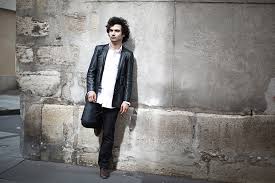
Tigran Hamasyan is often introduced through a convenient equation: Armenian folk music plus jazz improvisation plus progressive rock or metal. The description is not entirely wrong. All of those elements can be heard in his work, sometimes within the same composition, and the physical intensity of his performances makes the combination immediately recognizable. Yet the formula becomes misleading when it suggests that Hamasyan’s music is simply a fusion of separate genres. His development has been more gradual and more deeply rooted than that. Armenian musical traditions are not decorative colors placed over a jazz foundation, just as rock is not merely an additional layer of volume applied when the music needs greater impact. Over the course of his career, these influences have become parts of a compositional language in which rhythm, melody, memory and improvisation are increasingly difficult to separate.
That distinction explains why Hamasyan occupies an unusual position in contemporary improvised music. His piano technique is formidable, but virtuosity alone does not explain the identity of his work. Complex meters are important, but complexity is not the subject. Heavy rhythmic passages can recall progressive rock or metal, yet reducing them to stylistic borrowing overlooks the rhythmic structures that connect much of his writing to Armenian music. At other moments, especially in solo recordings, the same musician can sound meditative, spacious and almost austere. Vocal passages, sacred music, electronic textures and folkloric melodies have all entered his work without producing a career that feels like a sequence of unrelated experiments.
The continuity comes from the way Hamasyan has learned to treat tradition: not as a fixed inheritance to preserve unchanged, but as material capable of generating new music.
To understand how that happened, it is necessary to begin before the international competitions, major labels and albums that made his rhythmic language recognizable. It begins in Gyumri, with a child surrounded not by one musical tradition but by several.
Gyumri, Rock Records and the Piano
Tigran Hamasyan was born in 1987 in Gyumri, Armenia, then still part of the Soviet Union. His parents were not professional musicians, but music was present in the home, and his father’s record collection introduced him to rock bands including Led Zeppelin, Black Sabbath, Deep Purple and Queen. Hamasyan began finding melodies on the family piano at around three years old and entered formal musical training a few years later. This combination — disciplined study alongside an early fascination with amplified, rhythmically forceful music — would eventually become important, although not in the simplistic sense that a child listening to Black Sabbath was already preparing to create “metal jazz.”
What matters is that Hamasyan’s ears were never organized around a single hierarchy. Classical piano provided technique and repertoire. Rock demonstrated another relationship with physical intensity, repetition and sound. Jazz would soon introduce improvisation. Armenian music, initially part of the cultural environment surrounding him, would become increasingly central as he grew older.
By the time he was approaching adolescence, Hamasyan was already performing and participating in festivals and competitions. He also became deeply interested in jazz. The piano offered an unusually productive meeting place for these interests because it could support harmony, melody, counterpoint and rhythm simultaneously. For a musician fascinated by several forms of organization at once, the instrument could function almost like a laboratory.
Yet Armenian music did not immediately dominate his musical identity. That relationship developed. Hamasyan has described becoming more seriously engaged with Armenian folk material during his teenage years, and this gradual discovery is important because it prevents his biography from becoming a predetermined story in which national identity automatically produces a particular artistic language.
Tradition had to be studied.
It had to be heard again.
Discovering Armenian Rhythm as Structure
The influence of Armenian music on Hamasyan is sometimes described primarily through melody, and melody is certainly crucial. Traditional songs and modal characteristics appear throughout his work. But rhythm is equally important, particularly the asymmetrical meters and accent patterns that can sound startling to listeners whose expectations are shaped by regular divisions of four.
Odd meter is hardly unique to Armenia, nor is it new to jazz. Dave Brubeck, Don Ellis and numerous musicians from the Balkans, Middle East and elsewhere had demonstrated long before Hamasyan’s career that irregular meters could become central to improvisation. Progressive rock likewise developed an extensive vocabulary of shifting time signatures. What distinguishes Hamasyan is not the discovery of rhythmic complexity but the particular sources and physical character he brings to it.
In his strongest compositions, meter does not behave like a mathematical exercise.
It dances.
This is a crucial distinction. A pattern may be difficult to count on paper while feeling remarkably natural once internalized. Accents create direction. Repetition turns an apparently unstable structure into a groove. The musicians do not sound as though they are surviving a technical obstacle; they inhabit the pattern until it acquires physical inevitability.
That relationship between complexity and bodily movement would become one of Hamasyan’s signatures. It also helps explain why his later engagement with rock and metal feels less like genre tourism than it might appear from a distance. Heavy music gave him a sonic environment capable of emphasizing rhythmic structures already important to his compositional thinking.
The rhythm came before the label.
From Armenia to Los Angeles
Hamasyan’s early abilities quickly attracted attention beyond Armenia. In 2003, while still a teenager, he won the piano competition at the Montreux Jazz Festival. Around the same period, his family relocated to Los Angeles, placing him inside the substantial Armenian-American community of Southern California while also giving him access to a very different professional musical environment.
The move is tempting to frame as a conventional story of a gifted musician leaving the periphery for an international center. Hamasyan’s subsequent development makes that interpretation inadequate. Los Angeles expanded his opportunities, but distance from Armenia also intensified questions of cultural memory and identity that would become increasingly important in his work. Migration did not simply replace one environment with another. It created a relationship between them.
Los Angeles exposed Hamasyan to musicians from many traditions and provided access to an active jazz scene. At the same time, Armenian culture remained present through family and community. This dual perspective — belonging to a place while also viewing it from elsewhere — would later become particularly significant when Hamasyan returned to live in Armenia for periods of his career.
His early competition success continued. In 2006 he won the Thelonious Monk International Jazz Piano Competition, one of the most visible achievements available to a young jazz pianist. Such awards can accelerate a career, but they can also distort the way that career is remembered. A competition rewards performance under particular conditions. It does not create an artistic identity.
Hamasyan’s identity was still forming.
World Passion and the Search for a Language
Hamasyan’s first recordings reveal a musician whose interests were already broad but whose mature language had not yet fully crystallized. World Passion, recorded while he was still very young, introduced a pianist with considerable technical resources and an obvious relationship with both jazz and Armenian material. Hearing it retrospectively is valuable because the album demonstrates that the later synthesis did not appear suddenly on Mockroot.
Early Tigran is not simply a less developed version of later Tigran. The proportions are different. Jazz vocabulary can appear more exposed; influences can be easier to identify separately. Over time, those elements would become more deeply integrated.
This is a normal but often overlooked part of artistic development. Distinctive musicians rarely arrive with a complete language already formed. They absorb, imitate, reject, reorganize and gradually discover which elements can coexist without sounding borrowed.
The albums that followed document that process.
New Era continued the search, but Red Hail became a particularly revealing turning point. Released near the end of the decade, it made the relationship among Armenian material, improvisation and rock energy much harder to treat as separate concerns. The music could become heavy without abandoning melodic identity. Electric textures and rhythmic force entered a language still centered on composition and improvisation.
The title itself suggests something elemental, but the important transformation is musical rather than symbolic. Hamasyan was learning how to make contrasting influences operate according to the same internal logic.
Red Hail and the Arrival of Weight
Red Hail matters because it begins to reveal the physical dimension that would later become strongly associated with Hamasyan. The piano is not merely harmonic or melodic. It becomes percussive. Repeated figures can function almost like riffs. Bass and drums do not simply accompany improvisation; they participate in large rhythmic structures whose momentum can approach the intensity of rock.
This is where comparisons with progressive metal begin to make sense, but they need to be used carefully. Hamasyan was certainly listening beyond jazz, and heavy rock had been part of his musical environment since childhood. Yet describing the music as jazz meeting metal can obscure the fact that both were being reorganized through his interest in Armenian rhythm.
A distorted guitar or aggressive drum pattern does not automatically make music structurally connected to metal. What matters is how repetition, accent, density and dynamics operate. Hamasyan understood that the visceral power of heavy music could coexist with sophisticated rhythmic organization without either element becoming parody.
At the same time, melody remained central.
This is one of the reasons his music avoids becoming a permanent display of complexity. Even in rhythmically demanding compositions, a melodic idea often provides orientation. The listener may lose track of the meter while still recognizing the emotional direction of the piece.
That balance would become increasingly refined.
A Fable: Removing the Weight
After the growing density of the preceding work, A Fable, released in 2011, offered a revealing contrast. The solo-piano album reduced the musical environment to its most fundamental element: Hamasyan alone at the instrument.
The change matters because it exposes what survives when the rhythmic machinery and amplified force disappear.
Melody survives.
So does Armenian memory.
Without drums or electric bass, Hamasyan’s relationship with folk material becomes easier to hear as something more than rhythmic complexity. Space assumes greater importance. Resonance matters. The piano can suggest multiple voices without needing to reproduce the scale of an ensemble.
A Fable also demonstrates why the common description of Hamasyan as a pianist of extreme meter and progressive-rock energy is incomplete. His musical personality depends on contrast. The force of Red Hail becomes more meaningful when placed beside the intimacy of solo playing.
The album received the Victoires de la Musique award in France, increasing his international visibility, but its deeper importance lies in the clarity it brought to his artistic identity. Hamasyan could remove almost everything associated with his spectacular side and still remain unmistakably himself.
This is a test many virtuosos do not pass easily.
Shadow Theater and the Expansion of the Stage
If A Fable reduced the music, Shadow Theater expanded it again. Released in 2013, the project brought together piano, rhythm section, vocals, electronics and additional textures in a more elaborate compositional environment. The title is appropriate because the music often behaves theatrically: sections appear and disappear, voices emerge from dense arrangements, rhythmic structures change scale, and acoustic and electronic elements interact without settling into a single hierarchy.
By this point, Hamasyan was no longer merely combining influences.
He was composing environments.
That development marks an important difference. Fusion is often described by identifying ingredients: jazz, folk, rock, electronics. Composition asks another question: what function does each element perform? A voice can become texture rather than narrative. A folk-derived melody can organize an entire composition rather than appear as quotation. Electronics can alter rhythmic perception rather than simply modernize the surface.
Shadow Theater therefore represents a major step toward the mature Hamasyan language because the music becomes increasingly difficult to reverse-engineer into separate sources.
The Armenian element remains central, but “Armenian” itself is becoming more complex. Hamasyan’s relationship with his heritage would soon move beyond folk-derived rhythm and melody toward sacred repertoire, historical composition, poetry, geography and questions of cultural memory.
The next several years would make that expansion unmistakable.
Tradition as a Living Question
By the early 2010s, Hamasyan had already accumulated the ingredients from which much of his mature work would develop: classical discipline, jazz improvisation, Armenian folk material, asymmetrical rhythm, rock intensity, electronic texture and a strong melodic sensibility. What prevented these elements from becoming a fixed formula was his changing relationship with tradition.
Tradition, for Hamasyan, increasingly became something to investigate rather than simply inherit.
That distinction would lead to very different projects. Luys i Luso would engage centuries of Armenian sacred music with the Yerevan State Chamber Choir. Mockroot would compress folk memory, heavy rhythmic structures, voice and electronics into the language of a compact trio. An Ancient Observer would return to a more intimate setting and examine place and memory from another perspective. Later albums would continue moving between original composition, standards, ancient stories and increasingly ambitious multimedia forms.
None of these directions can be explained adequately by saying that Hamasyan fuses Armenian folk with jazz and metal.
The formula describes the surface.
The career is about what happens underneath it.
By the time Mockroot arrived in 2015, Hamasyan had reached the point where influences that once could be identified individually had become parts of a coherent musical grammar. Armenian rhythmic structures no longer needed to announce themselves as folk material. Rock intensity no longer sounded imported. Jazz improvisation no longer functioned as the stylistic center around which everything else revolved.
The elements had begun to lose their borders.
That is where the next phase of Tigran Hamasyan’s story truly begins.
Buy Amazon
Memory, Sacred Music and the Return Home
Luys i Luso: Looking Back Several Centuries
After Shadow Theater, Tigran Hamasyan could easily have continued developing the dense mixture of piano, voices, electronics and rhythm that had brought his music to a larger international audience. Instead, one of his next major projects turned toward Armenian sacred music and a repertoire whose history reached centuries beyond jazz.
Luys i Luso, created with the Yerevan State Chamber Choir, represented a different kind of engagement with tradition. The project drew on Armenian sacred compositions spanning a vast historical period, including music associated with figures such as Mesrop Mashtots, Grigor Narekatsi, Nerses Shnorhali, Makar Yekmalyan and Komitas. Hamasyan arranged this material for piano and choir, placing improvisation inside a repertoire whose spiritual and cultural meanings could not be reduced to musical source material.
The difference from using a folk melody inside a contemporary jazz composition is substantial. Sacred music arrives with another kind of memory. It belongs to liturgy, language, community and historical continuity. The challenge is not simply how to modernize it, but whether modernization is even the right objective.
Hamasyan’s solution was not to transform the choir into a jazz ensemble. The piano enters the music as another voice, sometimes reinforcing its contemplative character and sometimes opening spaces in which improvisation can interact with the written material. The old and the new do not have to merge completely in order to coexist.
This restraint is important because Hamasyan’s public image was increasingly connected to rhythmic intensity. Luys i Luso demonstrated that his relationship with Armenian culture could not be explained by odd meter alone. Melody, language, spiritual history and the resonance of collective voices were equally significant.
The project also became geographical. Hamasyan and the choir performed the music in churches across Armenia and beyond, allowing architecture and place to become part of the experience. Sacred repertoire was returned to spaces whose acoustics and cultural meanings differed radically from the jazz club or festival stage.
For a musician whose career had developed internationally, the project represented more than stylistic expansion. It was another stage in the process of looking toward Armenia not as an aesthetic resource but as a historical world.
Mockroot: When the Languages Became One
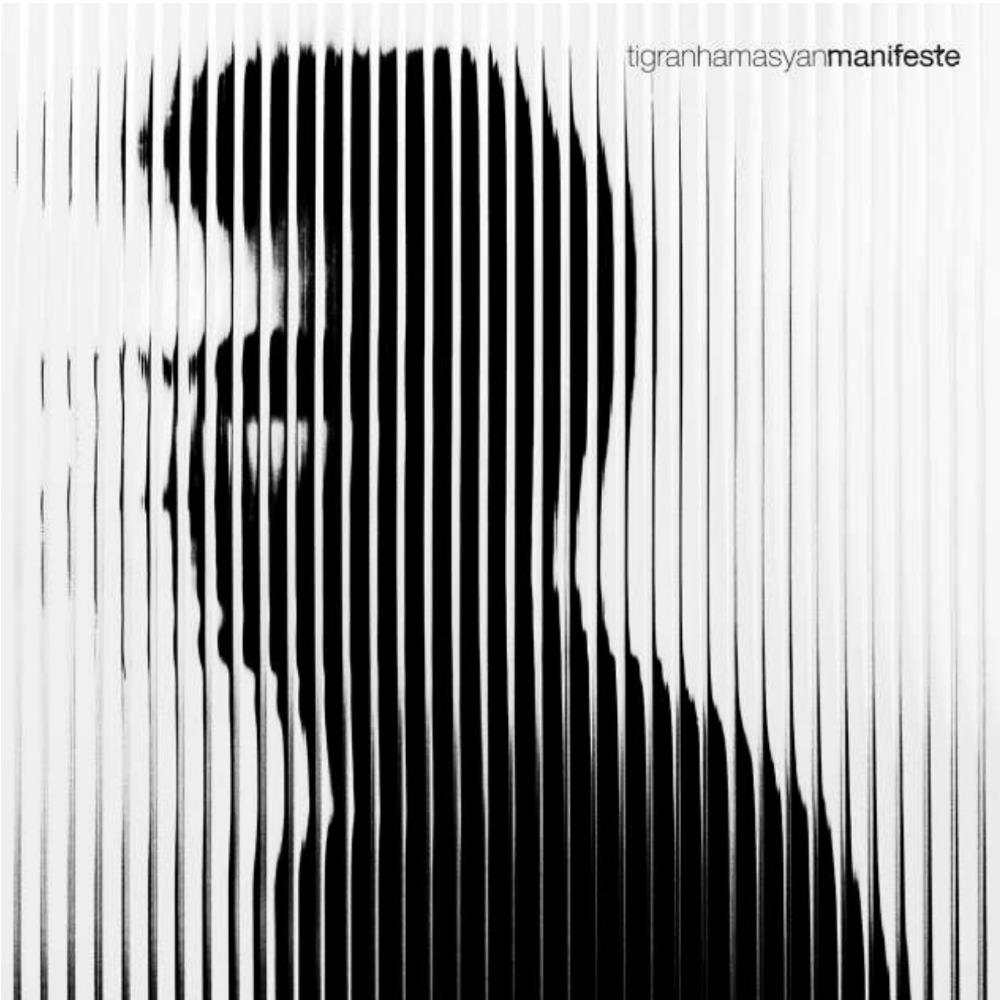
Released in 2015, Mockroot became one of the most widely recognized recordings of Hamasyan’s career and one of the clearest demonstrations of how thoroughly his influences had become integrated. The album deserves a separate analysis — and its individual Jazz Latitude article can examine its compositions and rhythmic architecture in detail — but within the larger biography its importance lies in synthesis.
The contrast with Luys i Luso is striking. One project engages sacred repertoire through piano and choir; the other can erupt with the physical force of a modern rhythm section. Yet both arise from the same deepening relationship with Armenian musical identity.
On Mockroot, Hamasyan worked with bassist Sam Minaie and drummer Arthur Hnatek, with voices and additional textures contributing to the album’s broader palette. Hnatek was particularly suited to this music because his rhythmic precision could make extremely complicated structures feel immediate. Minaie’s bass had to perform a similarly demanding role, anchoring patterns without reducing them to mechanical repetition.
The music can sound heavy, but heaviness is not the organizing principle. Armenian melodic and rhythmic ideas, improvisation, repetition, electronics and rock-derived force operate as parts of one compositional system. The listener may recognize individual influences, but the music no longer depends on the novelty of their combination.
This is why Mockroot became such an important reference point in discussions of Hamasyan. It is not because the album invented a genre or established a blueprint that other contemporary jazz musicians were required to follow. Those claims exaggerate its historical position. Its achievement is more personal: Hamasyan had reached a stage where his various musical histories could speak simultaneously without constantly calling attention to their origins.
The synthesis sounds lived rather than assembled.
That distinction would shape much of what followed.
Armenia as More Than Musical Material
As Hamasyan’s international career expanded, Armenia became increasingly central to his work in ways extending beyond repertoire. The relationship between place and artistic identity became especially important after years spent abroad. Returning physically to Armenia altered the perspective from which memory could be examined.
This is a recurring experience in migrant artistic lives. Distance can intensify attention to details that once seemed ordinary. Language, landscape, ritual and familiar sounds acquire different meanings when encountered after absence. Returning does not simply restore an earlier relationship with home because the person returning has changed.
Hamasyan’s music increasingly reflects this tension.
Armenia can appear ancient and contemporary, intimate and historical. The country is not treated as an untouched repository of folk authenticity. It is a living place marked by religious history, Soviet experience, migration, modern cities, rural landscapes and political uncertainty. Hamasyan’s compositions do not attempt to summarize all of this, but their relationship with memory becomes more layered as his career develops.
The word “folk” consequently becomes less sufficient.
A traditional melody may be present, but the larger subject can be belonging.
An Ancient Observer: Watching Rather Than Declaring
An Ancient Observer, released in 2017, changed scale again. After the concentrated rhythmic force associated with Mockroot, Hamasyan returned toward an intimate piano-centered environment. The album drew inspiration from his return to Armenia and from observing the world around him: landscapes, architecture, people and the persistence of older histories within everyday life.
The title is revealing.
An observer does not necessarily intervene. Observation requires patience, and patience brings another side of Hamasyan’s playing into focus. The music still contains rhythmic complexity, but complexity no longer needs to announce itself through physical force. Patterns can unfold quietly. Repetition can create contemplation rather than pressure. Silence becomes part of the composition.
This is where the common image of Hamasyan as the pianist who combines Armenian music with djent becomes especially inadequate. Remove the amplified attack and the musical identity remains.
As on A Fable, solo and near-solo contexts reveal how strongly melody anchors his work. Armenian influence can appear through contour, ornamentation, mode or rhythmic implication without requiring an obvious folk quotation. The piano becomes a space where cultural memory can be suggested rather than declared.
The album also demonstrates a growing confidence in understatement. Young virtuosos often face an understandable temptation to show the full extent of what they can do. Hamasyan had already demonstrated extraordinary technical command. By this stage, the more interesting question was how little information a composition might need while remaining recognizably his.
The answer could be surprisingly little.
For Gyumri: The City Becomes Personal Again
The 2018 EP For Gyumri makes the geographical relationship explicit in its title. Gyumri is not simply Hamasyan’s birthplace in a biographical timeline. It becomes an emotional and compositional reference point.
A city remembered from childhood is never identical to the city encountered as an adult. Gyumri carries its own complex history, including the devastating 1988 Armenian earthquake, whose consequences shaped the city and the lives of its inhabitants. Hamasyan was born shortly before that disaster, and although an artist’s work should never be reduced mechanically to historical events, the broader environment of Gyumri forms part of the cultural memory surrounding his generation.
The EP continues the more reflective direction heard on An Ancient Observer, but it should not be understood simply as a quiet interlude between more ambitious albums. Its intimacy is part of Hamasyan’s larger compositional development. Place becomes something music can address without describing literally.
There is no need for a composition about Gyumri to reproduce the sounds of a street or illustrate a landscape. The relationship can exist through memory, melodic shape or the emotional distance between past and present.
This approach also prevents Armenian identity from becoming spectacle. Hamasyan does not need every project to announce ancient tradition through dramatic gestures. Sometimes a title and a melody can carry enough weight.
The Call Within: Turning Inward and Outward at Once
With The Call Within in 2020, Hamasyan returned to a more forceful ensemble language, but the album did not simply recreate Mockroot. By this point, his rhythmic vocabulary had developed further, and his compositional interests had expanded toward myth, subconscious imagery, maps, poetry and the internal worlds through which cultural memory is transformed.
The album reunited him with bassist Marc Karapetian and drummer Arthur Hnatek, alongside guests and vocal contributions. Hnatek’s return is significant because his understanding of Hamasyan’s rhythmic structures allows difficult patterns to retain extraordinary clarity. The drums can sound enormous without becoming blunt. Accents articulate the architecture rather than merely intensifying it.
Hamasyan’s piano frequently functions in several roles simultaneously. It can provide the harmonic field, articulate a repeated rhythmic figure and introduce melodic material within the same passage. When keyboards and electronics enter, the boundaries expand further.
Again, comparisons with progressive metal can be useful at the level of physical experience. Some passages possess the tightly organized rhythmic attack and weight associated with contemporary heavy music. But the compositions resist being understood through metal alone because their melodic and rhythmic sources point elsewhere.
Hamasyan is not placing an Armenian melody on top of a metal rhythm section.
The deeper achievement is that the listener can no longer easily determine where one vocabulary ends and another begins.
Levitation 21 and the Problem of Counting
“Levitation 21” became one of the clearest examples of Hamasyan’s rhythmic imagination reaching a broad audience. The piece is frequently discussed in terms of its shifting and unusual meters, and musicians understandably enjoy analyzing its construction.
Yet counting alone can obscure what makes the composition effective.
A meter can be intellectually impressive while remaining musically inert. Hamasyan’s rhythmic writing works when the pattern develops a physical identity independent of its notation. Repetition allows the ear and body to learn a structure that may initially seem unstable. Once that structure becomes familiar, small changes acquire enormous impact.
This is similar to the way a groove functions in music built from simpler meters. The listener internalizes expectation. The musician can then manipulate it.
Hamasyan’s skill lies partly in creating that sensation with structures that might appear forbidding on paper. The rhythm becomes memorable before it becomes comprehensible.
This is also where his relationship with Armenian rhythmic traditions and his enthusiasm for contemporary heavy music find a particularly natural meeting point. Both can value repeated patterns whose identity depends on accent and physical insistence.
The result is not mathematical jazz.
It is embodied rhythm organized with unusual precision.
The Voice Inside the Piano Music
Another element increasingly important in Hamasyan’s work is the human voice. Singing has appeared throughout his career, sometimes through his own vocals and sometimes through collaborators, and its function varies considerably. Voice can carry text, reinforce melody or operate as another timbral layer inside an arrangement.
This matters because it connects several aspects of his musical identity. Armenian folk and sacred traditions are deeply connected to singing, while contemporary studio production allows the voice to be multiplied, processed and positioned inside dense instrumental textures.
Hamasyan uses that flexibility without turning vocals into a conventional frontman role.
The voice often feels embedded in the composition.
This is particularly important when considering the trajectory from Luys i Luso to The Call Within. The choir project demonstrated the historical and spiritual power of collective singing. Later work can place voice inside an entirely different sonic environment while retaining the sense that melody has a relationship with something older than the arrangement surrounding it.
Technology changes the surface.
Memory survives underneath.
Complexity Without Worshipping Complexity
By the time of The Call Within, Hamasyan had become strongly associated with musicians and listeners fascinated by complex rhythm. Transcriptions, reaction videos and technical analyses could focus intensely on meter, subdivisions and coordination.
That attention is understandable, but it creates the same danger that surrounds any highly technical musician: difficulty can become mistaken for value.
Hamasyan’s strongest music is not important because it is hard to play.
It is important because difficulty serves character.
An irregular meter can create instability, propulsion or a dance-like asymmetry. A repeated figure can become hypnotic. A sudden dense passage can make the silence that follows feel larger. Technical decisions matter because of the emotional and structural consequences they create.
This is also why his quiet recordings belong at the center of the story rather than at its margins. A Fable, An Ancient Observer and For Gyumri demonstrate what remains when the obvious complexity is reduced.
The answer is melody, rhythm, memory and a highly personal sense of space.
From Heritage to Personal Language
The arc from Luys i Luso through The Call Within reveals an artist whose relationship with Armenian heritage became increasingly difficult to summarize through the language of influence. At the beginning of a career, critics can point toward sources: here is a folk rhythm, here is jazz harmony, here is progressive rock, here is classical technique.
Eventually, if the musician develops deeply enough, the map becomes less useful.
Hamasyan reached a point where Armenian musical memory was no longer something he needed to insert into compositions. It had become part of the way he composed. Jazz improvisation was no longer a stylistic declaration. It was a method. Rock and metal were no longer external genres to fuse with jazz. Their energy and sonic weight had become available colors.
That development opened another possibility.
If Hamasyan’s identity no longer depended on proving the compatibility of these worlds, he could move somewhere apparently unexpected without losing himself.
He could turn toward the standard jazz repertoire.
And on StandArt, he did exactly that.
Standards, Stories and a Language Beyond Categories
StandArt: Returning to the Common Language
After years in which Armenian music had become increasingly central to his public identity, Tigran Hamasyan made a revealing move with StandArt. Released in 2022, the album turned toward the repertoire that has historically provided jazz musicians with a common language: standards.
At first glance, this could appear almost conservative. Hamasyan had spent much of his career developing music immediately identifiable through original compositions, Armenian melodic and rhythmic structures, electronics, voices and the physical energy of contemporary rock. Why return to songs that generations of jazz musicians had already interpreted?
The answer reveals something important about his development.
A musician with a highly recognizable language eventually faces the danger of becoming trapped inside it. Listeners learn what to expect. Certain rhythmic devices, harmonic colors or production choices begin to function as signatures. What once sounded surprising can become an anticipated feature.
Standards create a different test because the material already possesses a history independent of the performer. The question is no longer whether Hamasyan can construct a world entirely from his own vocabulary. It is what happens when that vocabulary encounters songs that belong to the shared memory of jazz.
On StandArt, Hamasyan works with bassist Matt Brewer and drummer Justin Brown, with guest appearances by Ambrose Akinmusire, Joshua Redman and Mark Turner. The personnel alone places him in direct conversation with contemporary American jazz rather than presenting jazz as one ingredient inside a larger hybrid.
That distinction matters.
Hamasyan had never stopped being an improvising jazz musician, but his increasingly distinctive compositional language sometimes made that foundation easy to overlook. StandArt exposes it again.
What Remains When the Folklore Disappears?
One of the most interesting aspects of StandArt is what Hamasyan does not need to do. He does not have to transform every standard into an explicit display of Armenian meter. He does not need heavy electronic production to establish individuality. He does not need a folk melody inserted into the arrangement to remind the listener who is playing.
His identity survives without those signals.
That is evidence of maturation.
When a musician’s language becomes sufficiently internalized, style no longer depends on recognizable devices. Touch, pacing, harmonic decisions, rhythmic displacement and interaction can communicate identity with greater subtlety.
Hamasyan approaches standards as structures that can be reopened. Familiar harmonic sequences become opportunities for rhythmic reorganization. Melodies can be treated with affection without becoming museum objects. Improvisation can move far from the original song while preserving enough of its character to make the return meaningful.
The result also complicates the recurring assumption that Hamasyan stands outside the jazz tradition because his influences are unusually broad. His career suggests something more interesting. Jazz has always absorbed musicians whose identities were formed by musical worlds beyond jazz itself. What changes from generation to generation are the materials entering the conversation.
For Hamasyan, those materials include Armenian folk and sacred traditions, rock, metal, electronics and contemporary composition.
But improvisation remains a central method connecting them.
Listening Instead of Demonstrating
The guest musicians on StandArt help clarify another aspect of Hamasyan’s playing: his ability to adapt his vocabulary to the personalities around him.
A saxophonist such as Joshua Redman brings a different conception of line and swing from Mark Turner, whose improvisational language often explores long, architecturally complex phrases. Ambrose Akinmusire brings another relationship with space, register and dramatic tension. Hamasyan does not need to overpower those differences.
He listens.
That may seem like an obvious requirement for jazz, but it is particularly significant for a musician so frequently discussed through virtuosity. Technical brilliance can dominate critical narratives because it is easy to describe. Speed can be measured. Odd meters can be counted. Difficult passages can be transcribed.
Listening is harder to quantify.
Yet much of mature improvisation depends on it.
On StandArt, Hamasyan’s strongest moments often emerge not when he demonstrates the maximum density available to him but when he responds to what another musician has introduced. Harmony can shift because of a bass note. A rhythmic idea can be extended because the drummer has changed its emphasis. Space can become more important because a horn has left a phrase unresolved.
The music therefore reminds us that Hamasyan’s rhythmic sophistication is not merely compositional.
It is conversational.
The Standard as Historical Memory
There is another reason StandArt fits naturally into Hamasyan’s broader career. His music has long been concerned with memory.
Earlier projects approached memory through Armenia: traditional melodies, sacred repertoire, landscape, childhood and historical continuity. Standards represent another kind of inherited memory. They belong to a musical culture passed from musician to musician, altered through thousands of performances.
Hamasyan’s relationship with this repertoire is therefore not entirely separate from his work with Armenian tradition.
In both cases, he confronts existing material.
In both cases, the challenge is to respect history without allowing history to determine every musical decision.
And in both cases, improvisation provides a mechanism through which inherited music becomes present-tense experience.
The cultural histories are obviously different and should not be collapsed into one another. Armenian sacred repertoire carries meanings that an American popular song does not, just as the jazz standard belongs to a particular history of performance, race, migration, entertainment and improvisational practice.
What connects them in Hamasyan’s artistic process is the question they pose:
How can inherited music remain alive?
His answer has never been preservation alone.
It requires transformation.
Beyond the Piano Album
The years following StandArt revealed another direction that had been developing beneath Hamasyan’s work for some time. Music could expand beyond the conventional boundaries of an album and become part of a larger narrative environment.
That impulse reached an ambitious scale with The Bird of a Thousand Voices.
The project draws inspiration from the Armenian folk tale of Hazaran Blbul, the mythical bird whose song has the power to restore harmony to a fractured world. Rather than treating the story simply as a source for song titles or atmosphere, Hamasyan developed a larger work in which music, narrative and visual elements interact.
This is an important step because it extends ideas already present throughout his career.
Shadow Theater had explored theatrical composition and layered voices. Luys i Luso connected music with sacred history and physical spaces. Later projects had investigated landscape, memory and cultural inheritance. The Bird of a Thousand Voices brings several of these concerns together through storytelling.
The result suggests that Hamasyan increasingly thinks not only in terms of compositions or albums but in terms of worlds.
The Bird of a Thousand Voices
The ancient story at the center of the project concerns a quest. Different versions and traditions surrounding the tale contain their own details, but the image of the magical bird provides Hamasyan with a powerful symbolic framework: something lost must be found, and its recovery can restore order.
That idea resonates strongly with a career preoccupied with cultural memory.
Yet The Bird of a Thousand Voices should not be reduced to an allegory about recovering Armenian tradition. Hamasyan’s relationship with the past is too dynamic for that. The project uses an old story to create a contemporary artistic environment rather than attempting to reconstruct some imagined pure historical form.
The music incorporates the characteristics listeners may associate with Hamasyan — intricate rhythm, piano, keyboards, voices, electronic sound and moments of considerable force — but the narrative framework changes their function.
A composition can represent a stage of a journey.
A recurring musical idea can behave like a character.
Changes in texture can create dramatic transitions.
Voice can operate somewhere between song, memory and narration.
The larger structure becomes as important as any individual display of instrumental skill.
This is a significant development for an artist who initially became internationally visible as a prodigiously gifted pianist. The piano remains central, but the artistic identity surrounding it has grown much larger.
Armenian Tradition Without the Museum
Across Hamasyan’s career, one principle has remained remarkably consistent: Armenian music is treated as living material.
This is not the same as treating tradition casually.
Hamasyan has devoted serious attention to Armenian folk and sacred music, composers, songs and rhythmic practices. Projects such as Luys i Luso demonstrate the depth of that engagement. But reverence does not require immobility.
Traditions survive partly because people continue using them.
Every generation inherits something already transformed by previous generations. Folk melodies change through performance. Sacred repertoires acquire different interpretations. Instruments change. Communities migrate. Recording technology alters how music circulates. Cultural memory is never entirely static.
Hamasyan’s work exists inside this process.
His use of synthesizers does not cancel the historical depth of a melody. A rhythm played with the physical impact of contemporary rock does not automatically become less Armenian. Improvisation can introduce new material without erasing the inherited structure beneath it.
This is why the word “fusion” ultimately feels inadequate.
Fusion implies that identifiable substances are being combined.
Hamasyan increasingly works as though those substances were never completely separate.
The Limits of the Armenian-Jazz-Metal Description
Calling Hamasyan the pianist who combines Armenian folk, jazz and progressive metal is useful when introducing him to someone who has never heard his music. It provides an immediate orientation.
But it should be the beginning of the conversation rather than the conclusion.
The description struggles with A Fable.
It struggles even more with Luys i Luso.
It cannot adequately explain An Ancient Observer.
And StandArt demonstrates that Hamasyan can temporarily remove most of the elements associated with his public signature while retaining a recognizable musical personality.
The problem is not that the genres are absent from his history. They are clearly present.
The problem is assuming that genres explain the music.
They do not explain his sense of pacing, his melodic instincts, his fascination with repeated structures or the relationship between density and silence that appears across very different recordings. They do not explain why a violent rhythmic passage and an almost fragile solo-piano miniature can belong convincingly to the same musician.
Those connections emerge from a language developed over decades.
Virtuosity and Its Distractions
Hamasyan belongs to a generation of musicians whose performances circulate constantly online. Short clips can isolate extraordinary technical moments from the larger compositions containing them. A few seconds of rhythmic complexity can travel much farther than the quieter passage that makes the complexity meaningful.
This environment rewards spectacle.
Hamasyan is exceptionally well equipped to provide it.
His independence at the keyboard, rhythmic control and ability to execute dense repeated figures are immediately impressive. Yet focusing exclusively on those qualities risks misunderstanding his development.
Virtuosity is most valuable when it disappears into musical intention.
The young pianist who attracted attention through extraordinary ability gradually became a composer for whom ability could be hidden. A Fable did not need maximum density. An Ancient Observer could allow a melodic fragment to carry a piece. Luys i Luso required the piano to coexist with a choral tradition much older than the pianist interpreting it.
Even the most rhythmically aggressive recordings work because contrast gives force a context.
Without silence, intensity becomes ordinary.
Hamasyan understands that increasingly well.
Where He Sits in Contemporary Jazz
Claims that a single musician has “redefined jazz” are attractive because they convert complicated history into a simple narrative. They are rarely accurate.
Contemporary jazz has no single center waiting to be transformed by one artist. Its development is distributed across countries, generations and scenes, from musicians extending African American traditions in the United States to improvisers throughout Europe, Latin America, Africa and Asia whose work reflects different musical histories.
Hamasyan belongs within that larger landscape.
His importance comes not from replacing an older definition of jazz but from demonstrating one way an improvising musician can build a deeply individual language from multiple inheritances.
In that respect, his Armenian identity matters enormously.
But so does his refusal to let identity become a cage.
He can engage Komitas and American standards. He can perform solo piano and construct music with the physical force of a rock band. He can work with a chamber choir and then place synthesizers inside a rhythmically explosive trio. He can look backward several centuries without presenting himself as a historical preservationist.
The range is meaningful because the underlying language remains coherent.
A Different Model of the International Jazz Musician
Hamasyan’s career also reflects a broader change in how jazz circulates internationally.
Earlier generations often moved toward a small number of cultural centers in order to enter the music’s professional networks. Those centers remain important, and Hamasyan’s own years in Los Angeles formed a significant part of his development. But contemporary musicians increasingly operate through several places at once.
Festivals, recordings, online circulation and international collaborations allow an artist to participate in global jazz culture without surrendering the musical specificity of home.
Hamasyan’s career illustrates this possibility particularly clearly because Armenia is not a decorative biographical detail attached to otherwise generic contemporary jazz.
It changes the music itself.
At the same time, Armenia does not isolate the music from the rest of the world.
It gives Hamasyan a position from which to enter it.
From Gyumri to an Open Musical World
The child who began exploring a piano in Gyumri could not have known that Armenian sacred music, American jazz standards, progressive rock, folk tales, electronics and improvised music would eventually coexist inside the same career.
Seen retrospectively, the path can appear almost inevitable.
It was not.
Each stage required choices.
Hamasyan could have remained primarily a jazz pianist with Armenian influences. He could have built an entire career around the impact of Mockroot. He could have turned complex meter into a permanent signature and repeated it whenever audiences expected another display of rhythmic virtuosity.
Instead, the discography repeatedly changes perspective.
Red Hail increased the weight.
A Fable removed it.
Shadow Theater expanded the compositional environment.
Luys i Luso looked centuries backward.
Mockroot compressed several musical languages into a remarkably concentrated ensemble vocabulary.
An Ancient Observer returned to intimacy.
The Call Within made rhythmic architecture physically overwhelming again.
StandArt entered the shared repertoire of jazz.
The Bird of a Thousand Voices expanded composition into storytelling.
The pattern is not stylistic restlessness for its own sake.
It is the gradual expansion of what Hamasyan believes his musical language can contain.
The Language Beneath the Categories
Tigran Hamasyan does not need to be declared the musician who redefined twenty-first-century jazz. The reality is more interesting than the slogan.
He represents a contemporary form of musicianship in which cultural specificity and international language are not opposites. Armenian musical history gives his work depth precisely because he does not treat it as an exotic ingredient. Jazz gives him a tradition of improvisation without demanding that every recording conform to a fixed idea of what jazz should sound like. Rock and metal provide energy, weight and rhythmic possibilities without determining his identity. Classical technique expands what the piano can do without turning the music into a demonstration of training.
The categories remain useful for critics, record stores and listeners discovering the music.
For Hamasyan, they increasingly seem secondary.
What connects his work is something more fundamental: a fascination with rhythm as physical movement, melody as cultural memory, improvisation as discovery and composition as a way of allowing apparently distant histories to occupy the same space.
That is why the quiet albums matter as much as the explosive ones.
It is why the sacred projects belong beside the electronic ones.
And it is why Mockroot, despite its importance, should not become the single recording through which the entire career is understood.
Hamasyan’s most significant achievement is not that he found an unusual combination of Armenian folk music, jazz and progressive metal.
It is that, after years of composition, performance, migration, study and return, the combination stopped sounding like a combination at all.
It became a language.