During the 1950s, the American jazz industry was undergoing a period of extraordinary transformation. On the East Coast, labels such as Blue Note, Prestige and Riverside documented the explosive growth of hard bop and modern jazz. Thousands of miles away, however, a different musical movement was taking shape in California. Its sound emphasized lyricism, transparency, sophisticated arrangements and a distinctive sense of musical space that would eventually become known as West Coast Jazz.
One of the most important institutions behind that movement was Pacific Jazz Records.
Founded in Los Angeles in 1952 by producer Richard Bock, the label quickly became the principal home for many of the musicians shaping the California jazz scene. While other companies occasionally recorded West Coast artists, Pacific Jazz built its identity around them, documenting an entire musical community at a time when its artistic significance was still being debated.
More than seventy years later, the label remains one of the essential chapters in the history of modern jazz.
Richard Bock’s Vision
Richard Bock was not simply interested in releasing records.
He wanted to document a new musical culture.
Unlike producers who focused primarily on commercial trends, Bock believed that the musicians emerging from Southern California represented a genuine artistic movement deserving long-term attention. His approach combined enthusiasm for young talent with a willingness to give artists unusual creative freedom in the studio.
This philosophy proved remarkably successful.
Pacific Jazz quickly earned the trust of musicians who appreciated Bock’s collaborative style. Sessions often felt less like commercial productions and more like creative partnerships, allowing artists to experiment with instrumentation, ensemble formats and compositional ideas that might have seemed risky elsewhere.
That atmosphere of openness became one of the label’s defining strengths.
The Rise of Chet Baker
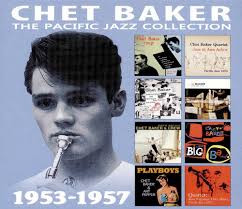
No artist became more closely associated with Pacific Jazz than Chet Baker.
Following his work with Gerry Mulligan’s pioneering pianoless quartet, Baker emerged as one of the most recognizable figures in modern jazz. His lyrical trumpet playing and intimate vocal style perfectly reflected the aesthetic that Pacific Jazz sought to promote.
Albums such as Chet Baker Sings introduced a remarkably understated approach to jazz performance. Baker demonstrated that emotional depth could emerge through melodic simplicity, subtle phrasing and careful control of tone rather than technical display alone.
His success also helped establish Pacific Jazz as an international label.
Listeners who discovered Baker often remained to explore the broader California jazz scene that surrounded him.
Beyond Chet Baker
Although Baker became the label’s best-known artist, Pacific Jazz was never built around a single personality.
The catalog soon expanded to include an extraordinary range of musicians whose styles reflected the diversity of West Coast Jazz.
Gerry Mulligan continued developing his contrapuntal approach to ensemble playing.
Bud Shank explored the meeting point between jazz and Brazilian music.
Shorty Rogers brought remarkable sophistication to modern jazz arranging.
Shelly Manne, Jimmy Giuffre, Bob Brookmeyer and many others contributed recordings that demonstrated the movement’s artistic breadth.
Together, these musicians challenged the stereotype that West Coast Jazz represented a single, uniform style.
Pacific Jazz became a showcase for innovation rather than conformity.
JazzLatitude Insight
One of Pacific Jazz Records’ greatest achievements was its willingness to document musicians as individual artists rather than representatives of a fashionable trend. While the label helped define the public image of West Coast Jazz, its catalog reveals a remarkable diversity of musical approaches that extends far beyond the familiar “Cool Jazz” stereotype.
A Sound Distinct from the East Coast
Comparisons between Pacific Jazz and Blue Note Records have often dominated discussions of 1950s jazz.
Those comparisons are understandable, but they can also be misleading.
Blue Note documented the evolution of hard bop through artists such as Art Blakey, Horace Silver and Lee Morgan. Pacific Jazz focused instead on musicians who valued transparency, contrapuntal interaction and carefully balanced ensemble textures.
Neither philosophy was superior.
Each reflected a different artistic environment.
New York emphasized urban energy, blues traditions and rhythmic intensity.
Southern California explored orchestral color, melodic openness and collective interaction.
Together, the two labels documented complementary visions of modern jazz, enriching the music through their contrasting perspectives.
Buy Amazon
The Artists Who Defined the Pacific Jazz Sound
As Pacific Jazz Records matured during the 1950s, it became clear that the label’s identity extended well beyond the success of Chet Baker. Richard Bock continued expanding the roster with musicians who shared a commitment to artistic exploration, yet each brought a distinctly personal voice. Rather than pursuing a single commercial formula, Pacific Jazz documented a remarkably diverse musical community whose members constantly challenged one another’s ideas.
This diversity remains one of the label’s greatest strengths.
Listening through the Pacific Jazz catalog today reveals a movement defined not by stylistic uniformity, but by curiosity, collaboration and an openness to new musical possibilities.
Gerry Mulligan and a New Kind of Ensemble
Among the label’s most influential artists, Gerry Mulligan occupies a central place.
Although his celebrated pianoless quartet predated much of Pacific Jazz’s later expansion, the recordings associated with the label helped establish Mulligan as one of the defining architects of West Coast Jazz. His decision to eliminate the piano from the ensemble fundamentally changed the way harmony functioned within a small group.
Instead of relying on chordal accompaniment, Mulligan encouraged continuous contrapuntal interaction between the horns and rhythm section. The result was music that felt unusually spacious and conversational, allowing every instrument to participate equally in shaping the harmonic landscape.
This approach influenced countless later ensembles and remains one of the defining innovations of modern jazz.
Bud Shank and Musical Curiosity
Few Pacific Jazz artists demonstrated greater stylistic versatility than Bud Shank.
An exceptional alto saxophonist and flutist, Shank refused to remain confined within the traditional boundaries of Cool Jazz. Throughout his career, he explored chamber jazz, orchestral projects and, perhaps most significantly, Brazilian music.
His collaborations with Brazilian guitarist Laurindo Almeida during the 1950s anticipated the international popularity of bossa nova by several years. Rather than treating Brazilian rhythms as exotic novelties, Shank approached them with genuine musical respect, creating recordings that highlighted the natural compatibility between jazz improvisation and Brazilian harmony.
These pioneering projects later influenced countless musicians on both sides of the Atlantic.
JazzLatitude Insight
Long before bossa nova became an international phenomenon, Pacific Jazz artists were already exploring meaningful collaborations with Brazilian musicians. These recordings demonstrated that cultural exchange could enrich jazz without sacrificing the integrity of either tradition.
Shorty Rogers and Modern Arranging
Trumpeter, composer and arranger Shorty Rogers helped define another essential aspect of the Pacific Jazz aesthetic.
His recordings combined sophisticated orchestration with remarkable accessibility, proving that carefully constructed arrangements could coexist naturally with spontaneous improvisation. Rogers viewed the jazz ensemble almost as a miniature orchestra, assigning each instrument a clearly defined role while preserving the flexibility necessary for creative interaction.
Albums such as Cool and Crazy reveal a composer equally comfortable writing intricate ensemble passages and allowing musicians complete freedom when the moment demanded it.
His influence extended well beyond West Coast Jazz, shaping the work of later arrangers in both jazz and film music.
Shelly Manne and the Rhythm of California
Although Shelly Manne recorded extensively for Contemporary Records and other labels, his appearances within the Pacific Jazz orbit further illustrate the interconnected nature of the California jazz community.
Manne possessed an extraordinary ability to adapt his drumming to almost any musical setting. Whether accompanying intimate chamber ensembles or energetic hard-swinging groups, he emphasized listening over display. His rhythmic approach reflected the broader West Coast philosophy, where interaction and subtlety often mattered more than sheer volume or technical exhibition.
His influence reached far beyond percussion.
As a bandleader, club owner and frequent collaborator, Manne helped establish Los Angeles as one of the world’s most creative jazz centers.
Jimmy Giuffre and Musical Experimentation
If Gerry Mulligan represented the melodic elegance of West Coast Jazz, Jimmy Giuffre embodied its spirit of experimentation.
Giuffre’s Pacific Jazz recordings challenged traditional assumptions about jazz structure through transparent textures, unusual instrumentation and collective improvisation. His celebrated trios often dispensed with conventional harmonic accompaniment altogether, allowing melodies to emerge organically through interaction between clarinet, guitar and bass.
These innovations anticipated developments in chamber jazz, free improvisation and the European jazz movement that would flourish decades later.
Although initially considered unconventional, Giuffre’s work has gained steadily in reputation and is now recognized as one of the most forward-looking contributions to the Pacific Jazz catalog.
Becoming World Pacific
By the late 1950s, Richard Bock’s ambitions had expanded beyond the original focus of Pacific Jazz.
Recognizing the growing interest in international musical traditions, the company gradually evolved into World Pacific Records, reflecting a broader artistic vision that embraced Latin jazz, Brazilian music, world music and experimental projects alongside its established jazz roster.
The name change represented more than a marketing decision.
It acknowledged that the label’s curiosity had outgrown regional boundaries.
While remaining deeply connected to its California roots, World Pacific increasingly documented a global musical conversation, one that anticipated the international outlook later embraced by labels such as ECM.
This evolution ensured that Pacific Jazz’s legacy would extend far beyond the West Coast itself.
Essential Pacific Jazz Albums
The following recordings provide an excellent introduction to the label’s artistic diversity and historical importance.
- Chet Baker – Chet Baker Sings (1954)
- The Original Gerry Mulligan Quartet (1952)
- Shorty Rogers – Cool and Crazy (1953)
- Bud Shank & Laurindo Almeida – Brazilliance (1953)
- Jimmy Giuffre – The Jimmy Giuffre 3 (1957)
- Bud Shank – Holiday in Brazil (1959)
Together, these albums reveal a record label that consistently encouraged originality, thoughtful ensemble playing and a willingness to explore musical territory beyond conventional jazz categories.
Buy Amazon
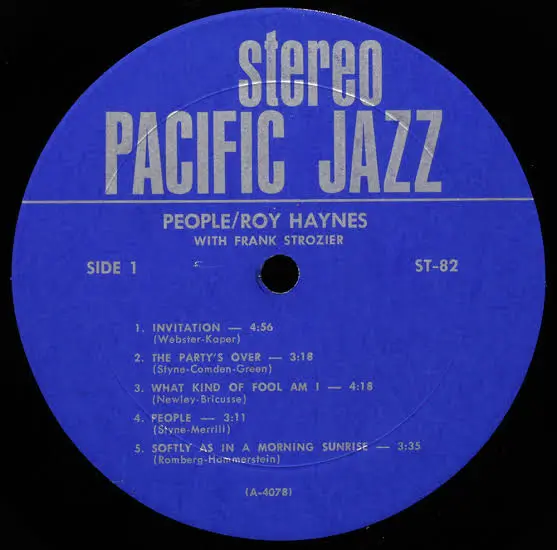
The Enduring Legacy of Pacific Jazz Records
Few independent record labels have shaped a regional jazz movement as profoundly as Pacific Jazz Records.
Blue Note documented the evolution of hard bop in New York. Prestige captured the spontaneity of East Coast jam sessions. Contemporary Records became synonymous with audiophile recording quality. Pacific Jazz, meanwhile, gave a musical identity to the creative explosion taking place along the West Coast, preserving performances that might otherwise have remained local phenomena.
Its importance extends far beyond the careers of Chet Baker or Gerry Mulligan.
The label documented a generation of musicians who believed jazz could evolve through lyricism, transparency, sophisticated arranging and thoughtful ensemble interaction. Rather than competing with the East Coast, Pacific Jazz demonstrated that modern jazz could flourish through a different artistic philosophy while remaining equally innovative.
Today, the label’s catalog stands as one of the essential archives of postwar American jazz.
From Regional Label to Global Influence
The transformation of Pacific Jazz into World Pacific Records reflected a broader change in the musical landscape of the late 1950s and early 1960s.
Jazz itself was becoming increasingly international.
Brazilian music was attracting worldwide attention.
Latin jazz continued to expand.
Asian and African musical traditions were beginning to influence adventurous improvisers.
Richard Bock recognized these developments early.
Rather than limiting the label to a single regional identity, he encouraged collaborations that connected American jazz with musical traditions from around the world. The result was a catalog that gradually became more adventurous while remaining faithful to the curiosity and openness that had defined Pacific Jazz from the beginning.
In many respects, the label anticipated the global outlook that would later characterize modern jazz.
JazzLatitude Insight
Pacific Jazz Records is often remembered as the home of West Coast Jazz, but its deeper legacy lies in its openness to musical dialogue. Long before “world music” became a recognized category, Richard Bock encouraged collaborations that treated different musical traditions as equal creative partners rather than commercial novelties.
Buy Amazon
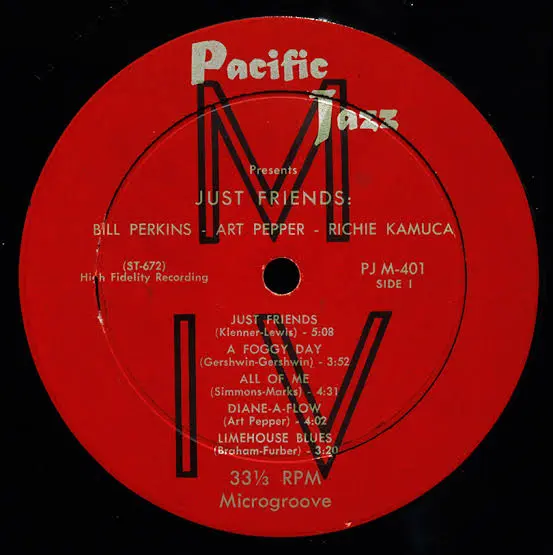
Essential Pacific Jazz Recordings
The following albums represent some of the label’s most significant artistic achievements and provide an excellent introduction to its remarkable diversity.
Chet Baker – Chet Baker Sings (1954)
The defining vocal jazz album of the West Coast movement. Baker’s understated singing and lyrical trumpet established a new model of emotional expression built on intimacy rather than dramatic display.
The Original Gerry Mulligan Quartet (1952)
One of the most influential small-group recordings in jazz history. Mulligan’s pianoless quartet redefined ensemble interaction through counterpoint and collective harmony.
Bud Shank & Laurindo Almeida – Brazilliance (1953)
Years before bossa nova became an international phenomenon, this pioneering collaboration demonstrated the remarkable compatibility between Brazilian rhythm and modern jazz improvisation.
Shorty Rogers – Cool and Crazy (1953)
A landmark in modern arranging, balancing sophisticated ensemble writing with relaxed improvisational freedom.
Jimmy Giuffre – The Jimmy Giuffre 3 (1957)
One of the earliest and most important examples of chamber jazz, anticipating later developments in free improvisation and European jazz.
Bud Shank – Holiday in Brazil (1959)
A beautiful example of the label’s growing international perspective, combining lyrical improvisation with authentic Brazilian musical influences.
Five Lesser-Known Facts About Pacific Jazz Records
1. The label helped introduce Brazilian music to American jazz audiences.
Richard Bock encouraged collaborations between American jazz musicians and Brazilian artists years before the international bossa nova boom, particularly through the pioneering work of Bud Shank and Laurindo Almeida.
2. Pacific Jazz documented much more than Cool Jazz.
Although often associated with the Cool Jazz movement, the label’s catalog includes chamber jazz, Latin jazz, Brazilian projects, experimental recordings and sophisticated orchestral works that extend well beyond the traditional West Coast stereotype.
3. Richard Bock believed producers should serve musicians.
Unlike some record executives who tightly controlled recording sessions, Bock generally encouraged artists to shape their own musical direction, fostering an atmosphere of trust and experimentation.
4. The label became increasingly international.
The transition to World Pacific Records reflected a genuine artistic expansion rather than a simple rebranding, embracing global musical traditions at a time when few American jazz labels pursued such an ambitious vision.
5. Pacific Jazz helped redefine small-group interaction.
Through artists such as Gerry Mulligan and Jimmy Giuffre, the label documented new approaches to counterpoint, ensemble balance and collective improvisation that continue to influence contemporary chamber jazz.
Frequently Asked Questions
What was Pacific Jazz Records?
Pacific Jazz Records was an independent American jazz label founded by Richard Bock in Los Angeles in 1952. It became the leading record company associated with the West Coast Jazz movement and later evolved into World Pacific Records.
Which artists recorded for Pacific Jazz?
The label’s most important artists included Chet Baker, Gerry Mulligan, Bud Shank, Shorty Rogers, Jimmy Giuffre, Bob Brookmeyer, Shelly Manne and numerous other musicians associated with the California jazz scene.
Was Pacific Jazz the same as Contemporary Records?
No.
Although both labels documented West Coast Jazz, Contemporary Records became especially famous for its exceptional recording quality under engineer Roy DuNann, while Pacific Jazz was distinguished by Richard Bock’s emphasis on artistic diversity and the development of the California jazz community.
Why is Pacific Jazz important?
The label preserved many of the defining recordings of West Coast Jazz while encouraging experimentation, international collaboration and innovative approaches to small-group performance that continue to influence jazz today.
Are original Pacific Jazz LPs collectible?
Yes.
Original 1950s Pacific Jazz pressings—particularly albums by Chet Baker, Gerry Mulligan, Bud Shank and Jimmy Giuffre—are highly sought after by collectors for both their historical significance and their musical quality.
JazzLatitude Rating
| Category | Rating |
|---|---|
| Historical Importance | ★★★★★ |
| Artistic Innovation | ★★★★★ |
| West Coast Jazz Legacy | ★★★★★ |
| Recording Catalog | ★★★★★ |
| Cultural Influence | ★★★★★ |
| Collector Appeal | ★★★★★ |
| Educational Value | ★★★★★ |
| Accessibility for New Listeners | ★★★★★ |
| JazzLatitude Essential | ★★★★★ |
Final Thoughts
Pacific Jazz Records occupies a unique place in the history of modern jazz because it documented a movement that refused to be defined by geography alone.
While the label became synonymous with the California sound, its true contribution was far broader. It nurtured musicians who challenged conventional ideas about harmony, ensemble interaction and improvisation, demonstrating that jazz could evolve through subtlety as effectively as through intensity.
Richard Bock’s greatest achievement was recognizing that innovation often begins at the margins. By giving artists the freedom to experiment, he helped preserve some of the most original voices of the postwar era, from the lyrical introspection of Chet Baker to the contrapuntal brilliance of Gerry Mulligan and the adventurous chamber music of Jimmy Giuffre.
The label also anticipated a more global understanding of jazz. Its early collaborations with Brazilian musicians, its openness to diverse cultural influences and its eventual transformation into World Pacific Records reflected a vision that extended well beyond the American West Coast.
More than seventy years after its founding, Pacific Jazz remains far more than a historical curiosity.
It is a reminder that some of jazz’s most important revolutions happened quietly—in intimate studios, thoughtful arrangements and conversations between musicians who believed that listening closely could be every bit as revolutionary as playing louder.
For anyone seeking to understand the full story of modern jazz, the Pacific Jazz catalog is not simply recommended.
It is essential.