
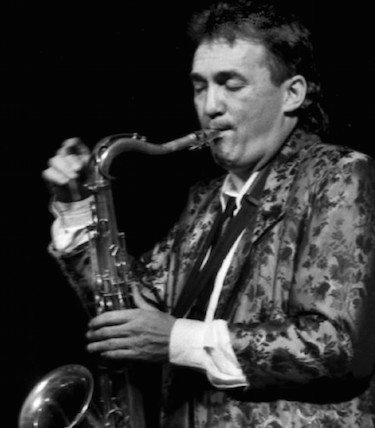
From Warsaw and Łódź to the European Jazz Vanguard
Long before Michał Urbaniak became associated with electric violin, New York fusion or a later appearance on a Miles Davis recording, his musical identity had been shaped by one of the most fertile jazz cultures in postwar Europe. Poland offered a complicated environment for jazz. The music carried associations with American modernity and cultural freedom, yet Polish musicians did not remain passive consumers of an imported language. By the 1950s and 1960s, a distinctive scene had emerged around festivals, clubs, radio, film and a generation of musicians determined to participate in modern jazz on their own terms. Krzysztof Komeda, Andrzej Trzaskowski, Zbigniew Namysłowski, Tomasz Stańko and others helped create a culture in which bebop, cool jazz, modal exploration and the avant-garde could coexist with European compositional ideas. Urbaniak came of age inside that environment, but his eventual path would be unusually restless. He moved between violin and saxophone, acoustic and electric instruments, jazz tradition and electronic experimentation. By the early 1970s, before leaving Poland permanently, he had already developed the essential characteristics of a musical language that would follow him across the Atlantic.
Born in Warsaw on January 22, 1943, Urbaniak grew up primarily in Łódź and began with the violin. His early training was classical, giving him the technical foundation expected of a young musician studying an instrument whose European concert tradition stretched back centuries. Yet the violin would eventually become something very different in his hands. Urbaniak was less interested in preserving its inherited prestige than in discovering how it could operate inside contemporary improvisation.
Jazz opened that possibility.
The attraction was strong enough that he also turned toward saxophone, particularly tenor and later soprano. That decision is central to understanding his development. Urbaniak did not approach jazz violin merely by transferring classical violin technique into a jazz setting. He spent formative years thinking like a horn player.
The implications would remain audible throughout his career.
Saxophone encourages a different relationship with line, attack and phrasing from classical violin. Breath naturally organizes musical sentences. Notes can be pushed, bent and articulated with a directness closely associated with the human voice. Urbaniak absorbed those possibilities and eventually carried some of them back into his violin playing.
His later electric violin sound would therefore emerge from more than amplification.
It grew from a musician who had learned to imagine melody through multiple instrumental identities.
Inside the Polish Jazz Renaissance
Urbaniak entered professional jazz while the Polish scene was expanding rapidly.
During the years after the political thaw of 1956, jazz had become increasingly visible in Polish cultural life. The Sopot festivals and, subsequently, Warsaw’s Jazz Jamboree helped create spaces where Polish musicians could encounter international artists and where local developments could be heard as part of a larger contemporary movement.
This environment mattered enormously.
Polish jazz musicians were separated geographically and politically from the American centers of the music, but they were not artistically sealed off. Records circulated. Radio mattered. Visiting musicians mattered. Festivals mattered. Musicians learned from American jazz while simultaneously developing networks among themselves.
Urbaniak became part of this generation.
His early professional work connected him with some of its most important figures. He played with pianist and composer Andrzej Trzaskowski, whose groups were central to the development of Polish modern jazz. Urbaniak also encountered the musical world surrounding Krzysztof Komeda, whose ability to connect jazz improvisation with European composition and film music offered another model for artistic independence.
These relationships were educational in a way no conservatory curriculum could reproduce.
Jazz was being learned through proximity.
A younger musician could hear how an experienced bandleader organized a group, how a composition changed during performance, how improvisation interacted with written material and how Polish musicians negotiated American influences without simply reproducing them.
Urbaniak absorbed these lessons while continuing to search for an instrumental identity of his own.
Saxophone Before Electric Violin
For listeners who discovered Urbaniak through his fusion recordings, it can be surprising how important the saxophone was to his early career.
During the 1960s he became recognized primarily as a saxophonist in the Polish jazz world. The instrument placed him directly inside the dominant language of modern jazz, where figures such as Charlie Parker, Sonny Rollins and John Coltrane had transformed expectations of improvisation.
But Urbaniak did not abandon the violin.
Instead, the two instruments gradually began informing one another.
This dual identity separated him from musicians who approached jazz violin as a specialized tradition. Stéphane Grappelli had already demonstrated the violin’s extraordinary possibilities in swing, and later figures would expand its modern vocabulary, but Urbaniak’s path was less about joining an established violin lineage than about bringing the instrument into the rapidly changing sound world of the late 1960s and early 1970s.
Jazz itself was becoming electric.
Miles Davis was moving toward amplified ensembles. Rock had changed expectations of volume and stage presence. Electric keyboards were becoming common. Effects processing and studio technology were expanding the definition of instrumental sound.
The violin could participate in that transformation.
For Urbaniak, amplification was not simply a way of making the instrument louder.
It offered the possibility of changing what the violin was allowed to be.
Sweden and a Wider European Perspective
Like several Polish jazz musicians of his generation, Urbaniak spent significant periods working outside Poland. Scandinavia became particularly important.
Sweden had a strong jazz culture and offered professional opportunities that were difficult to sustain elsewhere. Urbaniak’s years there expanded his experience as both performer and bandleader and placed him in closer contact with a broader European jazz network.
This period also reinforced a reality that would define much of his career: musical identity did not need to correspond neatly to national borders.
He was Polish.
He worked across Scandinavia and Western Europe.
His principal musical language came from jazz.
His training was partly classical.
And his developing ideas increasingly involved electric instruments associated with fusion, funk and rock.
Instead of resolving these influences into a single category, Urbaniak learned to live inside their intersections.
That ability would later make New York a natural destination.
But Europe was where the language was first assembled.
Urszula Dudziak and a Shared Experiment
One of the most important musical relationships in Urbaniak’s career developed with vocalist Urszula Dudziak.
Dudziak was not a conventional jazz singer. Her extraordinary vocal range and growing interest in electronics made her an ideal partner for Urbaniak’s increasingly experimental ensembles. Rather than functioning simply as the singer in a band led by an instrumentalist, she became another source of sound.
Scat singing could detach the voice from literal language.
Electronic processing could detach it further.
A vocal line might behave like a horn, an electronic texture or an abstract melodic instrument.
This approach complemented Urbaniak’s own transformation of the violin.
Both musicians were questioning the conventional identity of their instruments.
A violin did not have to sound like a violin in the classical sense.
A voice did not have to deliver lyrics.
Electronic technology could expand acoustic identity rather than merely decorate it.
Their partnership would become crucial to the groups Urbaniak led around the turn of the 1970s and would remain central during the transition from Europe to the United States.
The Group Takes Shape
By the end of the 1960s, Urbaniak had begun assembling the musicians who would help define his first mature period as a bandleader. Pianists and keyboardists including Adam Makowicz and Wojciech Karolak became important collaborators, while bassist Paweł Jarzębski and drummer Czesław Bartkowski contributed to the rhythmic foundation of different versions of his ensemble.
Dudziak’s voice added another dimension.
The group appeared repeatedly at Jazz Jamboree between 1969 and 1972 and performed at festivals elsewhere in Europe, including Norway and Germany.
These engagements mattered because Urbaniak’s music was changing at the same time that the wider jazz landscape was changing.
The traditional acoustic hierarchy of saxophone, piano, bass and drums was no longer sufficient for everything he wanted to explore.
Electric piano entered the sound.
Amplified violin became increasingly central.
Dudziak experimented with vocal electronics.
Rhythmic ideas became more pronounced.
The group could move from extended improvisation toward grooves that anticipated the fusion language Urbaniak would develop more fully after 1973.
Importantly, this was happening before his move to New York.
American success did not create Urbaniak’s fusion identity.
It gave that identity another environment in which to develop.
Montreux, 1971
A decisive international recognition came at the Montreux Jazz Festival in 1971.
Urbaniak was recognized there as best soloist and received a scholarship to the Berklee School of Music in Boston.
The award is important, but what followed is even more revealing.
He did not turn the scholarship into a conventional period of American academic study.
His career was already moving through performance, composition and bandleading. The recognition from Montreux strengthened his international position, but Urbaniak’s musical education remained fundamentally connected to working ensembles and the European festival circuit.
That same year he participated in the New Violin Summit associated with the Berliner Jazztage.
The event placed him in an international context with other musicians exploring the violin outside its traditional jazz boundaries, including Jean-Luc Ponty and Don “Sugarcane” Harris.
The comparison with Ponty would follow Urbaniak for years.
Both were European violinists who became prominent during the expansion of jazz-rock and fusion. Both embraced amplification and technology. Both eventually developed substantial international careers.
But their musical personalities were distinct.
Ponty’s approach often emphasized a polished melodic clarity and a rapidly evolving electronic vocabulary. Urbaniak’s playing carried more of the roughness of horn phrasing and increasingly incorporated rhythmic ideas connected to Polish music, funk and later urban American styles.
The important point is not to determine which violinist was more innovative.
It is that the early 1970s offered enough space for multiple definitions of the electric jazz violin to emerge simultaneously.
Urbaniak was creating one of them.
Paratyphus B
The transformation becomes particularly clear on Paratyphus B, recorded during Urbaniak’s European period and released by the West German Spiegelei label in 1973.
The album is an essential document because it undermines any simplified narrative in which Urbaniak moved to America and then discovered fusion.
The fusion was already happening.
The recording features Urbaniak on electric violin, saxophones and flute, with Dudziak contributing vocals and percussion, Adam Makowicz on electric piano, Paweł Jarzębski on bass, Czesław Bartkowski on drums and additional percussion from Laca Kovacev.
The instrumentation alone indicates how far the group had moved from a conventional acoustic jazz ensemble.
But the deeper change lies in the way the instruments interact.
The title piece is compact, while “Valium” and “Sound Pieces” stretch across much longer durations. The band can establish a heavy rhythmic figure and then loosen the structure into freer passages. Electric piano provides both harmonic support and texture. Dudziak’s voice operates beyond the conventional singer’s role. Urbaniak moves between instruments, refusing to let the violin become the group’s only defining color.
The album does not sound like a polished formula waiting for commercial export.
It sounds exploratory.
That is part of its importance.
Urbaniak and his musicians were discovering how electric sound, improvisation and groove could coexist without requiring them to abandon the experimental instincts of European modern jazz.
Polish Sources Inside Fusion
Another characteristic was becoming increasingly important: Urbaniak did not see Polish musical material as incompatible with contemporary electric jazz.
This could easily have become superficial.
Adding a folk melody to a jazz-rock rhythm section does not automatically create a meaningful synthesis. Urbaniak’s stronger work approached the relationship structurally. Melodic contours, rhythmic patterns and the particular character of Polish folk sources could become material for improvisation rather than decorative references to nationality.
This placed him within a broader development in European jazz.
By the late 1960s and early 1970s, musicians across the continent were increasingly asking whether modern jazz had to remain dependent on an American repertoire in order to remain jazz. Scandinavian musicians drew from regional folk traditions. Musicians elsewhere explored local rhythmic, melodic and compositional histories.
Polish jazz had its own answers.
Komeda had already demonstrated that a Polish composer could develop an unmistakably personal modern-jazz language without abandoning the music’s American foundations. Urbaniak approached the question differently.
His route was increasingly electric and rhythmic.
The violin became one of the places where those identities could meet.
Super Constellation
By 1973, Urbaniak’s ensemble had reached another important stage with Super Constellation.
The album belongs to the threshold between his European and American careers.
The group was becoming more concise and increasingly comfortable with the emerging fusion vocabulary, yet the music retained characteristics developed during the preceding years: electric violin, flexible vocal textures, strong rhythmic foundations and a willingness to place Polish-derived material inside contemporary jazz.
The title itself reflected the name Urbaniak was using for his ensemble, Constellation.
A related live recording, Constellation in Concert, documented the band before his departure from Poland.
These recordings matter because they preserve Urbaniak immediately before the narrative changes geography.
The temptation is to treat everything before New York as preparation.
It was more than that.
By 1973 he was already an established European jazz musician with festival recognition, an identifiable electric sound and a working ensemble capable of recording internationally.
New York would transform the scale of his career.
It would not invent him.
September 1973
Urbaniak and Urszula Dudziak left Poland for the United States in September 1973.
The move represented both ambition and risk.
New York was filled with extraordinary musicians, and fusion itself had become a crowded field. Miles Davis had already changed the electric-jazz landscape. Weather Report was developing its own language. Mahavishnu Orchestra had demonstrated how aggressively jazz improvisation, rock volume and compositional complexity could be combined. Herbie Hancock was moving toward the funk-centered world of Head Hunters.
A Polish violinist arriving with his own ensemble could not simply announce that he played fusion and expect attention.
Urbaniak needed something recognizable as his own.
Fortunately, he had brought it with him.
He had the violin.
He had the saxophone experience behind the violin.
He had Dudziak’s extraordinary electronic vocal language.
He had musicians capable of moving between jazz improvisation and increasingly forceful grooves.
He had Polish melodic and rhythmic material.
And he had years of European performances during which these elements had already been tested.
Producer and talent scout John Hammond would become crucial to what happened next. His support helped Urbaniak secure a contract with Columbia Records, placing the Polish musician inside one of the most powerful recording companies in the American industry.
The label would take material already recorded in Europe as Super Constellation and introduce it to the American market under a title that captured the central idea immediately:
Fusion.
The name was appropriate.
But the fusion had begun long before Columbia put the word on the cover.
It had begun in the distance between classical violin and jazz saxophone, between Warsaw and Scandinavia, between Polish melodic memory and American improvisation, between the acoustic instrument Urbaniak had learned as a child and the electric one he was transforming as an adult.
New York would give that language a much larger stage.
Urbaniak arrived there not to discover who he was, but to find out how far the music he had already created could travel.
Buy Amazon

Electric Violin, Fusion and New York
The move to New York in 1973 did not transform Michał Urbaniak into a fusion musician overnight. It placed an already developed musical language inside the city where many of jazz’s most dramatic transformations were unfolding in public. Urbaniak arrived at a moment when the boundaries between jazz, funk, rock and electronic music had become increasingly unstable. Miles Davis had already demonstrated that electric instruments could fundamentally reorganize an improvising ensemble rather than merely modernize its surface. Herbie Hancock was moving decisively toward funk. Weather Report was building music around texture, rhythm and collective interaction, while the Mahavishnu Orchestra had pushed jazz-rock toward extraordinary levels of velocity and amplification. New York was crowded with musicians responding to these developments, which meant that simply owning an electric violin or adding a synthesizer to a rhythm section was no longer enough to establish an identity. Urbaniak’s advantage was that he brought with him a combination that did not quite resemble anyone else’s: the phrasing instincts of a saxophonist, the technique of a classically trained violinist, Polish melodic and rhythmic material, the electronic vocal imagination of Urszula Dudziak and a conception of fusion that had already been tested in European clubs, festivals and studios.
John Hammond’s interest gave that combination an unusually powerful introduction to the American recording industry. Hammond had spent decades identifying musicians whose individuality could survive outside familiar categories, and his support helped Urbaniak secure a contract with Columbia Records. Yet even this important connection should not be turned into a discovery myth. Urbaniak was not an unknown amateur suddenly rescued by an American producer. He had already built a substantial European career, received international recognition at Montreux and recorded music that demonstrated a mature approach to electric jazz. What Columbia provided was access: distribution, visibility and entry into a market where the term “fusion” had become both an artistic category and a commercial opportunity. The first major American chapter of Urbaniak’s career therefore began not with an abrupt stylistic reinvention but with the repackaging and continuation of ideas he had brought from Europe.
When Super Constellation Became Fusion
The transformation of Super Constellation into Fusion is one of the clearest illustrations of this continuity. Material associated with Urbaniak’s European ensemble was introduced to American listeners by Columbia under a title that immediately situated the music within the rapidly expanding fusion market. The change was commercially understandable, but it also had an unintended historical consequence. Heard without knowledge of the preceding European recordings, Fusion can seem like the beginning of Urbaniak’s electric period. In reality, it was an international doorway into a language that had been developing for years.
What distinguished the music was not simply the presence of electric instruments. Urbaniak’s violin occupied a position that was still relatively unusual in jazz-rock. The electric guitar had become a natural symbol of fusion, while Fender Rhodes, synthesizers and amplified bass were redefining the rhythm section. The violin carried different associations. Its history suggested European classical music, folk traditions and, within jazz, a lineage extending through musicians such as Stéphane Grappelli. Urbaniak was interested in all of that history without allowing any single tradition to determine his sound.
Amplification allowed him to alter the instrument’s behavior.
His attack could become sharper. Sustained notes could compete with keyboards and amplified rhythm sections. Effects could destabilize the familiar acoustic character of the strings. Most importantly, the violin could phrase with something closer to the urgency Urbaniak had developed as a saxophonist. He did not need to make the instrument imitate a tenor saxophone, but years spent playing reeds had changed his understanding of melodic movement. Lines could surge forward rather than simply float above the rhythm. Repetition could generate pressure. Short rhythmic figures could matter as much as long lyrical phrases.
The result was an electric violin language that belonged naturally inside fusion without losing the instrument’s distinctive physical character.
Urszula Dudziak as an Instrumental Voice
The other unmistakable element was Urszula Dudziak.
It is difficult to understand Urbaniak’s 1970s music if Dudziak is treated merely as a featured vocalist. Her role was far more structural. Using extended vocal technique, scat, unusual registers and electronic processing, she could occupy musical territory normally assigned to horns or synthesizers. Words were often unnecessary. The voice became sound before it became narrative.
This made her an ideal counterpart to Urbaniak.
Both were taking instruments with long-established cultural identities and making them behave differently. Urbaniak electrified the violin and filtered jazz phrasing through it. Dudziak used electronics to multiply and reshape the human voice. Their sounds could interact without requiring the familiar relationship between singer and accompanist.
That distinction gave Urbaniak’s Fusion ensemble much of its personality.
In an era filled with instrumental virtuosity, Dudziak introduced something less predictable. Her voice could be playful, abstract, percussive or startlingly agile. It prevented the music from settling too comfortably into the standard fusion vocabulary of electric keyboard solos, distorted guitar and complex meters.
The band had another color available to it.
Sometimes that color became the center of the music.
Atma: The Language Becomes Clearer
The next stage was Atma, recorded in New York in June 1974. The sessions brought together Urbaniak and Dudziak with musicians closely associated with his European development — Wojciech Karolak, Paweł Jarzębski and Czesław Bartkowski — while percussionist Ray Mantilla expanded the rhythmic field.
This combination is significant.
Urbaniak had moved to America, but he did not immediately discard the musical relationships through which his style had been created. Instead, New York became a place where the existing ensemble language could encounter new conditions.
Atma demonstrates how misleading it would be to describe Urbaniak’s trajectory simply as a journey from Polish jazz toward American fusion. The movement was more reciprocal. He brought European musicians and ideas into an American recording environment while absorbing rhythms, technologies and production possibilities encountered in New York.
The music could be rhythmically direct without becoming simplistic.
Grooves mattered increasingly, but they remained platforms for improvisation. Electric keyboards could thicken the harmony or create atmosphere. Percussion expanded the rhythmic surface. Dudziak’s voice could move through the ensemble as another instrumental line. Above and within this, Urbaniak’s violin remained immediately identifiable.
There was also increasing confidence in the relationship between Polish sources and contemporary electric music.
This aspect of Urbaniak’s work deserves attention because “folk influence” can become an empty description. In his strongest music, Polish material was not inserted as a cultural label. It affected melodic shape and rhythmic behavior. Traditional sources could be transformed through amplification and improvisation until their origins became part of the music’s internal logic rather than an exotic feature added for foreign listeners.
The title Atma itself suggested the broadening conceptual world around the group. Urbaniak was not interested in defending a narrow definition of jazz. The music could absorb ideas as quickly as the musicians encountered them.
That appetite for absorption would become one of the most consistent features of his career.
The Violin in an Age of Fusion
Urbaniak’s growing American visibility inevitably placed him beside other electric violinists, particularly Jean-Luc Ponty.
The comparison made sense superficially. Both were European-born musicians with formidable technique who found major audiences during the rise of jazz fusion. Both embraced amplification, electronic effects and increasingly sophisticated studio production.
Yet listening to them only through that similarity obscures what Urbaniak brought to the instrument.
Ponty’s mature fusion sound often emphasized precision, melodic architecture and a highly controlled relationship with electronics. Urbaniak could be rougher, more rhythmically aggressive and closer to the inflections of saxophone playing. His violin sometimes sounded less like a string instrument seeking legitimacy inside a jazz-rock ensemble than a completely integrated improvising voice unconcerned with its historical category.
That attitude also encouraged technical experimentation.
Urbaniak became associated with a custom five-string electric violin, extending the instrument’s lower range and giving him additional flexibility inside amplified ensembles. He also explored electronic wind instruments, including the lyricon, alongside saxophones and keyboards.
The multiplicity of instruments was not simply a display of versatility.
It reflected a deeper refusal to equate musical identity with one timbre.
Urbaniak’s identity was the way he organized musical information.
The instrument was a vehicle.
That philosophy made adaptation easier as the sound of jazz changed around him.
Fusion III and the Consolidation of a Band Sound
By the middle of the decade, the series of Fusion recordings had made Urbaniak one of the most visible Polish jazz musicians working internationally. Fusion III continued the development of an ensemble sound increasingly comfortable with the relationship between written themes, electric textures, funk-derived rhythms and improvisation.
The title might suggest a standardized sequence, but the music was not simply repeating a successful formula.
Urbaniak was gradually moving deeper into the rhythmic environment of New York.
This mattered because American funk was not just another style to place beside jazz-rock. It proposed a different understanding of musical time. Rather than treating harmony as the primary engine of development, funk could build entire performances from repeated rhythmic relationships. Bass, drums, guitar and keyboards could create interlocking patterns whose small variations mattered enormously.
For an improviser trained in modern jazz, this required another kind of discipline.
Playing more notes did not necessarily create more intensity.
Sometimes the strongest decision was to remain inside the groove.
Urbaniak increasingly understood this.
His violin could attack rhythmically, punctuate repeated figures or move above the ensemble in longer lines. Dudziak’s voice could become percussive. Keyboards could function as part of the rhythmic architecture rather than simply supplying chords.
Fusion was becoming less a meeting between jazz and rock than an open system through which multiple rhythmic languages could interact.
Funk Factory
The clearest expression of this shift appeared in Funk Factory.
Recorded during Urbaniak’s New York period, the project pushed much further toward funk while retaining the unusual instrumental colors that distinguished his earlier work. It also placed him in closer contact with American musicians, including bassist Anthony Jackson, drummer Steve Gadd and guitarist John Abercrombie.
The significance of Funk Factory becomes clearer when separated from conventional jazz expectations.
This was not Urbaniak temporarily abandoning “serious” jazz for commercial dance music.
Rhythm had always been part of his developing language. Funk simply brought it into the foreground.
The project also produced one of the most enduring recordings associated with his American career, “Rien Ne Va Plus.” Decades later, the track would acquire another life through hip-hop sampling and DJ culture.
That later rediscovery was not accidental.
The music contained precisely the characteristics that sample-based producers often value: strong rhythmic identity, distinctive instrumental colors and sections capable of surviving when removed from their original context.
This would eventually help connect Urbaniak with a musical generation very different from the one that had encountered him through European jazz festivals.
But in the 1970s, the important development was already visible.
He was listening to the city around him.
New York Changes the Context
Moving to New York changed more than Urbaniak’s recording opportunities.
It changed his daily musical environment.
The city compressed styles and communities into close proximity. Jazz musicians encountered Latin music, funk, soul and the emerging sounds of the Bronx. Studio players moved between commercial sessions and experimental projects. Musicians who might appear on a demanding jazz record one day could work on an R&B session the next.
For Urbaniak, this environment reinforced instincts already present in Europe.
Purity was not useful.
Movement was.
His earlier career had already crossed boundaries between classical violin, jazz saxophone, Polish music and experimental electronics. New York added another set of rhythmic and cultural possibilities.
The change can be heard in the increasing physicality of his music.
Groove becomes less like an element added to improvisation and more like the ground from which improvisation grows.
This evolution also explains why Urbaniak would later respond to hip-hop with unusual enthusiasm for a musician of his generation.
He had already learned that a new rhythmic language did not threaten jazz identity.
It could renew it.
Beyond the Fusion Label
By the late 1970s, however, the word “fusion” itself had become increasingly problematic.
What had begun as a broad field of experimentation was turning into a recognizable market category. Certain sounds became predictable: synthesizer textures, highly polished production, virtuosic solos and rhythm sections designed around electric bass and drums.
Urbaniak had participated in the emergence of that language, but his curiosity was too broad for the label to remain sufficient.
He continued recording prolifically and moving between settings. Some projects leaned toward funk. Others returned toward jazz improvisation. Electronic instruments remained important, but so did acoustic playing. He worked as leader and collaborator, gradually becoming part of the larger network of New York musicians rather than simply the Polish violinist who had arrived in 1973.
This is an important distinction.
International musicians are often described through the story of their arrival: the European, Latin American, African or Asian artist who “comes to New York” and enters jazz history.
Urbaniak’s career complicates that narrative.
He did not merely enter an existing scene.
He participated in it for decades.
The longer he remained, the less useful the distinction between European and American periods became.
New York became part of his musical identity without erasing Poland.
A Network of Collaborations
As Urbaniak became established in the United States, his circle of collaborators widened considerably. His violin could appear in jazz contexts, studio sessions and projects that did not fit comfortably into one genre.
This adaptability was one reason he remained active while the commercial prominence of 1970s fusion declined.
A musician whose identity depended entirely on a particular production style could become stranded when fashion changed.
Urbaniak’s identity was more portable.
He could improvise.
He could compose.
He understood acoustic jazz.
He understood amplified ensembles.
He could play violin or reeds.
He could work with sophisticated harmonic material or rhythmically repetitive music.
That flexibility would become increasingly important during the 1980s, when jazz’s relationship with popular music changed again.
The synthesizer became ubiquitous.
Drum machines entered recording studios.
Digital production altered the character of albums.
Hip-hop began reorganizing the musical culture of New York from another direction entirely.
Urbaniak did not respond by retreating into the sound of his earlier successes.
He kept listening.
The Polish Thread Remains
Through all these changes, Poland remained present.
This continuity was not always expressed through explicit quotations or traditional melodies. Sometimes it was biographical rather than sonic. Urbaniak remained connected to Polish musicians and audiences even as New York became his principal base.
His career therefore challenges the assumption that migration requires a musician to choose between identities.
The American period did not replace the Polish one.
It accumulated on top of it.
This is one reason the word “fusion” describes Urbaniak more accurately when understood as a process rather than a genre.
Fusion was not simply electric jazz made during the 1970s.
For Urbaniak, it was a way of working.
Classical technique could coexist with saxophone phrasing.
Polish melodies could enter funk.
A human voice could become an electronic instrument.
Jazz improvisation could operate inside repeated grooves.
European musicians could enter New York without surrendering the musical histories they brought with them.
Technology could alter tradition without automatically destroying it.
This conception was broader than the market category attached to his Columbia albums.
And it would outlive that category.
Toward Miles Davis
By the time Urbaniak eventually entered a recording connected with Miles Davis, he no longer needed the encounter to validate his career.
This is essential to understanding what happened later.
Miles Davis occupies such an enormous place in jazz history that collaboration with him can easily overwhelm the biography of another musician. A familiar narrative emerges: Miles notices someone, and that recognition becomes proof that the musician mattered.
Urbaniak’s chronology tells a different story.
Before the connection with Davis, he had already spent decades developing professionally. He had participated in the Polish modern-jazz movement, worked across Europe, been recognized at Montreux, developed a distinctive electric violin language, recorded major albums under his own name, signed with Columbia, explored funk in New York and established himself within an international network of musicians.
Miles would become an important chapter.
He would not be the beginning.
The distinction becomes especially significant because the album involved was Tutu, a recording that itself represented another moment of transition. By 1986, Miles was operating inside a musical world transformed by synthesizers, programmed rhythms, funk and contemporary production — precisely the kind of technological and stylistic instability Urbaniak had spent much of his career embracing.
Their paths therefore crossed not because Urbaniak had finally reached the summit of jazz approval, but because both musicians had spent years refusing to treat jazz as a closed historical language.
That encounter belongs to the next phase of the story.
So does Urbanator.
And so does Urbaniak’s remarkable decision, as he moved into middle age, to engage with hip-hop rather than dismiss it as music belonging to somebody else’s generation.
The violin that had traveled from classical study in Poland through European modern jazz and 1970s New York fusion was about to enter another rhythmic world.
Miles Davis, Urbanator and a Career Without Borders
By the middle of the 1980s, Michał Urbaniak had little left to prove about his ability to cross musical borders. He had spent more than two decades moving through Polish modern jazz, Scandinavian clubs, European festivals, electric fusion and the dense professional networks of New York. He had transformed the violin through the phrasing instincts of a saxophonist, incorporated electronics without abandoning improvisation and absorbed funk at a time when some jazz musicians still regarded it with suspicion. Yet the encounter that would become one of the most frequently repeated episodes in his biography came relatively late. In 1986, Urbaniak played electric violin on Miles Davis’s Tutu. The collaboration mattered deeply to him, not least because Davis had been one of his musical heroes since adolescence. But its historical meaning becomes clearer when it is placed in proportion. Urbaniak did not reach Tutu as an unknown European musician waiting for recognition. He arrived after an established career on two continents, and the meeting brought together two musicians who had spent years treating stylistic boundaries as temporary rather than permanent.
The circumstances were characteristically informal. Urbaniak later recalled recording violin parts in a session involving musicians from the contemporary New York scene before meeting Davis himself. When Miles arrived and heard what had been recorded, the encounter led not only to Urbaniak’s appearance on Tutu but also to an invitation to perform with Davis at the Beacon Theatre in New York. Urbaniak subsequently remembered arriving without his violin, assuming he was simply attending the concert, only for Davis to ask where the instrument was and send him home to retrieve it. He ended up appearing with the band during three performances. For a musician who had admired Davis since his youth in Poland, the experience carried enormous emotional weight. It is easy to understand why Urbaniak told the story repeatedly for the rest of his life. But the episode becomes more interesting when removed from the mythology of artistic approval. Miles was not granting Urbaniak permission to belong to jazz. He was recognizing a musician who already belonged there.
Why Tutu Made Sense
The musical environment surrounding Tutu also makes the collaboration less surprising than it might initially appear.
Miles Davis in 1986 was again confronting a changing musical landscape. The album was dominated by the compositional, instrumental and production presence of Marcus Miller and reflected a world of synthesizers, programmed rhythms, electric bass and contemporary studio technology. This was far removed from the acoustic quintets with which Davis had transformed jazz two decades earlier.
For Urbaniak, however, those conditions were familiar.
He had spent the 1970s exploring electric instruments, effects, funk-derived rhythms and the changing relationship between improvisation and studio production. He had worked with musicians including Miller and other players comfortable moving between jazz, funk and commercial recording environments.
The violin therefore entered Tutu not as an exotic interruption but as another color within a deliberately modern sound world.
The meeting also reveals something fundamental about Urbaniak’s longevity.
He rarely treated the jazz of his youth as a finished language that later generations were obligated to preserve. New sounds interested him because they presented new problems. Electronic instruments changed articulation. Funk changed the relationship between rhythm and improvisation. Digital recording changed texture. Each transformation required adjustment.
That curiosity would become even more important as New York entered the hip-hop era.
Hearing Something New in the City
By the late 1980s, hip-hop was no longer a neighborhood phenomenon. It was becoming one of the defining cultural languages of New York and, increasingly, the world.
Many musicians from Urbaniak’s generation heard rupture.
He heard continuity.
His route toward hip-hop was not based primarily on marketing calculation. Urbaniak later described driving or walking through Manhattan late at night while listening to radio and encountering combinations of spoken poetry, rhyme, jazz records and contemporary beats. What attracted him was rhythm.
The discovery connected directly with lessons he had absorbed since arriving in America.
In New York, Urbaniak had become increasingly fascinated by musicians whose command of groove did not depend on elaborate notation or harmonic complexity. He came to understand simplicity not as the absence of sophistication but as another form of discipline. A musician could possess enormous technical ability and still fail to make a repeated figure feel convincing.
Hip-hop intensified that realization.
Its relationship with jazz was already embedded in sampling. Producers were taking fragments of older recordings — bass lines, horn phrases, drum breaks, piano chords — and constructing new music from them. The historical archive was becoming raw material.
For Urbaniak, this did not represent disrespect for jazz.
It demonstrated that the music was still alive enough to be used.
Before Urbanator
Around 1989, Urbaniak began developing material that combined jazz musicians with rap.
The timing is important.
Jazz and hip-hop collaborations would become increasingly visible during the early 1990s, but Urbaniak’s interest developed while the relationship was still far from an established market category. He assembled musicians, experimented with rappers and produced demos that he believed represented a natural continuation of his earlier fusion work.
Record companies were less certain.
Urbaniak later described carrying the material through the divisions of Columbia and encountering a revealing problem. The jazz side could hear hip-hop and send him elsewhere. Departments associated with contemporary Black popular music could hear jazz and send him back.
The music fell between institutional categories.
For Urbaniak, that was familiar territory.
His career had repeatedly occupied spaces that marketing departments found easier to separate: violin and saxophone, Europe and America, jazz and folk sources, improvisation and funk, acoustic technique and electronics.
The difficulty was not necessarily the music.
It was deciding what to call it.
Eventually Urbaniak found the name that allowed the project to acquire an identity independent of his conventional discography.
Urbanator.
Jazz with an Attitude
The first Urbanator album appeared in 1994 on Hip Bop Records.
Its personnel demonstrated that Urbaniak was not approaching hip-hop from outside the professional jazz world. His core group included drummer Lenny White, bassist Al McDowell and keyboardist Jon Dryden, while guests included Herbie Hancock, Michael Brecker and Marcus Miller alongside rappers.
The juxtaposition was the point.
Urbaniak did not want jazz musicians to imitate hip-hop superficially, nor did he want rappers added as decorative proof of contemporary relevance. The project attempted to locate the rhythmic territory the traditions could share.
He sometimes described the concept as “jazz with an attitude.”
The phrase captured his refusal to regard hip-hop as an enemy of musicianship.
For Urbaniak, the relationship was historical as well as rhythmic. Jazz had always developed through interaction with the popular culture surrounding it. Swing had been dance music. Bebop had transformed existing song forms. Soul-jazz drew energy from gospel and rhythm and blues. Fusion absorbed rock and funk.
Why should the process suddenly stop when rap appeared?
The question mattered more than any claim that Urbaniak had invented jazz-rap. He did not. By the time Urbanator reached listeners in 1994, musicians and producers on both sides had already created important jazz/hip-hop hybrids.
Urbaniak’s significance lies elsewhere.
He belonged to an older jazz generation and still chose engagement over nostalgia.
From Urbanator to Urbanator II
The project continued with Urbanator II in 1996.
By then, jazz-inflected hip-hop was well established. Groups and producers had demonstrated how effectively samples from jazz recordings could coexist with rap, while jazz musicians themselves were increasingly responding to the new rhythmic language.
Urbaniak’s approach remained characteristically collaborative.
The personnel changed, guests moved through the recordings and the music resisted the idea that Urbanator should become a fixed ensemble with one permanent sound. That flexibility mirrored his earlier Fusion groups.
The project was a platform.
What mattered was interaction.
Urbaniak could bring violin and saxophone into a rhythmic environment shaped by hip-hop without pretending that those instruments automatically belonged at the center. At times the most important musical information came from the groove. Elsewhere the violin became a sharp melodic contrast to the beat.
This willingness to surrender permanent control is one of the threads connecting his apparently different career periods.
The cooperative instincts of improvisation remained present even when the technology changed.
A Philharmonic Orchestra Meets Rap
Urbaniak pushed the idea further in January 1995 when he brought rap into a performance with a philharmonic orchestra.
For him, the event carried personal symbolism.
His earliest musical identity had been classical violin. As a young musician he had once faced the possibility of pursuing an elite classical path before choosing jazz and the dream of New York instead. Decades later, orchestral tradition and contemporary urban rhythm could occupy the same performance rather than representing mutually exclusive futures.
This was not simply crossover for its own sake.
It expressed a belief Urbaniak repeated in different forms throughout his life: musical categories are human conveniences, not natural laws.
That philosophy can sound simplistic until placed beside his career.
He had actually lived it.
The child violinist became a jazz saxophonist.
The saxophonist returned to violin.
The Polish modern-jazz musician became an electric fusion bandleader.
The fusion musician absorbed funk.
The veteran improviser worked with Miles Davis.
Then, rather than preserving the prestige of that association, he turned toward rappers young enough to belong to another generation.
The sequence was remarkably consistent.
Poland Never Disappeared
Despite decades in New York, Urbaniak never severed his relationship with Poland.
After a long absence, he returned to Polish stages and increasingly moved between his American life and the country in which his musical identity had begun. He remained a recognizable figure at festivals and became an important link between different generations of Polish musicians.
His later career also extended far beyond instrumental performance.
He composed music for film and television and received recognition in Poland for soundtrack work. He appeared as an actor, most notably in My Father’s Bike (Mój rower), demonstrating another form of the same curiosity that had driven his musical life.
Yet his most important later contribution may have been educational.
Urbaniak became increasingly interested in creating opportunities for young musicians to play with experienced professionals rather than simply receive formal instruction.
This led to Urbanator Days.
Urbanator Days
Beginning in the 2000s, Urbanator Days brought young musicians into workshops and performances with established players.
The philosophy was deliberately practical.
Urbaniak was skeptical of the idea that jazz could be transmitted entirely through formal teaching. Technique could be studied. Harmony could be explained. Repertoire could be analyzed.
But interaction had to be experienced.
Young musicians needed to play with people who understood rhythm, space, listening and the social behavior of an ensemble.
The idea returned Urbaniak to lessons he had learned decades earlier.
He had developed in Poland by playing with musicians more experienced than himself.
He had learned through Trzaskowski, Komeda’s environment and the Polish jazz community.
He had learned in Scandinavia.
He had learned from his own groups.
And after moving to New York, he had learned again from musicians whose understanding of groove challenged assumptions inherited from European training.
Urbanator Days turned that history into a method.
Not a curriculum.
A situation.
Put musicians together and make them listen.
Recognition Without a Final Category
Urbaniak accumulated substantial recognition over the course of his career. His name appeared repeatedly in DownBeat polls, and in Poland he received the Golden Fryderyk in 2016 for his contribution to Polish music. His later stature also extended beyond the jazz establishment: in 2020 he received a Golden Popkiller from the Polish hip-hop community, a particularly appropriate recognition for a musician who had spent decades insisting that rap and jazz belonged to a connected rhythmic history.
These honors are useful markers.
They are not the reason his career matters.
Urbaniak’s significance comes from the unusual continuity beneath its constant stylistic movement.
He changed sounds without abandoning curiosity.
Many musicians become associated with the period in which their language first receives recognition. Their later careers may remain productive, but history freezes them inside an album, a band or a decade.
Urbaniak resisted that kind of freezing.
The 1960s saxophonist did not disappear when the electric violin emerged.
The fusion musician did not disappear when funk became central.
The musician who played with Miles Davis did not spend the rest of his career retelling that achievement.
Urbanator did not erase the Polish jazz musician.
All of those identities accumulated.
The Meaning of Miles
This is why the Miles Davis story should appear near the middle of Urbaniak’s historical narrative rather than at its summit.
Yes, Tutu mattered.
Yes, Urbaniak’s emotional response to meeting Davis was genuine.
Yes, performing with Miles at the Beacon Theatre was an extraordinary personal moment for someone who had admired him since adolescence.
But Miles Davis does not explain Michał Urbaniak.
If anything, the encounter demonstrates how far Urbaniak had already traveled.
The young musician who dreamed of New York from behind the Iron Curtain had eventually become part of the city’s professional musical world. He could enter a studio containing Marcus Miller and other major figures of contemporary jazz and function not as a visitor but as a colleague.
That is the deeper achievement.
Not conquest.
Not blessing.
Belonging.
The Last Chapter
Urbaniak remained active into his later years, continuing to perform, collaborate and work with younger musicians. He maintained the instinct that had defined his career from the beginning: listen to what is happening now rather than demanding that the present sound like the past.
That attitude also kept him connected with younger Polish musicians whose own work blurred jazz, electronics and hip-hop. The conversation he had begun decades earlier did not need to end with Urbanator.
New generations could continue it differently.
In 2024, Poland awarded Urbaniak the Gold Medal for Merit to Culture — Gloria Artis, another recognition of a career that had come to represent Polish jazz internationally while refusing to remain confined to a purely national identity.
Michał Urbaniak died on December 20, 2025, at the age of eighty-two.
His death closed a career spanning more than six decades, but it also made the shape of that career easier to see.
There was no single definitive Urbaniak.
The violin mattered.
So did the saxophone.
Poland mattered.
So did New York.
Fusion mattered.
So did Atma, Funk Factory, Tutu and Urbanator.
The thread connecting them was not genre.
It was motion.
A Musician Between Worlds
Jazz history often becomes easier to tell when musicians can be placed into categories. Bebop pianist. Free-jazz saxophonist. Fusion guitarist. Big-band arranger.
Michał Urbaniak makes that approach difficult.
That difficulty is precisely what makes him important.
He belonged to the generation that demonstrated how European jazz could develop an identity strong enough to converse with American jazz without becoming either imitation or rejection. He helped establish the electric violin as a convincing voice inside modern fusion. He understood that funk could change improvisation rather than merely accompany it. He embraced electronics while retaining the instincts of an improviser. And when hip-hop transformed the rhythmic culture of New York, he listened closely enough to recognize another possibility rather than another threat.
His career also complicates the conventional geography of jazz.
The story does not move neatly from Poland to America, from periphery to center.
Ideas move in both directions.
Urbaniak brought Polish experience into New York and carried New York experience back into his relationship with Poland. He connected musicians separated by generations, technologies and musical categories.
Even his instrument embodied that movement.
The violin began as the vehicle of his classical education.
He abandoned it for saxophone.
Then he returned to it and forced it to speak differently.
Amplification changed it.
Jazz phrasing changed it.
Funk changed it.
Electronics changed it.
But underneath those transformations remained the physical memory of the instrument he had learned as a child.
That may be the most appropriate image with which to remember Michał Urbaniak.
Not the Polish musician who “conquered” Miles Davis.
Not simply the electric violin virtuoso.
Not the fusion star.
A musician who repeatedly crossed borders and discovered that the most interesting place was rarely on either side.
It was the space between them.