
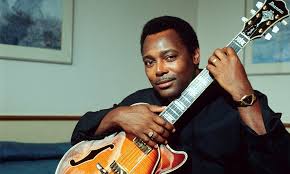
Only a handful of musicians have managed to satisfy two very different audiences at the same time.
One expects artistic innovation.
The other simply wants unforgettable songs.
Most artists eventually choose one path or the other.
George Benson refused to make that choice.
Throughout a career spanning more than six decades, he has demonstrated that technical brilliance and popular appeal do not have to exist in opposition. His recordings have earned the admiration of jazz musicians, topped international pop charts and introduced countless listeners to jazz through music that remained sophisticated without becoming inaccessible.
This rare balance explains why Benson occupies such a unique place in modern music. Guitarists study his flawless technique. Singers admire his effortless phrasing. Producers continue to reference his polished recordings. Audiences, meanwhile, simply enjoy the warmth, elegance and irresistible groove that define nearly everything he performs.
Few musicians have crossed stylistic boundaries so naturally.
Even fewer have done so without sacrificing their artistic identity.
Growing Up in Pittsburgh
George Washington Benson was born on March 22, 1943, in Pittsburgh, Pennsylvania, a city with a rich musical tradition that had already produced important jazz musicians long before his arrival.
Music entered his life remarkably early.
By the age of seven, he was already performing in local venues, singing and accompanying himself on the ukulele. Before reaching his teenage years, he had switched to guitar and was earning money through live performances, displaying an extraordinary level of confidence and musical maturity for someone so young.
Unlike many future jazz stars who first encountered music through formal lessons, Benson learned primarily through experience.
Night after night, he absorbed rhythm, phrasing and audience interaction directly from the stage.
Those early performances gave him something that no conservatory could provide.
An instinctive understanding of communication.
Long before becoming a celebrated improviser, George Benson understood how to connect with listeners.
That gift would remain central throughout his entire career.
Discovering Jazz
During the 1950s, jazz guitar was undergoing a remarkable transformation.
Charlie Christian had already established the instrument as a serious improvisational voice.
Barney Kessel, Tal Farlow and Kenny Burrell were expanding its harmonic possibilities.
Among all of these influences, however, one guitarist would prove especially important for the young George Benson.
Wes Montgomery.
Montgomery’s warm tone, lyrical phrasing and extraordinary octave technique left a profound impression on Benson. Rather than copying his hero, however, Benson absorbed the musical principles behind Montgomery’s playing while gradually developing a voice of his own.
By his late teens, his remarkable talent had attracted the attention of organist Jack McDuff, who invited Benson to join his band.
The experience transformed his career.
Performing nightly with seasoned professionals sharpened his improvisational vocabulary, strengthened his rhythmic confidence and introduced him to audiences throughout the American jazz circuit.
It was the perfect apprenticeship.
JazzLatitude Insight
Although George Benson is frequently compared to Wes Montgomery, the comparison only tells part of the story. Benson adopted Montgomery’s commitment to melody and swing, but he developed a far more fluid bebop vocabulary and eventually created one of the most recognizable guitar sounds in modern music.
From Promising Guitarist to Jazz Star
During the 1960s, George Benson quickly established himself as one of the most exciting young guitarists in American jazz.
Albums such as The New Boss Guitar, It’s Uptown and Cookbook revealed a musician with astonishing technical command, remarkable rhythmic precision and an unmistakable sense of swing.
Critics praised his dazzling improvisations.
Fellow musicians admired his versatility.
Audiences responded to the joy that radiated from every performance.
Unlike many technically gifted players, Benson never allowed virtuosity to overshadow communication.
Every solo remained melodic.
Every phrase carried purpose.
Even at breathtaking speed, his improvisations felt lyrical rather than mechanical.
This balance between complexity and accessibility would later become the defining characteristic of his greatest commercial successes.
By the early 1970s, George Benson had already earned the respect of the jazz world.
The wider world, however, was only beginning to discover him.
How George Benson Redefined the Sound of Modern Jazz
By the beginning of the 1970s, George Benson had already earned a reputation as one of the finest jazz guitarists of his generation. His recordings displayed impeccable technique, dazzling bebop vocabulary and an effortless sense of swing. Among musicians, his reputation was firmly established.
The broader public, however, had not yet discovered the full range of his talent.
That changed when Benson signed with CTI Records, the influential label founded by producer Creed Taylor. CTI was redefining jazz production by combining world-class musicianship with sophisticated arrangements, exceptional sound quality and a contemporary aesthetic. For Benson, it proved to be the ideal environment.
Albums such as Beyond the Blue Horizon, White Rabbit, Body Talk and Bad Benson expanded his audience while preserving the improvisational depth that had already earned him the respect of fellow musicians. The productions were richer, the orchestral arrangements more ambitious and the rhythmic grooves increasingly influenced by soul, funk and R&B.
Rather than moving away from jazz, Benson was expanding its vocabulary.
The Revolution of Breezin’
In 1976, George Benson released the album that would transform both his career and the commercial history of jazz.
Breezin’.
Produced by the legendary Tommy LiPuma, the record became an international phenomenon. It reached No. 1 on the Billboard 200, earned multiple Grammy Awards and became one of the best-selling jazz albums ever recorded.
Its success was remarkable because it appealed to very different audiences simultaneously.
Jazz listeners admired Benson’s elegant improvisations.
Pop audiences embraced the album’s infectious melodies.
Soul and R&B fans connected with its irresistible groove.
The title track became an instrumental classic, while “This Masquerade,” written by Leon Russell, revealed another side of Benson’s artistry.
His voice.
Until then, George Benson had been known primarily as a guitarist.
Now the world discovered that he was also an exceptional singer.
Warm.
Relaxed.
Effortlessly expressive.
The combination proved irresistible.
Singing What He Played
One of George Benson’s most distinctive musical characteristics is his habit of singing in unison with his guitar lines.
Listeners often notice it immediately.
As his fingers move across the fretboard, his voice quietly follows every phrase.
Far from being a stage effect, this habit reflects the way Benson hears music.
The melody exists simultaneously in his imagination and in his hands.
Rather than separating voice from instrument, he treats them as a single expressive language.
Many guitarists have occasionally sung while improvising.
Few have integrated the technique so naturally.
Today, it remains one of the defining signatures of his musical identity.
JazzLatitude Insight
George Benson’s vocalized guitar lines are more than a personal habit—they reveal an important principle of jazz improvisation. Great instrumentalists often think melodically rather than mechanically. By unconsciously singing each phrase, Benson demonstrates that every solo begins as a musical idea, not merely as finger movement across the fretboard.
Crossing Musical Borders
Following the extraordinary success of Breezin’, George Benson faced a challenge that many jazz musicians never encounter.
How do you follow one of the most successful jazz albums in history?
His answer was remarkably consistent.
Continue making great music.
Albums such as In Flight, Weekend in L.A. and Livin’ Inside Your Love confirmed that Breezin’ had not been an isolated success.
Each recording expanded his audience while preserving the elegance and musicianship that defined his earlier work.
The celebrated live album Weekend in L.A. became particularly significant.
Its unforgettable version of “On Broadway” demonstrated Benson’s extraordinary ability to combine jazz improvisation with popular song in a way that felt completely natural.
The performance won a Grammy Award and remains one of the defining live recordings of his career.
Quincy Jones and Give Me the Night
By 1980, George Benson was one of the most recognizable names in contemporary music.
Then came another milestone.
Give Me the Night.
Produced by Quincy Jones and featuring songs written by Rod Temperton, the album embraced funk, soul and pop more directly than any previous Benson release.
The title track became an international hit.
So did “Love X Love.”
Commercially, the album was a triumph.
Artistically, however, it generated debate among jazz purists.
Some critics argued that Benson had moved too far toward mainstream popular music.
Others saw something entirely different.
A jazz musician expanding the audience for sophisticated musicianship.
History has largely favored the second interpretation.
Even during his most commercially successful years, Benson continued recording instrumental jazz, performing with leading improvisers and returning repeatedly to the repertoire that first established his reputation.
Rather than abandoning jazz, he simply demonstrated that its language could flourish in many different musical settings.
A Guitarist First, Always
Despite enormous success as a vocalist, George Benson has consistently described himself as a guitarist first.
Throughout his career, he has continued to record instrumental projects that reveal the extraordinary depth of his musicianship.
His live concerts often move effortlessly between radio hits and breathtaking bebop improvisations, reminding audiences that the dazzling guitarist of the 1960s never disappeared.
He simply reached a much larger audience.
That ability to balance artistic excellence with universal appeal remains one of George Benson’s greatest achievements.
Very few musicians have accomplished it with such grace.
The Enduring Legacy of George Benson
Few musicians have reshaped the relationship between jazz and popular music as successfully as George Benson.
Throughout a career spanning more than sixty years, he has shown that technical excellence and commercial success do not have to exist in opposition. His recordings have sold millions of copies, earned numerous Grammy Awards and introduced generations of listeners to jazz without compromising the qualities that first made him one of the world’s finest guitarists.
That achievement is exceptionally rare.
Many artists who achieve mainstream popularity gradually move away from improvisation.
Many virtuoso jazz musicians, on the other hand, never reach audiences beyond the genre’s devoted followers.
George Benson accomplished both.
He remained a musician’s musician while becoming an international star.
His influence can be heard not only in jazz guitar but also in R&B, pop, soul and contemporary instrumental music, where his lyrical phrasing and elegant melodic sense continue to inspire performers across generations.
Essential George Benson Albums
George Benson’s discography reflects an extraordinary artistic journey, moving naturally from hard bop to jazz fusion, sophisticated vocal recordings and contemporary crossover projects.
These albums provide the best introduction to his remarkable career.
The Cookbook (1966)
One of Benson’s finest early jazz recordings, The Cookbook captures his bebop vocabulary at full strength. The album reveals a young guitarist whose technical brilliance is already matched by remarkable melodic maturity.
Beyond the Blue Horizon (1971)
His debut for CTI Records marked the beginning of a new artistic chapter. Rich production, adventurous arrangements and superb improvisation established Benson as one of the label’s defining artists.
Breezin’ (1976)
A landmark in jazz history and one of the best-selling jazz albums ever released.
With its effortless blend of jazz, soul and pop, Breezin’ transformed George Benson into an international superstar. The instrumental title track remains one of the most recognizable recordings in modern jazz, while “This Masquerade” revealed his extraordinary gifts as a vocalist.
Weekend in L.A. (1978)
This acclaimed live album captures Benson at the height of his powers. His Grammy-winning performance of “On Broadway” combines dazzling guitar work with irresistible vocal energy, illustrating why he became one of the greatest live performers of his generation.
Give Me the Night (1980)
Produced by Quincy Jones, this recording brought Benson even greater commercial success without sacrificing musical sophistication. The title track remains one of the defining songs of his career and a classic of contemporary soul and jazz-pop.
JazzLatitude Insight
George Benson’s greatest innovation was not simply bringing jazz into the mainstream. It was proving that accessibility and artistic excellence could reinforce one another. His music invited new listeners into jazz while continuing to satisfy the highest expectations of professional musicians.
Technical Profile
Full Name: George Washington Benson
Born: March 22, 1943
Birthplace: Pittsburgh, Pennsylvania, USA
Primary Instruments:
- Guitar
- Vocals
Years Active: 1954–Present
Primary Styles:
- Jazz
- Hard Bop
- Soul Jazz
- Jazz Fusion
- Smooth Jazz
- R&B
- Pop
Major Labels:
- Prestige Records
- CTI Records
- Warner Bros. Records
- Concord Records
Associated Artists:
- Jack McDuff
- Quincy Jones
- Creed Taylor
- Tommy LiPuma
- Earl Klugh
- Al Jarreau
Five Lesser-Known Facts About George Benson
1. He began performing professionally as a child.
Before reaching his teenage years, Benson was already appearing in Pittsburgh clubs, developing stage experience that would later become one of the defining strengths of his live performances.
2. He originally saw himself as a guitarist—not a singer.
Although millions know him for songs such as “Give Me the Night” and “Nothing’s Gonna Change My Love for You,” Benson has consistently described the guitar as his primary artistic voice.
3. His vocalized guitar lines happen naturally.
The habit of singing along with his improvisations is not a rehearsed effect. It reflects the way he internally hears melodies while playing, a trait shared by a small number of great improvisers.
4. Breezin’ changed the commercial history of jazz.
It became the first jazz album ever to reach No. 1 on the Billboard 200 chart, demonstrating that sophisticated instrumental music could achieve massive commercial success.
5. He never abandoned straight-ahead jazz.
Even during his years of greatest pop success, Benson continued recording instrumental projects and performing challenging jazz repertoire in concert, maintaining the respect of musicians throughout the jazz world.
Frequently Asked Questions
Who is George Benson?
George Benson is an American guitarist, vocalist and composer widely regarded as one of the greatest jazz guitarists in history. His career successfully bridges jazz, soul, R&B and pop while maintaining exceptional artistic standards.
What is George Benson’s most famous album?
Breezin’ is generally considered his defining recording. It became one of the best-selling jazz albums of all time and introduced Benson to a worldwide audience.
Why does George Benson sing while playing guitar?
He naturally vocalizes many of his guitar lines because he hears melodies internally as he improvises. The voice and the instrument function together as a single expressive language.
Did George Benson stop playing jazz after becoming famous as a singer?
No. Although he enjoyed enormous commercial success as a vocalist, Benson has consistently continued recording and performing instrumental jazz throughout his career.
Why is George Benson considered so influential?
Because he combined extraordinary guitar technique, lyrical improvisation, memorable songwriting and accessible performances in a way that permanently expanded jazz’s international audience.
JazzLatitude Rating
| Category | Rating |
|---|---|
| Guitar Technique | ★★★★★ |
| Improvisational Creativity | ★★★★★ |
| Vocal Performance | ★★★★★ |
| Historical Importance | ★★★★★ |
| Commercial Impact | ★★★★★ |
| Recording Legacy | ★★★★★ |
| Live Performance | ★★★★★ |
| Global Influence | ★★★★★ |
| JazzLatitude Essential | ★★★★★ |
Final Thoughts
George Benson’s career represents one of the most remarkable success stories in modern music.
He began as a gifted child performing in neighborhood clubs.
He became one of the finest jazz guitarists of his generation.
He evolved into an internationally celebrated vocalist.
And throughout every stage of that journey, he never lost sight of the qualities that first defined his artistry: swing, melody and genuine communication.
His recordings demonstrate that virtuosity is most powerful when it serves emotion rather than ego.
Whether interpreting a jazz standard, performing a soulful ballad or delivering an unforgettable guitar solo, Benson consistently places the listener at the center of the musical experience.
That generosity has earned him admiration across genres and generations.
Today, his influence extends far beyond jazz.
It can be heard in contemporary guitarists, R&B singers, pop producers and instrumental musicians who continue to study his phrasing, tone and effortless ability to balance sophistication with accessibility.
More than sixty years after his professional debut, George Benson remains a living reminder that great music needs no artificial boundaries.
It simply needs honesty, imagination and a melody that stays with us long after the final note has faded.
That is precisely what George Benson has given the world throughout one of the most extraordinary careers in modern music.