When Jazz Learned to Breathe Differently
Every era of jazz has produced ensembles that challenged audiences not by playing louder, faster or more technically, but by changing the way listeners perceived sound itself. The Modern Jazz Quartet introduced chamber-like elegance to bebop. Weather Report expanded the possibilities of electric improvisation. Esbjörn Svensson Trio demonstrated that a piano trio could absorb the emotional language of rock without sacrificing jazz’s conversational core. At the beginning of the twenty-first century, Portico Quartet quietly joined that lineage, creating a musical world in which melody, atmosphere and rhythm merged so naturally that traditional genre labels began to lose their meaning.
Their recordings rarely behave like conventional jazz albums. Rather than presenting themes followed by solos and familiar harmonic development, they unfold as carefully constructed sonic environments where every instrument contributes equally to an evolving landscape. Improvisation remains central, yet it is often inseparable from composition. Electronic textures coexist with acoustic resonance. Minimalist repetition gradually transforms into lyrical expansion. Silence carries as much expressive weight as melody.
Perhaps no instrument better symbolizes the group’s originality than the hang, later more commonly referred to alongside the broader family of handpans. When audiences first encountered its warm metallic resonance during Portico Quartet’s early performances, many assumed they were hearing an electronic instrument. In reality, its hypnotic timbre emerged entirely from acoustic craftsmanship, providing the ensemble with a sonic identity unlike anything previously associated with contemporary jazz.
Yet reducing Portico Quartet to “the band with the hang” would profoundly underestimate its artistic significance. Across nearly two decades, the group has continually reinvented itself, moving from acoustic minimalism toward increasingly sophisticated electronic production while preserving an unwavering commitment to collective listening. Their journey mirrors a broader transformation within European jazz itself—a movement increasingly comfortable drawing inspiration from ambient music, post-rock, contemporary classical composition and electronic experimentation without abandoning the improvisational values at jazz’s heart.
To understand Portico Quartet is therefore to understand one of the defining creative shifts in modern British jazz.
London at the Dawn of a New Century
Although London’s jazz tradition stretches back more than a century, the city experienced a remarkable artistic renewal during the early 2000s. Independent venues flourished. Cross-cultural collaborations became increasingly common. Young musicians moved freely between jazz clubs, electronic music festivals, contemporary art spaces and experimental performance venues.
Unlike previous generations, these artists rarely viewed musical styles as separate territories.
Jazz existed alongside folk.
Electronica.
Minimalism.
African rhythms.
Film music.
Improvised sound art.
Rather than defending stylistic purity, London’s emerging musicians embraced curiosity as their defining principle.
It was within this creative environment that Portico Quartet gradually took shape.
The city did not merely provide opportunities.
It shaped the ensemble’s artistic imagination.
Four Musicians, One Shared Curiosity
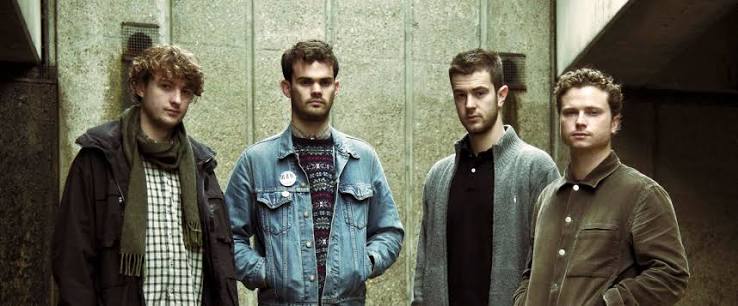
Portico Quartet emerged in 2005, bringing together four musicians whose backgrounds differed significantly but whose musical instincts proved remarkably compatible.
Jack Wyllie contributed an unusually lyrical approach to saxophone, favoring melody, texture and spacious phrasing over virtuosic display. His playing frequently recalls the emotional restraint associated with Jan Garbarek while remaining unmistakably personal.
Duncan Bellamy, equally comfortable as drummer, percussionist and producer, became one of the group’s principal architects of atmosphere. Rather than treating rhythm as accompaniment, Bellamy developed intricate sonic environments in which percussion, electronics and acoustic resonance constantly interacted.
Milo Fitzpatrick approached the double bass with similar openness. His lines often function simultaneously as harmonic foundation, rhythmic engine and melodic counterpoint, providing the ensemble with remarkable structural flexibility.
Completing the original quartet was Nick Mulvey, whose mastery of the hang introduced an entirely new tonal vocabulary into contemporary jazz.
Together, the four musicians discovered that their greatest strength lay not in individual virtuosity but in collective sound.
No instrument dominated.
Every voice mattered.
The ensemble itself became the primary soloist.
The Discovery of the Hang
Few instruments have influenced the identity of a contemporary jazz ensemble as profoundly as the hang influenced Portico Quartet.
Invented in Switzerland at the beginning of the twenty-first century by Felix Rohner and Sabina Schärer, the instrument combined elements of steel drums, tuned percussion and melodic resonance into something entirely new. Its rich overtones and singing sustain immediately captured the imagination of adventurous musicians across multiple genres.
Nick Mulvey recognized possibilities that extended far beyond novelty.
Within Portico Quartet, the hang became more than a featured instrument.
It served as a bridge.
Between rhythm and melody.
Between percussion and harmony.
Between jazz improvisation and meditative repetition.
Its shimmering resonance allowed the ensemble to create spacious textures rarely heard in acoustic jazz.
Listeners often found themselves unable to identify exactly what they were hearing.
That mystery became part of the group’s appeal.
JazzLatitude Insight
Portico Quartet reminds us that innovation in jazz often begins not with new harmonic theories but with new ways of listening to sound itself. By introducing unfamiliar timbres into collective improvisation, the group expanded the emotional vocabulary of contemporary jazz without abandoning its essential spirit.
Knee-Deep in the North Sea
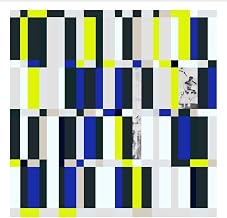
The quartet’s debut album, Knee-Deep in the North Sea (2007), immediately announced an unusually mature artistic vision.
Rather than presenting a collection of unrelated compositions, the recording unfolded with remarkable coherence.
Every piece contributed to a broader emotional landscape.
Minimalist repetition blended naturally with lyrical improvisation.
The hang’s luminous resonance intertwined with saxophone, bass and drums to create textures unlike anything else emerging from British jazz at the time.
Critics responded enthusiastically.
The album received a nomination for the Mercury Prize, introducing Portico Quartet to audiences well beyond the jazz community.
Perhaps more importantly, it demonstrated that contemporary jazz could remain intellectually ambitious while speaking directly to listeners who had never considered themselves jazz enthusiasts.
That achievement would become one of the defining characteristics of the group’s career.
The journey, however, had only just begun.
The years ahead would bring international acclaim, artistic reinvention and one of the most fascinating transformations any contemporary jazz ensemble has undertaken.
Buy Amazon
From Acoustic Discovery to Sonic Reinvention
One of the greatest challenges facing any ensemble with a highly recognizable sound is deciding what comes next. Success often creates expectations that can quietly become artistic limitations. For Portico Quartet, the shimmering resonance of the hang and the lyrical intimacy of Knee-Deep in the North Sea had become almost inseparable from the group’s public identity. It would have been easy to refine that formula indefinitely. Instead, the quartet chose a far more demanding path: continuous reinvention.
That decision reflects one of the defining characteristics of contemporary British jazz.
Rather than preserving stylistic identities, many of its most adventurous musicians have embraced constant transformation.
Portico Quartet never viewed its early success as a destination.
It became the starting point for a much broader exploration of sound.
Isla: Expanding the Emotional Landscape
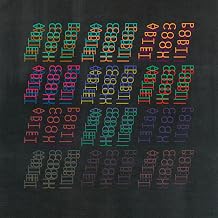
Released in 2009, Isla deepened every aspect of the quartet’s artistic language without abandoning the qualities that had first attracted listeners. The album retained the warm resonance of the hang, the lyrical elegance of Jack Wyllie’s saxophone and the subtle rhythmic interaction that already distinguished the ensemble, yet the emotional atmosphere became noticeably more expansive.
Where the debut often felt intimate and understated, Isla introduced broader cinematic horizons.
Compositions unfolded with greater patience.
The harmonic palette became richer.
Textures gained new complexity.
Pieces such as “Life Mask”, “Clipper” and “Paper Scissors Stone” revealed increasing confidence in allowing repetition to generate emotional transformation rather than merely structural continuity.
The influence of minimalism remained evident, but the music never sounded academically constructed.
Instead, every composition seemed to breathe naturally.
The listener experienced gradual evolution rather than deliberate design.
Many critics continue to regard Isla as one of the defining achievements of twenty-first-century British jazz.
JazzLatitude Insight
Portico Quartet demonstrates that atmosphere is never simply a production technique. In its finest recordings, atmosphere becomes composition itself. Texture, resonance and silence carry the same structural importance traditionally assigned to melody and harmony.
Beyond the Hang
As Portico Quartet matured, it became increasingly clear that the ensemble’s identity extended far beyond any single instrument.
The hang had opened an extraordinary creative door.
Now the group wished to explore the entire landscape beyond it.
Electronic processing gradually entered the music.
Sampling.
Synthesizers.
Looping techniques.
Studio manipulation.
None of these elements appeared as decorative additions.
Instead, they expanded possibilities already present within the quartet’s acoustic language.
Improvisation remained central.
Collective interaction remained essential.
Only the sonic vocabulary continued evolving.
This transition reflected broader developments within contemporary music, where distinctions between performance, composition and production had become increasingly fluid.
Portico Quartet embraced these changes without sacrificing the warmth and humanity that had always defined its sound.
The Departure of Nick Mulvey
One of the most significant turning points in the group’s history came in 2011, when founding member Nick Mulvey left Portico Quartet to pursue a solo career.
For many ensembles, losing the musician most closely associated with their signature sound might have proved devastating.
Instead, the departure became an unexpected opportunity.
Without the hang occupying its former central role, the remaining trio found itself free to rethink every aspect of its musical identity.
Rather than attempting to replace Mulvey directly, Jack Wyllie, Duncan Bellamy and Milo Fitzpatrick embraced transformation.
Electronic textures assumed greater prominence.
Studio production became increasingly adventurous.
The music evolved toward broader sonic landscapes where jazz improvisation, ambient music and contemporary electronics coexisted naturally.
Far from diminishing the ensemble, this reinvention demonstrated remarkable artistic courage.
Portico Quartet: Beginning Again
The self-titled album Portico Quartet (2012) announced this new creative chapter with striking confidence.
Listeners expecting a continuation of the earlier acoustic aesthetic encountered something far more ambitious.
The saxophone remained central.
The rhythmic interaction retained extraordinary subtlety.
Yet synthesizers, electronic processing and layered production now played equally important roles.
The music no longer revolved around a distinctive acoustic timbre.
Instead, it explored an expanded concept of ensemble sound.
Pieces such as “Ruins”, “Steepless” and “Window Seat” revealed a group increasingly interested in atmosphere as structural architecture.
Improvisation became less overt.
Compositional design assumed greater prominence.
The result divided some longtime admirers while attracting entirely new audiences.
In retrospect, the album stands as one of the boldest artistic reinventions undertaken by any contemporary jazz ensemble.
Living Fields: Collaboration and Song
The group’s willingness to challenge expectations continued with Living Fields (2015), created in collaboration with vocalist Jono McCleery.
Rather than functioning as a conventional jazz vocal album, the recording blended ambient production, lyrical songwriting and atmospheric improvisation into a remarkably cohesive whole.
McCleery’s understated vocal delivery complemented the ensemble’s evolving aesthetic beautifully.
Songs unfolded with cinematic pacing.
Electronic textures deepened emotional resonance.
The music occupied territory somewhere between contemporary jazz, art-pop, ambient composition and modern chamber music.
Although distinct from earlier recordings, Living Fields reinforced the ensemble’s refusal to become stylistically predictable.
Returning to Instrumental Exploration
Subsequent albums such as Art in the Age of Automation (2017), Memory Streams (2019), Terrain (2021) and Monument (2021) revealed increasing confidence in integrating acoustic improvisation with sophisticated electronic production.
Each recording explored different balances between composition and spontaneity.
Between melody and texture.
Between rhythm and atmosphere.
Rather than presenting dramatic stylistic departures, these albums documented continuous refinement.
The trio gradually discovered a mature language in which electronics no longer functioned as additions to jazz.
They became inseparable from it.
This evolution mirrored broader developments across contemporary European music while preserving the deeply collaborative listening that had always distinguished Portico Quartet.
A New Generation of British Jazz
As Portico Quartet continued evolving, British jazz itself entered an extraordinary period of international recognition.
Artists such as Matthew Halsall, GoGo Penguin, Mammal Hands, Nubya Garcia, Yussef Dayes, Ezra Collective and Shabaka Hutchings revealed the remarkable diversity flourishing across the United Kingdom.
Within this landscape, Portico Quartet occupied a distinctive position.
Less rooted in groove than Ezra Collective.
Less overtly spiritual than Halsall.
Less minimalist than The Necks.
Less rhythmically driven than GoGo Penguin.
Its defining characteristic remained atmosphere.
The ability to transform acoustic and electronic sound into immersive emotional landscapes unlike those created by any other ensemble.
Essential Albums
For listeners discovering Portico Quartet for the first time, these recordings provide the clearest path through the group’s remarkable artistic evolution.
- Knee-Deep in the North Sea (2007) — The groundbreaking debut that introduced the hang to contemporary jazz and established the quartet’s distinctive identity.
- Isla (2009) — A beautifully expanded exploration of atmosphere, minimalism and lyrical improvisation.
- Portico Quartet (2012) — A bold reinvention embracing electronics and broader sonic architecture.
- Living Fields (2015) — An elegant collaboration with Jono McCleery that blurred the boundaries between jazz, ambient music and art-pop.
- Art in the Age of Automation (2017) — A sophisticated fusion of acoustic improvisation and electronic production.
- Memory Streams (2019) — A mature statement balancing texture, melody and rhythmic subtlety.
- Terrain (2021) — One of the trio’s richest atmospheric recordings, demonstrating extraordinary compositional refinement.
Together, these albums reveal an ensemble that has continually reinvented itself while remaining unmistakably faithful to its original artistic vision.
Buy Amazon
A New Vocabulary for Contemporary Jazz
Looking back at the evolution of European jazz during the first quarter of the twenty-first century, it becomes increasingly difficult to imagine the landscape without Portico Quartet. The group did more than introduce a distinctive sound; it expanded the very vocabulary through which contemporary jazz could communicate. Before its emergence, discussions about innovation often revolved around harmonic complexity, rhythmic experimentation or the integration of electronics. Portico Quartet demonstrated that another path was possible. Timbre itself could become the foundation of a new musical language.
That insight fundamentally changed the way many younger musicians approached ensemble writing.
Sound was no longer merely the vehicle for composition.
Sound became composition.
The resonance of a cymbal.
The decay of a handpan.
The breath behind a saxophone phrase.
The subtle interaction between acoustic instruments and electronic processing.
Each element acquired structural significance equal to melody or harmony.
In many ways, Portico Quartet helped shift contemporary jazz away from the language of solos toward the language of environments.
Its music invites listeners not simply to follow ideas but to inhabit them.
The Studio as an Instrument
One of the defining characteristics of Portico Quartet’s mature work is the increasingly sophisticated role played by the recording studio. In traditional jazz, the studio has often functioned as a neutral space intended to capture live interaction as faithfully as possible. Portico Quartet gradually adopted a different philosophy, one more closely aligned with artists such as Brian Eno, Jon Hopkins and contemporary electronic producers.
Production became part of composition.
Reverb shaped emotional perspective.
Layering created additional voices.
Electronic treatments expanded acoustic resonance without replacing it.
Importantly, these techniques never obscured the ensemble’s improvisational foundation.
Instead, they extended it.
The listener hears musicians responding not only to one another but also to the evolving sonic architecture surrounding them.
This approach has influenced numerous younger ensembles seeking to dissolve the traditional boundaries separating performance from production.
JazzLatitude Insight
Portico Quartet reminds us that jazz has always embraced new technologies. From the microphone and electric guitar to multitrack recording and digital production, every generation has expanded the music’s vocabulary. What matters is never the technology itself, but whether it deepens human expression.
Beyond Genre Labels
Perhaps no description has ever fully captured Portico Quartet’s artistic identity.
Jazz.
Ambient.
Minimalism.
Post-rock.
Electronic music.
Contemporary classical composition.
Each label illuminates part of the picture while leaving much unexplained.
The quartet’s refusal to fit comfortably within any category has occasionally complicated marketing, yet it has also become one of its greatest strengths.
Listeners arrive from remarkably different musical backgrounds.
Some discover the group through jazz festivals.
Others through ambient playlists.
Some through modern classical recommendations.
Others through electronic music communities.
Each hears something familiar.
Each discovers something unexpected.
Few contemporary ensembles have built such an unusually diverse audience without compromising artistic integrity.
Influence on Modern British Jazz
Although Portico Quartet has always maintained a distinctive voice, its broader influence within British jazz has become increasingly apparent.
The success of artists such as Mammal Hands, GoGo Penguin, Matthew Halsall, Nubya Garcia, Yussef Dayes, Shabaka Hutchings and many others reflects a creative environment in which stylistic openness has become a defining virtue.
Portico Quartet helped normalize the idea that contemporary jazz could absorb ideas from electronic music, ambient composition and experimental production without losing its improvisational soul.
Its recordings encouraged younger musicians to treat atmosphere, texture and sonic design as legitimate compositional tools rather than decorative additions.
The result has been one of the richest periods in British jazz history.
The Emotional Geography of Sound
Listening closely to Portico Quartet reveals another remarkable quality rarely discussed.
Its music often behaves less like narrative than like landscape.
Traditional jazz compositions typically progress through clearly defined dramatic stages.
Themes.
Development.
Climax.
Resolution.
Portico Quartet frequently follows another logic.
The listener gradually enters an environment.
Light changes.
Perspective shifts.
Textures evolve.
Rather than moving toward a destination, the music invites continuous exploration.
This cinematic approach explains why filmmakers, visual artists and contemporary choreographers have frequently embraced the quartet’s work.
Its compositions create spaces in which other forms of artistic imagination naturally flourish.
Essential Collaborations and Artistic Connections
Portico Quartet’s artistic identity has been shaped not only by its internal evolution but also by its dialogue with a wider community of contemporary musicians.
Among the most significant connections are:
- Nick Mulvey — As a founding member, his pioneering use of the hang established the quartet’s original sonic identity before his departure opened the door to a new electronic chapter.
- Jono McCleery — His collaboration on Living Fields demonstrated how naturally Portico Quartet’s atmospheric language could embrace songwriting without sacrificing its improvisational depth.
- Brian Eno — Though not a direct collaborator, Eno’s philosophy of ambient music and sonic architecture offers one of the most illuminating reference points for understanding the quartet’s mature aesthetic.
- Jon Hopkins — His integration of electronics, minimalism and emotional storytelling parallels many of the sonic directions explored by Portico Quartet during its later recordings.
- The contemporary British jazz movement — Alongside Matthew Halsall, GoGo Penguin, Mammal Hands and other innovators, Portico Quartet helped redefine how international audiences perceive modern British jazz.
Technical Profile
Origin:
- London, England
Formed:
- 2005
Current Core Members:
- Jack Wyllie – Saxophones, Keyboards
- Duncan Bellamy – Drums, Percussion, Electronics
- Milo Fitzpatrick – Double Bass, Electric Bass
Founding Member:
- Nick Mulvey – Hang, Handpan, Guitar, Percussion (2005–2011)
Primary Styles:
- Contemporary Jazz
- British Jazz
- Ambient Jazz
- Electronic Jazz
- Minimalist Jazz
- Experimental Music
Musical Characteristics:
- Atmospheric ensemble writing
- Integration of acoustic and electronic textures
- Minimalist development
- Cinematic composition
- Collective improvisation
- Innovative use of resonance and timbre
Essential Albums:
- Knee-Deep in the North Sea (2007)
- Isla (2009)
- Portico Quartet (2012)
- Living Fields (2015)
- Art in the Age of Automation (2017)
- Memory Streams (2019)
- Terrain (2021)
Five Lesser-Known Facts About Portico Quartet
1. The Mercury Prize nomination transformed the group’s international career.
Knee-Deep in the North Sea introduced audiences far beyond jazz to a completely new sonic aesthetic and established the quartet as one of Britain’s most promising contemporary ensembles.
2. The hang became famous partly because of the band.
Although the instrument already existed before Portico Quartet formed, the quartet played a major role in introducing its extraordinary sound to international jazz audiences.
3. The departure of Nick Mulvey fundamentally reshaped the music.
Rather than replacing the hang with another acoustic instrument, the remaining members embraced electronics, transforming the ensemble’s identity while preserving its collaborative spirit.
4. The recording studio became an equal creative partner.
Many of the quartet’s later albums treat production, spatial design and electronic processing as integral elements of composition rather than post-production enhancements.
5. The group’s influence extends far beyond jazz.
Ambient producers, film composers, contemporary classical musicians and electronic artists frequently cite Portico Quartet as an important source of inspiration for its unique approach to atmosphere and musical architecture.
Frequently Asked Questions
What is Portico Quartet?
Portico Quartet is a British contemporary jazz ensemble formed in London in 2005. The group is internationally recognized for combining jazz improvisation with ambient music, minimalism, electronic production and cinematic composition.
Why is Portico Quartet important?
The quartet helped redefine contemporary European jazz by introducing new approaches to timbre, atmosphere and ensemble interaction while demonstrating that acoustic improvisation and modern production could coexist naturally.
Why was the hang so important to the band’s early sound?
Nick Mulvey’s use of the hang created a unique melodic and percussive voice that distinguished the quartet’s early recordings and introduced many listeners to the instrument for the first time.
Which Portico Quartet album should new listeners hear first?
Knee-Deep in the North Sea remains the ideal introduction to the original quartet, while Isla represents the refinement of that acoustic sound and Art in the Age of Automation offers an excellent entry point into the group’s later electronic direction.
Which artists are similar to Portico Quartet?
Listeners who enjoy Portico Quartet often explore GoGo Penguin, Matthew Halsall, Mammal Hands, The Necks, Brian Eno, Jon Hopkins, Nils Petter Molvær, Nik Bärtsch’s Ronin, Dawn of Midi and Hania Rani, all of whom explore different intersections between atmosphere, improvisation and contemporary composition.
JazzLatitude Rating
| Category | Rating |
|---|---|
| Compositional Originality | ★★★★★ |
| Sonic Innovation | ★★★★★ |
| Ensemble Interaction | ★★★★★ |
| Atmospheric Writing | ★★★★★ |
| Studio Production | ★★★★★ |
| Influence on Contemporary European Jazz | ★★★★★ |
| Replay Value | ★★★★★ |
| Accessibility for New Listeners | ★★★★★ |
| JazzLatitude Essential | ★★★★★ |
Final Thoughts
Portico Quartet occupies a rare position in contemporary music because its influence extends well beyond the boundaries of jazz. Across nearly two decades, the ensemble has demonstrated that innovation does not require abandoning tradition but listening to it from a different perspective. By treating atmosphere, resonance and texture as essential compositional elements, the group has quietly expanded the expressive possibilities of the modern jazz ensemble.
The quartet’s artistic evolution is equally remarkable. Rather than preserving the signature sound that first brought international recognition, the musicians repeatedly embraced uncertainty. The departure of Nick Mulvey could easily have ended the project or confined it to nostalgic repetition. Instead, it became the catalyst for one of the most convincing transformations in recent jazz history. Electronics, production techniques and new approaches to sonic architecture enriched the ensemble without diminishing its commitment to collective improvisation.
Perhaps Portico Quartet’s greatest achievement lies in changing how listeners experience instrumental music. Their recordings do not simply present compositions; they create environments. Time seems to expand. Small details acquire unexpected significance. The boundary between composition, improvisation and sound design gradually dissolves until only the emotional experience remains. In an era often dominated by instant gratification and fragmented attention, this invitation to immerse oneself completely in a musical landscape feels quietly revolutionary.
The group’s legacy continues to grow as younger artists explore similar relationships between jazz, ambient music, electronics and minimalism. Yet Portico Quartet remains unmistakably unique because every stylistic influence ultimately serves the same purpose: deeper listening. Whether through the luminous resonance of the hang in its early years or the sophisticated electronic textures of its later recordings, the ensemble has consistently pursued music that rewards patience, curiosity and emotional openness.
For anyone seeking to understand the evolution of contemporary European jazz, Portico Quartet is far more than one of its most original ensembles.
It is one of the groups that permanently changed the sound—and perhaps even the philosophy—of modern improvised music.