
The Music of Quiet Transformation
For much of jazz history, greatness has often been associated with intensity. The musicians who dominate the canon are frequently remembered for astonishing technical command, relentless innovation or overwhelming emotional force. Louis Armstrong transformed improvisation through joy. Charlie Parker redefined harmonic possibility with breathtaking velocity. John Coltrane pursued transcendence through an almost superhuman search for musical truth. Matthew Halsall represents a different kind of revolution. His music rarely seeks to overwhelm the listener. Instead, it slows the pulse, widens the emotional landscape and demonstrates that silence, patience and restraint can possess extraordinary expressive power.
During the first decades of the twenty-first century, Halsall emerged as one of the defining figures in the remarkable renaissance of British jazz. Yet unlike many contemporaries who embraced complex rhythmic experimentation or energetic crossovers with hip-hop and electronic music, the Manchester-born trumpeter followed another path. His recordings invite contemplation rather than excitement, encouraging listeners to inhabit sound rather than simply consume it. Long melodic lines unfold over spacious harmonic landscapes where every note appears carefully placed, every pause intentional and every ensemble interaction guided by deep mutual listening.
This aesthetic has occasionally led casual observers to describe his music as “ambient jazz” or “meditation jazz.” Such labels capture only part of the picture. Beneath the tranquility lies a sophisticated understanding of modal harmony, orchestration, collective improvisation and spiritual jazz traditions reaching back to Alice Coltrane, Pharoah Sanders and Don Cherry. Halsall’s music may appear gentle on the surface, but it is built upon decades of careful study and an unwavering commitment to artistic integrity.
His importance extends beyond performance. As founder of Gondwana Records, he has become one of the principal architects of contemporary British jazz, providing a home for artists whose work has helped redefine Europe’s musical landscape. In many ways, Halsall has influenced modern jazz as much through the opportunities he has created for others as through his own extraordinary recordings.
Understanding Matthew Halsall therefore requires exploring two parallel stories.
The evolution of a singular trumpeter.
And the creation of an artistic community whose influence now extends far beyond the United Kingdom.
Manchester Beyond Rock Music
When international audiences think of Manchester, they often recall the city’s remarkable contributions to rock and electronic music. Joy Division, New Order, The Smiths, Oasis and The Chemical Brothers helped establish its reputation as one of Britain’s great creative capitals. Less widely recognized is Manchester’s equally important role in the rebirth of contemporary jazz during the early twenty-first century.
Unlike London, whose jazz institutions grew around conservatories, major venues and long-established traditions, Manchester developed a more independent creative ecosystem. Musicians moved naturally between improvisation, contemporary classical music, electronic production and experimental composition. Small clubs, community spaces and independent labels encouraged collaboration rather than competition.
Matthew Halsall emerged directly from this environment.
Rather than choosing between jazz tradition and contemporary influences, he absorbed both with remarkable openness.
His music would eventually reflect the city’s artistic character.
Curious.
Inclusive.
Patient.
Quietly innovative.
A Trumpeter Shaped by Listening
Born in 1983, Halsall began studying trumpet during childhood, quickly developing an admiration for Miles Davis and Clifford Brown. Yet as his musical curiosity expanded, he became increasingly fascinated by artists whose work emphasized atmosphere and collective spirituality rather than technical display.
The recordings of Alice Coltrane proved especially transformative.
So did the deeply lyrical playing of Don Cherry.
The meditative qualities of Pharoah Sanders.
The spacious compositions of Kenny Wheeler.
The contemplative aesthetic associated with ECM Records.
Rather than imitating any single influence, Halsall gradually discovered a personal language built upon long melodic phrases, warm trumpet tone and extraordinary sensitivity to ensemble color.
Unlike many trumpeters who project authority through brilliance and volume, Halsall often achieves emotional impact through understatement.
His playing never competes with the ensemble.
It breathes within it.
This philosophy would eventually define every recording he made.
The Search for a Different Sound
One of the first qualities listeners notice about Matthew Halsall’s music is its refusal to hurry.
Themes unfold gradually.
Improvisations develop organically.
Rhythms pulse gently rather than driving aggressively forward.
The ensemble seems less interested in reaching climaxes than in creating immersive environments where every instrument contributes equally to the emotional atmosphere.
This approach owes something to modal jazz.
Something to spiritual jazz.
Something to contemporary classical composition.
Something to ambient music.
Yet the final result belongs entirely to Halsall.
Even the production reflects this philosophy.
Rather than emphasizing studio perfection, the recordings preserve warmth, acoustic resonance and the subtle interaction between musicians sharing the same physical space.
The listener feels present within the performance rather than observing it from a distance.
JazzLatitude Insight
Matthew Halsall reminds us that musical intensity does not always require speed or volume. Some of the deepest emotional experiences in jazz emerge when musicians trust melody, space and collective listening more than virtuosity.
Gondwana Records: An Idea Before a Label
By the mid-2000s, Halsall recognized that many artists exploring similarly contemplative musical directions struggled to find labels willing to support them.
The solution was remarkably simple.
Create one.
In 2008, he founded Gondwana Records, initially as a platform for his own work but soon expanding into one of Europe’s most respected independent jazz labels.
From the beginning, Gondwana rejected the traditional boundaries separating jazz, ambient music, contemporary classical composition and experimental electronics.
Instead, it embraced artists united by atmosphere, craftsmanship and emotional authenticity.
The label’s visual identity reflected the same philosophy.
Minimal design.
Elegant photography.
Thoughtful packaging.
Everything suggested careful attention rather than commercial urgency.
Within only a few years, Gondwana would become one of the defining creative centers of modern European jazz.
And Matthew Halsall would find himself leading not only a remarkable ensemble, but an entire artistic movement.
Buy Amazon
Gondwana Records and the Birth of a New British Sound
When Matthew Halsall founded Gondwana Records in 2008, few could have predicted that the independent label would become one of the most influential forces in twenty-first-century European jazz. At the time, the British scene was already beginning to show signs of renewal, but much of the international attention remained focused on London. Manchester, despite its extraordinary musical heritage, was still largely associated with rock, electronic music and post-punk rather than contemporary jazz.
Halsall saw something different.
He believed there was space for music that valued atmosphere over spectacle, collective expression over individual virtuosity and long-term artistic development over commercial urgency.
Gondwana was never conceived simply as a record label.
It became an aesthetic philosophy.
Its catalogue gradually revealed remarkable consistency. Whether releasing spiritual jazz, minimalist chamber music, ambient improvisation or experimental electronics, every album shared a commitment to sonic beauty, thoughtful production and emotional honesty. Over time, artists such as GoGo Penguin, Mammal Hands, Portico Quartet, Hania Rani, Svaneborg Kardyb and Chip Wickham would either release music through Gondwana or become closely associated with the creative environment the label helped cultivate.
The result was not merely a successful business.
It was the creation of a recognizable musical ecosystem.
Sending My Love: A Promise of Things to Come
Although Matthew Halsall had already begun attracting attention through live performances, his debut album, Sending My Love (2008), quietly announced the arrival of a distinctive new compositional voice.
Rather than attempting to impress listeners through technical fireworks, the recording established principles that would continue defining his work for years to come.
Warm trumpet melodies floated above gently shifting harmonies.
The rhythm section emphasized flow rather than propulsion.
Strings and woodwinds expanded the emotional palette without overwhelming the ensemble.
Even at this early stage, Halsall displayed unusual confidence.
He trusted simplicity.
He allowed melodies room to breathe.
He resisted the temptation to fill every available space.
Critics immediately recognized the influence of spiritual jazz pioneers, yet the music never sounded nostalgic.
Instead, it suggested that the ideals explored by Alice Coltrane and Don Cherry still possessed profound relevance within contemporary Europe.
JazzLatitude Insight
Matthew Halsall’s recordings remind us that patience is not the absence of movement but another form of momentum. His music unfolds like nature itself—gradually, organically and with quiet inevitability.
Colour Yes and the Expansion of Spiritual Jazz
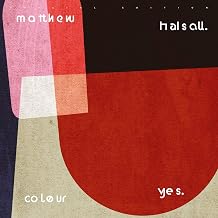
If Sending My Love introduced Halsall’s artistic personality, Colour Yes (2009) confirmed that he had become one of the most compelling composers working in modern British jazz.
The album deepened every aspect of his musical language.
The arrangements became more spacious.
Improvisations flowed with greater confidence.
Modal harmony assumed an increasingly central role.
The influence of Eastern philosophy and contemplative practice became more deeply embedded within the emotional architecture of the music.
Rather than presenting spiritual jazz as historical homage, Halsall adapted its principles to contemporary life.
Hope replaced anxiety.
Reflection replaced urgency.
The music encouraged attentive listening in a cultural moment increasingly defined by distraction.
That quiet resistance would become one of Halsall’s greatest artistic strengths.
On the Go and Rhythmic Evolution
Released in 2011, On the Go represented an important turning point.
While preserving the meditative atmosphere of earlier recordings, the album introduced greater rhythmic flexibility and more adventurous ensemble interaction.
African and Latin influences became increasingly audible.
Percussion assumed a more prominent role.
The music retained its contemplative character while embracing subtle movement and dance-like momentum.
Importantly, these rhythmic developments never disrupted the overall serenity of Halsall’s compositions.
Instead, they expanded the emotional vocabulary available to the ensemble.
The result was music that felt simultaneously grounded and exploratory.
Fletcher Moss Park: A Modern Classic
For many listeners, Fletcher Moss Park (2012) remains the defining Matthew Halsall recording.
Named after one of Manchester’s most beautiful public parks, the album embodies the relationship between landscape and sound that has become central to Halsall’s artistic identity.
Listening to the recording feels remarkably similar to walking slowly through a quiet natural environment.
Themes appear gently.
Improvisations emerge without announcement.
The ensemble breathes together with extraordinary sensitivity.
Rather than building toward dramatic climaxes, the music evolves through gradual transformation.
Every return to a melodic idea reveals subtle emotional changes.
The title track has become one of the most celebrated compositions in contemporary British jazz.
Its enduring popularity reflects not only its melodic beauty but also its remarkable emotional generosity.
Few modern jazz recordings communicate such profound calm without ever becoming passive.
Nature as Composition
One of the defining characteristics of Halsall’s music is its intimate relationship with the natural world.
Unlike many composers who use nature merely as poetic metaphor, Halsall approaches landscape as an active compositional influence.
Birdsong.
Changing seasons.
Water.
Light.
Open space.
These elements shape not only the titles of his works but also their internal structure.
Musical phrases resemble natural cycles.
Repetition mirrors patterns found in forests, rivers and weather.
Silence functions like open sky.
This ecological sensitivity distinguishes Halsall from many contemporary composers.
His music does not describe nature.
It behaves like nature.
Into Forever and Salute to the Sun
The years that followed revealed an artist growing steadily more ambitious without abandoning his fundamental aesthetic.
Into Forever (2015) introduced richer orchestration while preserving the lyrical intimacy that had always defined Halsall’s trumpet playing.
The compositions stretched further.
Improvisations became increasingly conversational.
The emotional atmosphere remained unmistakably his own.
Then came Salute to the Sun (2020), one of the most acclaimed recordings of his career.
Inspired by yoga, meditation and the cyclical rhythms of the natural world, the album feels almost ceremonial.
Its expansive arrangements combine harp, flute, strings, percussion and jazz improvisation into a remarkably unified whole.
Rather than borrowing superficially from spiritual traditions, Halsall creates music that embodies contemplative practice through sound itself.
The album became an international success and introduced his work to many listeners beyond the traditional jazz community.
An Ever Changing View
Released in 2023, An Ever Changing View represented another important stage in Halsall’s artistic evolution.
Recorded with an expanded ensemble, the album further deepened his fascination with atmosphere, orchestral color and environmental inspiration.
The title itself reflects one of the central ideas running throughout his career.
Nothing remains fixed.
Perception changes.
Nature changes.
Human understanding changes.
Music changes.
Rather than seeking dramatic reinvention, Halsall continues refining a language already capable of extraordinary expressive subtlety.
The album’s luminous production, expansive arrangements and graceful melodic writing confirmed that his creative vision remains as vital as ever.
Essential Albums
For listeners discovering Matthew Halsall for the first time, these recordings provide the ideal introduction.
- Sending My Love (2008) — The quietly assured debut that introduced Halsall’s lyrical and spiritual approach to composition.
- Colour Yes (2009) — A beautifully realized exploration of modal jazz and contemplative ensemble interaction.
- On the Go (2011) — Expanding the rhythmic palette while preserving the intimacy of his earlier work.
- Fletcher Moss Park (2012) — Widely regarded as his masterpiece and one of the defining recordings of modern British spiritual jazz.
- Into Forever (2015) — Rich orchestration and increasingly expansive compositional ambition.
- Salute to the Sun (2020) — A radiant meditation on nature, movement and spiritual renewal.
- An Ever Changing View (2023) — A mature and deeply atmospheric statement confirming Halsall’s place among the leading composers of contemporary European jazz.
Together, these recordings document one of the most coherent artistic journeys in modern jazz, revealing a composer whose vision has grown richer with every release while remaining unmistakably his own.
A New Definition of Spiritual Jazz
The phrase “spiritual jazz” has often been misunderstood. For some listeners, it refers to a particular period in the late 1960s and early 1970s, associated with artists such as John Coltrane, Alice Coltrane, Pharoah Sanders and Don Cherry. Others reduce it to a collection of recognizable musical characteristics—modal harmony, long improvisations, Eastern instruments or meditative atmospheres. Matthew Halsall has quietly challenged both assumptions. His work suggests that spiritual jazz is neither a historical movement nor a stylistic formula. It is an artistic attitude grounded in attention, generosity and presence.
This distinction helps explain why his music feels so contemporary despite its obvious dialogue with earlier traditions.
Halsall does not recreate the sound of Alice Coltrane.
He continues the questions she asked.
How can music become a space for contemplation?
How can improvisation encourage listening rather than competition?
How can an ensemble create emotional openness without sacrificing compositional sophistication?
These questions define his recordings far more than any particular harmonic language or instrumental choice.
In an era increasingly shaped by distraction and acceleration, Halsall’s music offers something unexpectedly radical.
It asks listeners to slow down.
Gondwana Records as a Cultural Institution
Matthew Halsall’s importance cannot be measured solely through his own discography. Over the past two decades, Gondwana Records has become one of the defining institutions in contemporary European jazz, performing a role once associated with labels such as ECM, ACT or Blue Note during different periods of jazz history.
Unlike many independent labels that simply distribute recordings, Gondwana has cultivated an identifiable artistic philosophy.
Its albums share remarkable attention to sound.
Visual design.
Production quality.
Emotional coherence.
Artists are encouraged to develop distinctive musical identities rather than adapting to commercial expectations.
This patient approach has transformed the label into an international point of reference for listeners seeking contemporary music that exists beyond conventional genre categories.
Many of today’s most respected European improvisers reached wider audiences through Gondwana’s carefully curated catalogue.
In that sense, Halsall has shaped modern jazz not only as a performer but also as a visionary producer, curator and artistic mentor.
JazzLatitude Insight
The greatest jazz musicians often leave two legacies: the music they create and the communities they inspire. Matthew Halsall has achieved both. His recordings have expanded the language of spiritual jazz, while Gondwana Records has provided an enduring home for artists whose work continues reshaping contemporary European music.
Beyond the Trumpet
Although Halsall is internationally recognized as one of today’s finest jazz trumpeters, reducing his contribution to instrumental performance alone would overlook the breadth of his artistry.
He composes with the instincts of an orchestrator.
Produces with the ears of an audiophile.
Programs albums with the sensitivity of a filmmaker.
Every recording reflects careful attention to emotional pacing.
Themes return like recurring characters.
Instrumental colors shift almost imperceptibly.
Silence functions as structural architecture rather than empty space.
Even the sequencing of his albums reveals remarkable narrative awareness.
The listener experiences not simply a collection of pieces but a complete emotional journey.
This holistic vision explains why Halsall’s recordings reward uninterrupted listening in an era increasingly dominated by isolated streaming tracks.
Influence on a New Generation
The remarkable growth of British jazz during the past fifteen years owes much to the creative environment Halsall helped cultivate.
Artists associated with Manchester’s evolving scene have demonstrated that contemporary jazz can embrace ambient music, folk traditions, electronics, minimalism and chamber composition without losing its improvisational core.
While each musician has developed an individual voice, the broader movement shares several qualities that Gondwana consistently championed:
Patience.
Melodic clarity.
Collective listening.
Acoustic beauty.
Respect for silence.
These values increasingly influence younger musicians across Europe, North America and Asia, many of whom cite Halsall’s recordings as evidence that emotional depth often emerges through restraint rather than excess.
Essential Collaborations and Artistic Connections
Matthew Halsall’s artistic world extends well beyond his own ensemble.
Some of the most significant creative relationships include:
- Gondwana Records — The independent label whose catalogue has become one of the defining platforms for contemporary European jazz.
- Chip Wickham — The British flautist and composer whose warm melodic language reflects many of the contemplative qualities associated with Halsall’s musical community.
- GoGo Penguin — Although their artistic languages differ, both ensembles played central roles in establishing Manchester as one of Europe’s most important contemporary jazz centers.
- Alice Coltrane — Not a direct collaborator but unquestionably one of Halsall’s deepest spiritual and musical influences, particularly in the integration of modal harmony, Eastern philosophy and transcendent atmosphere.
- Pharoah Sanders — Another guiding presence whose lyrical spirituality and emotional generosity continue resonating throughout Halsall’s compositional approach.
These connections illustrate that Halsall belongs to a living lineage rather than an isolated stylistic movement.
Technical Profile
Born:
- 1983
Birthplace:
- Manchester, England
Primary Instrument:
- Trumpet
Professional Roles:
- Trumpeter
- Composer
- Producer
- Arranger
- Founder of Gondwana Records
Primary Styles:
- Spiritual Jazz
- Contemporary Jazz
- British Jazz
- Ambient Jazz
- Modal Jazz
Musical Characteristics:
- Warm, lyrical trumpet tone
- Spacious modal compositions
- Nature-inspired orchestration
- Deep ensemble interaction
- Meditative pacing
- Organic acoustic production
Essential Albums:
- Sending My Love (2008)
- Colour Yes (2009)
- On the Go (2011)
- Fletcher Moss Park (2012)
- Into Forever (2015)
- Salute to the Sun (2020)
- An Ever Changing View (2023)
Five Lesser-Known Facts About Matthew Halsall
1. Gondwana Records began primarily to release his own music.
What started as a practical solution eventually became one of Europe’s most influential independent jazz labels.
2. Nature directly shapes his compositional process.
Many of Halsall’s works are inspired not simply by landscapes but by the rhythms, cycles and silence found within natural environments around Manchester.
3. He deliberately avoids excessive trumpet virtuosity.
Rather than emphasizing technical display, Halsall prioritizes melody, breath, tone and emotional communication.
4. His production style is as important as his trumpet playing.
Every Gondwana recording reflects extraordinary attention to acoustic detail, spatial balance and warmth, contributing significantly to the label’s instantly recognizable identity.
5. His influence extends far beyond performance.
Through Gondwana Records, Halsall has helped launch and support an entire generation of contemporary European jazz artists, making him one of the most important cultural figures in British jazz today.
Frequently Asked Questions
Who is Matthew Halsall?
Matthew Halsall is a British trumpeter, composer, producer and founder of Gondwana Records. He is internationally recognized for his contemplative approach to spiritual jazz, blending modal improvisation, ambient textures and contemporary composition into one of the most distinctive voices in modern European jazz.
Why is Matthew Halsall important?
Beyond his acclaimed recordings, Halsall has played a central role in the resurgence of British jazz through Gondwana Records, helping establish Manchester as one of Europe’s leading creative centers for contemporary improvised music.
What is Fletcher Moss Park?
Released in 2012, Fletcher Moss Park is widely regarded as Halsall’s masterpiece. Inspired by one of Manchester’s most beautiful green spaces, the album combines lyrical trumpet playing, spacious arrangements and profound emotional tranquility.
What is Gondwana Records?
Founded by Matthew Halsall in 2008, Gondwana Records is an independent British label celebrated for its exceptional catalogue of contemporary jazz, ambient music and modern composition, representing artists such as GoGo Penguin, Mammal Hands, Hania Rani and many others.
Which artists are similar to Matthew Halsall?
Listeners who appreciate Matthew Halsall often explore Charles Lloyd, Alice Coltrane, Pharoah Sanders, Chip Wickham, GoGo Penguin, Portico Quartet, Mammal Hands, Kamasi Washington, Nils Petter Molvær and Jan Garbarek, all of whom share an interest in atmosphere, lyricism and expansive musical storytelling.
JazzLatitude Rating
| Category | Rating |
|---|---|
| Compositional Originality | ★★★★★ |
| Spiritual Expression | ★★★★★ |
| Orchestration | ★★★★★ |
| Trumpet Performance | ★★★★★ |
| Production Quality | ★★★★★ |
| Influence on Contemporary British Jazz | ★★★★★ |
| Replay Value | ★★★★★ |
| Accessibility for New Listeners | ★★★★★ |
| JazzLatitude Essential | ★★★★★ |
Final Thoughts
Matthew Halsall occupies a unique place in contemporary jazz because his music succeeds through qualities that modern culture often undervalues: patience, attentiveness and emotional restraint. Rather than pursuing novelty for its own sake, he has spent nearly two decades refining a musical language built upon clarity, warmth and profound respect for collective expression. Every recording reveals an artist more interested in creating environments for listening than opportunities for display.
That philosophy extends naturally into his work as founder of Gondwana Records. In an industry frequently driven by rapid consumption and short-lived trends, Halsall has built a label whose catalogue rewards repeated listening and long-term artistic development. The consistency of Gondwana’s releases reflects an unusually coherent aesthetic vision, one that has influenced not only British jazz but the broader landscape of contemporary European music.
His trumpet playing embodies the same values. The sound is immediately recognizable—rounded, luminous and deeply lyrical. Instead of filling every measure with notes, Halsall allows melodies to unfold with remarkable confidence, trusting silence as much as sound. This economy of expression recalls the finest moments of Miles Davis while remaining unmistakably personal, shaped by spiritual jazz, contemporary classical music and an enduring fascination with the natural world.
Perhaps Halsall’s greatest achievement is demonstrating that contemporary jazz can be both adventurous and welcoming. His recordings invite newcomers without simplifying the music, while rewarding experienced listeners with layers of harmonic, rhythmic and emotional sophistication that continue revealing themselves over time. They stand as quiet reminders that innovation does not always arrive through dramatic gestures. Sometimes it emerges through careful listening, thoughtful collaboration and the courage to leave space for beauty to unfold.
For anyone seeking to understand the evolving landscape of twenty-first-century jazz, Matthew Halsall is far more than an outstanding trumpeter or successful label founder.
He is one of the artists redefining what contemporary jazz can feel like—and one of the quiet architects shaping where it is going next.