A New Kind of Piano Trio
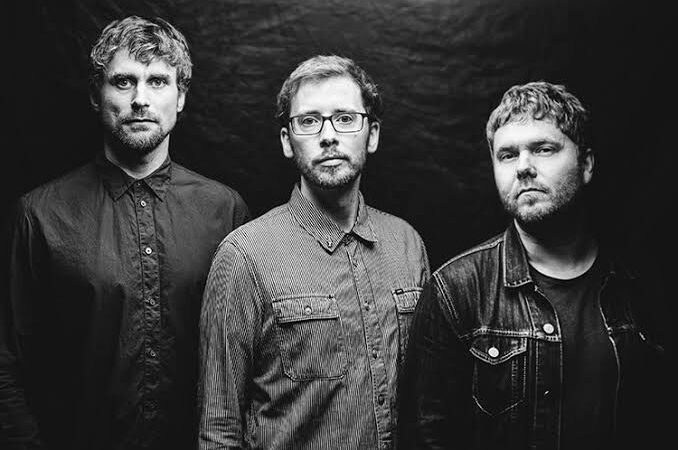
Every generation produces a handful of ensembles that quietly alter the direction of jazz without announcing themselves as revolutionaries. They do not reject tradition, nor do they seek controversy for its own sake. Instead, they change the music simply by asking different questions. During the second decade of the twenty-first century, few groups embodied that spirit more convincingly than GoGo Penguin. Emerging from Manchester, England, the trio demonstrated that a piano, an acoustic bass and a drum kit could evoke the rhythmic energy of electronic dance music, the emotional sweep of cinematic scores and the structural precision of minimalist composition while remaining unmistakably rooted in the improvisational language of jazz.
Their arrival coincided with a remarkable transformation in European jazz. For decades, the continent had produced musicians who were admired for refinement, technical excellence and compositional sophistication, particularly through labels such as ECM. Yet a younger generation was beginning to expand those traditions by embracing influences that earlier jazz musicians often regarded as external to the genre. Ambient music, techno, IDM, drum and bass, post-rock and contemporary classical composition increasingly became part of the same artistic vocabulary. Rather than treating these worlds as incompatible, GoGo Penguin approached them as complementary expressions of rhythm, texture and atmosphere.
This openness immediately distinguished the trio from many of its contemporaries. While comparisons with the legendary Swedish group e.s.t. (Esbjörn Svensson Trio) emerged almost automatically, GoGo Penguin never sounded like disciples. Their music possessed a different emotional architecture. Instead of building dramatic solos over conventional harmonic progressions, the trio often constructed pieces from repeating rhythmic cells, evolving motifs and subtle changes in texture. The result felt less like traditional jazz performance and more like watching a landscape slowly transform under changing light.
That unique aesthetic would eventually earn international recognition, but its origins lay far from London’s established jazz institutions. They were rooted in Manchester, a city whose musical identity had long been shaped as much by electronic experimentation and alternative rock as by jazz itself.
Manchester: A City That Refused Musical Boundaries
Few British cities have exerted as much influence on modern music as Manchester. From the post-punk innovations of Joy Division and New Order to the electronic culture surrounding the legendary Haçienda nightclub, the city developed a reputation for artistic communities in which stylistic boundaries mattered remarkably little. Rock musicians attended techno clubs. Electronic producers admired jazz harmony. Experimental composers collaborated with improvisers.
For young musicians growing up in this environment, crossing genres felt entirely natural.
It was within this creative landscape that pianist Chris Illingworth, bassist Nick Blacka and drummer Rob Turner gradually discovered a shared artistic language. Each had received formal musical training, each respected jazz tradition, yet all three were equally fascinated by artists who rarely appeared in jazz history books. The hypnotic structures of Steve Reich, the emotional minimalism of Philip Glass, the sonic architecture of Aphex Twin, the rhythmic complexity of drum and bass, the spacious production of ambient music and the cinematic storytelling of modern film composers all became essential points of reference.
What united these influences was not style but process.
Repetition.
Gradual transformation.
Attention to texture.
The patient accumulation of emotional intensity.
These ideas would later become central to the GoGo Penguin sound.
Three Equal Voices
Like the greatest piano trios in jazz history, GoGo Penguin has always rejected the traditional hierarchy in which the piano dominates while bass and drums provide accompaniment. Instead, the ensemble functions as a genuinely democratic organism in which every instrument carries melodic, rhythmic and structural responsibility.
Chris Illingworth’s piano rarely behaves like a conventional jazz solo instrument.
Instead of filling space with virtuosic improvisation, he often introduces deceptively simple motifs that evolve through subtle variation. Repeated figures gradually accumulate emotional weight until listeners become almost unaware of how dramatically the music has changed.
Nick Blacka’s acoustic bass occupies an equally distinctive role.
Rather than merely outlining harmony, it frequently serves as both rhythmic engine and secondary melodic voice. Influenced as much by electronic bass lines as by traditional jazz walking bass, Blacka creates hypnotic foundations that propel the music forward without relying on conventional swing.
Rob Turner’s drumming completed the original trio’s remarkable chemistry. His playing demonstrated extraordinary control of dynamics, blending jazz sensitivity with the relentless pulse associated with electronic dance music. Instead of imitating programmed beats, Turner translated their precision into fully acoustic performance, producing rhythms that felt simultaneously mechanical and deeply human.
Together, the three musicians created a sound in which individual virtuosity became almost invisible.
The listener hears the ensemble first.
Only later does one begin to appreciate the astonishing technical precision required to sustain such collective interaction.
JazzLatitude Insight
GoGo Penguin’s greatest innovation was not introducing electronic influences into jazz. Artists had been exploring that dialogue for decades. Their real achievement was demonstrating that electronic thinking could be expressed entirely through acoustic instruments, transforming the piano trio into something that sounded simultaneously ancient and futuristic.
The First Recordings
The trio’s earliest recordings immediately suggested unusual artistic maturity. Albums such as Fanfares (2012) revealed musicians who already possessed a remarkably coherent musical identity. While many debut recordings function as collections of promising experiments, Fanfares felt like the work of an ensemble that had spent years refining its aesthetic before entering the studio.
Critics quickly noticed the unusual balance between accessibility and sophistication.
The compositions remained memorable.
The rhythmic structures rewarded close listening.
Improvisation emerged organically rather than as obligatory displays of technical ability.
Listeners unfamiliar with jazz found the music emotionally inviting, while experienced improvisers admired its architectural precision.
This rare combination soon attracted the attention of one of the most respected independent labels in modern jazz.
Signing with Blue Note Records would bring international visibility.
More importantly, it would allow GoGo Penguin to develop its artistic vision on an increasingly ambitious scale.
The journey toward becoming one of the defining piano trios of the twenty-first century had only just begun.
Buy Amazon
Blue Note Records and an International Breakthrough
For decades, signing with Blue Note Records represented more than a contractual milestone. It signified entry into one of jazz’s most influential artistic lineages, a catalogue that had documented everyone from Thelonious Monk and Art Blakey to Herbie Hancock and Wayne Shorter. When GoGo Penguin joined the label in 2014, the decision reflected a broader transformation within contemporary jazz. Blue Note was no longer interested solely in preserving tradition; it had become equally committed to artists capable of redefining what jazz could become in the twenty-first century.
For GoGo Penguin, the partnership arrived at precisely the right moment.
The trio already possessed a distinctive musical identity.
International audiences were becoming increasingly receptive to genre-defying instrumental music.
Streaming platforms allowed listeners who might never browse the jazz section of a record store to discover acoustic ensembles alongside electronic producers, film composers and post-rock bands.
The group’s sound fit naturally into this new listening culture.
Without compromising its artistic vision, GoGo Penguin suddenly found itself performing before audiences that extended far beyond conventional jazz circles.
v2.0: Precision Meets Emotion
Released in 2014, v2.0 became the album that introduced GoGo Penguin to much of the international jazz community. Nominated for the prestigious Mercury Prize, it immediately established the trio as one of the most original voices emerging from Europe.
The recording demonstrated remarkable confidence.
Its rhythmic architecture remained extraordinarily intricate.
Yet nothing felt academic.
Pieces such as “Hopopono”, “Garden Dog Barbecue” and “Raven” balanced mathematical precision with genuine emotional immediacy.
Listeners often described the music as electronic despite the complete absence of synthesizers.
That perception reveals one of the trio’s most remarkable achievements.
Instead of reproducing electronic sounds acoustically, GoGo Penguin captured the logic behind electronic composition: looping structures, gradual development, rhythmic layering and hypnotic repetition.
The instruments remained unmistakably acoustic.
The musical thinking belonged equally to jazz and contemporary electronic music.
JazzLatitude Insight
GoGo Penguin invites listeners to reconsider an old assumption about jazz improvisation. Rather than treating spontaneity as constant variation, the trio demonstrates that repetition itself can become an improvisational language when shaped by subtle changes in rhythm, texture and dynamics.
The Shadow of e.s.t.
No discussion of GoGo Penguin can avoid comparisons with the legendary Esbjörn Svensson Trio (e.s.t.), whose groundbreaking fusion of jazz, rock and electronic aesthetics transformed the modern piano trio during the 1990s and early 2000s.
The similarities are understandable.
Both ensembles expanded the emotional vocabulary of the acoustic trio.
Both embraced contemporary production values.
Both reached listeners beyond traditional jazz audiences.
Yet the differences are equally revealing.
Where e.s.t. often built dramatic narratives through soaring melodies and explosive dynamic contrasts, GoGo Penguin favored gradual evolution.
The Swedish trio frequently approached rock’s emotional intensity.
The Manchester ensemble drew more deeply from minimalism, techno and contemporary classical music.
e.s.t. celebrated dramatic release.
GoGo Penguin explored sustained tension.
Rather than competing with its predecessor, the British trio extended a conversation that Esbjörn Svensson had helped begin, proving that the piano trio remained one of jazz’s most adaptable formats.
Man Made Object and Growing Confidence
The release of Man Made Object in 2016 marked another important stage in the group’s development.
If v2.0 announced GoGo Penguin’s arrival, Man Made Object revealed increasing confidence as composers.
The harmonic language grew richer.
The rhythmic structures became more adventurous.
Individual pieces unfolded with greater architectural ambition.
Tracks such as “Branches Break”, “Protest” and “Unspeakable World” demonstrated an ensemble increasingly comfortable allowing compositions to breathe, resisting the temptation to rely solely on technical complexity.
The emotional range also expanded.
Moments of quiet introspection stood alongside passages of remarkable rhythmic intensity.
The trio’s musical identity continued to mature without sacrificing accessibility.
A Humdrum Star: Finding Humanity in Everyday Life
Released in 2018, A Humdrum Star represented perhaps the clearest expression of GoGo Penguin’s artistic philosophy.
Inspired in part by Carl Sagan’s reflections on humanity’s place within the universe, the album explored the extraordinary hidden within ordinary experience.
Its title suggested that even an apparently insignificant star could possess profound beauty when viewed from the proper perspective.
That idea mirrors the trio’s compositional approach.
Simple motifs become emotionally transformative.
Repeated rhythms gradually reveal unexpected complexity.
Small musical gestures accumulate extraordinary expressive power.
Pieces such as “Prayer”, “Bardo” and “The Birdhouse” demonstrated increasing compositional patience.
Rather than rushing toward dramatic climaxes, the music trusted listeners to inhabit evolving sonic landscapes.
This confidence became one of the defining strengths of the trio’s mature work.
A Change Behind the Drum Kit
In 2021, founding drummer Rob Turner departed the group after more than a decade, marking the first major personnel change in GoGo Penguin’s history.
Replacing a founding member within such an interconnected ensemble presented obvious challenges.
Yet the arrival of Jon Scott, already admired for his work across the British jazz scene, opened new artistic possibilities rather than simply preserving existing formulas.
Scott brought exceptional sensitivity.
His rhythmic vocabulary remained deeply rooted in jazz while embracing the trio’s minimalist aesthetic.
Rather than imitating Turner’s style, he contributed his own musical personality, allowing the ensemble to evolve naturally.
The transition demonstrated the resilience of GoGo Penguin’s artistic vision.
Its identity had always depended less upon individual personalities than upon shared musical values.
Everything Is Going to Be OK
The first studio album featuring Jon Scott, Everything Is Going to Be OK (2023), arrived after one of the most turbulent periods in recent global history.
The title carried deliberate ambiguity.
Optimistic.
Hopeful.
Perhaps gently ironic.
The music reflected similar emotional complexity.
Compositions balanced moments of quiet reflection with renewed rhythmic energy.
Electronic influences remained present, yet acoustic interaction assumed an even more central role.
Many critics praised the album for demonstrating that GoGo Penguin had successfully entered a new creative chapter without abandoning the qualities that first distinguished the trio.
Rather than beginning again, the ensemble continued moving forward.
Necessary Fictions: A Continuing Evolution
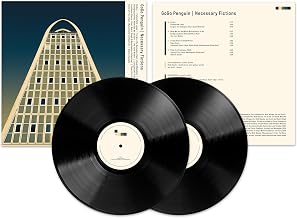
By the time Necessary Fictions appeared in 2025, GoGo Penguin had fully embraced the creative possibilities of its new lineup.
The album deepened the group’s fascination with atmosphere, texture and emotional storytelling while preserving the rhythmic precision that had always defined its sound.
Rather than presenting radical stylistic departures, the recording refined ideas developed across the previous decade.
Acoustic piano intertwined with subtle electronic treatments.
The bass lines became increasingly melodic.
Jon Scott’s drumming introduced fresh layers of color without disrupting the trio’s collective identity.
The result was music that felt unmistakably like GoGo Penguin while continuing to evolve with quiet confidence.
In an era when many successful groups rely on repetition, the trio remained committed to artistic growth.
Essential Albums
For listeners discovering GoGo Penguin for the first time, these recordings offer the clearest introduction to the ensemble’s remarkable evolution.
- Fanfares (2012) — The remarkable debut that established the trio’s minimalist, rhythm-driven identity.
- v2.0 (2014) — The international breakthrough and Mercury Prize-nominated masterpiece.
- Man Made Object (2016) — A richer and more ambitious exploration of rhythm, harmony and atmosphere.
- A Humdrum Star (2018) — Perhaps the definitive expression of the trio’s mature compositional voice.
- Everything Is Going to Be OK (2023) — The first recording with drummer Jon Scott, marking a confident new chapter.
- Necessary Fictions (2025) — A beautifully refined continuation of the group’s evolving artistic vision.
Together, these albums illustrate why GoGo Penguin has become one of the most influential piano trios in contemporary European jazz.
Redefining the Piano Trio for the Twenty-First Century
Looking back over the history of jazz, it becomes clear that the piano trio has repeatedly served as one of the genre’s greatest laboratories for innovation. From the conversational elegance of the Bill Evans Trio to the rhythmic brilliance of Oscar Peterson, from the cinematic experimentation of Esbjörn Svensson Trio to the genre-defying explorations of Brad Mehldau, each generation has reimagined the format according to its own artistic concerns. GoGo Penguin belongs naturally within that lineage, yet its contribution is unlike any that came before.
The trio did not revolutionize the piano trio by making it louder or more technically complex.
Instead, it quietly changed the way listeners perceive rhythm.
Repetition became narrative.
Texture became harmony.
Silence became structure.
Electronic thinking entered acoustic performance without requiring electronic instruments.
In doing so, GoGo Penguin demonstrated that innovation often emerges not from abandoning tradition, but from listening to it through a different cultural lens.
Their music speaks fluently to jazz audiences, contemporary classical listeners, electronic music enthusiasts and film score admirers without ever appearing designed to satisfy market expectations. That rare universality explains why the trio has become one of the defining voices of modern European jazz.
Beyond Genre
Perhaps the most remarkable aspect of GoGo Penguin’s success is that discussions about the trio rarely remain confined to jazz.
Their albums frequently appear in playlists devoted to ambient music.
Minimalism.
Post-rock.
Neo-classical composition.
Cinematic soundtracks.
Electronic music.
Far from weakening the group’s jazz identity, this broad reception reinforces one of jazz’s oldest traditions: openness to dialogue.
The trio has never attempted to erase stylistic boundaries through novelty.
Instead, it reveals that those boundaries were often less rigid than listeners imagined.
A repeated piano figure may owe as much to Steve Reich as to McCoy Tyner.
A bass ostinato may evoke both Charles Mingus and techno producers from Detroit.
A drum pattern can simultaneously suggest bebop independence and contemporary electronic sequencing.
These relationships emerge naturally rather than through deliberate fusion.
That subtlety distinguishes GoGo Penguin from many crossover projects.
JazzLatitude Insight
GoGo Penguin’s music reminds us that every generation discovers jazz through the sounds surrounding it. For previous musicians, those sounds might have been blues, gospel or rock. For GoGo Penguin, they included techno, IDM, ambient music and minimalist composition. The result is not a departure from jazz history but a continuation of its oldest creative instinct: absorbing the present without forgetting the past.
The Influence of Manchester
The importance of Manchester extends far beyond geography.
The city’s cultural history helped shape the trio’s artistic philosophy in ways that continue to define its music.
Unlike London, whose jazz tradition often developed around established institutions, Manchester fostered creative communities where improvisers, electronic producers, indie musicians and visual artists interacted with remarkable freedom.
This atmosphere encouraged experimentation without demanding stylistic allegiance.
GoGo Penguin inherited that spirit.
Its music carries the rhythmic precision of electronic clubs, the emotional introspection of post-rock and the compositional discipline of contemporary classical music, all filtered through the collective listening that remains central to jazz.
As the international reputation of British jazz has expanded during the past decade, the trio has become one of the movement’s most distinctive ambassadors.
Alongside artists such as Matthew Halsall, Portico Quartet, Mammal Hands, Nubya Garcia, Ezra Collective and Yussef Dayes, GoGo Penguin has helped demonstrate that British jazz is no longer defined by a single sound or aesthetic.
It has become a remarkably diverse creative ecosystem.
Performance as Collective Conversation
One of the greatest pleasures of experiencing GoGo Penguin live is realizing how much of the music depends upon microscopic interaction.
At first glance, performances appear almost restrained.
There are few theatrical gestures.
Little overt showmanship.
The musicians remain intensely focused on one another.
Yet beneath that apparent calm lies astonishing precision.
Tiny changes in touch alter the emotional direction of an entire piece.
A subtle rhythmic displacement transforms the listener’s perception of pulse.
Dynamics evolve almost imperceptibly before suddenly revealing an entirely new landscape.
This approach reflects extraordinary trust.
Unlike ensembles built around extended individual solos, GoGo Penguin succeeds because every musician constantly shapes the collective architecture.
Improvisation exists less as isolated moments of virtuosity than as continuous negotiation.
The result is music that feels simultaneously composed and spontaneously alive.
Essential Collaborations and Artistic Connections
Although GoGo Penguin has maintained a remarkably consistent identity as an independent trio, its artistic dialogue extends through a wide network of musicians and traditions.
Among the most significant connections are:
- Blue Note Records — The legendary label that introduced the trio to an international audience while affirming its place within the evolving history of modern jazz.
- Esbjörn Svensson Trio (e.s.t.) — The Swedish pioneers whose reinvention of the piano trio opened conceptual pathways that GoGo Penguin would later explore from an entirely different perspective.
- Steve Reich — Though not a collaborator, his minimalist compositional language profoundly shaped the trio’s approach to repetition, gradual transformation and rhythmic architecture.
- Aphex Twin — An essential influence whose electronic aesthetic helped inspire the group’s translation of programmed rhythmic thinking into acoustic performance.
- Matthew Halsall and the contemporary British jazz movement — Together these artists illustrate the remarkable diversity of twenty-first-century British jazz, proving that innovation can emerge through many different artistic languages.
Technical Profile
Origin:
- Manchester, England
Formed:
- 2012
Current Members:
- Chris Illingworth – Piano
- Nick Blacka – Bass
- Jon Scott – Drums
Former Member:
- Rob Turner – Drums
Primary Styles:
- Contemporary Jazz
- British Jazz
- Minimalist Jazz
- Piano Trio
- Acoustic Electronica
- Modern European Jazz
Musical Characteristics:
- Repetitive minimalist structures
- Acoustic interpretation of electronic rhythms
- Collective improvisation
- Cinematic atmosphere
- Rhythmic precision
- Strong melodic development
Essential Albums:
- Fanfares (2012)
- v2.0 (2014)
- Man Made Object (2016)
- A Humdrum Star (2018)
- Everything Is Going to Be OK (2023)
- Necessary Fictions (2025)
Five Lesser-Known Facts About GoGo Penguin
1. The trio rarely relies on traditional jazz swing.
Although deeply rooted in jazz improvisation, much of its rhythmic language draws inspiration from techno, drum and bass and contemporary electronic music rather than classic swing patterns.
2. Minimalism influences the compositions as much as jazz.
The gradual evolution of repeating motifs owes as much to Steve Reich and Philip Glass as to Bill Evans or Keith Jarrett.
3. Acoustic instruments create an electronic illusion.
Many first-time listeners assume synthesizers or sequencers are involved, yet the overwhelming majority of the trio’s signature sound is produced through acoustic performance and exceptional ensemble precision.
4. The drummer change marked a genuine artistic evolution.
Jon Scott did not simply replace Rob Turner. His arrival subtly reshaped the group’s rhythmic vocabulary while preserving its collective identity.
5. The trio has become a gateway into contemporary jazz.
Many younger listeners discover modern jazz through GoGo Penguin before exploring artists such as e.s.t., Brad Mehldau, Tigran Hamasyan, Vijay Iyer and other innovators of the contemporary piano trio.
Frequently Asked Questions
What is GoGo Penguin?
GoGo Penguin is a British piano trio formed in Manchester. Known for blending jazz improvisation with minimalism, electronic music, contemporary classical composition and cinematic atmosphere, the group has become one of the defining ensembles of modern European jazz.
Why is GoGo Penguin important?
The trio has redefined the possibilities of the acoustic piano trio by incorporating rhythmic concepts from electronic music without abandoning jazz’s improvisational foundation, attracting audiences far beyond traditional jazz circles.
Which GoGo Penguin album should new listeners hear first?
v2.0 remains the ideal introduction, combining memorable compositions, rhythmic innovation and emotional accessibility. From there, A Humdrum Star and Everything Is Going to Be OK reveal the continuing evolution of the group’s musical language.
Is GoGo Penguin really jazz?
Yes, although its influences extend far beyond conventional jazz. The trio’s music is grounded in collective improvisation, interaction and compositional freedom while embracing minimalism, electronic music and contemporary classical traditions.
Which artists are similar to GoGo Penguin?
Listeners who appreciate GoGo Penguin often enjoy Esbjörn Svensson Trio, The Necks, Tigran Hamasyan, Brad Mehldau, Portico Quartet, Mammal Hands, Matthew Halsall, Alfa Mist and Vijay Iyer, all of whom expand the language of contemporary jazz through distinctive artistic perspectives.
JazzLatitude Rating
| Category | Rating |
|---|---|
| Compositional Originality | ★★★★★ |
| Ensemble Interaction | ★★★★★ |
| Rhythmic Innovation | ★★★★★ |
| Contemporary Relevance | ★★★★★ |
| Atmospheric Writing | ★★★★★ |
| Influence on Modern European Jazz | ★★★★★ |
| Replay Value | ★★★★★ |
| Accessibility for New Listeners | ★★★★★ |
| JazzLatitude Essential | ★★★★★ |
Final Thoughts
GoGo Penguin emerged at a moment when many questioned whether the acoustic piano trio still had unexplored territory to discover. After all, generations of extraordinary musicians had already transformed the format, from Bill Evans and Keith Jarrett to Esbjörn Svensson and Brad Mehldau. Yet the Manchester trio demonstrated that innovation rarely depends upon inventing new instruments or abandoning tradition. Sometimes it begins by listening carefully to the sounds that define one’s own era.
Their music reflects the world in which it was created. The repetitive pulse of electronic dance music, the emotional restraint of minimalism, the cinematic pacing of contemporary film scores and the collective interaction of jazz all coexist with remarkable naturalness. Rather than treating these influences as stylistic experiments, GoGo Penguin integrates them into a musical language that feels coherent, deeply personal and unmistakably modern.
Perhaps the trio’s greatest achievement lies in expanding the audience for contemporary jazz without diluting its artistic integrity. Listeners arriving through ambient music, post-rock or electronica soon discover the profound improvisational conversations taking place beneath the surface. Experienced jazz audiences, meanwhile, encounter fresh perspectives on rhythm, texture and form. Both groups leave with a broader understanding of what jazz can become.
As European jazz continues to evolve, GoGo Penguin stands among its most original and influential voices. The trio has shown that the future of the piano trio does not lie in choosing between tradition and innovation, but in allowing them to enrich one another through curiosity, patience and fearless musical imagination.
For anyone seeking to understand where contemporary jazz is heading, GoGo Penguin is far more than an exceptional ensemble.
It is one of the defining sounds of modern European music.