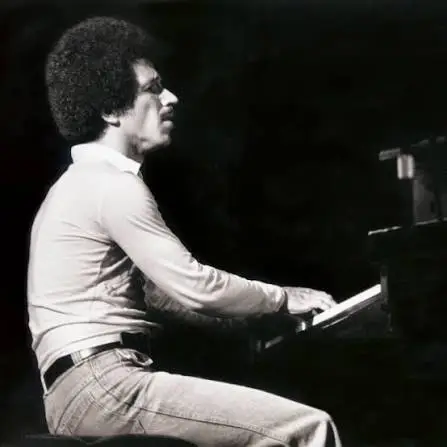
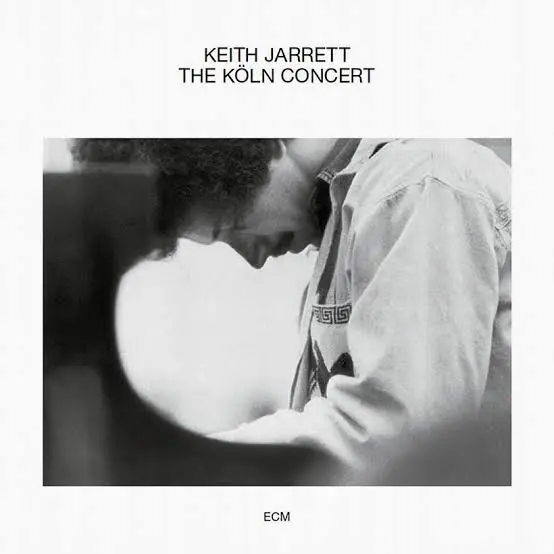
Discover the extraordinary story behind The Köln Concert, the best-selling solo piano album in history. Learn how Keith Jarrett transformed a disastrous performance into one of jazz’s greatest masterpieces.
Album: The Köln Concert
Artist: Keith Jarrett
Released: 1975
Label: ECM Records
Genre: Solo Piano · Contemporary Jazz
Producer: Manfred Eicher
Reading Time: Approximately 18 minutes
Historical Importance: ★★★★★
Musical Innovation: ★★★★★
Audiophile Rating: ★★★★★
Recommended For
- Piano enthusiasts
- Jazz newcomers
- Fans of improvisation
- Classical music listeners
- Audiophiles
Buy Amazon
The Concert That Almost Never Happened
Some of the greatest artistic achievements in history begin with meticulous planning.
Others begin with disaster.
On the evening of January 24, 1975, a twenty-nine-year-old American pianist arrived at the Cologne Opera House exhausted after a long drive through winter roads. Keith Jarrett had spent the previous days traveling across Europe, performing almost every night. His back pain had become nearly unbearable, his sleep was irregular, and physically he was in no condition to perform one of the most demanding concerts of his career.
Yet an even greater problem awaited him inside the concert hall.
The piano prepared for the performance was not the instrument he had requested.
Instead of a full-size Bösendorfer concert grand, Jarrett found a much smaller rehearsal piano that had been mistakenly placed on stage. Its bass register sounded weak. The middle register lacked warmth. The upper notes felt brittle and metallic. Even the pedals malfunctioned.
To most concert pianists, the evening would have ended there.
Jarrett seriously considered canceling the performance.
Only after considerable persuasion—and out of respect for the young concert promoter Vera Brandes, who had worked tirelessly to organize the event—did he reluctantly agree to take the stage.
What followed would become one of the most extraordinary recordings in music history.
Not because everything went according to plan.
But because nothing did.
JazzLatitude Insight
Many legendary jazz recordings benefited from exceptional instruments and ideal studio conditions. The Köln Concert became immortal despite an instrument that Keith Jarrett himself initially refused to play.
Jazz in Search of a New Voice
The mid-1970s marked a fascinating period in jazz history.
The revolutionary energy of the 1960s had transformed the musical landscape. Miles Davis had already opened the door to jazz fusion. Free jazz continued to challenge conventional structures. Electric instruments were becoming increasingly common, while traditional acoustic jazz searched for new directions.
Listeners found themselves divided.
Some embraced amplified experimentation.
Others longed for the intimacy of earlier acoustic traditions.
Keith Jarrett belonged to neither camp entirely.
Although he had played electric keyboards with Miles Davis, he viewed the piano not merely as an instrument but as an extension of spontaneous thought. Improvisation, for Jarrett, was never about displaying technique or navigating predetermined harmonic patterns. It was an act of discovery.
Each performance began without a written score.
Without a set list.
Without predetermined themes.
The music emerged only after his hands touched the keyboard.
This philosophy demanded extraordinary concentration, absolute trust in intuition and a willingness to embrace uncertainty.
Few musicians had attempted such artistic vulnerability on major concert stages.
Fewer still had succeeded.
Keith Jarrett Before Cologne
By 1975, Keith Jarrett was already regarded as one of the most gifted pianists of his generation.
Born in Allentown, Pennsylvania, he displayed exceptional musical ability from childhood. Classical piano lessons revealed remarkable technical command, yet jazz quickly became the language through which his imagination flourished.
During the 1960s, Jarrett performed with drummer Art Blakey before joining Charles Lloyd’s influential quartet. International tours exposed him to audiences across Europe, where listeners proved particularly receptive to his lyrical style and fearless improvisation.
His collaboration with Miles Davis introduced him to electric jazz, but it also clarified his artistic priorities.
Jarrett admired Miles deeply.
He simply did not wish to spend his career behind electric keyboards.
Returning to the acoustic piano allowed him to pursue a more personal musical vision.
Working closely with ECM Records and producer Manfred Eicher, Jarrett began recording increasingly ambitious projects that emphasized space, melody and emotional honesty rather than virtuosity alone.
This artistic partnership would prove essential to what happened in Cologne.
JazzLatitude Insight
ECM Records, founded by Manfred Eicher in 1969, became internationally recognized for its distinctive production philosophy: exceptional sound quality, generous use of silence and recordings that often feel as spacious as the landscapes that inspired many European jazz musicians.
Vera Brandes and an Unlikely Gamble
Every legendary performance has its central figure.
Sometimes it is not the artist.
At just seventeen years old, German concert promoter Vera Brandes had already developed a reputation for organizing ambitious jazz events despite her age.
Convincing established musicians to trust a teenage promoter required remarkable determination.
Booking Keith Jarrett represented her boldest project yet.
The concert at the Cologne Opera House carried enormous financial risk.
Tickets had sold well.
Expectations were high.
Everything depended on a single evening.
When Jarrett discovered the unsuitable piano, Brandes found herself facing catastrophe.
There was no replacement instrument available in time.
No opportunity to postpone the concert.
No practical solution.
The audience had already begun filling the hall.
Her persistence ultimately persuaded Jarrett to perform despite the circumstances.
Without that conversation backstage, The Köln Concert would almost certainly never have existed.
Learning the Instrument While Playing It
Most pianists spend hours becoming familiar with a concert instrument before stepping on stage.
Keith Jarrett had only minutes.
The rehearsal piano forced him to rethink everything.
Powerful left-hand passages caused distortion.
The bass lacked projection.
Certain registers sounded noticeably uneven.
Rather than fighting the instrument, Jarrett adapted to it.
He avoided the weakest notes.
He emphasized rhythmic ostinatos that compensated for the limited bass response.
He explored the brighter upper register in ways he might never have attempted on a superior piano.
What initially appeared to be a crippling limitation gradually became part of the performance’s identity.
Necessity reshaped creativity.
The flaws of the instrument influenced the music itself.
In retrospect, many listeners believe these limitations contributed to the concert’s distinctive sound.
The performance became less about technical perfection and more about imagination overcoming circumstance.
It is one of the clearest demonstrations in modern music that artistic greatness depends not on ideal conditions but on the ability to transform obstacles into opportunities.
Taking the Stage
As Keith Jarrett walked toward the piano, few people in the audience had any idea how close the concert had come to cancellation.
The lights dimmed.
Silence settled across the opera house.
Jarrett adjusted the bench, placed his hands above the keyboard and remained motionless for several seconds.
There was no written score waiting on the music stand.
No opening theme prepared in advance.
Only possibility.
The first notes emerged almost hesitantly, as though both pianist and instrument were discovering one another in real time.
Within minutes, uncertainty had given way to complete immersion.
The audience was no longer witnessing a performance.
They were witnessing creation itself.
And somewhere in that remarkable exchange between artist, instrument and audience, an imperfect evening quietly began its transformation into one of the most celebrated recordings in the history of music.