
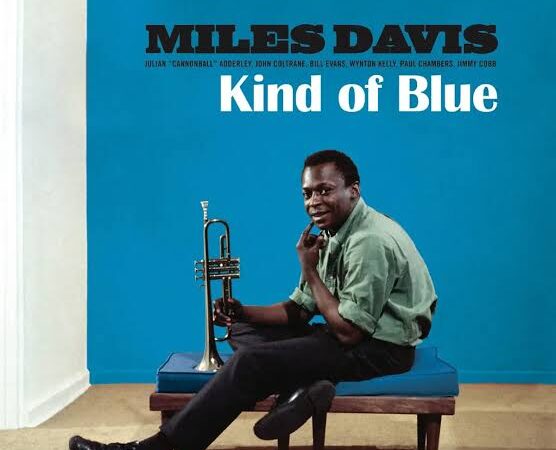
The Story Behind Kind of Blue: Why It Became the Greatest Jazz Album Ever Recorded
Some albums become classics. Others change the direction of music itself. Miles Davis’ Kind of Blue belongs to the second category.
Imagine stepping into Columbia’s legendary 30th Street Studio in New York on a quiet spring morning in 1959. The room is enormous, its vaulted ceiling a remnant of the building’s previous life as a church. Sunlight filters softly through the high windows while microphones stand ready in silence. There is no audience, no fanfare, and remarkably little sheet music.
Around the room are some of the greatest musicians of their generation. Miles Davis adjusts his trumpet. John Coltrane warms up with quiet phrases. Bill Evans sits calmly at the piano, searching for colors rather than notes. Cannonball Adderley smiles as if he already senses something special. Paul Chambers tunes his bass while Jimmy Cobb gently taps his cymbals.
What none of them fully realizes is that the music they are about to record will become the most celebrated jazz album in history.
More than sixty years later, Kind of Blue continues to inspire listeners across generations. It has introduced millions of people to jazz, influenced artists far beyond the genre, and become a benchmark for musical creativity. Yet its greatness is not built on complexity or technical spectacle. Instead, it comes from something far more difficult to achieve: simplicity, trust, and emotional honesty.
Buy Amazon
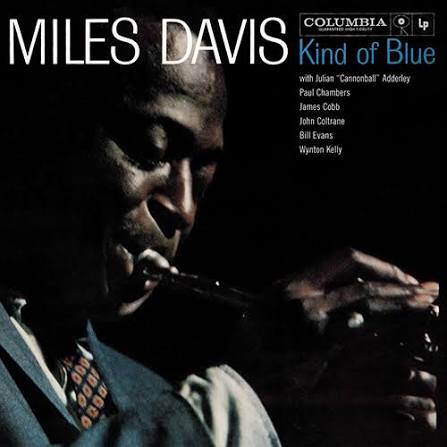
Table of Contents
- Jazz at a Turning Point
- The Vision of Miles Davis
- The Legendary Sextet
- Recording History in Two Sessions
- Understanding Modal Jazz
- A Journey Through Every Track
- Why Kind of Blue Changed Music
- The Album’s Lasting Legacy
- Essential Listening
- Fascinating Facts
- Frequently Asked Questions
- Final Thoughts
Jazz at a Turning Point
By the late 1950s, jazz had already undergone several revolutions.
Swing had dominated dance halls during the 1930s and 1940s before giving way to bebop, a style that emphasized dazzling improvisation, rapid chord changes, and extraordinary technical ability. Artists like Charlie Parker and Dizzy Gillespie had completely transformed the language of jazz.
Yet by 1958, many musicians felt that bebop had become increasingly restrictive. Improvisation often meant navigating intricate harmonic structures at incredible speed. While intellectually exciting, it sometimes left little room for melody, atmosphere, or silence.
Miles Davis believed there was another way. Rather than adding more notes, perhaps musicians needed fewer. Rather than constantly changing harmony, perhaps they needed space. This deceptively simple idea would become one of the defining innovations in modern jazz.
The Vision of Miles Davis
Miles Davis had never been interested in repeating the past. Throughout his career, he consistently reinvented himself, moving from bebop to cool jazz, hard bop, modal jazz, and eventually jazz fusion. His willingness to embrace change became one of his defining characteristics. For Kind of Blue, Davis drew inspiration from theoretical concepts developed by composer George Russell, particularly the idea of improvising over musical modes instead of dense chord progressions. He deliberately avoided giving his musicians complete arrangements. Instead, he presented them with brief sketches containing scales, basic structures, and emotional directions. His goal was simple.
He wanted musicians to react honestly in the moment. That decision gave the album its extraordinary sense of freshness—a quality that listeners still feel today.
The Legendary Sextet
Few recording sessions have ever assembled a lineup of comparable brilliance.
The musicians included:
- Miles Davis — Trumpet
- John Coltrane — Tenor Saxophone
- Julian “Cannonball” Adderley — Alto Saxophone
- Bill Evans — Piano
- Paul Chambers — Bass
- Jimmy Cobb — Drums
Pianist Wynton Kelly appears on “Freddie Freeloader,” bringing a more blues-oriented approach to that single track.
Each artist represented a distinct musical personality, yet none attempted to dominate the conversation. Their collective restraint became one of the album’s defining strengths.
Recording History in Two Sessions
Perhaps the most astonishing fact about Kind of Blue is how quickly it came together.
The album was recorded during just two sessions:
- March 2, 1959
- April 22, 1959
There were very few rehearsals. Most of the musicians encountered the material for the first time inside the studio. Miles Davis believed that over-rehearsing would remove the spontaneity that gives jazz its emotional power. Listening to the album today, that philosophy is unmistakable. Every solo feels like genuine discovery rather than polished repetition.
Understanding Modal Jazz
One of the reasons Kind of Blue remains so influential is its role in popularizing modal jazz. Traditional bebop improvisation often requires musicians to navigate rapidly changing chord progressions. Modal jazz simplifies this framework by allowing performers to remain within a single scale—or mode—for much longer periods.
This creates several important artistic advantages:
- Greater melodic freedom
- More expressive phrasing
- Increased emotional depth
- Stronger interaction between musicians
- More space for silence and dynamics
Instead of demonstrating virtuosity through speed, musicians focus on storytelling.
That subtle shift changed jazz forever.
Track-by-Track Highlights
So What
The album begins with one of the most recognizable bass introductions in jazz history.
Paul Chambers establishes the famous motif before Bill Evans paints shimmering harmonic colors.
Miles Davis enters with remarkable restraint, proving that confidence often requires fewer notes rather than more.
Freddie Freeloader
The album’s blues centerpiece introduces pianist Wynton Kelly.
His energetic, swinging style offers a fascinating contrast to Bill Evans’ more impressionistic approach heard throughout the rest of the album.
Blue in Green
Widely regarded as one of the most beautiful ballads ever recorded, “Blue in Green” unfolds slowly, almost like a quiet conversation.
Its emotional depth continues to captivate listeners decades after its release.
All Blues
Built on a familiar blues structure yet transformed through modal harmony, “All Blues” perfectly balances accessibility with innovation.
Jimmy Cobb’s subtle drumming provides one of the finest examples of tasteful accompaniment in jazz history.
Flamenco Sketches
The album concludes with extraordinary freedom.
Each musician decides independently how long to remain within each mode before moving to the next, creating one of the most organic performances ever captured on tape.
Why Kind of Blue Changed Music Forever
Few jazz albums have influenced as many different genres.
Its spacious musical language inspired:
- Rock musicians
- Classical composers
- Film score composers
- Ambient artists
- Progressive musicians
- Contemporary jazz performers
Beyond style, Kind of Blue introduced a new philosophy of improvisation.
It demonstrated that emotional honesty could be more compelling than technical complexity.
That lesson continues to shape music today.
Lasting Legacy
The album remains the best-selling jazz recording in history.
Universities teach it.
Professional musicians study it.
Critics consistently rank it among the greatest albums ever recorded in any genre.
It has also been preserved by the Library of Congress as a culturally significant work, ensuring that future generations will continue discovering its remarkable artistry.
Very few recordings achieve such universal respect.
Essential Listening
If you enjoyed Kind of Blue, these albums provide the perfect next steps:
- Milestones — Miles Davis
- Sketches of Spain — Miles Davis
- A Love Supreme — John Coltrane
- Portrait in Jazz — Bill Evans
- Sunday at the Village Vanguard — Bill Evans Trio
- Somethin’ Else — Cannonball Adderley
- Giant Steps — John Coltrane
Fascinating Facts
- The album was recorded inside a converted church.
- Most tracks were recorded after minimal rehearsal.
- Bill Evans wrote the famous original liner notes.
- “So What” became one of the most frequently performed jazz standards.
- The album has sold millions of copies worldwide.
- It introduced countless listeners to jazz for the very first time.
Frequently Asked Questions
Why is Kind of Blue considered the greatest jazz album?
Because it combines innovation, accessibility, emotional depth, and extraordinary performances from some of the greatest musicians in jazz history.
What makes modal jazz different?
Modal jazz focuses on scales rather than rapidly changing chord progressions, giving musicians greater freedom to develop melodic ideas.
Did Bill Evans play on every track?
No. Wynton Kelly performs piano on “Freddie Freeloader,” while Bill Evans plays on the remaining tracks.
Is Kind of Blue suitable for beginners?
Absolutely. It is widely considered one of the finest introductions to jazz because of its lyrical melodies, relaxed tempos, and timeless atmosphere.
Final Thoughts
More than sixty-five years after its release, Kind of Blue still sounds remarkably modern. It reminds us that the most revolutionary ideas are not always the loudest or the most complicated. Sometimes, true innovation comes from leaving space—for melody, for silence, and for imagination.
Whether you are discovering jazz for the first time or revisiting a lifelong favorite, Kind of Blue remains an essential listening experience. It is more than an album; it is a timeless conversation between extraordinary musicians who trusted one another enough to create something that transcends generations.
Suggested External References
- Miles Davis Official Website
- Columbia Records Archive
- Library of Congress – National Recording Registry
- Smithsonian Jazz