
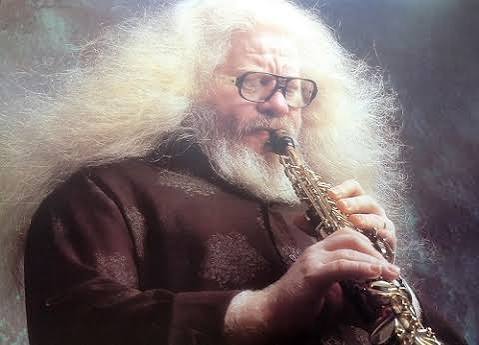
A Dedication That Contains an Entire Life
There is something unusually intimate about the title Pra Você, Ilza. Before a note is heard, Hermeto Pascoal has already placed the music inside a personal history. Ilza da Silva, his wife and lifelong companion, died in 2000 after sharing decades of a life in which family, composition, rehearsal, travel and musical experimentation were rarely separate worlds. To dedicate an album to her was therefore not simply to attach a name to a collection of pieces. It was to acknowledge a presence embedded in the conditions from which much of Hermeto’s music had emerged.
Released in 2024 with Hermeto Pascoal & Grupo, Pra Você, Ilza belongs to the extraordinary late period of an artist who had long ago escaped any useful definition based on genre. By this stage, Hermeto was no longer required to demonstrate that Brazilian regional traditions could coexist with jazz improvisation, sophisticated harmony, free-form experimentation, orchestral thinking and sounds drawn from everyday life. He had spent more than half a century proving that such distinctions were often less interesting than the musical relationships hidden between them. What mattered now was not another declaration of freedom but what an artist could do after freedom had become his normal condition.
That makes Pra Você, Ilza a particularly revealing album. Its emotional center is remembrance, yet the music does not behave like a conventional memorial. There is little sense of Hermeto withdrawing into solemnity or treating grief as a demand for restraint. The vitality associated with his work remains intact: melodies turn unexpectedly, rhythms refuse to remain inside a single frame, ensemble passages can suddenly open into improvisation, and moments of tenderness coexist with the humor and curiosity that have always prevented his music from becoming monumental in the conventional sense.
Hermeto’s universe has never separated seriousness from play. On Pra Você, Ilza, that principle acquires another meaning. Celebration becomes a form of remembrance.
To understand why, it helps to return to the beginning.
From Lagoa da Canoa to a Music Without Borders
Hermeto Pascoal was born in 1936 in Lagoa da Canoa, in the northeastern Brazilian state of Alagoas, into a rural environment far removed from the institutions that usually shape stories about major twentieth-century composers. His albinism limited the amount of time he could spend working outdoors under the intense sun, and music became one of the spaces in which his imagination could roam freely. The sounds surrounding him—birds, animals, metal objects, water, voices, local festivities and regional instruments—were not background noise to be filtered out. They were potential musical material.
This way of listening would remain fundamental. Hermeto’s later reputation for turning kettles, bottles, toys, pipes, farm objects and environmental sounds into instruments can sometimes be presented as eccentricity, as though the point were simply that he could make music from unusual things. But the deeper idea is more radical. Hermeto refuses the assumption that music begins only after an approved instrument enters the room. Pitch, rhythm and timbre already exist everywhere. The musician’s task is to recognize relationships among them.
His early professional development, however, was grounded in demanding instrumental practice. Accordion became crucial, and the regional music of northeastern Brazil provided a rhythmic and melodic foundation that would never disappear even as his vocabulary expanded. When he moved through Recife and later into the musical life of Rio de Janeiro and São Paulo, he encountered increasingly diverse environments: radio work, dance music, popular song, instrumental ensembles and the rapidly changing Brazilian scene of the 1960s.
Groups such as Sambrasa Trio and, most importantly, Quarteto Novo became central to that development. Quarteto Novo—with Hermeto alongside Airto Moreira, Heraldo do Monte and Theo de Barros—demonstrated that northeastern rhythmic languages could participate in modern instrumental music without being reduced to folkloric decoration. Baião, frevo and other Brazilian forms could interact with improvisation and harmonic sophistication on their own terms.
The implications were significant. Brazilian instrumental music did not need to choose between local identity and international modernity. For Hermeto, the very opposition was artificial.
When Miles Davis Entered Hermeto’s World
Hermeto’s international visibility expanded dramatically around the turn of the 1970s. His connection with Airto Moreira helped place him in contact with musicians in the United States, and his appearance within the orbit of Miles Davis became one of the most frequently repeated episodes in his biography. Hermeto’s compositions appeared on Davis’s Live-Evil, an encounter that placed the Brazilian musician close to one of the most radical transformations then taking place in American jazz.
It is tempting to make Miles the central legitimizing figure in this story, but doing so reverses the more interesting relationship. Hermeto did not become adventurous because he encountered Miles Davis. He arrived with a musical imagination already formed by Brazilian traditions, improvisational practice and an unusually expansive conception of sound. What the encounter demonstrated was how compatible that imagination could be with musicians who were themselves trying to escape inherited boundaries.
The 1970s made this increasingly clear. Hermeto developed a body of work in which composition could be extraordinarily detailed while performance remained volatile. Albums such as Slaves Mass brought his ideas to international listeners, while subsequent recordings deepened a language that could contain dense ensemble writing, lyrical themes, rhythmic complexity, free improvisation and sounds whose origins seemed to belong as much to the street, kitchen or countryside as to the studio.
This is where the phrase Música Universal, so closely associated with Hermeto, becomes useful. It should not be understood as a claim that his music belongs nowhere in particular. Quite the opposite. Hermeto’s universality grows from an intense attention to specific sounds and traditions. Northeastern Brazil remains present, but so do choro, samba, jazz, classical composition, popular song, experimental practice and countless experiences that resist classification.
Universal, in Hermeto’s sense, does not mean culturally neutral.
It means that no sound must remain isolated from another merely because a category says it should.
The Grupo as a Musical Community
One of the great developments in Hermeto’s career was the formation of ensembles capable of living inside this language rather than merely performing it. The Grupo became essential because Hermeto’s compositions require more than technical proficiency. They demand musicians who can move rapidly between precision and openness, who understand complex rhythmic structures without making them sound academic, and who can respond to unexpected musical events without treating them as mistakes.
During the celebrated period associated with musicians such as Jovino Santos Neto, Itiberê Zwarg, André Marques and other collaborators across different generations, the idea of Hermeto’s ensemble became inseparable from intensive rehearsal and collective musical life. The music could be meticulously organized, but its organization was designed to make spontaneity possible.
This apparent contradiction is central to Hermeto. Freedom is not necessarily the absence of structure. Sometimes an extremely sophisticated structure allows musicians to move with greater freedom because they understand the architecture around them.
The result is why Hermeto’s music can sound simultaneously composed and discovered. A melody may arrive with almost songlike clarity, only for the ensemble to expose rhythmic implications hidden inside it. An improvisation may seem to move far from the written material before revealing that it has been responding to the composition all along. Dense passages can suddenly become transparent. Humor may interrupt virtuosity. A seemingly chaotic moment can resolve into collective precision.
These qualities matter enormously when approaching Pra Você, Ilza. The album is not simply Hermeto surrounded by musicians executing his ideas. It belongs to a tradition of collective interaction he spent decades cultivating.
The word Grupo is therefore not incidental.
Ilza and the Life Behind the Music
The public mythology surrounding Hermeto understandably concentrates on the extraordinary musician: the multi-instrumentalist surrounded by keyboards, flutes, accordions, percussion and unexpected objects; the composer capable of writing music at astonishing speed; the white-haired figure who seems permanently delighted by the discovery of another sound.
But artistic lives are sustained by less visible structures.
Ilza was part of Hermeto’s life long before the international festivals, canonical albums and institutional recognition. Their marriage belonged to the years in which he was still building a career through the practical realities of Brazilian professional music. They raised a family while Hermeto’s artistic world expanded from regional work and radio into increasingly ambitious ensembles, recordings and international travel.
When Ilza died in 2000, Hermeto lost someone connected not merely to his private life but to the long arc of his development as a musician. More than two decades later, naming an album Pra Você, Ilza gives that history public form without turning it into biography set to music.
This distinction is important. The album does not require listeners to reconstruct private events or decode every composition as a message. Hermeto’s music has always resisted such narrow translation. Emotion enters through movement, melody, interaction and memory rather than through a fixed narrative.
What changes is the frame.
Knowing the dedication makes the vitality of the album more moving, not less. The energetic passages do not contradict remembrance; they suggest a conception of remembrance in which a person remains present through the life that continues around their absence.
For Hermeto, whose musical imagination has always depended on finding sound where others might hear only ordinary life, this feels entirely consistent.
An Elder Artist Who Refuses to Become a Museum Piece
Late-career albums often arrive burdened by expectations. Listeners search for retrospection, final statements or simplified versions of the qualities that made an artist important decades earlier. The musician is treated as a historical figure before the music has been allowed to exist in the present.
Hermeto has consistently resisted that process.
By the time of Pra Você, Ilza, he had already become one of the most internationally recognized figures in Brazilian instrumental music. His influence could be heard across generations of composers and improvisers. His archive was substantial enough to support endless historical reassessment. Yet the music continued to behave as though discovery remained unfinished.
That may be one of the most important things about the album. Hermeto does not imitate his younger self. Nor does he attempt to prove contemporary relevance by adopting fashionable production techniques or forcing his music into newer genres. Instead, he trusts the system of curiosity he has spent a lifetime developing.
The result feels neither nostalgic nor defensive.
There are echoes of earlier Hermeto because the underlying musical principles remain connected: rhythmic elasticity, harmonic richness, unexpected instrumental combinations, melodic generosity and the constant possibility that the ensemble will transform what initially appears straightforward. But these are not quotations from a golden age. They are elements of a living vocabulary.
This distinction separates an active musical language from a personal style that has hardened into mannerism.
Hermeto remains interested in what can happen next.
Memory as Motion
The emotional achievement of Pra Você, Ilza begins to emerge from this refusal to freeze either the past or the person being remembered. The album could easily have been built around solemnity. Instead, it moves.
That movement carries decades of history with it: Lagoa da Canoa and the sounds of northeastern Brazil; accordion and radio work; Quarteto Novo; the international encounters surrounding Miles Davis; the development of Música Universal; the disciplined freedom of the Grupo; family life; loss; and an artistic curiosity that survived every attempt to classify it.
Ilza belongs inside that history.
So does joy.
The title may direct the album toward one person, but the music opens outward. That is one of Hermeto Pascoal’s enduring paradoxes. The more personal the source becomes, the less confined the resulting music can feel.
Pra Você, Ilza begins as a dedication.
It becomes something larger: a portrait of how memory can remain alive when a musician refuses to treat the past as a closed room.
Buy Amazon

Inside Pra Você, Ilza: Music That Refuses to Stand Still
If the dedication gives Pra Você, Ilza its emotional center, the music itself refuses to remain inside a single emotional register. That is essential to understanding Hermeto Pascoal. A memorial album from another composer might naturally move toward contemplation, reduced tempos and an atmosphere of reverence. Hermeto takes a different route. Remembrance becomes active. The ensemble moves, melodies unfold with almost conversational ease, rhythmic ideas continually reorganize the ground beneath them, and moments of tenderness exist alongside humor, surprise and exuberance. The past is present, but it has not been embalmed.
This quality connects the album to Hermeto’s larger philosophy of Música Universal. For decades, his compositions have treated musical categories less as boundaries than as materials. Brazilian regional traditions, jazz, choro, samba, frevo, baião, sophisticated harmonic writing, free improvisation and chamber-like ensemble detail can enter the same piece without requiring an explanation for their coexistence. What prevents this variety from becoming collage is Hermeto’s extraordinary sense of internal logic. However unexpected a transition may initially seem, it usually emerges from something already present in the music: a rhythmic cell, melodic contour, harmonic possibility or instrumental gesture waiting to be expanded.
On Pra Você, Ilza, that process feels especially natural because Hermeto no longer needs to demonstrate the breadth of his vocabulary. The music does not announce its eclecticism. It simply moves through the world he has spent a lifetime constructing. Listeners familiar with his work can recognize characteristic turns—rhythmic displacement, sudden ensemble responses, melodies whose apparent simplicity conceals harmonic complexity—but the album rarely feels like a catalogue of signatures. Its strongest quality is continuity.
That continuity is emotional as much as musical. Hermeto allows affection to remain complicated. Memory can be gentle without becoming passive, joyful without denying loss and intimate without becoming private to the point that an outside listener cannot enter.
Composition as a Living Architecture
One of the persistent misunderstandings surrounding Hermeto is that his reputation for spontaneity somehow places composition in a secondary role. In reality, his music demonstrates the opposite. The freedom heard in his ensembles is frequently possible because the written architecture underneath it is so strong.
Hermeto thinks compositionally even when dealing with materials that appear spontaneous. A melodic phrase may contain rhythmic implications that only become clear after several transformations. An accompaniment may begin as support and later reveal itself as an independent line. A transition that sounds almost accidental may prepare the harmonic environment for an entirely different section. Improvisation is not simply inserted between composed passages; it often grows from their internal possibilities.
That approach distinguishes the Grupo from a conventional ensemble in which a composer supplies charts and musicians reproduce them efficiently. Hermeto’s music requires collective understanding. Players must know where the written material is going, but they also need enough flexibility to recognize possibilities that emerge during performance. The composition provides identity without closing the door.
This is why the music can sound so relaxed even when the underlying material is difficult. Technical complexity rarely becomes the subject. Hermeto has little interest in asking listeners to admire complexity merely because it exists. Difficult passages serve motion, character and interaction. Virtuosity is absorbed into the musical conversation.
On Pra Você, Ilza, this balance prevents the album’s emotional significance from becoming heavy. The arrangements remain alive because the musicians are not simply illustrating remembrance. They are participating in it.
Rhythm as a Way of Thinking
Rhythm has always been one of the deepest organizing forces in Hermeto’s music, but describing it exclusively through meter misses what makes his approach distinctive. Rhythm for Hermeto is not simply a grid over which melody and harmony are placed. It is a way of discovering relationships.
The northeastern Brazilian traditions that shaped his early life remain fundamental. Baião, frevo, forró and related rhythmic languages provided him with patterns whose identities depend not only on where accents fall but on how different layers interact. Later encounters with samba, jazz and other forms expanded those possibilities without erasing their origins.
Consequently, Hermeto’s rhythmic writing can feel simultaneously grounded and unstable. The listener may sense a strong pulse while individual instruments appear to approach it from different angles. Phrases stretch across bar lines. Accents migrate. Percussion may reinforce the ensemble at one moment and provoke it at another. A figure that initially appears to be accompaniment can become the engine of a transition.
The remarkable achievement is that this rarely feels mathematical in performance. The musicians inhabit the complexity rather than displaying it.
That distinction is crucial. Many composers can write difficult rhythmic music. Hermeto’s particular gift lies in making complexity feel bodily. Even when the listener cannot identify the structure analytically, the movement remains intelligible.
Within Pra Você, Ilza, rhythm becomes one of the principal ways the album avoids becoming static. The dedication may look backward, but the rhythmic language continually insists on the present tense.
The Sound of the Grupo
Hermeto’s relationship with ensemble playing also separates his music from the mythology of the solitary genius. His personality is unmistakable, but the music depends on interaction. The Grupo is not simply a frame around him.
Across the decades, musicians associated with Hermeto have needed a particular combination of discipline and openness. They must read demanding material, understand Brazilian rhythmic traditions, improvise convincingly and react instantly when the music changes direction. Just as importantly, they need to understand Hermeto’s sense of humor. Playfulness is not decorative in this world; it is part of the method.
That creates an unusual ensemble character. A performance can move from tightly coordinated writing into something that seems almost chaotic and then suddenly reveal that everyone has remained connected. One musician may introduce a gesture that another immediately develops. A rhythmic displacement can become collective. An unexpected sound may be treated not as an interruption but as an invitation.
This responsiveness is central to Música Universal because Hermeto’s idea of universality has always included people as much as styles. Music exists through relationships between listeners and sounds, between written material and improvisation, between individual personality and collective awareness.
On an album dedicated to Ilza, the communal dimension becomes especially meaningful. The music remembers one person through the actions of many.
Melody Without Sentimentality
For all the attention given to Hermeto’s harmonic and rhythmic sophistication, his gift for melody is sometimes underestimated. His themes can possess an immediate, almost songlike clarity. What makes them distinctive is what happens around that clarity.
Hermeto rarely treats a melody as an object to be preserved unchanged. A theme may be harmonized differently, placed against a shifting rhythmic environment, divided among instruments or returned after improvisation with a transformed emotional meaning. The melody remains recognizable while its surroundings continue to evolve.
This ability becomes particularly important on Pra Você, Ilza. A dedication of this nature could easily invite sentimentality, especially from a composer remembering a life partner. Hermeto avoids that trap not by suppressing emotion but by allowing emotion to remain mobile.
Tenderness does not have to announce itself as tenderness.
A lyrical passage can contain rhythmic tension. A joyful section can carry the awareness of memory. A harmonically rich sequence can suddenly open into something almost direct. Hermeto trusts melody enough not to overload it with explanation.
The effect is often more moving precisely because the music refuses to tell the listener exactly what remembrance should feel like.
Improvisation as Conversation
Jazz is one of the languages within Hermeto’s world, but his relationship with improvisation cannot be understood solely through the standard jazz model of theme followed by individual solos. Improvisation in his ensembles often functions more broadly as a form of conversation.
A musician can improvise inside an arrangement without necessarily stepping into a spotlight. Small reactions matter. Changes in articulation matter. Rhythmic responses between instruments can reshape the direction of a passage. The border between written and spontaneous material becomes deliberately difficult to locate.
This has profound consequences for the listener. Instead of waiting for the composition to stop so improvisation can begin, one hears a continuous process of negotiation. The score establishes possibilities; the musicians decide how those possibilities will live in time.
That principle connects Hermeto to some of the deepest traditions of jazz while also reflecting Brazilian ensemble practices in which rhythmic interaction has always depended on collective responsiveness. The result is not a fusion in the superficial sense. There is no need to identify where one genre ends and another begins.
Hermeto’s achievement is to make the question irrelevant.
The Everyday World as an Orchestra
Any discussion of Hermeto eventually reaches his fascination with unconventional sound sources, but the subject deserves more than a catalogue of eccentric instruments. Bottles, kettles, water, animal sounds, toys, pipes and household objects have appeared throughout his musical life because he hears the environment differently.
For Hermeto, an instrument is fundamentally something capable of producing a sound that can enter a relationship with another sound.
This idea places him surprisingly close to traditions of twentieth-century experimental composition, musique concrète and extended instrumental practice, yet his attitude rarely carries the institutional seriousness associated with those movements. He approaches discovery with delight. A strange timbre can be funny and musically useful at the same time.
The distinction matters because humor is one of the elements that keeps Hermeto’s experimentalism human. He does not present unusual sounds as evidence that the audience has entered an avant-garde laboratory. They belong to the same world as accordion, piano, flute, saxophone and percussion.
That democratic conception of sound remains part of the philosophical background of Pra Você, Ilza, even when the music operates through more familiar instrumentation. Decades of listening to the world as potential music have shaped how Hermeto organizes conventional instruments as well. Each timbre possesses personality. Each sound can become an event.
Music Written Every Day
Perhaps no project better reveals Hermeto’s relationship with composition than the Calendário do Som. Between June 1996 and June 1997, he undertook the extraordinary discipline of composing a piece for every day of the year, creating music associated with individual dates and birthdays.
The project reveals something essential about his creativity. Composition is not treated as an exceptional event requiring ideal conditions or a dramatic flash of inspiration. It is practice—a way of living.
That attitude helps explain the enormous quantity of music surrounding Hermeto and why his late career does not feel like a gradual retreat into a canonical past. For someone who has spent decades treating composition as daily activity, the idea of simply preserving earlier achievements would be profoundly unnatural.
Pra Você, Ilza belongs to this continuum. It carries history, but it is not trapped by history.
The album is the work of an elderly composer whose musical imagination remains oriented toward making rather than remembering alone. Even memory itself becomes material for creation.
A Brazilian Language That Became International Without Losing Its Accent
Hermeto’s international stature presents another important lesson. His music traveled widely without requiring him to flatten its Brazilian identity for export. The northeastern rhythms, melodic instincts and cultural experiences that shaped him remained audible even as his work entered jazz festivals, international collaborations and conservatory discussions around the world.
This is one reason his influence extends far beyond musicians who sound obviously like him. Hermeto demonstrated a model of internationalism based not on stylistic neutrality but on confidence in specificity.
A musician could engage jazz without becoming an imitation of American jazz. Brazilian traditions could participate in sophisticated contemporary composition without being presented as exotic color. Popular, regional, experimental and erudite practices could coexist without being arranged into a hierarchy.
This idea now feels familiar across much contemporary global jazz. Musicians increasingly build improvisational languages from local traditions while participating in international networks. Hermeto was exploring that possibility decades before it became a widely recognized model.
Pra Você, Ilza shows how natural the result can become after a lifetime. Nothing needs to be advertised as a crossover. The music simply speaks in the language Hermeto built.
Love Without a Final Cadence
The deepest achievement of Pra Você, Ilza may ultimately be the way it refuses closure.
A memorial usually implies an ending: a life completed, a period remembered, an absence acknowledged. Hermeto’s music recognizes absence but resists treating memory as something finished. Ilza’s name becomes attached to music that continues moving, improvising, changing and surprising.
There is something profoundly consistent about this.
Hermeto has spent his career hearing possibilities inside sounds that others might dismiss as ordinary. He has found composition inside environmental noise, sophisticated harmony inside regional traditions, freedom inside rigorous structures and humor inside virtuosity. On Pra Você, Ilza, he finds motion inside remembrance.
The dedication therefore becomes more than biography. It expresses the same philosophy that has always driven his music: nothing meaningful has to remain fixed in order to remain present.
Ilza belongs to the past.
The music does not.
And through that distinction, Pra Você, Ilza becomes not simply an album about someone Hermeto lost, but an affirmation of the musical world that continued to carry her presence forward.
Beyond Genre: Where Does Hermeto Pascoal Belong?
Trying to place Hermeto Pascoal inside jazz history immediately exposes the limitations of the categories normally used to organize it. He has improvised throughout his career, worked alongside major jazz musicians, appeared on recordings connected to Miles Davis, absorbed harmonic and rhythmic ideas from modern jazz and become a familiar presence at jazz festivals around the world. Calling him a jazz musician is therefore perfectly reasonable. It is also insufficient. Calling him a Brazilian composer is more accurate geographically but hardly more complete. His work contains northeastern regional traditions, samba, choro, frevo, baião, popular song, chamber-like writing, orchestral thinking, free improvisation, environmental sound and techniques that can approach the experimental avant-garde without ever surrendering the warmth and humor that make his music so recognizably human.
Hermeto’s own idea of Música Universal remains the most useful response because it avoids forcing these materials into a hierarchy. Jazz is not positioned above Brazilian regional music, nor is written composition treated as inherently more sophisticated than spontaneous invention. A melody learned through popular tradition can generate harmonic possibilities as rich as those derived from formal study. An everyday object can produce a sound as compositionally useful as a conventional instrument. A tightly notated passage and an improvised reaction can belong to the same musical argument.
This does not mean that all music becomes interchangeable. Hermeto’s universe is extraordinarily specific. His rhythmic imagination remains deeply marked by Brazil, particularly the Northeast, and his melodic sensibility carries histories that cannot be separated from the places in which he learned to listen. Música Universal is therefore not an escape from cultural identity. It is what becomes possible when cultural identity is strong enough not to fear encounter.
That distinction helps explain why Hermeto has become increasingly relevant to contemporary jazz. In a twenty-first-century scene where musicians routinely combine local traditions, improvisation, electronic sound, classical composition and popular forms, his career can seem almost prophetic. He demonstrated decades ago that musical identity could expand without dissolving.
A Different Kind of Brazilian Modernism
Brazilian music reached international audiences during the twentieth century through several powerful narratives. Bossa nova became one of the country’s most recognizable cultural exports. Samba remained foundational. Tropicalismo transformed the relationship between Brazilian popular music, mass culture, political confrontation and international influences. MPB produced generations of composers whose songs became part of the country’s cultural memory.
Hermeto belongs to this history while occupying a peculiar position within it. His work rarely depends on the conventional song form that carried so much Brazilian music internationally. Even when his melodies are immediately memorable, the compositions surrounding them may expand into intricate instrumental structures, rhythmic transformations or improvisational episodes. His relationship with Brazilian tradition is therefore less about representing recognizable styles than about understanding their internal possibilities.
Quarteto Novo was already pointing in this direction during the 1960s. Northeastern forms were not presented as picturesque additions to modern instrumental music; they became structural resources. Hermeto continued developing that principle until the distinction between regional source and contemporary experimentation became increasingly difficult to maintain.
This was a form of Brazilian modernism quite different from simply importing avant-garde techniques from Europe or the United States. Hermeto’s modernity emerged through recombination. A rhythmic language associated with popular or regional practice could become the foundation for highly complex composition. Improvisation could enter without requiring the music to become American jazz. Formal sophistication could coexist with humor and directness.
The resulting music remained unmistakably Brazilian precisely because Hermeto never treated Brazilian identity as something that needed to be protected from outside influence.
What Miles Davis Recognized
The Miles Davis connection remains irresistible because it places Hermeto beside one of the most famous musicians in jazz at a moment of radical transformation. Yet its historical value lies less in celebrity than in recognition. Miles had spent the late 1960s and early 1970s dismantling many of the assumptions surrounding his own music. Electric instruments, studio construction, rock rhythms, funk, abstraction and open-ended improvisation were becoming part of an increasingly volatile language.
Hermeto’s compositions could enter that environment because they already refused simple categorization.
Miles reportedly held Hermeto’s musical abilities in exceptionally high regard, but the enduring point is audible rather than anecdotal. The Brazilian composer did not arrive as a student waiting to absorb the innovations of American jazz. He brought another system of musical knowledge into the encounter. That relationship challenges the old model in which jazz influence travels in only one direction—from the United States outward.
Hermeto admired and learned from jazz, but he also contributed ideas that could surprise musicians at its center.
This reciprocal movement is increasingly important to how jazz history is understood today. The music has always traveled internationally, but histories of jazz have sometimes treated musicians outside the United States primarily as receivers. Hermeto’s career demonstrates why that framework is inadequate. By the early 1970s, musicians from Brazil were not simply adapting jazz; they were helping expand what internationally connected improvisational music could contain.
Influence Without Imitation
Hermeto’s influence is difficult to measure through stylistic imitation because copying his surface characteristics rarely captures what makes his music important. A musician could employ unusual objects, write complex Brazilian rhythms or combine accordion with jazz harmony and still miss the central principle.
The deeper inheritance is permission.
Hermeto demonstrates that musicians can construct systems around their own ways of hearing. They do not need to eliminate contradictions before beginning. Local traditions and international languages can coexist. Complexity and accessibility do not have to be enemies. Humor does not weaken serious composition. Written detail does not eliminate improvisational freedom. Advanced technique does not require emotional distance.
Generations of Brazilian instrumentalists have absorbed aspects of this lesson, whether through direct contact with Hermeto, study of his compositions or the broader environment his work helped create. His former collaborators carried their experiences into their own projects and educational practices. Musicians associated with Brazilian jazz and instrumental music increasingly operated within a landscape in which ambitious composition rooted in local rhythmic traditions no longer needed justification.
Internationally, the influence is more diffuse but equally significant. Contemporary musicians who integrate folk traditions with improvisation, composers who blur distinctions between chamber writing and jazz ensembles, and artists who treat environmental sound as part of an expanded instrumental vocabulary all work in territories Hermeto has inhabited for decades.
Not all of them sound like him.
That may be the strongest evidence of influence.
The Composer as Teacher
There is another dimension to Hermeto’s legacy that recordings alone cannot fully represent: the way his musical practice functions as education. Musicians entering his ensembles encounter not simply repertoire but a method of listening.
To perform this music convincingly, one must understand rhythm beyond counting, harmony beyond chord symbols and improvisation beyond soloing. The musician must remain aware of the ensemble even while navigating demanding individual material. Written information is essential, but so is responsiveness.
This creates a form of apprenticeship in which technical development and musical imagination cannot easily be separated. A player may learn a difficult composition, but the deeper lesson is how to hear relationships inside it.
The Calendário do Som extends that educational possibility beyond the ensemble. Its hundreds of compositions constitute not merely an enormous creative achievement but an invitation to study how a composer can continually generate form from everyday practice. The project challenges the romantic idea that composition depends on waiting for inspiration. Hermeto wrote because writing was part of living.
For younger musicians, that may be one of his most practical lessons.
Creativity can be cultivated through attention.
Why Pra Você, Ilza Matters in the Late Catalogue
With an artist whose career stretches across so many decades, late recordings can easily be treated as appendices to the supposedly essential work. The canonical narrative is usually established around youthful breakthroughs, and everything afterward becomes evidence of endurance.
Pra Você, Ilza deserves more than that.
Its importance does not depend on claiming that it replaces the landmarks of Hermeto’s earlier career. It does something different. The album allows listeners to hear what happens when a musical philosophy survives long enough to become completely internalized.
There is no need to announce Música Universal as a revolutionary proposition. The revolution has already happened inside the musician. Rhythmic languages coexist naturally. Written and improvised material communicate without anxiety. Brazilian identity and international experience no longer require negotiation. The ensemble operates within a vocabulary whose apparent unpredictability has become its own form of coherence.
The dedication to Ilza gives these qualities emotional weight. A lifetime of musical development is directed toward a relationship that existed across much of the same history. Personal memory and artistic memory become difficult to separate.
That is why the album should not be reduced to either category: neither simply a late Hermeto record nor simply a tribute to his wife.
It is where those two histories meet.
Listening to Age Without Listening for Decline
Jazz criticism has often struggled with aging. Younger musicians are praised for innovation; older musicians are evaluated according to whether they still resemble the versions of themselves that established their reputations. This can turn longevity into a test the artist never agreed to take.
Hermeto offers another possibility.
His late work does not need to compete with the physical intensity of youth because physical intensity was never the sole foundation of his music. Curiosity was. The ability to hear unexpected relationships remains more important than proving technical dominance.
This changes how Pra Você, Ilza can be heard. Rather than asking whether it matches a classic album from the 1970s or 1980s, the more interesting question is what decades of accumulated musical experience allow Hermeto to express now.
The answer lies partly in ease. Ideas that once might have seemed radical no longer need to be defended. A lifetime spent dissolving boundaries allows the late music to move through them without ceremony.
Age becomes perspective rather than limitation.
Hermeto and the Contemporary Global Jazz Landscape
The international jazz world surrounding Pra Você, Ilza is very different from the one Hermeto entered decades earlier. Musicians now circulate through festivals, conservatories, independent labels and digital platforms with unprecedented access to traditions far beyond their immediate environments. Contemporary jazz scenes in London, Johannesburg, São Paulo, Tokyo, Copenhagen and countless other cities increasingly draw upon local rhythmic, electronic and popular languages.
In this environment, Hermeto’s career appears less eccentric than foundational.
The principle that a musician can engage deeply with jazz while refusing to subordinate local musical knowledge to it has become central to many of the most interesting developments in contemporary improvisation. What once risked being marketed as “fusion” or “world jazz” can now be understood more accurately as musicians constructing modern languages from multiple inheritances.
Hermeto anticipated that freedom while insisting that Brazilian traditions were not raw material awaiting refinement by international jazz. They already contained sophisticated systems of rhythm, melody and collective interaction.
His work helped shift the question from “How can Brazilian music be combined with jazz?” toward something far more productive:
What happens when musicians stop assuming that either language must dominate?
The Radical Normality of Curiosity
Perhaps Hermeto’s greatest achievement is that experimentation eventually stops sounding experimental in his hands. After decades of hearing music everywhere, using unconventional sounds and allowing radically different traditions to communicate, curiosity becomes ordinary.
This may explain why humor remains so important. Hermeto does not approach musical discovery as a solemn act of transgression. He often seems delighted by it.
That attitude prevents his work from hardening into avant-garde doctrine. There is no manifesto demanding that listeners accept difficult music as an intellectual duty. The invitation is simpler: listen again. The object you ignored may contain a rhythm. The noise you dismissed may possess pitch. The regional tradition you considered limited may contain an entire compositional system. The rule separating two musical languages may exist primarily because nobody has bothered to question it.
Música Universal begins with that act of attention.
For Ilza, and for Everything That Continues
Eventually, Pra Você, Ilza returns us to the simplicity of its title.
For you, Ilza.
After the enormous history surrounding Hermeto Pascoal—the childhood in Alagoas, accordion, radio, Quarteto Novo, Airto Moreira, Miles Davis, international festivals, landmark recordings, Música Universal, the Grupo, hundreds of compositions and decades of experimentation—the album directs all of that accumulated musical life toward one person.
Yet Hermeto does not build a monument.
A monument stands still.
His music moves.
That difference may contain the deepest meaning of the record. Ilza is remembered not through an attempt to suspend time but through the continuation of the creative life they shared for decades. The ensemble plays. Rhythms shift. Melodies appear and transform. Musicians listen to one another. Seriousness turns suddenly toward humor. Written structures open into spontaneous decisions. The musical universe keeps expanding.
There is grief within that continuity, but grief does not receive exclusive ownership of memory.
This is consistent with everything Hermeto has taught listeners about sound. Nothing exists completely alone. A note acquires meaning through another note; rhythm emerges through relationships in time; improvisation responds to what has already happened; a regional tradition can communicate with another musical language without surrendering itself.
Memory works similarly.
The past remains present because it continues to interact with what comes afterward.
That is why Pra Você, Ilza feels larger than a tribute album. It offers a late-career view of the philosophy underlying Hermeto Pascoal’s entire musical life. Listen closely enough and boundaries begin to weaken: between Brazilian music and jazz, composition and improvisation, sophisticated technique and everyday sound, seriousness and play, private memory and collective expression.
Hermeto has spent a lifetime crossing those borders until crossing them no longer seems remarkable.
At this stage, perhaps “Música Universal” does not need to be understood as a genre at all. It is a practice of remaining available to sound, wherever it comes from.
Pra Você, Ilza brings that practice into one of its most personal contexts. The album looks backward without becoming nostalgic and carries loss without becoming motionless. It remembers through creation.
For an artist who has always insisted that music can be found almost anywhere, there could hardly be a more fitting act of love.
The world continues making sounds.
Hermeto Pascoal continues listening.
And somewhere inside that immense, restless musical universe, Ilza remains.