Tine Thing Helseth: The Trumpeter Who Made Lyricism a Form of Strength

Tine Thing Helseth: The Trumpeter Who Made Lyricism a Form of Strength

Beyond the Brilliant Trumpet

A Different Kind of Virtuosity

The trumpet has never had difficulty announcing itself. Across classical music, jazz, military traditions, ceremonial music and popular culture, its history is filled with projection: fanfares, calls, declarations, brilliance. Even when played quietly, the instrument seems to carry the memory of its public voice. For a classical soloist, that inheritance can become both an advantage and a trap. Technical brilliance attracts immediate attention, but the qualities that distinguish one trumpeter from another often emerge elsewhere — in phrasing, breath, color, patience and the ability to make a naturally assertive instrument sound intimate.

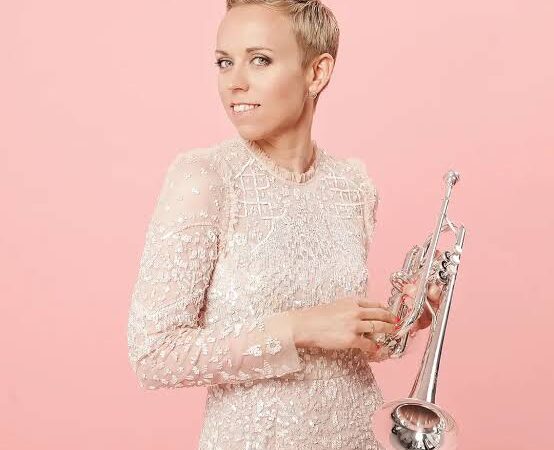
Tine Thing Helseth has built her career inside that tension. The Norwegian trumpeter possesses the technique required by the major concert repertoire, yet virtuosity alone does not explain why her playing has reached audiences far beyond the relatively specialized world of classical brass. What has increasingly defined her is an insistence that the trumpet can sing rather than merely shine. Her performances often emphasize the shape of a phrase before the force of an attack, allowing warmth, vulnerability and sustained melodic thinking to coexist with the instrument’s brilliance. That approach has taken her through Haydn and Hummel, contemporary concertos, chamber music, transcriptions, Norwegian repertoire, brass ensemble projects and collaborations that resist the assumption that a trumpet soloist should remain inside a narrowly defined canon.

By the time Echoes appeared in 2025, Helseth was therefore not trying to establish that she could command an orchestra. She had been doing that for years. The more interesting question was what kind of repertoire she wanted the trumpet to inhabit after nearly two decades on international stages. Her answer was an album built around Alexander Arutiunian, Krzysztof Penderecki and Mieczysław Weinberg: composers separated by background, generation and musical language, but united here by their ability to treat the trumpet as something more complicated than an instrument of triumph.

The album would become one of the clearest statements of Helseth’s mature musical identity. To understand why, however, it helps to begin before the concert halls, recordings and international recognition — with a young Norwegian musician learning what the trumpet could become when its volume was no longer the most interesting thing about it.

Growing Up With the Instrument

Helseth was born in Oslo in 1987 and began playing trumpet as a child. The instrument was not an exotic object arriving from outside family life: her mother also played trumpet, giving music an immediate domestic presence. Helseth has recalled childhood memories connected to listening while her mother rehearsed, an experience that later surfaced explicitly in Magical Memories, her deeply personal 2021 album with organ. The importance of that environment is easy to underestimate. Before the trumpet became a profession, it belonged to ordinary life.

That distinction helps explain something about Helseth’s later musicianship. She has rarely treated classical music as though its seriousness depends on distance from the listener. Her programs can be demanding without being defensive about accessibility, and melody is never treated as an embarrassment. This is particularly important for an instrument whose classical solo repertoire is smaller than that of the violin or piano. Trumpeters inevitably encounter questions of transcription, adaptation and repertoire-building. The challenge is not simply to perform the established works well, but to imagine a broader musical territory in which the instrument can remain convincing.

Helseth’s development was rapid. She studied with Heidi Johanessen at the Barratt Due Institute of Music and later with Arnulf Naur Nilsen at the Norwegian Academy of Music. By her late teens she was already attracting international attention. In 2006 she won second prize at the Eurovision Young Musicians competition, and the following year became the first classical artist to receive Newcomer of the Year at Norway’s Spellemann awards. A Borletti-Buitoni Trust Fellowship followed in 2009, and in 2013 she received the Echo Klassik Newcomer of the Year award.

Awards can establish a young musician’s visibility, but they can also create an expectation that a career will be defined by precocious technique. Helseth gradually moved beyond that category. The prodigy narrative gave way to something more sustainable: a musician building a repertoire, establishing long-term collaborations and deciding what kind of trumpet sound she wanted to carry from one musical environment to another.

Making the Trumpet Sing

Helseth’s sound is often described as lyrical, and the word is useful as long as it does not become shorthand for softness. Lyricism on the trumpet requires considerable physical control. The player must manage air, articulation and intonation while preserving the illusion that a melodic line is unfolding naturally. At high volume the trumpet can project with extraordinary directness; at lower dynamics, maintaining focus without allowing the tone to lose its center demands another kind of discipline.

Helseth has made that quieter authority central to her identity.

Listen to the way she approaches a long phrase and the emphasis often falls not on individual notes but on their destination. Attacks are shaped according to context rather than used as demonstrations of precision. Vibrato, when present, belongs to the emotional contour of the line. The instrument retains its metallic core, but the listener is invited to hear beyond it.

This quality became particularly valuable as Helseth expanded her repertoire. A player whose primary identity depends on brilliance can become restricted to music that rewards brilliance. A player who thinks vocally can enter a much wider range of material. Helseth’s discography reflects that freedom: standard trumpet concertos sit beside arrangements, Scandinavian melodies, contemporary compositions and music whose original identity may have little to do with brass.

Her 2021 album Magical Memories made this breadth unusually explicit. Created with organist Kåre Nordstoga, the program moved through Bach, Telemann, Grieg, Purcell, traditional melodies and music associated with Helseth’s own childhood memories. Rather than constructing a conventional recital around a single period or national school, she organized the album through personal connection. The trumpet became the thread linking music that had lived with her over time.

That decision tells us something essential about her career. Repertoire is not merely a catalogue of pieces to be mastered. It can also be autobiography.

The Ensemble Instinct

Helseth’s musical identity has never been confined to the image of a soloist standing in front of an orchestra. In 2007 she founded tenThing, an all-female brass ensemble that became an important parallel strand of her career. The group allowed her to explore another dimension of brass playing: collective precision without the hierarchy of soloist and accompaniment.

A brass ensemble demands a particular form of listening. Similar instrumental families share certain acoustic characteristics, which means balance and articulation become crucial. A single voice can easily dominate a texture. Phrasing has to be negotiated collectively. The pleasure comes partly from power, but the ensemble is most interesting when power is only one available color.

With tenThing, Helseth could move across arrangements and repertoire while challenging another historical limitation. Brass traditions, particularly at professional orchestral levels, had long been overwhelmingly male. An all-female ensemble therefore carried a social dimension even when the music itself remained the central argument.

That idea became particularly explicit with the 2024 album She Composes Like a Man. Its deliberately provocative title borrowed the language once used to praise women composers by comparing their work to male standards. The program instead placed music by women at the center, including composers such as Grażyna Bacewicz, Lili Boulanger, Florence Price and others whose work had too often occupied the margins of conventional concert programming.

The project demonstrated a characteristic Helseth approach. Rather than delivering an abstract lecture about representation, she built a musical program. The historical argument was made through performance.

This ensemble instinct would also matter in her orchestral work. Helseth may be the named soloist, but her strongest performances rarely sound as though the orchestra exists merely to frame her. The relationship is conversational. That becomes crucial in Echoes, where the orchestral writing is too substantial and unpredictable to function as decorative accompaniment.

A Repertoire Larger Than the Canon

Every classical trumpeter eventually confronts the dimensions of the repertoire. Haydn’s E-flat major concerto and Hummel’s concerto remain foundational, and works by composers such as Neruda and Arutiunian have become essential parts of the instrument’s concert tradition. But compared with pianists or violinists, trumpet soloists inherit a smaller body of major canonical concertos.

Helseth’s career can be understood partly as a response to that reality.

One solution is transcription. Music written for voice, strings or other instruments can reveal unexpected qualities when reimagined for trumpet. Another is commissioning. Contemporary composers can expand the technical and expressive language of the instrument rather than forcing each generation to circulate through the same handful of works. A third is rediscovery: looking beyond the most frequently performed repertoire toward compositions whose musical value exceeds their familiarity.

Helseth has pursued all three.

Her willingness to cross these boundaries does not mean that she treats every piece as interchangeable. On the contrary, the challenge is to preserve the identity of the music while allowing the trumpet to speak naturally inside it. A Grieg melody should not suddenly become a trumpet showpiece simply because a virtuoso is performing it. A contemporary concerto should not be reduced to an obstacle course of extended techniques. The instrument must serve the musical argument.

This principle became especially visible on Seraph in 2022, recorded with Ensemble Allegria. The program included Eric Ewazen’s Concerto for Trumpet and Strings, Rolf Wallin’s Elegi, James MacMillan’s Seraph, an elegy by Arutiunian and arrangements of Poulenc, Grieg and Satie. The mixture might appear eclectic on paper, but it revealed a recurring concern in Helseth’s playing: the trumpet as a carrier of sustained emotional line.

The record also pointed toward the territory she would explore more dramatically on Echoes. Contemporary and twentieth-century repertoire did not require her to abandon lyricism. It allowed her to test how lyricism survives when the surrounding music becomes darker, more fragmented or more volatile.

Returning to Arutiunian

Alexander Arutiunian occupies a special position in the modern trumpet repertoire. His concerto has become one of the instrument’s most frequently performed twentieth-century works, familiar to generations of students and professionals. Its combination of rhythmic vitality, Armenian-inflected melodic character and opportunities for expressive playing makes it an obvious vehicle for a trumpeter who wants to demonstrate both agility and songfulness.

For Helseth, however, familiarity was precisely what made returning to the work meaningful.

By the time of Echoes, Arutiunian’s concerto had been part of her musical life since adolescence. A piece learned young does not remain the same piece. Technique changes. Tempo can feel different. Phrases once approached primarily as physical challenges acquire structural meaning. Passages that initially demanded concentration can later become spaces for interpretation.

This transformation is one of the least visible aspects of a performing career. Audiences encounter a concerto during a particular evening; the soloist may have been living with it for twenty years.

Echoes begins from that accumulated relationship.

The album does not present Arutiunian as a nostalgic return to youthful repertoire. Instead, his music becomes one pole in a larger conversation. His concerto appears alongside his less familiar Theme and Variations, while Penderecki and Weinberg move the trumpet into more unsettled territory. The program therefore allows Helseth to place a work she has known for years beside music that asks different questions of the instrument.

Familiarity becomes the starting point rather than the destination.

The Road Toward Echoes

By 2025, Helseth had already performed with major orchestras across Europe and beyond, including the Oslo and Bergen Philharmonics, Philharmonia Orchestra, BBC Scottish Symphony Orchestra, Helsinki Philharmonic, Danish National Symphony Orchestra and Royal Stockholm Philharmonic. She had recorded standard concertos, chamber programs, personal arrangements and contemporary works. She had led tenThing, participated in festivals, presented music on Norwegian radio and television, taught trumpet and maintained a musical life broader than the conventional touring-soloist model.

Echoes arrived from within that accumulated experience.

Recorded with the Bergen Philharmonic Orchestra under conductor Petr Popelka and released by LAWO Classics, the album brings together four substantial works: Arutiunian’s Concerto for Trumpet and Orchestra, Penderecki’s Concertino per tromba e orchestra, Arutiunian’s Theme and Variations, and Weinberg’s Trumpet Concerto, Op. 94. The sequence covers very different emotional terrain, from the immediacy of Arutiunian to the compressed modernism of Penderecki and the larger, stranger dramatic world of Weinberg.

Helseth herself described the program as bringing together music that had followed her since her teenage years with works she had come to love more recently. That statement provides a better key to the album than any attempt to turn Echoes into a demonstration of trumpet spectacle.

This is a record about relationships accumulated over time.

There is the relationship between soloist and repertoire, between a performer in her late thirties and music first encountered as a teenager. There is the relationship between trumpet and orchestra, which changes radically from one composer to another. There is the relationship between virtuosity and expression: technical command remains essential, but it matters only when it allows the player to move freely through contrasting musical worlds.

And there is the relationship between memory and discovery.

Arutiunian represents music Helseth has carried for years. Penderecki and Weinberg push toward other forms of drama. The Bergen Philharmonic is not a neutral background but a participant capable of changing the weight and scale of each gesture, while Popelka has to manage scores in which the balance between solo voice and orchestral mass is constantly being renegotiated.

The title Echoes therefore becomes suggestive without requiring an elaborate metaphor. Music from different periods of Helseth’s life returns in altered form. Earlier experiences are heard through a mature performer. One composition reflects another not because they speak the same language, but because the same trumpeter must find a truthful voice inside each of them.

That is where the album’s real drama begins.

The opening Arutiunian concerto gives Helseth a language she knows intimately. Penderecki destabilizes that familiarity. Theme and Variations reveals another side of Arutiunian, and Weinberg ultimately transforms the trumpet into a protagonist inside a far more ambiguous orchestral world. Across the sequence, brilliance remains available, but it is no longer the destination.

For Tine Thing Helseth, the more difficult achievement is making the trumpet capable of doubt, memory, tenderness and unease without losing the authority that has always belonged to its voice.

Echoes is where those possibilities meet.

Buy Amazon

tine cd

When the Trumpet Changes Character

Arutiunian and the Music a Performer Carries for Years

There is a fundamental difference between performing a concerto one has recently learned and returning to music that has been part of one’s life for decades. The notes may be identical, but the relationship to them changes. Technical problems that once occupied the foreground recede; familiar transitions acquire new proportions; phrases that initially seemed to demand demonstration can become opportunities for restraint. Alexander Arutiunian’s Trumpet Concerto occupies precisely this position for Tine Thing Helseth. She has known the work since her teenage years, and on Echoes she approaches it not as a vehicle that needs to prove her command of the instrument but as music whose language has become internalized.

Written in 1950, Arutiunian’s concerto has become one of the central works of the twentieth-century trumpet repertoire. Its popularity is understandable. The solo part offers brilliance, agility and rhythmic excitement, but the concerto also contains long melodic lines that reward a player capable of shaping the trumpet vocally. Armenian musical influence gives much of the thematic material a distinctive profile without turning the piece into a simplistic exercise in national color. For generations of trumpeters, it has offered something relatively rare: a substantial concerto in which technical display and melodic expressiveness are not competing priorities.

Helseth’s interpretation emphasizes that balance. She possesses the projection necessary to move through the orchestral texture, yet she does not approach every entrance as an announcement. The trumpet can arrive with authority and then immediately become more flexible, shaping phrases according to their harmonic direction rather than maintaining a uniform heroic tone. This matters because Arutiunian’s concerto can easily become a sequence of impressive events. In less imaginative performances, rhythmic sections demonstrate articulation, lyrical sections demonstrate tone, and the cadenza demonstrates endurance and technique. Helseth searches for continuity between them.

The Bergen Philharmonic Orchestra under Petr Popelka plays a crucial role in creating that continuity. Arutiunian’s orchestration is colorful and rhythmically active, and the orchestra must remain responsive enough for the soloist to move freely without losing structural momentum. Popelka allows the accompaniment to retain character. The ensemble is not reduced to a polite frame around a famous trumpet part; orchestral gestures have their own weight, and the soloist repeatedly emerges from and returns to that larger environment.

This relationship immediately establishes one of the central ideas of Echoes. Helseth may be the protagonist, but the album is not organized around the assumption that everything else exists to make the protagonist appear more brilliant.

The Difference Between Power and Weight

Trumpet technique is often discussed through measurable extremes: range, speed, projection, endurance. All are essential professional tools, particularly in repertoire as demanding as that gathered on Echoes. Yet mature playing involves knowing how much of those resources a musical moment actually needs.

Helseth’s strength lies partly in her refusal to equate power with continuous volume.

A trumpet can dominate an orchestra by sheer projection, but domination is rarely the most interesting musical relationship. Helseth often achieves authority through concentration instead. The center of the tone remains stable even when the dynamic is restrained. Articulations have clarity without becoming percussive by default. Climaxes are more convincing because she has not spent the preceding music behaving as though every phrase were already one.

This approach is particularly effective in Arutiunian. The concerto’s extroverted passages retain excitement because they are placed beside genuine lyricism. The lyrical material, in turn, does not become sentimental because Helseth maintains direction through the phrase. Breath supports structure rather than interrupting it.

Her playing demonstrates a simple but easily overlooked truth: a beautiful trumpet sound is not a static object. It changes according to what the music is saying.

The sound required by Arutiunian will not be sufficient for Penderecki.

Penderecki Changes the Room

Krzysztof Penderecki’s Concertino per tromba e orchestra changes the psychological environment of Echoes. After the relative familiarity and melodic immediacy of Arutiunian, the listener enters music in which gesture, tension and orchestral color behave differently. The trumpet remains identifiable, but its role is less secure.

Penderecki’s career encompassed enormous stylistic territory. The radical sound worlds associated with works such as Threnody to the Victims of Hiroshima made him one of the defining figures of the postwar European avant-garde, but his later music increasingly reengaged with tonality, large-scale symphonic thinking and historical forms. Reducing him to a single aesthetic period therefore obscures the breadth of his development.

The Concertino belongs to that larger late style. It does not ask the trumpet merely to display a new collection of techniques. Instead, the soloist enters a dramatic environment in which lyricism, agitation and darker orchestral colors continually alter one another.

For Helseth, this is an ideal test of the musical identity established elsewhere in her career. Her instinct is toward line, but Penderecki does not always allow a line to unfold comfortably. Phrases can be interrupted. Orchestral events can change their emotional context. The solo voice must remain coherent without pretending that the surrounding world is stable.

This produces a different kind of virtuosity.

In Arutiunian, the listener can admire the fluency with which Helseth moves through technically demanding material. In Penderecki, the more important skill is psychological flexibility. The trumpet must change character quickly, sometimes carrying intensity without relying on obvious brilliance. Helseth’s control of color becomes as important as articulation or range.

The instrument begins to sound less like a soloist delivering a concerto and more like a dramatic voice responding to an unpredictable environment.

Listening Between Soloist and Orchestra

The Bergen Philharmonic’s contribution becomes even more significant in Penderecki. The orchestra possesses a historical identity extending far beyond this recording, but what matters here is its ability to move between transparency and mass. A solo trumpet requires space; an orchestra can erase that space instantly if balance is handled without sensitivity. Yet making the orchestra permanently subordinate would weaken the composition.

Popelka instead treats the relationship dynamically.

There are moments when the ensemble recedes enough for Helseth’s line to feel exposed. Elsewhere, orchestral weight becomes part of the drama, forcing the trumpet to exist within a denser field. The listener hears not simply alternating solo and accompaniment but changing degrees of resistance.

This is particularly effective because Helseth does not respond to every increase in orchestral intensity by simply playing harder. She varies the quality of projection. Sometimes the trumpet cuts through; sometimes it seems to hover over the ensemble; sometimes its significance comes from sounding vulnerable against a larger body.

That vulnerability is one of the album’s most interesting qualities.

The trumpet’s cultural symbolism encourages us to hear confidence even before a phrase begins. Penderecki disrupts that expectation. Helseth allows the instrument to question, hesitate and search without making it weak. The technical command remains obvious, but it is placed at the service of uncertainty.

For an artist often praised for the purity and warmth of her tone, this repertoire reveals how much expressive tension can exist inside that beauty.

A Norwegian Musician Without a Nordic Formula

Helseth’s nationality inevitably appears in writing about her, as it should. She emerged from Norway’s educational and cultural institutions, has maintained important relationships with Norwegian ensembles and musicians, and has repeatedly included Scandinavian repertoire in her work. Yet nationality becomes less useful when it is converted into a predetermined description of sound.

Norwegian musicians are frequently surrounded by the same vocabulary: coldness, space, ice, silence, fjords, northern light. These images can occasionally illuminate particular works, but repeated indiscriminately they turn geography into an aesthetic formula. A Norwegian performer does not automatically sound glacial, spacious or melancholic.

Helseth is an especially poor fit for such simplification.

Her repertoire ranges from Baroque music to contemporary concertos, French song, Armenian-inflected writing, Norwegian melodies and brass arrangements. Her tone can be warm, direct, playful, ceremonial, fragile or forceful according to context. What connects these different environments is not a national atmosphere but an approach to phrasing.

This becomes obvious on Echoes. Arutiunian is Armenian. Penderecki was Polish. Weinberg’s life and music were shaped by Poland, the Soviet Union, Jewish identity, war and displacement. The Bergen Philharmonic is Norwegian, Helseth is Norwegian, and Popelka is Czech. Attempting to hear the resulting album primarily as a portrait of Nordic landscape would erase most of what makes the program interesting.

Its geography is musical rather than scenic.

Different twentieth-century traditions meet through the trumpet.

Returning to Arutiunian From Another Direction

After the concerto and the destabilizing experience of Penderecki, Arutiunian returns through Theme and Variations. The placement is significant. The listener recognizes aspects of a musical language already encountered, but the scale and structure are different. Rather than simply repeating the emotional territory of the concerto, the piece allows Helseth to approach Arutiunian through a more concentrated formal process.

Variation form places particular demands on interpretation. Repetition and transformation must remain connected: if each variation sounds completely independent, the underlying structure disappears; if the performer emphasizes continuity too strongly, the differences lose their character. Helseth has to preserve the identity of the thematic material while allowing each transformation to acquire its own weight.

This is where her attention to phrasing becomes especially useful.

The listener does not need to experience the piece as an analytical exercise. Helseth allows the sequence to unfold as a progression of changing perspectives. A familiar melodic identity is reconsidered through rhythm, articulation, register and orchestral color. The trumpet remains recognizable while its surroundings and behavior change.

Placed after Penderecki, the music also sounds different from how it might have appeared immediately after the concerto. The ear has been recalibrated. Arutiunian’s directness now feels less predictable because Penderecki has demonstrated how unstable the soloist-orchestra relationship can become.

Album sequencing creates interpretation.

Echoes is therefore more than a collection of pieces Helseth wanted to record. The order allows one work to modify the way another is heard.

Why Arutiunian Endures

The presence of two Arutiunian works also invites a broader question: why has his trumpet writing remained so attractive to performers? Part of the answer lies in the physical understanding of the instrument. His music allows the trumpet to behave naturally without making naturalness synonymous with ease. The instrument can project, articulate rapidly and sustain lyrical lines in ways that feel idiomatic rather than imposed.

More importantly, the music gives performers room for personality.

A technically competent player can deliver the concerto effectively, but the piece does not dictate a single emotional character. One trumpeter may emphasize rhythmic fire, another elegance, another dramatic contrast. Helseth emphasizes song. Even energetic passages seem connected to a broader melodic consciousness.

Her return to Arutiunian after years of performing other repertoire therefore becomes revealing. The work that once helped establish a young trumpeter can now demonstrate how that trumpeter has changed.

This is one of the quiet themes of Echoes: technique develops, but interpretation accumulates.

The performer brings previous versions of herself into the studio.

The Soloist Who Listens

Helseth’s chamber and ensemble experience becomes audible in the way she interacts with the orchestra throughout these pieces. A soloist can technically perform with an ensemble while still sounding psychologically separate from it. Helseth rarely does. Her entrances often seem to emerge from something already happening in the orchestral texture, and her endings frequently leave space for another voice to continue the thought.

This may partly reflect years of playing with tenThing, where individual projection must coexist with collective identity. It may also reflect her broader musical philosophy. Helseth has repeatedly chosen collaborative projects rather than constructing a career exclusively around the conventional concerto circuit.

Whatever its source, the effect is central to Echoes.

Listening becomes part of virtuosity.

The phrase may sound paradoxical because listening is invisible, while spectacular technique is immediately apparent. Yet ensemble music depends on continuous adjustment. Timing, balance, articulation and color respond to what other musicians are doing in real time. Even in a carefully prepared recording, the sense of responsiveness distinguishes a living interpretation from a merely coordinated one.

The Bergen Philharmonic gives Helseth plenty to respond to. Popelka maintains enough orchestral personality that the soloist cannot simply float above the score.

By the end of Theme and Variations, the album has established several possible identities for the trumpet. Arutiunian has allowed it to sing and dance. Penderecki has made it negotiate uncertainty. The return to Arutiunian has shown how familiar material can change through perspective.

But the largest transformation is still ahead.

Weinberg Waits at the End

Mieczysław Weinberg’s Trumpet Concerto, Op. 94 occupies the final and most expansive position on Echoes. Composed in the 1960s, it belongs to a musical world very different from Arutiunian’s concerto. Weinberg’s life had been marked by extraordinary historical violence: born in Warsaw in 1919 to a Jewish family, he fled east after Nazi Germany invaded Poland, while most of his family would be murdered in the Holocaust. He eventually settled in Moscow, developed a close relationship with Dmitri Shostakovich and built an enormous catalogue that remained underrecognized internationally for much of his lifetime.

His trumpet concerto carries traces of that complicated musical world without being reducible to biography.

It can be sardonic, theatrical, lyrical, fragmented and unexpectedly humorous. Familiar gestures can appear distorted. The trumpet’s traditional associations with ceremony and proclamation become material that Weinberg can use, question or destabilize. The soloist is asked not merely to play beautifully but to inhabit changing dramatic roles.

For Helseth, this creates a different challenge from everything preceding it.

The qualities that make her Arutiunian compelling — centered tone, melodic continuity, control of breath — remain necessary. But Weinberg demands that she use those qualities inside music that may refuse continuity. Beauty itself can become ambiguous.

The trumpet that opened Echoes with the confidence of familiar repertoire must now enter a world in which familiarity can no longer be trusted.

That is why Weinberg belongs at the end.

The album has spent its first stages expanding the definition of Helseth’s lyricism. The final concerto asks whether that lyricism can survive when the music becomes theatrical, ironic and historically unsettled.

The answer will define not only the conclusion of Echoes, but one of the strongest arguments for understanding Tine Thing Helseth as far more than a trumpeter with a beautiful sound.

What the Trumpet Can Become

Weinberg and the Unstable Concerto

By the time Mieczysław Weinberg’s Trumpet Concerto, Op. 94 arrives on Echoes, the listener has already encountered several versions of Tine Thing Helseth’s instrument. Arutiunian allowed the trumpet to move between rhythmic brilliance and expansive melody; Penderecki placed that lyricism inside a more uncertain orchestral environment; Theme and Variations returned to Arutiunian through a compact process of transformation. Weinberg now asks a more difficult question. What happens when the trumpet enters music in which its own historical identity becomes part of the drama?

Weinberg completed the concerto in 1967, and the work occupies an unusual position within the trumpet repertoire. It is technically demanding, but virtuosity is not its only subject. Across its three movements — Etudes, Episodes and Fanfares — the soloist moves through a sequence of changing gestures that can feel energetic, theatrical, ironic and unexpectedly reflective. The trumpet’s familiar associations with ceremony and public declaration are repeatedly invoked, altered and placed beside material of a very different character. Rather than simply exploiting what the instrument naturally does well, Weinberg seems interested in asking what those familiar sounds mean once their context becomes unstable.

That makes the concerto particularly revealing for Helseth. Her tone has long been admired for its focus and warmth, qualities that can make the trumpet sound almost vocal. Weinberg does not ask her to abandon that identity. He asks her to place it under pressure. A beautiful line may emerge only to be interrupted; an assertive gesture may suddenly sound ambiguous; brilliance can become theatrical rather than triumphant. Helseth must therefore preserve coherence without smoothing away the work’s contradictions.

This is where mature technique becomes more interesting than spectacle. The difficulty lies not only in producing the notes but in changing psychological character while maintaining a recognizable instrumental voice.

Etudes: Motion Without Simple Triumph

The first movement, Etudes, immediately establishes a restless relationship between soloist and orchestra. Its title might suggest exercises, and there is indeed an athletic quality to parts of the writing, but Weinberg transforms technical motion into dramatic material. The trumpet moves rapidly, articulates sharply and negotiates changing orchestral responses, yet the music does not behave like a conventional display piece progressing toward an uncomplicated climax.

Helseth’s articulation is essential here. She can give individual gestures definition without breaking the larger line into a sequence of effects. Speed remains connected to phrasing. The trumpet is agile, but agility has direction.

The Bergen Philharmonic under Petr Popelka refuses to turn the orchestra into passive support. Rhythmic events have weight, instrumental groups answer or challenge the soloist, and the orchestral field can change quickly around her. Helseth’s role is therefore closer to that of a character navigating an environment than a virtuoso standing permanently in front of it.

This relationship makes the movement feel alive. When the trumpet projects, the authority is real, but it is never guaranteed. The orchestra can redirect the conversation. A gesture that initially sounds declarative may acquire another meaning when echoed or surrounded by different material.

The result challenges the conventional image of trumpet virtuosity. Helseth certainly demonstrates technical command, but the performance becomes compelling because command does not eliminate risk from the musical narrative.

Episodes: A Different Kind of Exposure

The central Episodes changes the scale of the drama. Here Weinberg allows the trumpet to inhabit a more reflective and fragmented space, and Helseth’s ability to sustain melodic thought becomes particularly important. The movement does not offer lyricism in the uncomplicated sense of a beautiful slow melody floating above accompaniment. Its quieter material carries uncertainty.

This is precisely where Helseth’s refusal to equate softness with weakness becomes valuable.

A restrained trumpet sound can still possess extraordinary intensity. The challenge is to maintain a centered tone while allowing fragility into the phrase. Helseth does not exaggerate that fragility. She avoids turning the movement into an emotional monologue detached from the orchestra. Instead, her phrasing remains alert to what surrounds it.

Silence and orchestral space become active elements. A note can feel exposed because the ensemble has withdrawn, while another acquires tension because of what remains underneath it. Popelka manages these relationships carefully, giving the solo line room without removing the orchestra’s psychological presence.

The effect is very different from the lyrical sections of Arutiunian heard earlier on the album. There, melody often seems to carry its own forward momentum. In Weinberg, melody can feel provisional, as though it is searching for a stable environment that may not exist.

Helseth adapts without losing herself.

That is one of the central accomplishments of Echoes. She does not create a different artificial trumpet personality for each composer. Instead, the same fundamental musical values — breath, line, clarity, responsiveness — produce different results because the surrounding compositions demand different forms of expression.

Fanfares and the Memory of the Trumpet

The final movement, Fanfares, brings the trumpet’s public history directly into focus. Fanfares belong to some of the instrument’s oldest cultural functions: ceremony, military signaling, royal display, celebration and collective announcement. A composer writing a movement with that title therefore works with associations that listeners may recognize even without consciously identifying them.

Weinberg does not simply reproduce those associations.

The movement plays with gestures whose familiarity can become unstable. The trumpet can sound ceremonial one moment and strangely displaced the next. Fragments of musical history pass through the concerto, including references that contribute to its sense of theatrical memory. The effect is not a straightforward celebration of the instrument but an examination of the cultural material attached to it.

Helseth handles this ambiguity without caricature. She can produce the brilliant, penetrating tone the gestures require, but she does not treat every fanfare as heroic. Character changes according to context. Some passages feel exuberant; others acquire irony or unease from their relationship with the orchestra.

This flexibility separates interpretation from mere execution.

A technically immaculate performance could still miss the point if all of Weinberg’s gestures were delivered with the same confident brilliance. Helseth instead allows the instrument’s identity to shift. The trumpet can announce, question, sing, interrupt and remember.

By the conclusion, the instrument heard at the beginning of Echoes has not disappeared. It has become more complicated.

Weinberg Without a Biographical Shortcut

Weinberg’s biography inevitably follows his music into contemporary discussions, and understandably so. Born in Warsaw in 1919 to a Jewish family, he escaped east after the German invasion of Poland in 1939. His parents and sister, who remained behind, were murdered during the Holocaust. Weinberg eventually settled in Moscow, where he developed a close artistic relationship with Dmitri Shostakovich. In 1953 he was arrested during the final period of Stalinist antisemitic persecution and released after Stalin’s death.

These experiences belong to the historical reality in which his music was created. Ignoring them would impoverish our understanding of the composer.

But biography becomes dangerous when used as a codebook.

Not every dark harmony represents trauma. Not every ironic gesture can be mapped onto political repression. Not every lyrical passage should be interpreted as personal memory. Weinberg was a composer with a vast musical imagination, not simply a witness translating biography directly into notes.

The Trumpet Concerto is particularly resistant to such simplification because humor, virtuosity, quotation, theatricality and seriousness coexist. Its changing moods cannot be reduced to one emotional narrative.

Helseth’s interpretation benefits from resisting that temptation. She plays the score rather than illustrating a biography. The historical knowledge remains behind the performance, giving weight to the composer’s world without forcing each gesture to carry a predetermined meaning.

That restraint makes the music more, not less, powerful.

The Bergen Philharmonic as Partner

The title of the old Jazz Latitude article placed the Bergen Philharmonic prominently beside Helseth, and that instinct was correct even if the surrounding language obscured why. Echoes genuinely depends on the orchestra.

A concerto album can sometimes become a portrait of a soloist with the ensemble functioning primarily as infrastructure. That would be especially easy with the trumpet, whose projection naturally attracts attention. The Bergen Philharmonic resists this hierarchy throughout the program.

Its contribution changes according to the composer. Arutiunian requires rhythmic flexibility, warmth and enough transparency for melodic interplay. Penderecki needs more abrupt transformations of color and weight. Weinberg demands an orchestra capable of participating in theatrical shifts without turning them into exaggeration.

Popelka keeps these different languages distinct.

The value of the collaboration lies precisely there. Echoes does not make four works sound alike merely because they appear on the same recording. Helseth provides continuity through her musical personality, while the orchestra helps preserve the individual world of each composer.

This balance gives the album coherence without uniformity.

It also reinforces Helseth’s ensemble instincts. She listens into orchestral textures rather than merely projecting over them. Her phrasing often seems aware of where another instrument will continue, contradict or transform an idea. Years of chamber playing and tenThing inevitably form part of that sensibility.

The soloist leads, but she also responds.

After the Young Virtuoso

Helseth’s early career was understandably framed around youth and exceptional ability. A teenage trumpeter winning major competitions and appearing with professional orchestras provides an easy narrative. But no musician can remain interesting simply by remaining the person who was impressive at nineteen.

The deeper story of Helseth’s career has been the gradual expansion of what virtuosity means.

Technical command remains fundamental. Nothing in Weinberg, Penderecki or Arutiunian permits the soloist to hide behind interpretive language when the physical demands of the trumpet arrive. But technique increasingly functions as infrastructure rather than subject. The listener is not continually asked to admire that Helseth can play difficult passages. Difficulty has been absorbed into the larger task of creating character.

Her recordings document this evolution. Standard repertoire established her command of the classical trumpet tradition. Projects with tenThing expanded the social and musical possibilities of brass ensemble playing. Magical Memories allowed repertoire to become personal memory. Seraph placed contemporary works and arrangements in conversation. She Composes Like a Man used programming to address historical exclusion without reducing the music to a slogan.

Echoes gathers several of those tendencies.

It contains repertoire Helseth has carried since adolescence and music that belongs to later stages of her development. It requires orchestral collaboration, technical brilliance, melodic concentration and rapid shifts of character. It is rooted in the trumpet tradition while refusing to define that tradition narrowly.

The young virtuoso has become a musician interested in what virtuosity can make possible.

Expanding a Smaller Repertoire

Classical trumpet players face a practical reality that violinists and pianists do not encounter to the same degree: the central concerto repertoire is relatively compact. Haydn and Hummel remain indispensable, but a sustainable international career cannot depend indefinitely on repeating a small canonical group.

The most important trumpeters therefore become curators as well as performers.

They revive neglected works, encourage composers, create transcriptions and construct programs capable of showing different histories of the instrument. Helseth’s career belongs to this broader project. She has not abandoned the standard repertoire, nor should she. Instead, she places it beside works that enlarge the listener’s understanding of what a trumpet soloist can do.

Weinberg is particularly important in this respect. His concerto has gained greater visibility as the composer’s wider catalogue has undergone a substantial international reassessment. Including it alongside the much more familiar Arutiunian creates a useful conversation between two twentieth-century approaches to the instrument.

Penderecki adds another perspective.

The result is not a chronological history of trumpet writing, but it demonstrates why repertoire matters. Each composer changes the role of the soloist. The same physical instrument can occupy radically different dramatic positions.

Helseth’s achievement lies in allowing those differences to remain audible.

Lyricism Is Not an Escape From Difficulty

The word “lyrical” can sometimes sound like faint praise when applied to a virtuoso. It may imply beauty without intellectual weight, smoothness without risk, accessibility without complexity. Helseth’s playing demonstrates why that opposition is false.

Lyricism is not the absence of difficulty. It is one way of organizing difficulty into meaning.

To make a long trumpet phrase sound inevitable requires control of breath and embouchure that the listener ideally stops noticing. To preserve warmth across register changes requires technique. To play quietly against an orchestra without losing tonal focus requires technique. To change articulation while maintaining the identity of a melodic line requires technique.

The difference is that Helseth does not ask the audience to admire the machinery continuously.

On Echoes, this becomes a form of strength. Arutiunian’s virtuosity can remain musical because the line survives inside it. Penderecki’s uncertainty does not destroy the centered identity of the instrument. Weinberg’s shifting theatrical roles do not reduce the trumpet to a collection of effects.

The listener keeps hearing a human phrase behind the technical event.

Beyond the Northern Landscape

It would be easy to describe Helseth through Norway itself: clear air, distant mountains, winter light, silence. Classical writing about Scandinavian musicians repeatedly reaches for these images because they provide an immediate atmosphere.

They also become a substitute for listening.

Nothing in Helseth’s career requires her to escape her Norwegian identity, but nationality is a historical and cultural fact, not a preset sonic effect. Her musical world includes Armenian melody, Polish modernism, Soviet-era repertoire, Bach, Grieg, contemporary British composition, French music, arrangements, brass traditions and the many international orchestras with which she has performed.

Her distinctiveness comes from what she does across those environments.

She brings a strong melodic instinct without making every composer sound romantic. She values tonal beauty without treating beauty as the only purpose of the instrument. She possesses considerable projection without assuming that projection is always the answer. And she listens closely enough to collaborators for the trumpet to remain part of an ensemble even when it occupies the center.

Those characteristics are more revealing than any metaphor involving ice.

The Echo That Matters

The title Echoes can invite endless poetic interpretation, but its most useful meaning may be the simplest. A musician’s present is filled with echoes of earlier encounters.

Arutiunian carries Helseth back toward music she learned when she was young. Performing it decades later does not reproduce that earlier experience; it reveals the distance traveled since then. Penderecki represents another stage of exploration, asking the trumpet to negotiate a less familiar dramatic language. Weinberg pushes the instrument further into irony, memory and theatrical instability.

The orchestra answers all of them.

The result is an album about continuity without repetition.

Helseth still possesses the brilliant technique that brought her attention as a young performer. She still values the singing quality of the trumpet. She still moves comfortably between solo and ensemble identities. But those characteristics have accumulated experience. They now serve repertoire that demands more than proof of ability.

This is why Echoes matters within her discography.

It does not announce a dramatic reinvention of Tine Thing Helseth. It demonstrates something more convincing: maturation.

The trumpet has not become less brilliant. Helseth has simply learned how many other things brilliance can contain.

It can carry a melody without forcing it. It can become vulnerable without losing focus. It can respond to an orchestra instead of conquering it. It can move through music shaped by different countries, histories and aesthetics without requiring them to share a single atmosphere.

And in Weinberg, it can even question the very confidence that the instrument has symbolized for centuries.

That may be the most compelling achievement of Helseth’s mature playing. She does not ask us to forget what a trumpet is.

She asks us to hear how much more it can become.