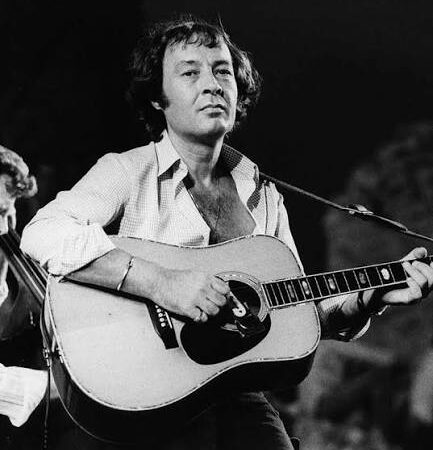
If you were to step out onto the sun-drenched sands of Copacabana or sit in a smoky late-night lounge in Manhattan during the scorching summer of 1966, your ears would be treated to a glorious, dizzying collision of cultural sounds. The cool, sophisticated syncopation of Brazilian bossa nova was thoroughly intoxicating the American jazz vanguard, while across the Atlantic, the raw, electric energy of psychedelic rock was beginning to reshape the youthful consciousness of the West. A master cultural chronicler like Nelson Motta would instantly tell you that the most magnificent artistic miracles always happen when an artist refuses to accept the safe, polite boundaries of a single genre. True genius prefers to step directly into the eye of the cultural hurricane, blending completely disparate worlds into an entirely new musical language. That is precisely the feat achieved by a brilliant Hungarian guitarist named Gabor Szabo. Having fled Budapest as a young refugee during the bloody anti-Soviet revolution of 1956 with nothing but a beat-up acoustic guitar on his back, Szabo arrived in America carrying a deep, incurable Eastern European melancholy in his chest. In May 1966, he walked into the legendary Van Gelder Studio in Englewood Cliffs, New Jersey. Backed by an elite, rhythmically explosive Latin jazz rhythm section, he recorded Spellbinder for the visionary Impulse! Records label. It remains a towering, hypnotic masterpiece of exotic, cross-cultural jazz alchemy.
Buy Amazon
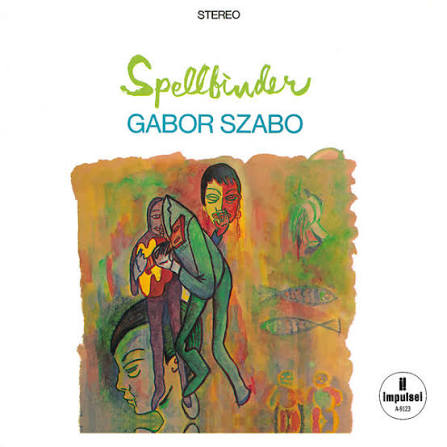
What Szabo delivered on Spellbinder is a breathtaking, incense-scented exercise in musical mysticism. He took the traditional jazz guitar format and systematically stripped away the clean, polite, and predictable bebop phrasing that had dominated the American mainstream for over a decade. Instead, he injected the haunting, microtonal inflections of Hungarian gypsy folk music, the driving, hypnotic pulse of Afro-Cuban percussão, and the raw, feedback-laced modal drone of emerging garage rock. It is a music defined by its exotic, incantatory power—a sonic landscape where Szabo’s unique acoustic-electric guitar lines chime, weep, and dance over a thick, boiling cauldron of Latin rhythms. This is the historic album that featured the original recording of “Gypsy Queen”, the very track that a young Carlos Santana would later combine with Peter Green’s “Black Magic Woman” to conquer the global rock market. For high-fidelity audio collectors and serious audiophiles, Spellbinder has long been a legendary, fiercely coveted treasure. When the specialized audiophile label Acoustic Sounds selected this historic document for its premium, definitive reissue series—cut completely all-analog (AAA) from the original master tapes by mastering engineer Ryan K. Smith and pressed onto dead-silent 180-gram virgin wax at Quality Record Pressings (QRP)—they handed the high-end community the ultimate diagnostic reference tool for checking high-frequency transient response, midrange transparency, and instrument placement.
The primary, most uncompromising technical gauntlet that Spellbinder throws down at the feet of your playback chain is the highly unique, complex acoustic-electric tone of Gabor Szabo’s guitar. Szabo performed using a specialized acoustic guitar fitted with a magnetic soundhole pickup, running the signal through a tube amplifier. This hybrid setup captured the immediate, metallic snap and hollow, woody body resonance of a flat-top acoustic instrument, combined with the warm, rich sustain and natural tube compression of an electric amplifier. On the mesmerizing opening track, the driving, modal journey of “Spellbinder”, his instrument enters right in the center of the soundstage with a startling, physical presence. This presentation puts immense pressure on your system’s upper-midrange and lower-treble linearity between 1 kHz and 4 kHz. If your loudspeakers suffer from artificial driver resonance, or if your phono cartridge has alignment errors, Szabo’s intense, repetitive note-bending and ringing double-stops will instantly sound thin, hard, or aggressively plasticky. A truly linear high-fidelity chain will beautifully separate the crisp metallic strike of his pick on the steel strings from the warm, woody bloom of the guitar’s internal air cavity, delivering his hypnotic melodies with absolute, breathtaking realism.
As you allow the stylus to journey deeper into the heavy, infectious groove of the classic “Gypsy Queen”, the unique spatial geometry of Rudy Van Gelder’s legendary studio opens up into a panoramic, three-dimensional masterclass of stereo instrument separation. Van Gelder was famous for his distinct, bold mixing philosophies, and on this album, he captures the full, visceral power of Szabo’s specialized rhythm section. The legendary Ron Carter’s double bass anchors the lower frequencies with an upfront, muscular authority, while the twin percussion assault of Victor Pantoja on congas and Willie Bobo on bongos works alongside master drummer Chico Hamilton to create a dense, interlocking tapestry of rhythm. This arrangement operates simultaneously across the entire frequency spectrum, testing the limits of your system’s intermodulation distortion and power supply headroom. If your amplification chain lacks a robust power supply, the explosive, sudden slaps on the skins of the congas and the sharp ring of Hamilton’s cymbals will bleed across the stereo image, completely masking the subtle harmonic decay of Szabo’s guitar chords. A pristine audio system with exceptional phase linearity will keep the percussionists locked firmly in their distinct geographic pockets, allowing you to hear the exact physical shape of the drums and the literal palms of the musicians striking the leather heads.
Furthermore, this uncompressed AAA analog master places a tremendous demand on your system’s low-frequency pitch definition and woofer control. On slow, late-night exotic tracks like the gorgeous, bolero-tinged reading of “Autumn Leaves”, Ron Carter’s acoustic bass lines move with a deep, organic, and woody thud that operates heavily between 50 Hz and 120 Hz. This recording captures the true, uncompressed weight of an acoustic bass in a live room. If your loudspeakers suffer from cabinet coloration, or if your listening room lacks proper acoustic treatments, this low-frequency energy will turn into a boomy, modern mess that muddying the entire soundstage. A high-end amplifier with an iron-fisted damping factor will control your speaker’s woofers with absolute precision, ensuring that Carter’s foundational notes stop and start instantly, maintaining a clean, deep, and beautifully articulated rhythmic pulse that grounds the entire psychedelic performance.
Meanwhile, Szabo’s pioneering use of controlled amplifier feedback on tracks like “It’s Not Unusual” provides a rigorous, fascinating workout for your system’s low-level resolution and noise floor. Long before Jimi Hendrix made guitar feedback an iconic staple of rock history, Szabo was subtly utilizing it in a jazz context, holding his acoustic-electric guitar close to the speaker cabinet to create long, singing, and microtonal drones that float like incense smoke over the Latin groove. This delicate, harmonic texture requires an audio system with an exceptionally low noise floor. Any trace of electronic hum, poor component shielding, or sub-par turntable bearing rumble will completely swallow these low-level micro-dynamics, robbing the record of its unique, hauntingly psychedelic atmosphere. On this premium Acoustic Sounds pressing, provided your electronics are meticulously isolated, these ghostly feedback trails reveal themselves with pristine clarity, hovering gracefully in a deep, dark space far behind the physical plane of your loudspeakers.
The true triumph of this Ryan K. Smith all-analog remaster lies in its absolute fidelity to the original master tapes, completely avoiding the modern temptation to compress or artificially brighten historic recordings. On tracks like “Bang Bang (My Baby Shot Me Down)”, when the frantic percussion suddenly drops away, leaving only Szabo’s guitar weeping alongside Hamilton’s sparse drum accents, you can hear the natural acoustic signature of the Van Gelder studio itself—the faint ring of the room microphones and the beautiful, warm saturation of the vintage analog tape machine. If your audio setup introduces any time-alignment errors across its crossover networks, this delicate, telepathic balance will be completely destroyed, stripping the record of its immense, poetic emotional impact.
To sit down in the sweet spot of your listening environment, dim the house lights, and absorb Spellbinder from its initial, hypnotic salvo to its final, fading acoustic chord is to witness a masterclass in cross-cultural musical sophistication and audiophile engineering. It is an intense, deeply moving, and endlessly fascinating auditory journey that beautifully demonstrates the boundary-pushing spirit of the 1960s jazz avant-garde. A legendary bohemian romantic like Nelson Motta would undoubtedly tell you that this record is the ultimate expression of sophisticated, late-night artistic luxury—a piece of pure, uncompromising musical gold best enjoyed in absolute stillness with a glass of rich, dark rum, while the city outside rushes by in a blur and the mind completely surrenders to the hypnotic, sorcerous spell of this legendary Hungarian master. The Acoustic Sounds team has executed a monumental service for music history, treating Gabor Szabo’s finest hour with the absolute, unyielding reverence it commands. It is an indispensable, essential cornerstone that will continuously challenge your audio system to achieve its absolute peak of transient speed, spatial clarity, and emotional truth.