
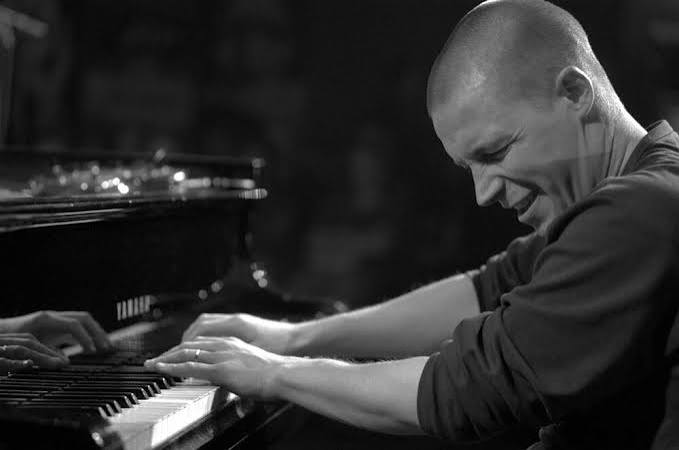
If the introspective jazz of the Norwegian fjords feels like a solitary prayer frozen in winter stone, the music that exploded out of Stockholm at the turn of the millennium was an entirely different beast. It was a revolution born in the garage but polished in the conservatory. A master cultural chronicler like Nelson Motta would instantly tell you that true genius always refuses to accept the neat, polite borders that critics draw around art. True genius wants to take the traditional, acoustic piano trio—that sacred vehicle of Bill Evans and Keith Jarrett—and plug it directly into the high-voltage electrical grid of alternative rock, pop romanticism, and electronic ambient texturing. That is precisely what a brilliant Swedish pianist named Esbjörn Svensson did alongside his childhood friends, bassist Dan Berglund and drummer Magnus Öström. Operating under the simple, lowercase moniker of e.s.t., they didn’t just play jazz for traditional clubs; they played it with the sweeping, stadium-sized energy of Radiohead and the profound, bittersweet melodic grace of a Chopin nocturne. In the autumn of 2004, they entered continuous studio sessions to cut Viaticum, released in early 2005 on the visionary German label ACT Music. It remains their undisputed, towering masterwork.
Viaticum—a Latin word referring to the provisions or spiritual sustenance gathered for a long, final journey—carries a heavy, almost prophetic emotional weight today, recorded just a few years before Svensson’s tragic, untimely passing in 2008. The album is an absolute tour de force of modern acoustic-electric fusion, moving seamlessly from delicate, rain-streaked classical motifs to massive, thunderous walls of distorted, psychedelic rhythm. For high-fidelity audio enthusiasts, reproducing the dense, multi-layered textures of e.s.t. without transforming the mix into a congested, muddy wall of sound has always been an exceptional challenge. The ultimate analog validation arrived with ACT Music’s premium audiophile vinyl pressings. Mastered with wide dynamic range and pressed onto dead-silent 180-gram virgin wax, this release stands as an indispensable reference disc for evaluating an audio system’s lower-midrange pitch definition, high-frequency transient recovery time, and loudspeaker power handling.
Buy Amazon
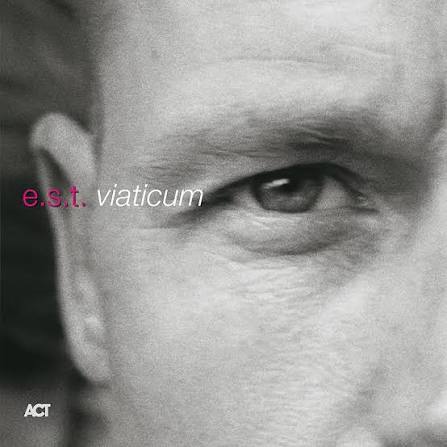
The primary, uncompromising challenge that Viaticum presents to your playback chain is the revolutionary, chameleonic tone of Dan Berglund’s double bass. Take the album’s opening track, “Tide of Left Behind”. Berglund doesn’t merely pluck the strings; he often utilizes a bow combined with a line of effects pedals—including electro-harmonix fuzz distortion and wah-wah filters—effectively transforming his massive acoustic instrument into a crying, snarling electric guitar. This recording layout operates heavily between 50 Hz and 300 Hz, testing the absolute limits of your system’s lower-midrange transparency. On a poorly matched setup where the amplifier cannot deliver high instantaneous current, or where the speaker cabinets suffer from microphonic ringing, Berglund’s distorted arco bass lines will completely mask Svensson’s delicate piano chording. A truly linear high-fidelity chain will keep the raw, fuzzy bite of the bass amplifier perfectly separated from the natural, woody acoustic thud of the instrument’s body resonance.
As you allow the stylus to travel into the hypnotic, driving groove of “In the Wedding of His Eye”, the soundstage expands into a complex masterclass of modern stereo imaging. Magnus Öström’s drum kit is recorded with an astonishing, upfront physical realism that requires incredible transient speed from your phono cartridge. Öström relies on a hyper-articulated style, combining lightning-fast brush strokes on the snare drum with a deeply propulsive, heavy bass drum pattern. The real technical hurdle here is the management of these overlapping transient layers. Your system’s tweeters and mid-range drivers must possess extraordinary rise times and low intermodulation distortion to prevent the whisper-soft scratching of the wire brushes from blurring into the heavy, rhythmic thrum of the bass drum. A high-end audio setup with immaculate phase linearity will project the drums as a perfectly focused, multi-dimensional entity on the right-center of the stage, breathing naturally within the studio’s ambient air.
Meanwhile, the genius of Esbjörn Svensson’s piano tracking on tracks like “The Goldhearted Miner” provides a beautiful, ruthless evaluation of your system’s harmonic decay. Svensson’s touch is uniquely fluid; he can shift from a gentle, feather-light classical melody to a heavy, percussive block chord within a single measure. This pristine Steinway grand piano registration requires an audio system with absolute pitch stability and minimal wow and flutter. When Svensson strikes a chord in the lower register and allows it to sustain, a linear playback chain should not merely reproduce the fundamental note. It must articulate the complex web of sympathetic string vibrations inside the piano frame and the long, natural decay of the sound waves reflecting off the studio walls. If your system suffers from digital pre-riding or time-alignment errors across the crossover network, this organic decay will feel truncated and sterile, robbing the performance of its deep, melancholic soul.
As the album reaches its stunning emotional peak with the title track, “Viaticum”, the trio subtly introduces electronic soundscapes—faint synthesizer loops, tape echoes, and ambient radio static that float like ghosts behind the acoustic trio. This intricate blending of the organic and the synthetic is a magnificent test of your system’s “noise floor” resolution. These low-level micro-dynamics are carefully buried deep within the mix by the recording engineers. On a standard, mass-market audio setup, these ambient details completely vanish, swallowed up by system distortion or poor cartridge tracking. On this reference-grade ACT pressing, however, provided your playback chain is meticulously isolated and dialed-in, these electronic elements float gracefully in a deep, dark space far behind the physical plane of your loudspeakers, enveloping the listener in a vast, cinematic dreamworld.
To sit down in the sweet spot of your listening environment, turn up the volume, and absorb Viaticum from its opening note to the haunting, fading electronic whisper at the end of Side B is to understand why the Esbjörn Svensson Trio transformed the global definition of modern jazz. They didn’t just play music; they captured the profound, beautiful ache of the human condition. A legendary bohemian romantic like Nelson Motta would undoubtedly tell you that this record is the ultimate expression of sophisticated, late-night urban luxury—a piece of pure, revolutionary art best experienced in a quiet room with a glass of rich, peaty scotch, while the rain beats a slow rhythm against the windowpane and the mind drifts out into the dark, electrical night. ACT Music has delivered a monumental audiophile document, treating e.s.t.’s timeless, rock-infused jazz legacy with the absolute, uncompromising reverence it commands. It is an essential cornerstone that will continuously challenge your audio system to achieve its absolute highest potential of transparency, emotional power, and spatial truth.