Johnny Hartman: The Velvet Baritone Who Defined Jazz Ballads

Johnny Hartman: The Velvet Baritone Who Defined Jazz Ballads

The Voice That Never Needed to Raise Itself

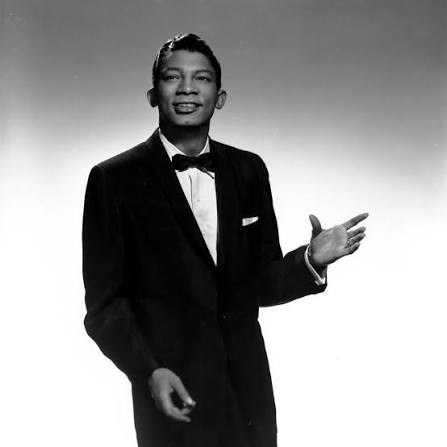
Few singers in the history of jazz possessed a voice as immediately recognizable as Johnny Hartman. Long before audiences remembered the titles of his songs, they remembered the sound itself. Warm without becoming heavy. Elegant without sounding distant. Romantic without slipping into sentimentality. Hartman’s baritone seemed to exist outside the usual expectations of jazz singing, inviting listeners into an intimate conversation rather than a theatrical performance. He never chased dramatic gestures or vocal acrobatics. Instead, he relied on extraordinary control, impeccable diction and a tone so rich that every lyric appeared to carry deeper meaning.

Listening to Johnny Hartman often feels like entering another era.

His recordings unfold patiently.

Nothing is rushed.

Every phrase receives exactly the space it needs.

Silence becomes as expressive as melody, and every breath seems carefully placed to serve the emotional truth of the song. In a musical landscape increasingly fascinated by technical brilliance and stylistic innovation, Hartman remained devoted to something timeless: the art of telling a story through the human voice.

That commitment would eventually make him one of the greatest interpreters of jazz ballads ever recorded.


From Louisiana to Chicago

John Maurice Hartman was born on July 3, 1923, in Houma, Louisiana, but his family soon relocated to Chicago, a city whose vibrant musical culture would shape his artistic identity.

Chicago during the 1930s was alive with jazz.

Big bands filled dance halls.

Blues echoed through neighborhood clubs.

Radio broadcasts introduced young musicians to America’s finest singers and instrumentalists.

Hartman absorbed every influence available.

Unlike many future jazz vocalists, however, he was drawn less toward theatrical performance than toward refinement. Even as a teenager, he admired singers whose greatest strength lay in communication rather than spectacle.

His musical heroes reflected that preference.

Bing Crosby demonstrated effortless phrasing.

Nat King Cole revealed how intimacy could become a form of elegance.

Billy Eckstine introduced the rich, sophisticated baritone sound that would profoundly influence Hartman’s own vocal development.

Rather than imitating any one artist, Hartman gradually blended these influences into a style defined by patience, warmth and remarkable emotional restraint.


Learning the Craft

Before becoming known as one of America’s great ballad singers, Hartman developed his skills through years of professional experience with big bands.

The orchestra remained the most demanding classroom available to an aspiring vocalist.

Every evening required consistency.

Projection.

Perfect timing.

The ability to communicate with large audiences while remaining faithful to the song itself.

Hartman embraced those challenges with quiet determination.

Unlike performers who relied on dramatic stage personalities, he focused almost entirely on musical precision. His diction became extraordinarily clear. His phrasing grew increasingly relaxed. Most importantly, he learned that the emotional impact of a lyric often depended less on volume than on sincerity.

These lessons would remain central throughout his career.


Earl Hines and the First Great Opportunity

Hartman’s first major breakthrough came when he joined the legendary Earl Hines Orchestra, one of the most influential training grounds in jazz history.

For countless musicians, Hines’ ensemble served as a bridge between swing and the emerging language of modern jazz. The orchestra demanded professionalism of the highest order while encouraging individual personality.

Hartman flourished within that environment.

Night after night, he refined the qualities that already distinguished him from other vocalists. His phrasing became more conversational. His confidence deepened. His remarkable baritone acquired an even greater sense of warmth and authority.

Most importantly, he discovered that audiences responded not because he overwhelmed them, but because he invited them into the emotional world of each song.

It was an approach that would define his entire career.


JazzLatitude Insight

Johnny Hartman never sang to impress listeners. He sang to make them believe every word. That quiet honesty became the defining characteristic of one of jazz’s most unforgettable voices.


The Dizzy Gillespie Years

Another significant chapter began when Hartman joined Dizzy Gillespie’s orchestra.

At first glance, the pairing seemed unexpected.

Gillespie stood at the forefront of bebop, a musical revolution built upon harmonic innovation, rhythmic complexity and extraordinary instrumental virtuosity. Hartman, by contrast, represented lyrical elegance and emotional understatement.

Yet the collaboration proved surprisingly natural.

Hartman’s calm vocal style provided a beautiful contrast to the orchestra’s adventurous arrangements. Rather than competing with the instrumental fireworks surrounding him, he offered moments of balance and reflection, reminding audiences that bebop could accommodate romance as gracefully as technical brilliance.

The experience also broadened Hartman’s musical perspective.

He became increasingly comfortable navigating sophisticated harmonic settings while preserving the clarity and warmth that had always distinguished his singing.


A Voice Unlike Any Other

By the early 1950s, Johnny Hartman had developed one of the most distinctive vocal identities in American music.

His baritone possessed unusual depth without sacrificing flexibility.

His phrasing flowed naturally behind the beat, creating an atmosphere of relaxed intimacy.

Unlike many singers influenced by blues or gospel traditions, Hartman rarely relied on dramatic emotional outbursts.

His power came from restraint.

Every lyric felt carefully considered.

Every melody unfolded with remarkable patience.

Listening to Hartman, one senses absolute confidence.

He never appears eager to reach the next phrase.

He allows each musical moment to exist fully before moving forward.

That extraordinary control transformed even familiar standards into deeply personal conversations.


Waiting for the Right Moment

Despite his immense talent, widespread recognition arrived slowly.

The changing musical landscape of the 1950s often favored singers with stronger commercial profiles or more extroverted stage personalities. Hartman continued recording and performing, earning enormous respect from musicians while remaining something of a well-kept secret among the broader public.

Yet those who truly listened recognized what others sometimes overlooked.

Few vocalists possessed such complete command of tone, phrasing and emotional honesty.

Few could transform a familiar standard into something that felt newly written.

All Hartman needed was the right artistic partnership.

When that moment finally arrived in 1963, it would produce one of the most beautiful vocal jazz albums ever recorded.


Buy Amazon

Hartman cd

One Evening That Changed Jazz History

Some collaborations seem inevitable only after they have happened. Looking back today, it is difficult to imagine that John Coltrane and Johnny Hartman had not worked together sooner. One was redefining the language of modern jazz through fearless harmonic exploration and spiritual intensity. The other had perfected the art of intimate storytelling, possessing perhaps the most refined baritone voice of his generation. Their musical worlds appeared radically different. Yet beneath the surface they shared a profound artistic value: both believed that emotion should always remain more important than virtuosity.

Their meeting in March 1963 produced one of the most extraordinary recordings in jazz history.

Remarkably, it was also their only studio album together.

Sometimes greatness requires only a single conversation.


Coltrane’s Unexpected Choice

By 1963, John Coltrane had already established himself as one of the most revolutionary figures in modern jazz. Albums such as Giant Steps and My Favorite Things had transformed the possibilities of the tenor saxophone, while his quartet was rapidly becoming one of the most celebrated ensembles in the world.

Few observers expected his next project to feature a traditional jazz vocalist.

Even fewer would have predicted Johnny Hartman.

Coltrane, however, heard something others often overlooked.

He recognized that Hartman’s voice possessed the same qualities he sought in his own playing.

Patience.

Honesty.

Depth.

Absolute commitment to melody.

Rather than asking Hartman to adapt to the quartet’s modern language, Coltrane built an environment in which the singer could remain completely himself. It was an act of extraordinary musical generosity and artistic confidence.


The Perfect Quartet

The success of John Coltrane and Johnny Hartman owes as much to the remarkable sensitivity of Coltrane’s quartet as it does to the brilliance of its two principal artists.

McCoy Tyner filled the harmonic landscape with luminous piano voicings that supported Hartman’s voice without overwhelming it.

Jimmy Garrison anchored every performance with quiet authority, allowing each song to breathe naturally.

Elvin Jones, celebrated for his explosive rhythmic imagination, demonstrated remarkable restraint, proving that power sometimes reveals itself most completely through subtlety.

Together they created an atmosphere unlike anything else in Coltrane’s catalog.

The quartet did not accompany Hartman.

It listened to him.

Every chord, every brushstroke and every pause reflected complete trust.

The result remains one of the finest examples of collaborative musicianship ever captured in a recording studio.


JazzLatitude Insight

The genius of John Coltrane and Johnny Hartman lies not in the contrast between two musical worlds, but in the discovery that they had been speaking the same emotional language all along.


My One and Only Love

Among the album’s many unforgettable performances, “My One and Only Love” has achieved an almost mythical status.

Hartman sings with astonishing composure.

Nothing feels exaggerated.

Every word carries emotional weight.

His baritone unfolds effortlessly across the melody, while Coltrane answers each vocal phrase with lyrical responses that seem less like solos than quiet conversations.

The chemistry between singer and saxophonist remains extraordinary.

Neither musician dominates.

Neither competes.

Instead, each allows the other to reveal new emotional dimensions within a song that had already been interpreted countless times.

More than sixty years later, the performance continues serving as a masterclass in musical empathy.


Lush Life

Billy Strayhorn’s “Lush Life” has challenged generations of singers through its sophisticated harmony and emotionally complex lyric.

Hartman transforms those challenges into opportunities.

He approaches the song with remarkable calm, allowing Strayhorn’s poetic language to unfold naturally rather than emphasizing its technical difficulty.

The interpretation feels intimate.

Reflective.

Deeply personal.

Coltrane responds with one of the most lyrical performances of his career, abandoning virtuosity in favor of pure melodic expression.

Together they create a version that many listeners continue to regard as definitive.

It is less a performance than a conversation between two extraordinary storytellers.


They Say It’s Wonderful

Irving Berlin’s “They Say It’s Wonderful” reveals another side of the partnership.

Where Lush Life explores introspection, this performance radiates quiet optimism.

Hartman’s phrasing remains effortlessly conversational.

Every lyric sounds freshly discovered.

The quartet surrounds him with extraordinary delicacy, demonstrating once again that true sophistication often depends upon restraint rather than complexity.

Listening today, it becomes almost impossible to imagine these songs performed differently.

The interpretations feel complete.

Timeless.

Unhurried.


Beyond the Album

Commercially, the recording achieved only modest success upon its release.

Artistically, however, its reputation grew steadily with each passing decade.

Musicians admired the remarkable trust shared between Hartman and Coltrane.

Critics praised its emotional depth.

Listeners discovered that the album possessed an unusual quality.

It never grows old.

Each return reveals another subtle detail.

Another carefully shaped phrase.

Another extraordinary moment of communication.

Today, John Coltrane and Johnny Hartman stands not only among the greatest vocal jazz recordings ever made but also among the finest albums in Coltrane’s remarkable discography.

That achievement speaks volumes.


More Than Coltrane’s Singer

One unfortunate consequence of the album’s enormous reputation is that Johnny Hartman is sometimes remembered only as “the singer who recorded with Coltrane.”

Such a description profoundly understates his artistry.

The collaboration succeeded precisely because Hartman had already spent decades refining one of the most distinctive voices in American music.

Coltrane did not create Hartman’s greatness.

He recognized it.

He simply provided the perfect setting in which millions of future listeners could finally hear what fellow musicians had known for years.

The album became immortal because two complete artists met at exactly the right moment.

Neither overshadowed the other.

Together, they created something neither could have achieved alone.


The Voice of Romantic Jazz

Following the Coltrane collaboration, Hartman continued recording and performing with the same elegance that had always defined his career.

Although no subsequent project achieved quite the same historical impact, his later albums confirmed the remarkable consistency of his artistry.

His voice remained warm.

His phrasing remained impeccable.

His commitment to the emotional truth of every lyric never diminished.

By then, however, something had changed permanently.

Johnny Hartman was no longer simply a respected jazz vocalist.

He had become the definitive interpreter of the romantic jazz ballad.


Buy Amazon

hartman

The Voice That Time Could Not Fade

Some singers become inseparable from a particular era. Their recordings preserve the fashions, tastes and production styles of a specific moment in history. Others transcend time entirely. Johnny Hartman belongs to that rarer category. Decades after his passing, his voice continues to sound remarkably fresh—not because it anticipated modern trends, but because it was never dependent upon them. His artistry rested on qualities that never lose their power: beautiful tone, impeccable phrasing, emotional honesty and an unwavering respect for the song itself.

Listening to Hartman today feels almost startling.

Modern recording technology has made it possible to manipulate, polish and perfect nearly every aspect of a vocal performance. Hartman needed none of those advantages. What reaches the listener is simply the sound of a remarkable human voice, shaped by discipline, intelligence and extraordinary musical sensitivity. Every lyric feels lived rather than merely performed.

That authenticity explains why his recordings continue finding new audiences across generations.


More Than One Historic Album

Although John Coltrane and Johnny Hartman remains the cornerstone of his legacy, reducing Hartman’s career to a single masterpiece overlooks the remarkable consistency of his work.

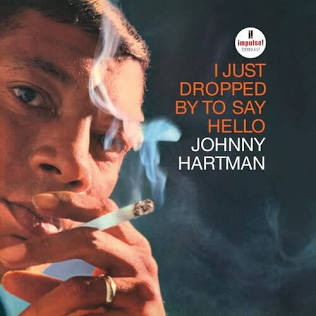
Albums such as Songs from the Heart, I Just Dropped By to Say Hello, The Voice That Is! and Once in Every Life reveal the same qualities that made the Coltrane collaboration unforgettable. His repertoire extended far beyond romantic standards, yet regardless of the material, Hartman approached every song with the same elegance and emotional precision.

He never forced a lyric.

He never exaggerated a melody.

He trusted the composer.

He trusted the listener.

Most importantly, he trusted the extraordinary expressive power of his own voice.

That quiet confidence became one of the defining characteristics of his artistry.


JazzLatitude Insight

Johnny Hartman reminds us that great singing is not measured by how loudly a voice can soar, but by how deeply it can make a listener believe every word.


A Singer Admired by Singers

Musicians have long recognized Hartman’s extraordinary gifts, even when wider public recognition arrived more slowly.

Among those who admired his artistry was Frank Sinatra, himself one of the greatest interpreters of the American Songbook. Sinatra appreciated Hartman’s impeccable phrasing, relaxed sense of time and ability to transform familiar standards into deeply personal statements.

That admiration was hardly unique.

Professional singers frequently point to Hartman as a model of vocal restraint and musical integrity. Rather than overwhelming listeners with dramatic flourishes, he demonstrated that sincerity, subtle dynamics and careful storytelling often produce the most lasting emotional impact.

It is an approach that remains surprisingly rare.


A Lasting Influence

The resurgence of interest in classic vocal jazz during the late twentieth and early twenty-first centuries brought renewed attention to Hartman’s remarkable catalog.

Younger artists began discovering recordings that had never truly gone out of style.

Among the singers most often associated with Hartman’s legacy are Kevin Mahogany, Kurt Elling and Gregory Porter, each of whom has embraced different aspects of his artistic philosophy.

Mahogany inherited Hartman’s rich baritone warmth.

Elling admired his conversational phrasing and emotional subtlety.

Porter continues the tradition of combining deep vocal resonance with lyrical honesty and understated elegance.

None attempts to imitate Hartman directly.

Instead, each reflects the enduring influence of a singer who demonstrated that intimacy could become one of jazz’s greatest expressive strengths.


The Art of Singing Behind the Beat

One of Hartman’s most remarkable technical achievements was his extraordinary command of musical time.

Like the finest jazz instrumentalists, he understood that rhythm is not simply about precision but about placement.

Hartman frequently allowed phrases to settle gently behind the beat, creating an effortless sense of relaxation without ever disturbing the underlying pulse.

This subtle rhythmic flexibility gave his performances their unmistakable conversational quality.

Listeners rarely notice the technique consciously.

They simply experience the feeling.

The songs breathe.

The lyrics unfold naturally.

Nothing appears hurried.

Such rhythmic sophistication cannot be taught easily.

It emerges only through years of deep musical understanding.


Essential Artistic Relationships

Throughout his distinguished career, Johnny Hartman collaborated with musicians whose artistry perfectly complemented his own refined musical language.

Among the most significant are:

  • John Coltrane — Their legendary 1963 collaboration produced one of the greatest vocal jazz albums ever recorded, demonstrating the extraordinary emotional compatibility between Hartman’s voice and Coltrane’s lyrical tenor saxophone.
  • Earl Hines — Hartman’s early years with Hines’ orchestra provided invaluable professional experience and helped shape the polished phrasing that became one of his defining characteristics.
  • Dizzy Gillespie — Performing with Gillespie expanded Hartman’s harmonic vocabulary while proving that his understated vocal style could flourish even within the adventurous world of bebop.
  • McCoy Tyner — His luminous piano accompaniment on the Coltrane sessions created one of the most elegant harmonic settings ever recorded for a jazz vocalist.
  • Billy Strayhorn — Although primarily connected through repertoire rather than direct collaboration, Strayhorn’s compositions, especially Lush Life, found one of their most profound interpreters in Hartman.

Together, these artistic relationships reveal a singer whose greatest collaborations always emerged from mutual respect rather than vocal display.


Technical Profile

Born:

  • July 3, 1923

Died:

  • September 15, 1983

Birthplace:

  • Houma, Louisiana, USA

Primary Role:

  • Jazz Vocalist

Voice Type:

  • Baritone

Primary Styles:

  • Vocal Jazz
  • Jazz Ballads
  • Traditional Pop
  • American Songbook

Musical Characteristics:

  • Rich, velvety baritone
  • Exceptional breath control
  • Conversational phrasing
  • Relaxed rhythmic placement
  • Extraordinary diction
  • Emotional restraint and elegance

Essential Albums:

  • John Coltrane and Johnny Hartman (1963)
  • Songs from the Heart
  • The Voice That Is!
  • I Just Dropped By to Say Hello
  • Once in Every Life

Five Lesser-Known Facts About Johnny Hartman

1. He originally dreamed of becoming a classical singer.

Before fully embracing jazz and popular music, Hartman studied vocal technique with ambitions that extended well beyond the nightclub stage.

2. His baritone was considered one of the finest of the twentieth century.

Critics and fellow musicians frequently praised not only the beauty of his tone but also the remarkable consistency he maintained throughout his career.

3. The Coltrane collaboration was their only studio album together.

Despite its enormous influence, John Coltrane and Johnny Hartman remains the sole recording produced by this extraordinary partnership.

4. He was admired more by musicians than by the commercial music industry.

Hartman’s artistry earned immense respect from fellow performers, even during periods when mainstream commercial success remained elusive.

5. His reputation has continued growing after his death.

The renewed appreciation for classic vocal jazz has introduced Hartman’s recordings to entirely new generations of listeners, many of whom now regard him as one of the greatest interpreters of the American Songbook.


Frequently Asked Questions

Who was Johnny Hartman?

Johnny Hartman was an American jazz baritone celebrated for his rich voice, elegant phrasing and timeless interpretations of ballads, particularly on his legendary 1963 recording with John Coltrane.

Why is Johnny Hartman important?

He elevated jazz ballad singing through extraordinary vocal control, emotional honesty and a conversational style that continues influencing singers around the world.

What is Johnny Hartman’s greatest album?

Most critics regard John Coltrane and Johnny Hartman as his masterpiece and one of the finest vocal jazz recordings ever produced.

Why is Johnny Hartman’s voice considered unique?

His warm baritone, impeccable diction, relaxed phrasing and remarkable ability to communicate emotional depth without theatrical exaggeration created one of the most distinctive vocal sounds in jazz history.

Which singers are similar to Johnny Hartman?

Listeners who appreciate Hartman often explore Billy Eckstine, Nat King Cole, Joe Williams, Kevin Mahogany, Kurt Elling, Gregory Porter, Mark Murphy, Johnny Mathis, Mel Tormé and Andy Bey, each of whom shares different aspects of his lyrical and sophisticated approach to jazz singing.


JazzLatitude Rating

CategoryRating
Vocal Tone★★★★★
Ballad Interpretation★★★★★
Phrasing★★★★★
American Songbook Interpretation★★★★★
Emotional Communication★★★★★
Historical Importance★★★★★
Replay Value★★★★★
Vocal Jazz Legacy★★★★★
JazzLatitude Essential★★★★★

Final Thoughts

Johnny Hartman’s legacy rests upon an extraordinary paradox. In a musical world that often rewards the loudest voices, the boldest personalities and the most dramatic performances, Hartman achieved lasting greatness through quiet confidence. He never relied on vocal excess or theatrical gestures to capture a listener’s attention. Instead, he trusted the timeless qualities of beautiful tone, impeccable phrasing and absolute emotional sincerity. That artistic philosophy transformed every ballad into something deeply personal, making listeners feel as though each song had been written for them alone.

His celebrated collaboration with John Coltrane remains one of the defining moments in the history of vocal jazz, but it represents only the most visible chapter of a career devoted to artistic refinement. Long before entering the studio with Coltrane, Hartman had already developed one of the most sophisticated vocal styles in American music. The album’s enduring greatness lies not in the fact that it introduced Hartman to the world, but in the way it allowed the world to finally recognize a singer who had quietly perfected his craft over decades.

Today, his influence can be heard in generations of vocalists who value intimacy over spectacle and storytelling over technical display. From Kevin Mahogany and Kurt Elling to Gregory Porter, echoes of Hartman’s artistry continue shaping modern jazz singing. His recordings also remind instrumentalists of an essential lesson: phrasing, timing and emotional honesty matter every bit as much as technical mastery.

More than forty years after his passing, Johnny Hartman’s voice remains one of the most beautiful ever captured on record.

Not because it demanded attention.

But because it never needed to.

Its quiet elegance continues to speak directly to the heart, proving that the greatest love stories in jazz were sometimes told not by a trumpet or a saxophone, but by a single velvet baritone that understood every word it sang.