The Chronicle of an Era: The Mid-Sixties Civil Rights Crucible and the Philips Analog Realism
By the arrival of 1965, the American landscape was fractured by an intense geopolitical and social upheaval. The civil rights movement was shifting from peaceful protest to a deeper, more urgent demand for radical systemic change. In the music industry, jazz vocalists were no longer expected to merely soothe audiences with romantic escapism or polished cabaret standards. Inside the mid-town Manhattan studios of Philips Records, a Dutch-owned label that approached recording with a distinctively european, high-fidelity transparency, an entirely new genre of artistic resistance was being forged. This engineering approach did not seek to clean up or sugarcoat the performance; it prioritized capturing the unvarnished dynamic truth, the raw concrete acoustics of the room, and the explosive emotional peaks of live-in-the-studio performance.
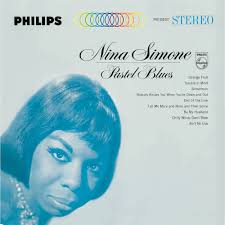
It was precisely within this climate of social tension and audiophile realism, in 1965, that Nina Simone entered the studio to cut her definitive artistic statement for Philips. Titled Pastel Blues, the album stood as an extraordinary, historic creative threshold. It did not merely interpret standard blues and traditional folk tunes; it completely dismantled and reconstructed them through a high-fidelity blend of classical piano technique, gospel fervor, and avant-garde vocal minimalism, establishing a timeless, reference-grade audiophile masterpiece for three-dimensional vocal projection and dynamic room decay.
The Biography & The Concept of the Masterwork: The Classical Prodigy and the High Priestess of Soul
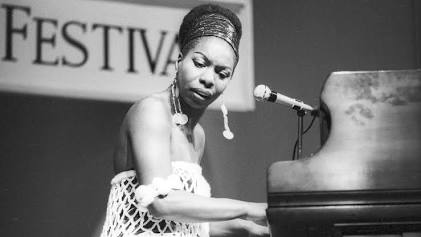
The artistic trajectory of Nina Simone (born Eunice Kathleen Waymon in 1933; died in 2003) is a narrative of profound stylistic synthesis. Denied entry to the prestigious Curtis Institute of Music due to systemic racial bias, the young prodigy redirected her rigorous training in Bach, Beethoven, and classical counterpoint onto the smoke-filled stages of Atlantic City and New York. She developed a completely singular approach to the piano, using intricate, independent left-hand lines that behaved like Baroque fugues while her right hand punched out heavy, polyrhythmic blues chords.
The core conceptual architecture of Pastel Blues represents the absolute maturation of this hybrid musical language.
Operating under the deserved title of the “High Priestess of Soul,” Simone crafted an album that explored the entire psychological continuum of Black American music.
Backed by a razor-sharp, deeply minimalist quartet featuring guitarist Rudy Stevenson, bassist Lisle Atkinson, and drummer Bobby Hamilton, Simone built an environment where space and silence were utilized as physical instruments. The arrangements deliberately strip away commercial artifice, leaving her voice and piano to carry the immense narrative weight of a nation on the brink of structural transformation.
Buy Amazon
The Anatomy of the Soundstage: A Sensorial Excursion Through Heavy Soundboards, Bare Rooms, and Volcanic Vocals
[Album Presentation: Nina Simone - Pastel Blues (Philips Records, 1965)]
To experience an original 1965 Philips monaural or stereo pressing—or a masterfully executed modern AAA audiophile vinyl reissue cut directly from the original magnetic master tapes—is to witness an astonishing demonstration of spatial depth, uncompressed vocal power, and stark near-field realism. The engineering places the listener inches from Simone’s grand piano, with the backing instruments arranged cleanly in a deep, organic acoustic pocket behind her. Side A opens with the agonizingly beautiful interpretation of “Chilly Winds Don’t Blow”, where the transparency of the vocal mic captures the wet, full-bodied resonance of her unique contralto voice.
The physical realism of the grand piano is jaw-dropping; as Simone navigates the modal structures of “Strange Fruit”, the microphones capture the immense, woody thud of the dampener pedals hitting the frame.
You can feel the physical weight of the keys being struck, the vibrating air inside the open soundboard, and the absolute absence of artificial echo or digital manipulation.
As the record transitions to Side B, it culminates in the legendary, ten-minute epic “Sinnerman”, a track that stands as an absolute reference standard for modern audiophile component testing. Positioned dead center, Simone’s voice evolves from an intimate whisper into a towering, volcanic roar that challenges the tracking ability and transient headroom of the finest phono cartridges.
Behind her, Bobby Hamilton’s drum kit acts as a high-definition rhythmic engine; his hand-claps and the crisp, metallic strike of his ride cymbal cut through the soundstage with incredible phase correctness.
The mix captures the natural, reflective decay of the live studio walls, preserving the raw, kinetic energy of the performance as it mounts to a terrifying, ecstatic gospel climax, delivering a visceral masterclass in how analog technology can immortalize pure spiritual catharsis.
The Legacy and Modern Coordinates: The Unyielding Standard of Radical Sincerity
The historical, critical, and cultural trajectory of Pastel Blues stands today as an untouchable, universally revered milestone in the canon of global music. The album permanently elevated Nina Simone from a jazz-pop cabaret singer to a vital, revolutionary cultural icon whose influence echoes through modern pioneers like Lauryn Hill, Meshell Ndegeocello, and the contemporary avant-garde. It provided definitive, historical proof that the blues and traditional standards could be elevated into high-art classical structures without sacrificing an ounce of their raw, bone-deep emotional sincerity.
Our map looks directly back to this 1965 New York document as an essential, foundational textbook for the art of dramatic pacing, vocal dynamics, and acoustic space management. From the contemporary jazz musicians who fuse classical motifs with deep groove to the high-end audiophiles who use the demanding, uncompressed transients of “Sinnerman” to calibrate the speed, timing, and soundstage imaging of premium audio components, everyone operates within the trade routes mapped out by the High Priestess. Nina Simone carved a permanent, brilliantly glowing coordinate of fire and stone on our map: an eternal vanguard outpost that stands as an immortal monument to the infinite triumph of the uncompromising musical soul.