
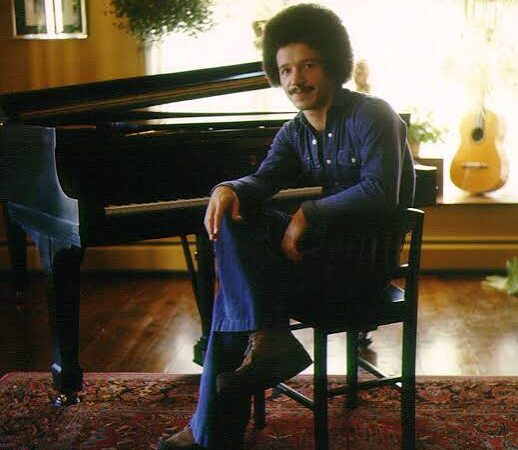
The Chronicle of an Era: The Mid-Seventies Acoustic Solitary, The ECM Space-Time Continuum, and the Opera House Miracle
By the arrival of 1975, the global jazz landscape had largely surrendered to the heavy, dense currents of electronic fusion and synthesized experimentation. Arenas were packed with wall-to-wall amplification, Moog synthesizers, and distorted guitars. Yet, beneath this high-voltage acoustic exhaustion, an intensely focused counter-revolution was gathering momentum in the European avant-garde. It sought a radical return to acoustic purity, structural vulnerability, and the terrifying freedom of absolute, unscripted improvisation. At the absolute vanguard of this movement stood the independent German label ECM Records and its legendary producer Manfred Eicher, whose radical devotion to pristine sonic spaces, natural room acoustics, and the deep emotional weight of silence was redefining the very physics of recorded music.
It was precisely within this climate of acoustic restoration, near midnight on January 24, 1975, that an exhausted, 29-year-old American pianist named Keith Jarrett stepped onto the stage of the Opera House in Köln, West Germany. What followed remains one of the most miraculous, unrepeatable occurrences in the history of art. Operating under severe physical pain from a back injury, sleep deprivation, and confronted with a completely defective, small baby-grand piano instead of the concert grand he requested, Jarrett did not play a repertoire. Instead, he closed his eyes and allowed a massive, multi-movement stream of consciousness to pour directly through his fingers, establishing The Köln Concert as an extraordinary creative threshold and setting an untouched, reference-grade audiophile Holy Grail for solo piano engineering.
The Biography & The Concept of the Masterwork: The Purist Maverick and the Altar of Continuous Creation
The artistic trajectory of Keith Jarrett (born in 1945) stands as a fierce, unyielding monument to instrumental transfiguration and uncompromising creative independence. Emerging as a prodigy who famously played with Art Blakey, Charles Lloyd, and Miles Davis’s electric ensembles, Jarrett made a radical mid-career choice to completely abandon electronic instruments. He viewed the traditional acoustic piano not as an antique tool, but as a living, organic extension of the human nervous system. Rejecting the cozy safety of composed jazz charts or familiar standards, Jarrett pioneered the terrifying art of the completely solo, entirely improvised concert—walking onto a stage with an absolute blank slate, without a single pre-conceived melody, rhythm, or harmonic structure, treating the performance as an authentic spiritual exorcism.
The core conceptual architecture of The Köln Concert is fundamentally a triumph over material limitations and immediate physical adversity. The instrument provided by the opera house was a tiny Bösendorfer 290 Imperial baby grand that was wildly out of tune, suffering from a completely broken sustain pedal mechanism, an inoperable upper register, and a hollow, thin mid-range.
Rather than walking off the stage in anger, Jarrett brilliantly altered his entire physical approach to the instrument.
To compensate for the lack of low-end resonance, he locked his left hand into driving, repetitive rhythmic patterns and gospel-drenched ostinatos, while using his right hand to unleash soaring, lyrical folk melodies in the middle register where the piano still possessed some tonal warmth.
Accompanied by his own famous vocal groans, stomping feet, and physical body shifts, Jarrett transformed a logistical disaster into a multi-layered masterpiece of harmonic depth, folk lyricism, and classical structural grandeur.
Buy Amazon
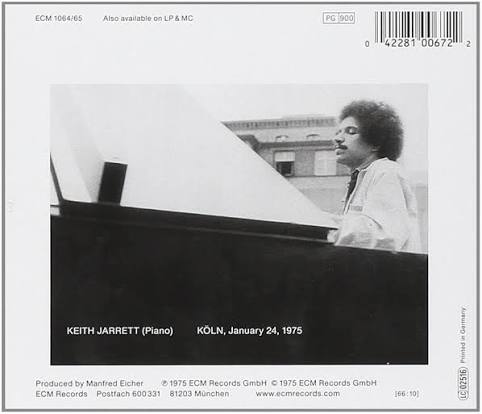
The Anatomy of the Bösendorfer: A Sensorial Excursion Through Sparkling Hammers, Decaying Reverbs, and Pure Acoustic Air
To experience an original 1975 ECM German double-LP pressing—or a masterfully executed modern AAA audiophile vinyl reissue mastered directly from the original two-track analog tapes—is to witness an astonishing demonstration of spatial transparency, microphone placement, and raw dynamic realism. Recorded by engineer Martin Wieland using a minimalist array of Neumann condenser microphones positioned close to the open soundboard of the piano, the soundstage places the listener directly on the piano bench. Part I opens with the now-immortal “Part I”, which famously begins with Jarrett mimicking the literal four-note chime of the Köln Opera House’s evening buzzer, drawing an immediate, breathless laugh from the audience.
The physical realism of the instrument is breathtaking; despite the piano’s thin acoustic character, Wieland’s recording preserves every ounce of physical warmth and percussive hammer strike with absolute, transparent fidelity.
You can hear the sharp, immediate transient pop of the wooden hammers hitting the steel strings, entirely free of high-frequency tape hiss or mid-range saturation.
As Jarrett locks into his intense, rolling left-hand rhythmic grooves, the low frequencies carry a tight, focused, and completely natural weight that tests the phase correctness of your loudspeakers.
The micro-dynamic details are staggering: you can feel the exact velocity of his finger pressure, the subtle sliding of his leather shoes against the stage wood, and his vocalizations floating in a three-dimensional pocket above the keys.
On the sweeping, deeply emotional architectures of “Part II A”, the piano notes decay gracefully into the massive, high-ceilinged acoustic space of the empty opera house hall.
The microphones capture the natural ambient bloom of the room, preserving the vast distance between the listener and the acoustic boundaries of the building. It is a historic masterclass in how a minimalist, uncompressed analog studio recording can document a solitary human being in a state of absolute, vulnerable creation with flawless tonal truth and boundless emotional depth.
The Legacy and Modern Coordinates: The Eternal Outpost of Solo Improvisation
The historical, critical, and commercial trajectory of The Köln Concert stands today as an untouchable, universally studied milestone in the global history of modern creative music. The album achieved immediate critical coronation and staggering commercial success, selling over four million copies to become the best-selling solo album in jazz history and a foundational text for audiophiles worldwide. It provided definitive, historical proof that a single musician, armed with nothing but an acoustic piano and absolute creative courage, could captivate millions by turning completely away from commercial formulas and embracing the raw, unpredictable beauty of continuous creation.
Today, the modern coordinates of Jazz Latitude look directly back to this 1975 German document as an essential, foundational textbook for the art of solo acoustic performance and spontaneous composition. From contemporary pianists who blend jazz with classical minimalism and ambient structures to the modern audio engineers who strive to capture the uncompressed, physical reality of acoustic instruments without digital enhancement, everyone operates directly within the trade routes mapped out by Keith Jarrett. It remains unyielding proof that when technical virtuosity, profound spiritual surrender, and pristine analog studio engineering collide, they build an environment that is structurally timeless, sonically pristine, and boundlessly immortal. Jarrett carved a permanent, brilliantly glowing ivory-and-ebony coordinate on our map: an eternal solo outpost that stands as an immortal monument to the infinite triumph of the spontaneous musical soul.