The Chronicle of an Era: The 1961 Pós-Bop Transition, Blue Note’s Sonic Architecture, and the Evolution of the Modern Trumpet
By the dawn of 1961, the hard bop movement in New York City was beginning to stretch and fracture under the weight of its own creative ambitions. The standard, blues-based formulas of the late 1950s were no longer enough to contain the intense spiritual and intellectual hunger of a new generation of musicians. Jazz was expanding in two distinct directions: toward the radical, open freedom of the avant-garde, and toward a highly sophisticated, harmonically advanced evolution known as post-bop. At the center of this transition stood Alfred Lion’s Blue Note Records, operating from its newly constructed technical sanctuary in Englewood Cliffs, New Jersey—a magnificent, high-ceilinged studio designed by architect Philip Johnson and engineered by Rudy Van Gelder to capture acoustic instruments with unprecedented dynamic power and pristine stereo separation.
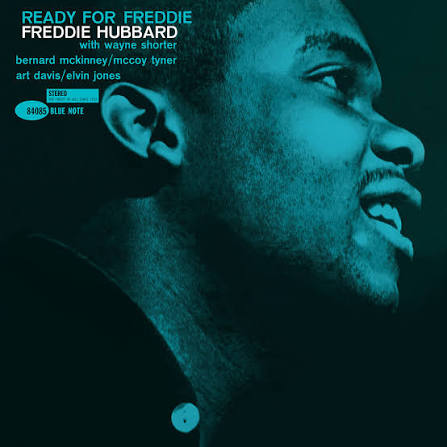
It was precisely within this climate of high-speed stylistic evolution, on August 21, 1961, that a 23-year-old trumpet prodigy named Freddie Hubbard led his dream ensemble through the doors of the Englewood Cliffs studio. Released later that year as Blue Note 4085, Ready for Freddie stood as an extraordinary, definitive creative threshold. The album did not merely showcase a young player with terrifying technical speed; it executed a brilliant, wide-screen synthesis of complex modal harmony, deep blues feeling, and aggressive rhythmic drive. It permanently altered the evolutionary path of modern jazz trumpet performance, establishing an untouchable, reference-grade audiophile monument for the golden age of analog recording.
The Biography & The Concept of the Masterwork: The Indianapolis Phenomenon and the All-Star Septet
The artistic trajectory of Frederick Dewayne Hubbard (1938–2008) is the story of pure instrumental dominance. Arriving in New York from Indianapolis, Hubbard possessed a physical approach to the trumpet that stunned his older peers. He boasted an incomparably fat, golden tone, a flawless upper register that never cracked under pressure, and a half-valve technique that allowed him to slide between notes with the fluid speed of a woodwind player. While previous giants like Clifford Brown favored long, scalar lyricism, Hubbard introduced a volcanic, explosive style packed with wide interval leaps, dramatic trills, and a driving, muscular sense of swing that could push a rhythm section to the brink of chaos.
The core conceptual architecture of Ready for Freddie represents the absolute maturation of this explosive philosophy, framed within an elite, historically significant lineup. To bring his challenging, non-traditional compositions to life, Hubbard bypassed standard hard bop quintet frameworks to construct a unique, multi-textured sextet.
He recruited his close collaborator Wayne Shorter on tenor saxophone and the modal master McCoy Tyner on acoustic piano—both men operating at the absolute peak of their creative powers.
In a strokes of curation, Hubbard added the chromatic harmonica of Toots Thielemans to the frontline, creating an eerie, singing texture that balanced the heavy brass fire.
Completed by the muscular bass of Art Davis and the revolutionary polyrhythmic drive of drummer Elvin Jones, the ensemble functioned as a complex, multi-headed improvisational engine.
Buy Amazon
The Anatomy of the Valve: A Sensorial Excursion Through Searing Brass, Golden Harmonicas, and Van Gelder Echo Chambers
To place a reference-grade phono cartridge onto the uncompressed analog grooves of an original 1961 Blue Note stereo pressing—or a modern AAA audiophile vinyl reissue cut directly from the original two-track master tapes—is to experience an astonishing demonstration of mid-range presence, transient speed, and holographic acoustic space. Rudy Van Gelder captured this historic date using his prized Neumann U47 condenser microphones and custom-built tube mixing consoles, preserving the raw, physical power of the instruments. Side A opens with the soaring, modal majesty of “Birdlike”, a tribute to Charlie Parker that erupts into the room with an explosive unison horn statement positioned wide across the stereo soundstage.
When Hubbard steps forward for his first solo, the physical realism is jaw-dropping; his trumpet is locked firmly center-left, projecting a tone so bright, fat, and golden that it feels three-dimensional.
You can hear the sharp, immediate bite of his attack, the subtle warmth of his breath between phrases, and the natural acoustic splash of his horn reflecting off the studio’s high cedar beams.
As Wayne Shorter takes over, his tenor saxophone materializes on the right channel with a dry, muscular, and intensely focused presence, completely free of modern digital smoothing.
Behind them, McCoy Tyner’s acoustic piano provides a masterclass in modern chord comping, his left-hand low-end block chords possessing deep physical weight while his right-hand runs sparkle in the center-left space.
On the heartbreakingly beautiful ballad “Crisis”, the mix reveals an elite layer of audiophile delicacy. Toots Thielemans’ harmonica enters from the center-right, its fragile, reedy, and human voice captured with such proximity that you can hear the sliding of the metal slide mechanism.
Underneath it all, Elvin Jones’s drum kit manages the stereo field with spectacular macro-dynamics; the uncompressed snap of his snare accents and the continuous, metallic shimmer of his K. Zildjian ride cymbal cut through the mix with instantaneous speed, providing a continuous masterclass in how primitive analog equipment could document a dense, aggressive ensemble with absolute phase correctness and deep emotional clarity.
The Legacy and Modern Coordinates: The Eternal Blueprint for Progressive Hard Bop
The historical, critical, and educational trajectory of Ready for Freddie stands today as an untouchable, universally studied milestone in the global canon of modern creative music. The album achieved immediate critical coronation, permanently solidifying Freddie Hubbard’s reputation as a top-tier composer and the definitive trumpet voice of the post-bop era. It provided definitive, historical proof that hard bop could embrace advanced modal concepts and complex, non-traditional instrumentation while retaining its deep connection to the blues, setting a structural blueprint that would guide the genre for decades.
Today, the modern coordinates of Jazz Latitude look directly back to this 1961 Blue Note document as an essential, foundational textbook for the art of brass expression and small-group arrangement. From the contemporary acoustic jazz innovators of New York and Chicago to the modern audio engineers who strive to capture the uncompressed, physical power of brass instruments without digital glare, everyone operates directly within the trade routes mapped out by Freddie Hubbard and his septet. It remains unyielding proof that when technical virtuosity, deep ensemble empathy, and pristine analog studio engineering collide, they build an environment that is structurally timeless, sonically pristine, and boundlessly immortal. Hubbard carved a permanent, brilliantly glowing brass-and-gold coordinate on our map: an eternal outpost that stands as an immortal monument to the infinite triumph of the syncopated musical soul.