
The Chronicle of an Era: The 21st-Century Instrumental Renaissance, The Evolution of Choro, and the Decentered Jazz Map
By the dawn of the 2000s, global instrumental music was operating within a radically decentralized reality. The historic, Anglo-American monopoly on modern jazz improvisation was being systematically challenged by global sonic movements that fused their native, ancient rhythmic traditions with advanced post-bop harmonic concepts. In Brazil, a profound creative revolution was taking place on the streets of Rio de Janeiro, Brasília, and Recife. A new generation of virtuosos refused to view choro—Brazil’s foundational instrumental genre, older than jazz itself—as a fragile museum piece. Instead, they recognized it as a living, breathing structural matrix capable of digesting the entire vocabulary of modern creative music, from Coltrane’s modal expansions to the metric modulations of avant-garde jazz.
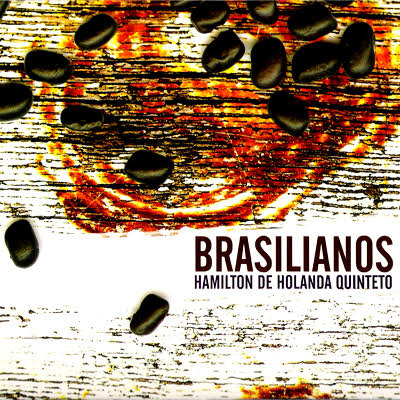
It was precisely within this climate of stylistic renewal and explosive rhythmic cross-pollination, in 2006, that bandolim player Hamilton de Holanda gathered his elite ensemble to record a defining cultural statement. Released under the independent prestige label Biscoito Fino, Brasilianos stood as an extraordinary milestone. The record did not merely present a nostalgic collection of syncopated acoustic tunes; it engineered a heavy, lightning-fast, and deeply emotional post-bop grid where Afro-Brazilian groove and complex, multi-voiced counterpoint existed in absolute, breathtaking equilibrium, setting an untouchable, reference-grade audiophile Holy Grail for 21st-century acoustic jazz.
The Biography & The Concept of the Masterwork: The Architect of the Decacorde and the Telepathic Quintet
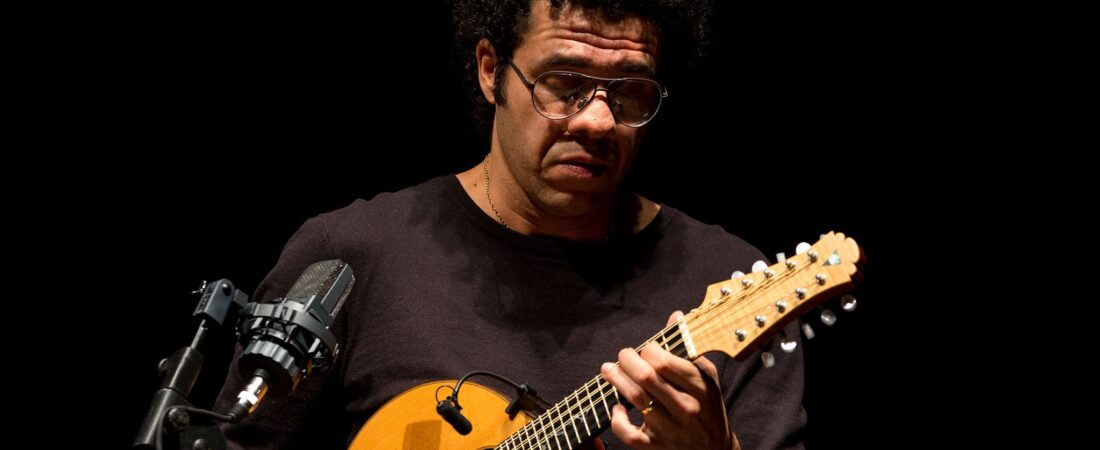
The artistic trajectory of Hamilton de Holanda (born in 1976) is fundamentally a narrative of instrumental transfiguration. Raised in Brasília—a city built on geometric modernist architecture that deeply influenced its musical subcultures—Hamilton was a child prodigy who completely mastered the traditional 8-string Brazilian mandolin (bandolim). However, restricted by the technical boundaries of the high-register instrument, he executed a radical act of design: he added a fifth pair of strings tuned to a deep, resonant low C. This single structural choice transformed the bandolim from a purely melodic, horn-like voice into a self-contained, multi-register acoustic engine capable of delivering heavy bass counterpoints, dense piano-like block chords, and lightning-fast polyphonic runs.
The core conceptual architecture of Brasilianos represents the absolute distillation of this 10-string philosophy, expanded into a collaborative quintet setting. Hamilton assembled a generational dream team of improvisers who shared his deep connection to both Brazilian folklore and international jazz structures.
The ensemble featured Daniel Santiago on acoustic guitar, Gabriel Grossi on chromatic harmonica, André Vasconcellos on electric bass, and Márcio Bahia on drums.
Abandoning the polite, predictable arrangements of commercial bossa nova, the quintet functioned as a single, multi-headed improvisational organism.
Through complex odd-meter meters, sudden modal shifts, and unison front-line horn-like lines, they transformed compositions like “Samba do Avião,” “Abre Alas,” and “O Choro de Paulinho” into fiery platforms for real-time creative destruction and joyous spiritual liberation.
Buy Amazon
The Anatomy of the Studio: A Sensorial Excursion Through Snapping Steel, Growling Reeds, and Pristine Room Transients
To experience a high-resolution or premium uncompressed press tracking of Brasilianos is to witness an absolute masterclass in modern acoustic instrument capture. Recorded with exceptional dynamic range and a wide, open stereophonic field that completely avoids the artificial, heavily compressed studio scrubbing of the era, the soundstage possesses an astonishingly vivid physical scale. Side A opens with the breathtaking compositional force of “Abre Alas”. The piece materializes with Hamilton’s 10-string bandolim positioned dead center, executing a rapid, uncompressed solo intro where the sharp, metallic snap of his pick striking the steel strings tests the transient speed of your loudspeakers.
The physical realism is incredible; you can feel the literal tension of the high strings and the deep, rich resonance of the custom wooden body vibrating against his chest.
Suddenly, the full quintet explodes across the stereo field, and the multi-instrumental separation is jaw-dropping. In the left channel, Daniel Santiago’s nylon-string acoustic guitar provides a soft, complex harmonic cushion, its tone warm and completely natural.
In the right channel, Gabriel Grossi’s harmonica enters with a burning, reedy presence, capturing the physical breath and subtle pitch-bends of his performance.
André Vasconcellos’s electric bass lines occupy a deep, perfectly focused low-frequency pocket, while Márcio Bahia’s drum kit manages the background with instantaneous dynamic changes.
On the gorgeous, introspective ballad spaces of “O Choro de Paulinho”, the mix slows down into a deep, smoke-tinted sanctuary of profound lyrical beauty. The natural acoustic decay of the studio room is preserved flawlessly, capturing the delicate interplay between the mandolin’s sparkling upper register and the heavy, chest-thumping growl of the low-C string. It is a historic demonstration of how modern engineering could record high-speed, dense acoustic polyphony with absolute phase correctness, deep spatial scale, and uncompromised emotional warmth.
The Legacy and Modern Coordinates: The Eternal Outpost of Contemporary Choro-Jazz
The historical, critical, and educational trajectory of Brasilianos stands today as an untouchable, universally studied milestone in the global history of progressive creative music. The album achieved immediate critical adoration, winning international accolades and permanently cementing Hamilton de Holanda’s reputation as one of the most important improvisers and instrumental innovators of his generation. It provided definitive, historical proof that traditional South American roots music possessed the structural complexity and intellectual depth to sit at the absolute forefront of contemporary global jazz without losing its primal, danceable emotional core.
Today, the modern coordinates of Jazz Latitude look directly back to this 2006 Biscoito Fino document as an essential, foundational textbook for the art of modern small-group interaction and acoustic balance. From the contemporary instrumental academies of Rio and São Paulo to the elite jazz conservatories of New York, Amsterdam, and Paris, every modern string player, wind instrumentalist, and rhythmist who seeks to explore the absolute boundaries of polyrhythmic velocity, modal freedom, and global heritage operates directly within the trade routes mapped out by Hamilton de Holanda. It remains unyielding proof that when technical virtuosity, profound cultural pride, and uncompromised studio engineering collide, they build an environment that is structurally timeless, sonically pristine, and boundlessly immortal. Hamilton carved a permanent, brilliantly glowing coordinate of jacaranda and steel on our map: an eternal Afro-Brazilian outpost that stands as an immortal monument to the infinite triumph of the syncopated musical soul.